Chris Osmond PhD

  • typewriter agonistes
  • human words project
  • about
  • contact

  • Things with People in Places

    December 17th, 2025
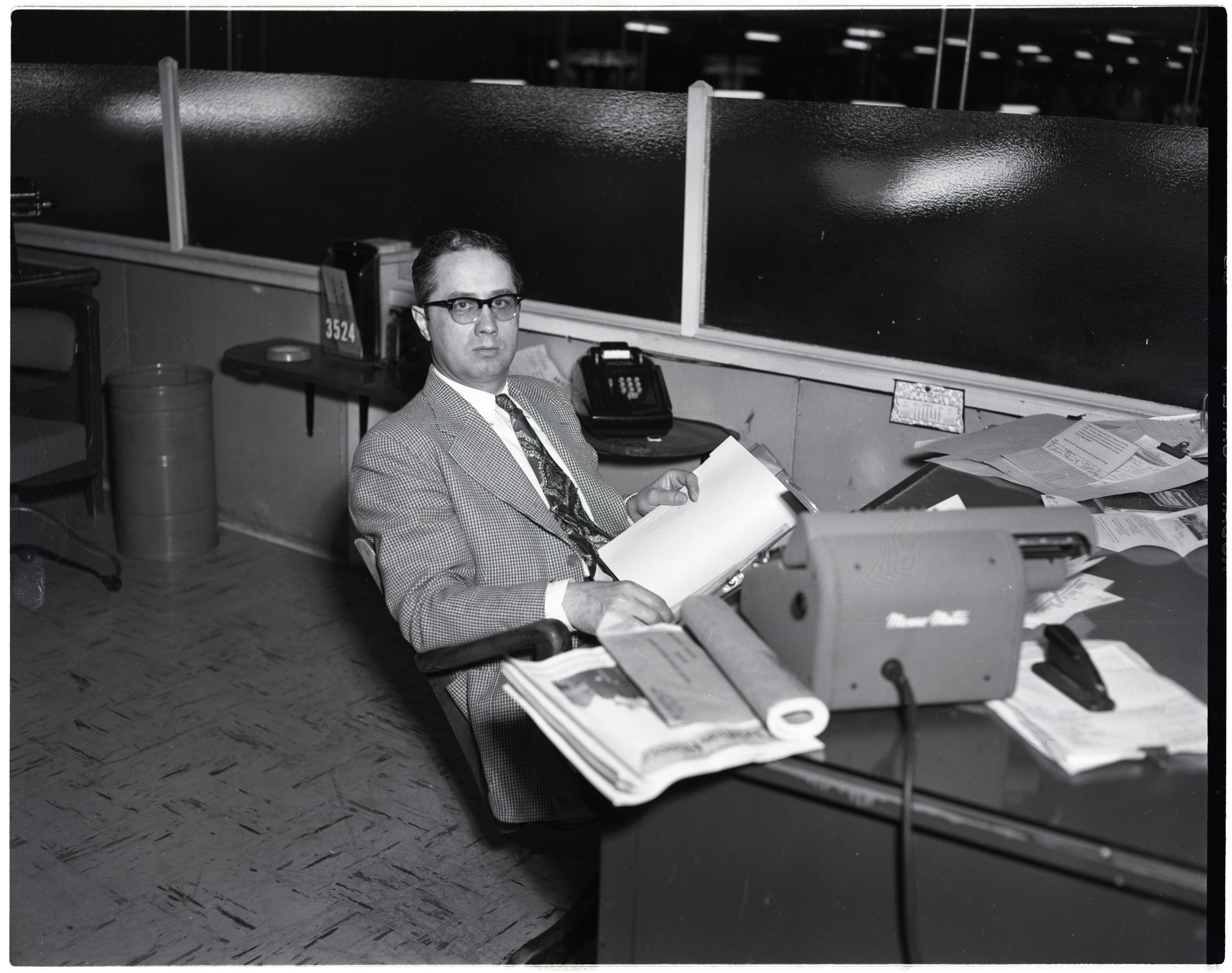
    “Willis W. Chester Leaning in Desk Chair.” Digital Watauga.

    I am thinking a lot lately about places. What being in a place, or being of a place, gives us. What we need from our places that we don’t even realize we need–until we don’t have it anymore. 

    For example: as education becomes more virtual each year, “where you went to school” becomes almost meaningless.

    Last Friday I met a doctoral student of mine face-to-face for the first time, when she came to campus to attend commencement and receive her degree. Zoom meetings are such an unremarkable part of our work now that I had not realized we had never met in the flesh.

    After commencement, I walked with her family up through campus to the bookstore and gave them a little tour of “her” school–where she had never set foot in her life. She didn’t know where the bookstore was. Why would she?

    What do we lose from being placeless when we learn and teach? 

    I used to think typewriting in the 21st century was about being “distraction-free.” But for me, it increasingly is more about being “place-full.” 

    Every day I type with a particular machine, on a particular sheet of paper, atop a particular desk. When I do that, my writing is happening both in a place (this room, this desk, this machine) and upon a place (this page). My utter control over what I write stems from its place-ness. 

    Do I mail this page to one other person, and make its words happen in one other place too? 

    Do I scan it and put it on my blog, instantly making it happen in countless places everywhere? (Though possibly less seen than the page I mailed to one reader.)

    Do I send the manuscript to an editor and get it published? Or do I rip it up and burn it, and make it no longer exist in any place? 

    I have total control over what happens next—but only because I am here in this place with these words on this page. If I had written it in Google Docs instead, the words would be every place there is a computer…and also no place.

    And they would belong to…well, to Google, as these words belong to WordPress. And by courtesy, to me and to you…for now…

    (Stephen King’s wife famously fished the first typed pages of Carrie out of the wastebasket and suggested to him that he keep telling that story. “‘You’ve got something here,’ she said. ‘I really think you do.’” How many drafts abandoned on hard drives will never see other eyes beyond their frustrated authors?) 

    It turns out that the constraints we wanted so badly to slip out of when we first met our word processors are now actually freedoms.

    In the 80s, when my family acquired our first home computer, I longed to be free from typos, from spelling errors, from typing clean versions of rough drafts. I longed to be able to change and change and change what I was saying and how I was saying it with no resistance whatsoever. 

    Now, with all my computer writing being ephemeral and inscrutable (“where” really “is” my document, on my hard drive or in the cloud?), my typewriter gives me back the freedom to do with my words exactly what I will. Nothing, or everything. My words are now truly free in the world, exactly to the degree I wish them to be, intelligible and malleable and fungible. Or not.

    Typewriters have always happened in places. They came from places, first of all: factories in Connecticut or New York, in Ivrea, Italy or Wilhelmshaven, West Germany, or Yverdon, Switzerland.

    They came in crates, they came from the office supply store downtown. For a little while, they were dropped from planes. 

    And once purchased, they got set up on desks in offices and bedrooms and studies–and many times they stayed there for decades.

    Many times they also got crated about everywhere the writer had to be. Which was sometimes a lot of places.

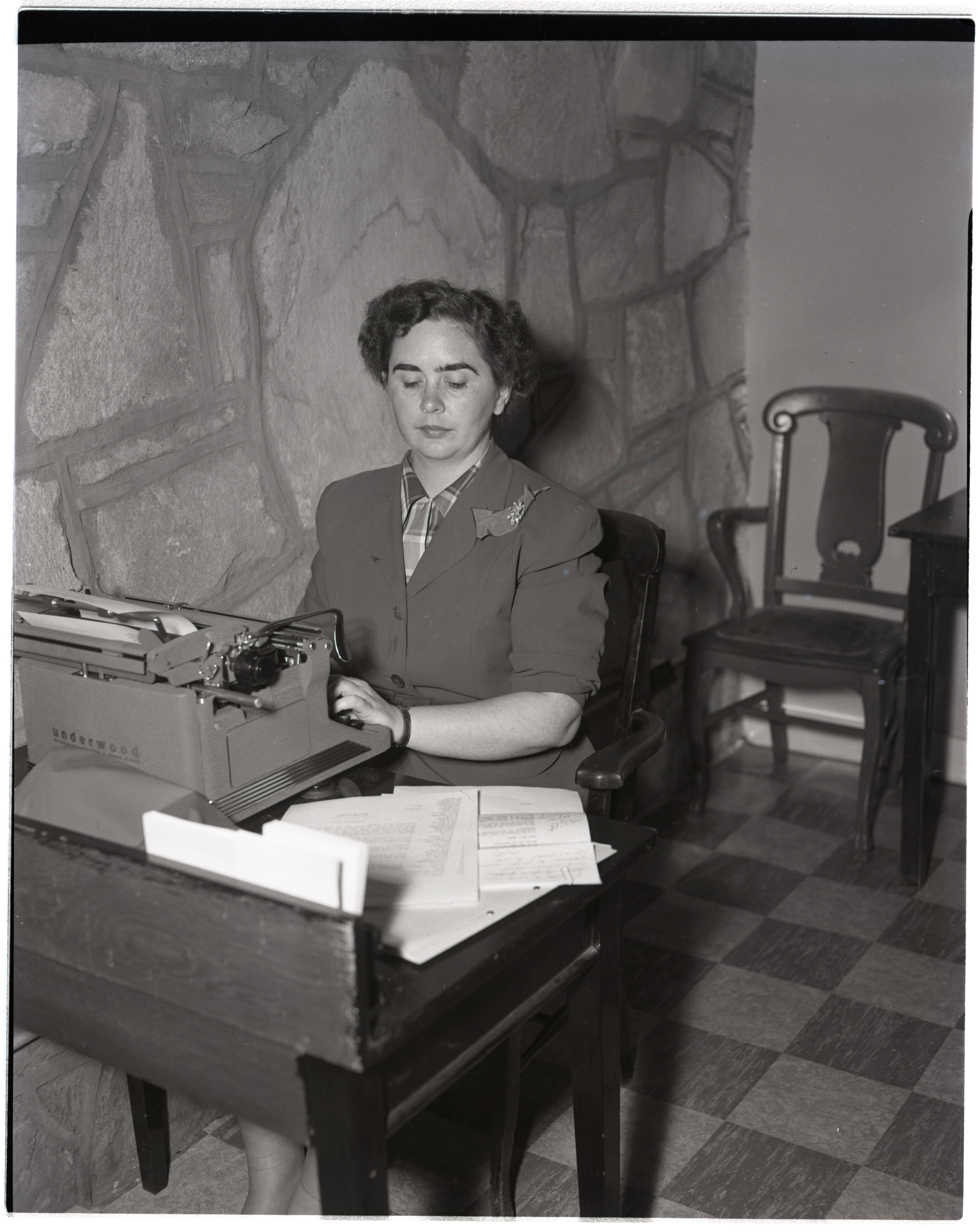
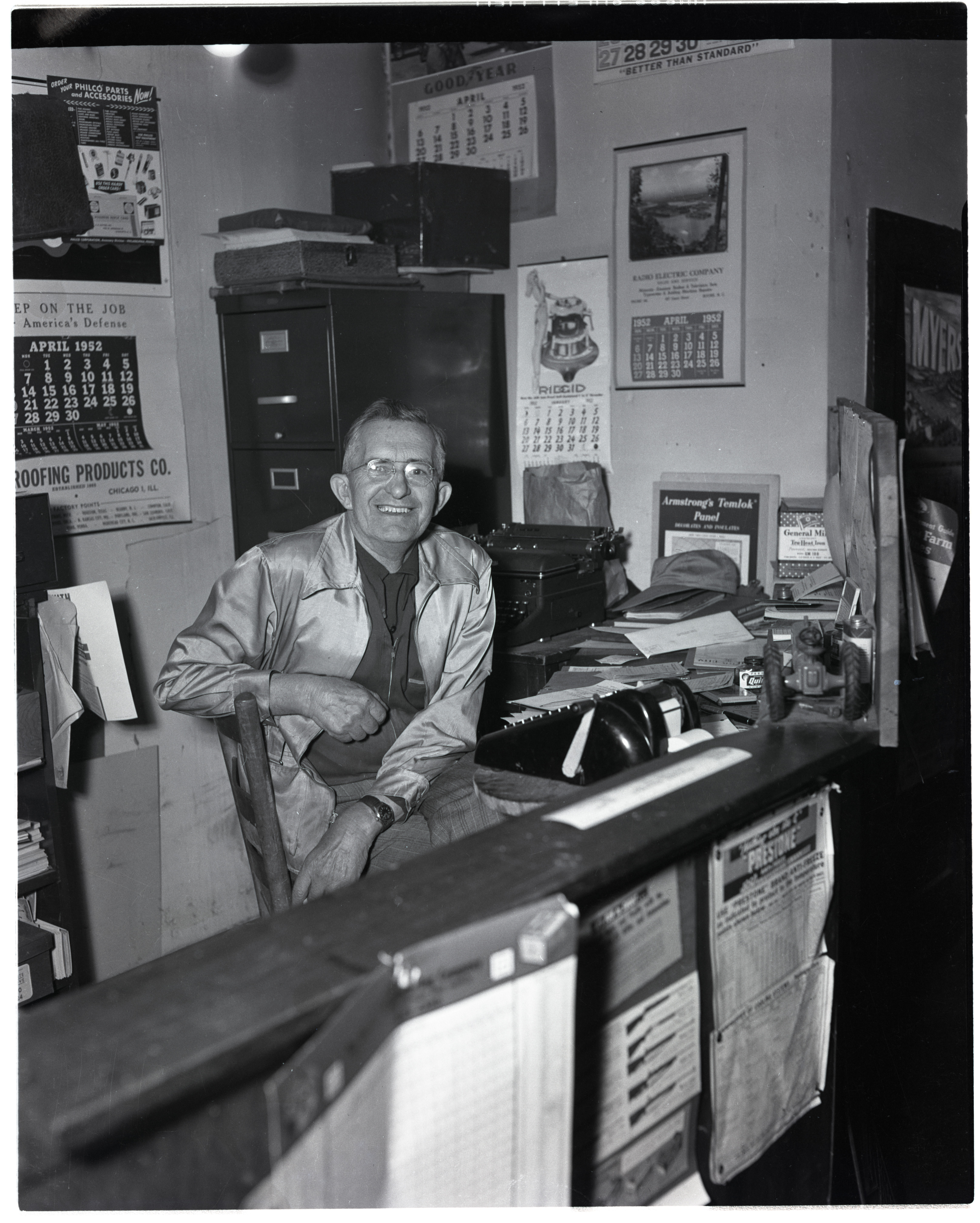
    The Digital Watauga project features 53 images tagged as having typewriters in them. Their spaces are filled with ephemera and helpfully-dated calendars. There are pages in many of the typewriters, and the trash cans are often full. Their users are sometimes named and sometimes not; the photographer’s jokes they are often smiling at are gone, but their typewriters remain. 

    So do many of the buildings where these offices were, in my historic town where some buildings are historic and some are just old, and most of both are still around.

    What does it mean to walk into the Antique Mall that now occupies the old Belk department store building, and look up at the balcony where the manager leaned back in his office chair in 1952 and glanced at the photographer interrupting his afternoon? 

    (NB: His typewriter is barely visible in the back left corner; the desk holds an adding machine, which is not yet an obsession of mine.)

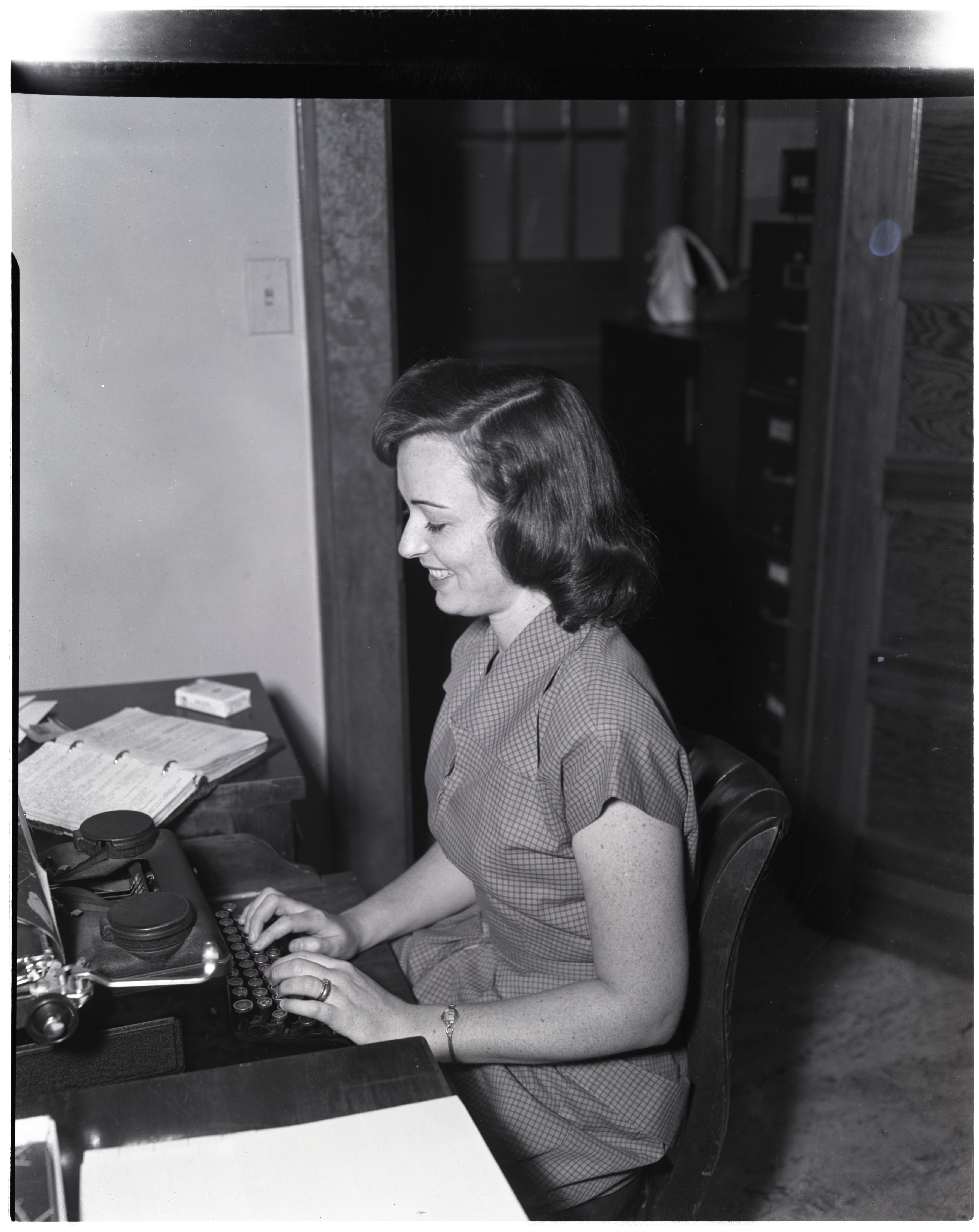
    Is the woman using the typewriter here inside the WPA-era Appalachian High School (now Chappell Wilson Hall), as the distinctive stone work might suggest? That building is right next to the new library now.

    Maybe not. There are a lot of stone walls in Boone. Or maybe…

    What’s this guy so happy about? Could it have something to do with his silk jacket? That jacket would make me happy, all right.

    “Man with Receipt Maker and Typewriter.” Digital Watauga.

    What about her? Maybe she is happy that her typewriter has already lasted twenty years, and shows no signs of stopping.

    “Woman Typing on a Typewriter.” Digital Watauga.

    I own most of the typewriter models in these photos. They weren’t rare then, and they aren’t now, if you are looking for one. 

    But seeing the actual machine on your desk, next to a photo of a different machine on a different desk from 75 years ago that sat less than a mile from where you do, imbues it with a different power.

    You look at the real typewriter, and you look at the photo. You are here, they both say to you, with your machine. And also, this person was here, with their machine…that was their turn to have their say, and now it is your turn.

    You are different, and your life is different, than theirs. And it is not.

    You labor differently today, over different tasks, than they did. You fret over different news that you receive differently.

    But when you are done you will also get up and leave and go home to your family and your dinner, and your Christmas in a week, just like they did.

    Those moments are yours…and they are theirs too. They are all of ours.

    A typewriter is a token of the freedom to be oneself and to have one’s say…and the freedom to know you are one of the crowd too.

    That was then, and then, a thousand million thens.

    But you are here, and so is your typewriter. You are alone together in the world, right now.

    What will you say?

    Share this:

    • Click to share on Facebook (Opens in new window) Facebook
    • Click to email a link to a friend (Opens in new window) Email
    • More
    • Click to share on X (Opens in new window) X
    • Click to share on Reddit (Opens in new window) Reddit
    Like Loading…
  • Reading Sucks

    December 13th, 2025

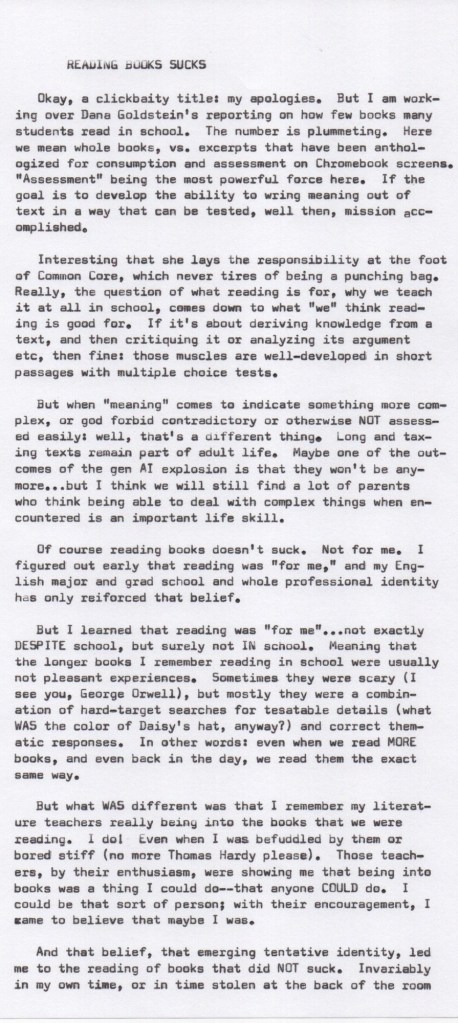
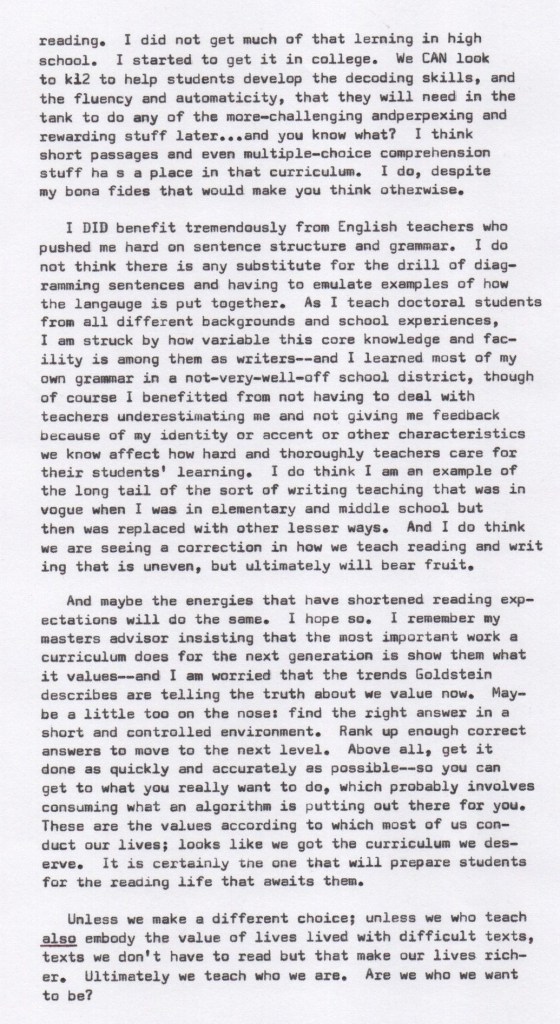
    Being some half-baked thoughts on Dana Goldstein’s December 12th article, “Kids Rarely Read Whole Books Anymore. Even in English Class.”

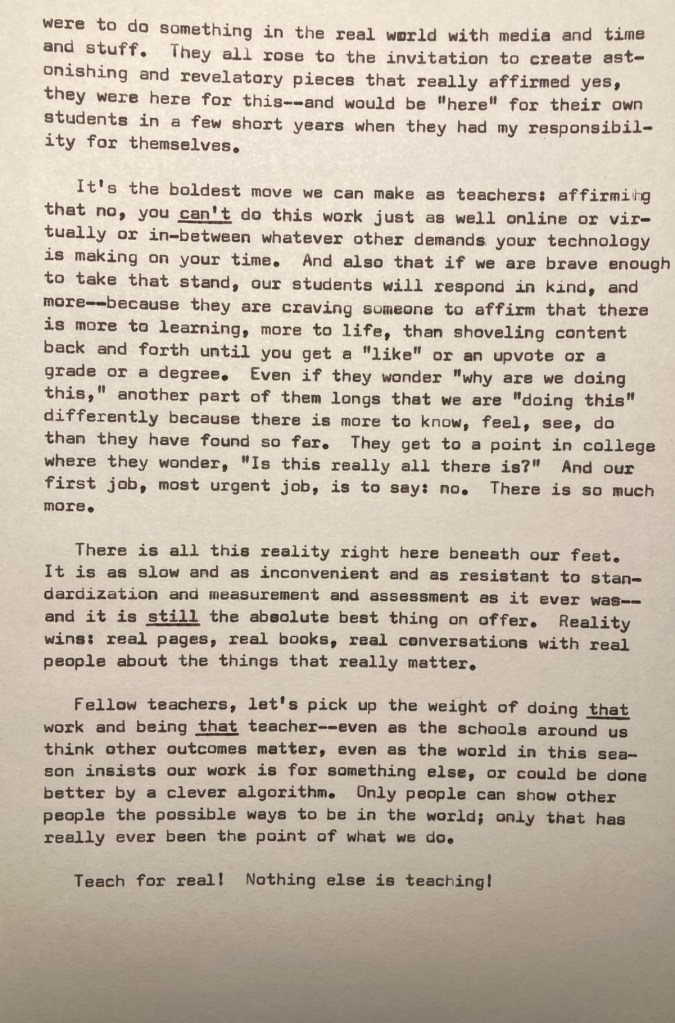
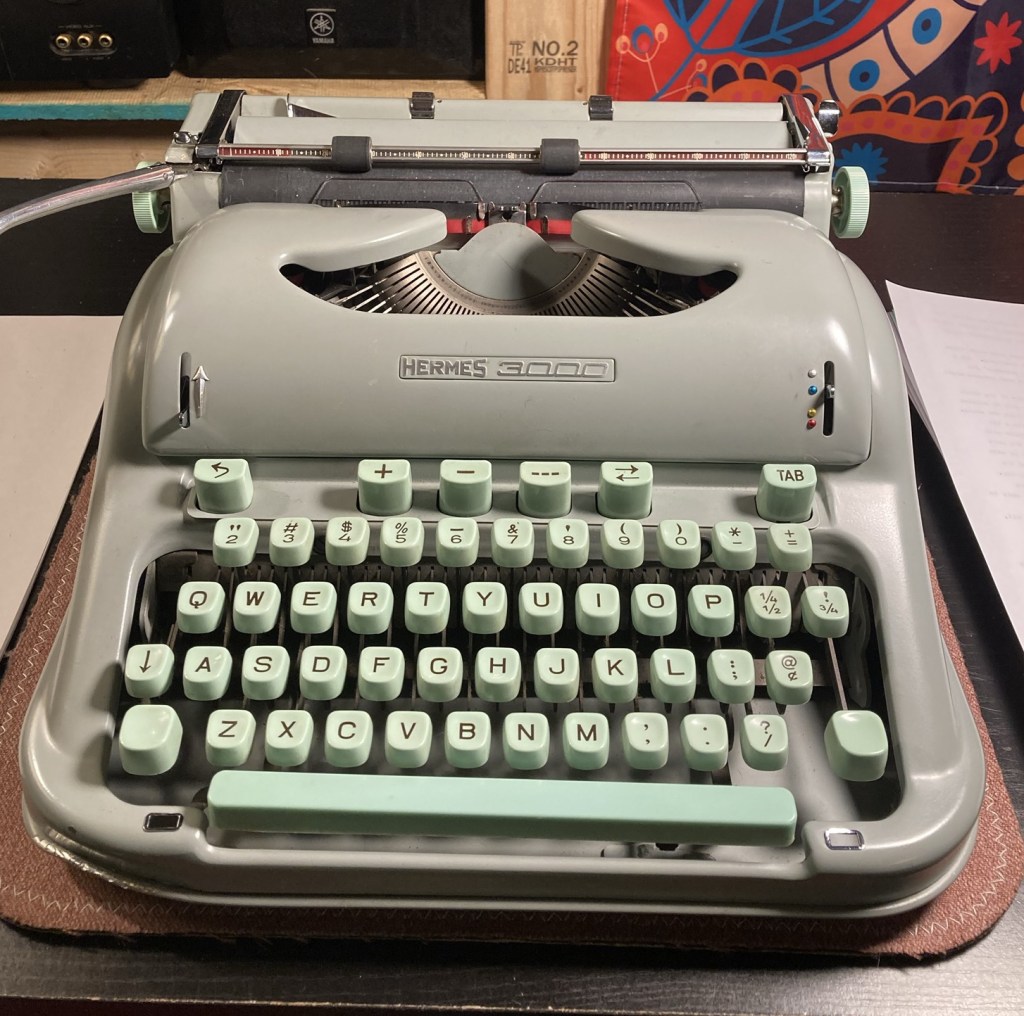
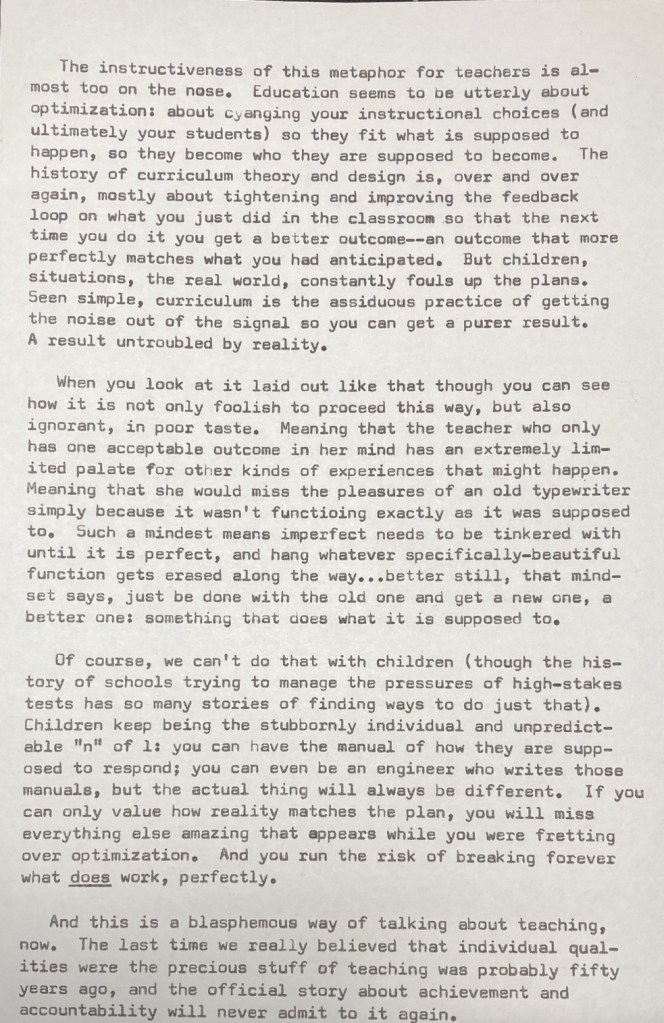
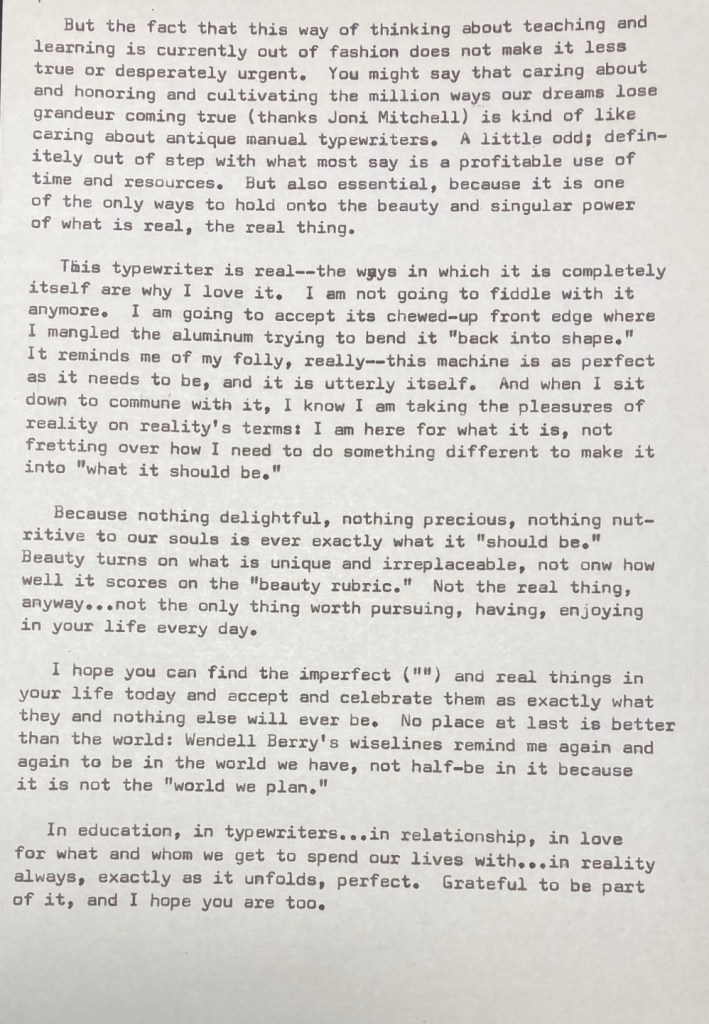
    Excited to try a new scanning process to make my typed human words more legible and accessible! I am still with the charming ’63 Hermes 3000. We’re developing a serious long-term relationship. It really gets me…

    I have no rights to the B&B image, which is the cover of an out-of-print anthology, but hope Mike Judge would consider it fair use. FWIW, you can buy it here.

    Share this:

    • Click to share on Facebook (Opens in new window) Facebook
    • Click to email a link to a friend (Opens in new window) Email
    • More
    • Click to share on X (Opens in new window) X
    • Click to share on Reddit (Opens in new window) Reddit
    Like Loading…
  • Five Dollars a Minute

    December 8th, 2025

    First I have to share a note the great jazz pianist Bill Evans wrote to his composition teacher, Gretchen Magee, at Southeastern Louisiana University.

    I have always admired your teaching as that rare and amazing combination – exceptional knowledge combined with the ability to bring that same knowledge, that lies deep within the student, to life. You were certainly my biggest inspiration in college, and the seeds of the insights that you have sown, have in practice borne fruit many times over.

    Teachers change the world!

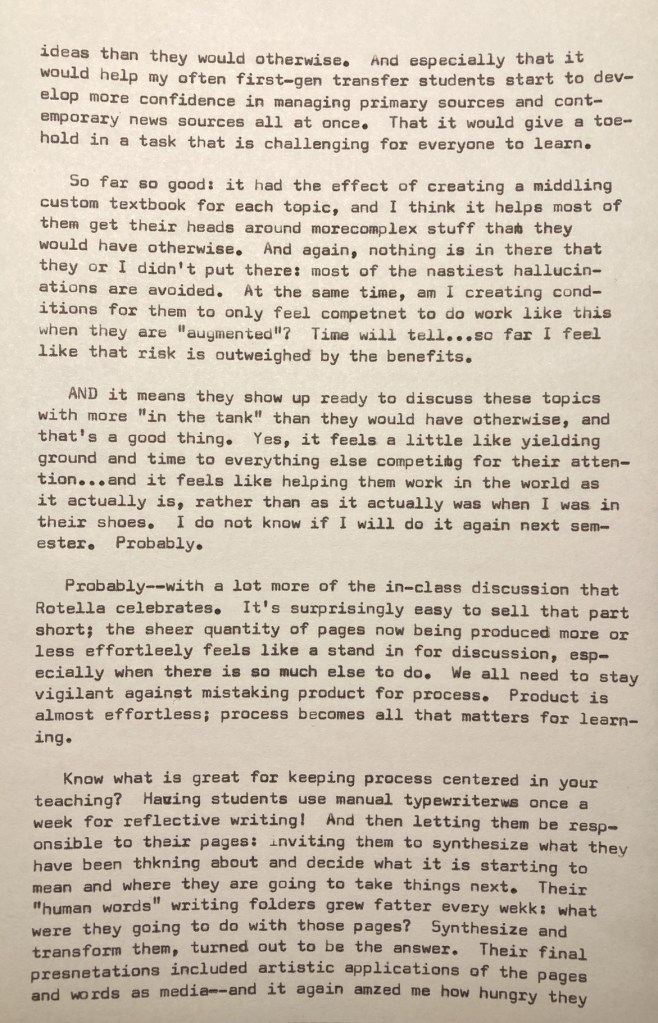
    Now, on to the fresh typed content you crave. The article referenced is I’m a Professor. A.I. Has Changed My Classroom, but Not For the Worst. New York Times Magazine, November 25, 2025.

    Share this:

    • Click to share on Facebook (Opens in new window) Facebook
    • Click to email a link to a friend (Opens in new window) Email
    • More
    • Click to share on X (Opens in new window) X
    • Click to share on Reddit (Opens in new window) Reddit
    Like Loading…
  • Everything is Unfolding Perfectly

    November 26th, 2025

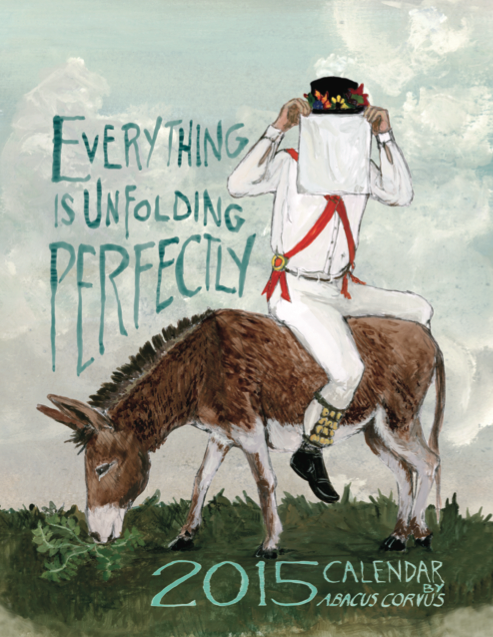
    Post title from this delightful image by our friend Jo Musser at AbacusCorvus. Buy their gorgeous art! Resist legibility!

    Share this:

    • Click to share on Facebook (Opens in new window) Facebook
    • Click to email a link to a friend (Opens in new window) Email
    • More
    • Click to share on X (Opens in new window) X
    • Click to share on Reddit (Opens in new window) Reddit
    Like Loading…
  • The Troubled Typewriters of Breathless and Nouvelle Vague

    November 21st, 2025

    Ah, les plaisirs du les machines à écrire!

    That is probably the only French I will attempt here—though it is hard to resist, mais oui.

    Because for the last two nights I have been submerged in Richard Linklater’s new film Nouvelle Vague, which tells a story about the making of Jean-Luc Godard’s 1960 French New Wave classic Breathless. I want to think about their typewriters, and the texts they purportedly yield.

    I have watched / rewatched them both, Kanopy open in one tab and Netflix in the other. Fighting Richard Brody’s urge to make of the latter film “a nitpicker’s delight…any viewer who knows anything about Godard’s story can find contrivances, departures from the historical record. I won’t bother; if I want the details, I’ll read a book” (perhaps his).

    I won’t say I really know anything about the “historical record” of Breathless. I shotgunned it only once a couple of years ago–in the name of cultural literacy, really, when my son came home from college raving about it. He was gobsmacked by his distinguished professor’s thoughts on Bicycle Thieves, and The 400 Blows, and this film, so I tried to catch up. A film autodidact at best, I do know what I like. And I liked these pictures.

    In the 1959 milieu of Nouvelle Vague, typewriters are ubiquitous and unremarked. After all, Godard and his partners are the critics of Cahiers du Cinéma before they become filmmakers, so there is (supposedly) a lot of writing happening.

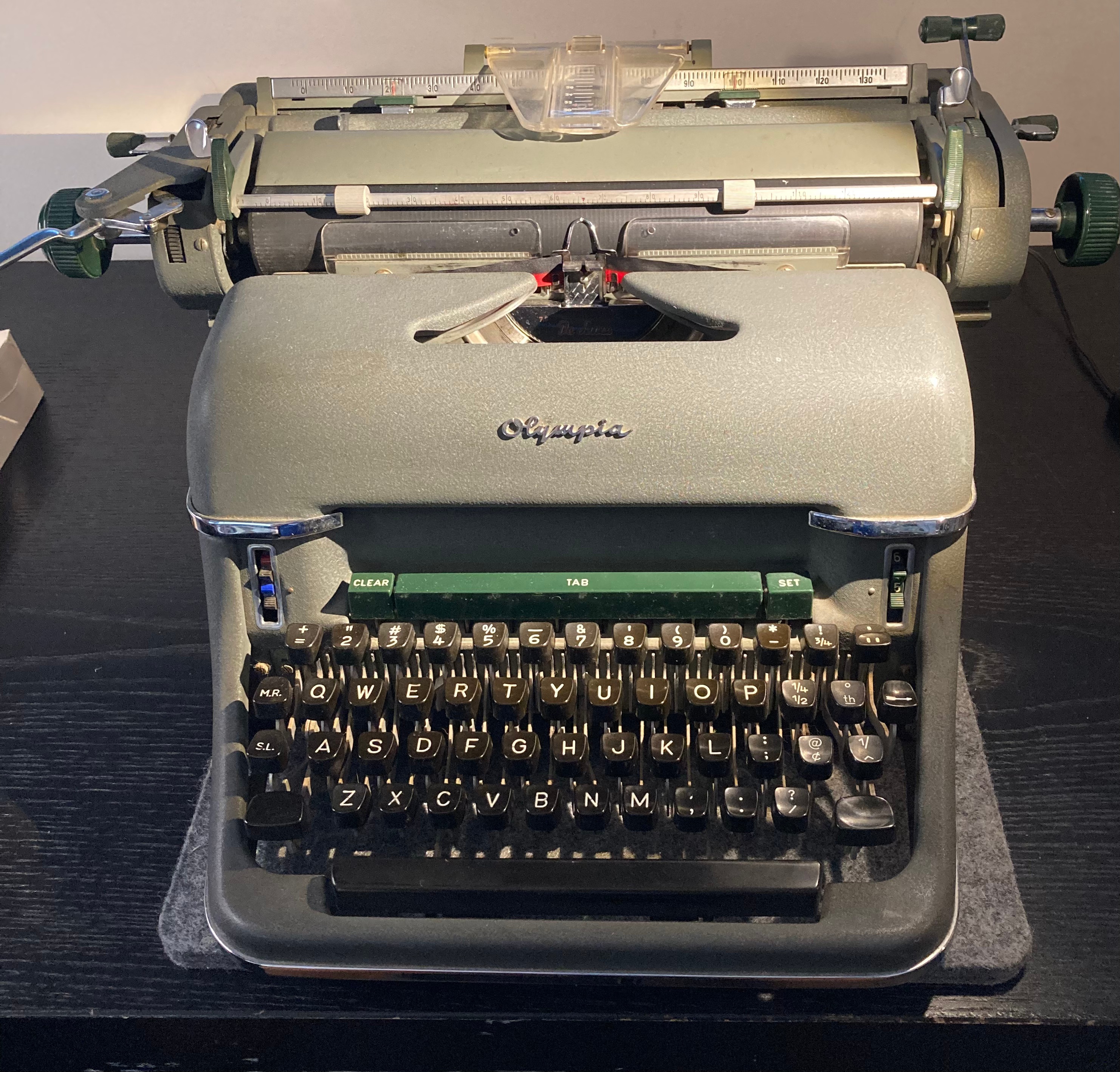
    The offices of that magazine are imagined here as a large dining table with three high-end standard machines atop it on three sides. Two are easily identifiable as Olympia SG-1s, apparently brand new and perhaps purchased together for office use. The studio standard machine for people who write for a living, they are completely plausible presences here. First manufactured in 1953, they dominated the European and American markets. Mine is from 1960 and hulks on the table behind me right now.

    The third is harder for me to make; it looks plastic and sloping, not exactly the Olivetti 82 but pretty close. We barely see it in the establishing shot of Godard, François Truffaut, and Jacques Rivette typing, and in a later shot of a brief speech by Roberto Rossellini to his assembled acolytes it is missing altogether. Perhaps it belonged to Rivette and he took it home? Pretty big machine–not for commuting! But it would make sense: another serious machine for forging a new age of film.

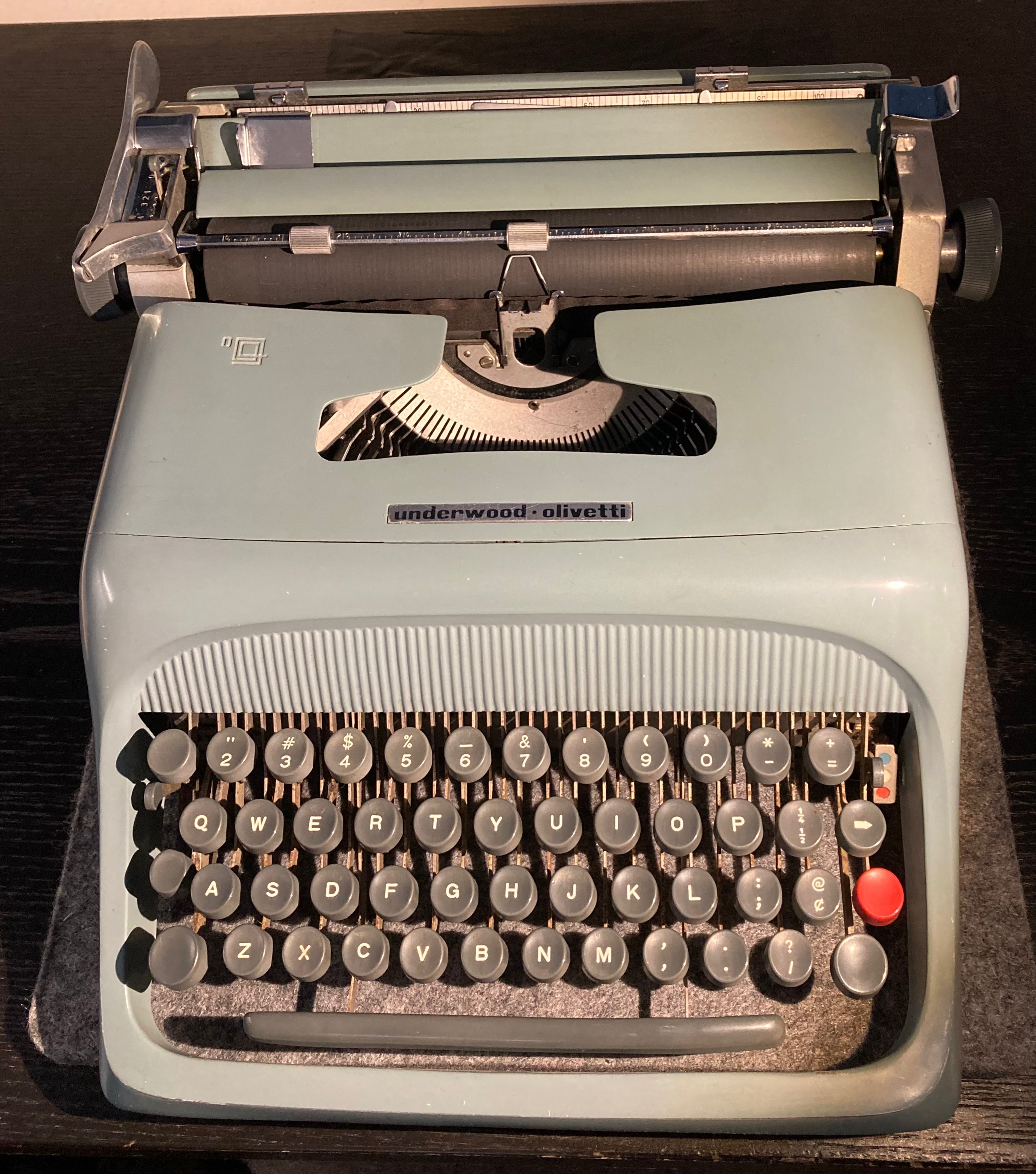
    There’s also a lovely Olivetti Studio 44 in the presumed offices of the Breathless shoot itself, tucked into a corner behind Godard’s desk. I have one too, from 1961–though it began production in 1952.

    He never touches it, or even acknowledges it is there; the light looks bad for serious typing on it, to me. The machine was style-forward in every conceivable way. Entirely reasonable that it would be the choice of one as presentation-conscious as Godard, so eager to make his mark in the vanguard.

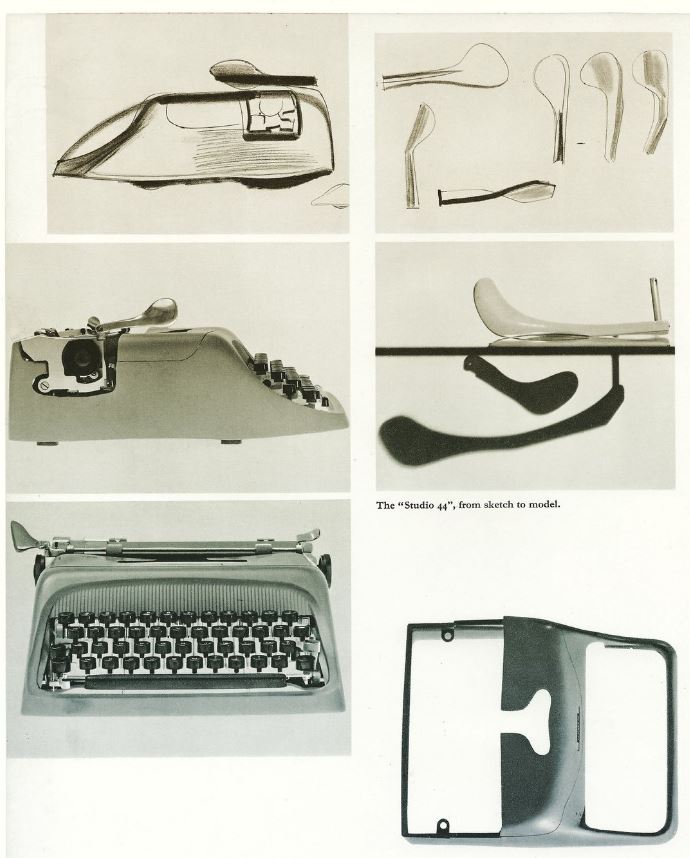
    Marcello Nizzoli’s sketches for the Studio 44. Cribbed gratefully from Oz Typewriter.

    Whether he ever types anything on it is unclear–and improbable, as we shall see.

    But the third typewriter scene is the most interesting to me. In Breathless‘s extended afternoon almost-tryst that Patricia and Michel enjoy in the tiniest hotel room in Paris, we glimpse a portable typewriter on a cluttered desk by the bed. It is Patricia’s, because this is her hotel room. We know she is aspires to be a journalist, despite mostly just selling the Herald-Tribune rather than writing for it, and she also notes that she will have to enroll at the Sorbonne in order to keep her financial support flowing from home in the United States. (From where in the US is unclear to me–though Jean Seberg was born in Iowa, as her flatly-accented French reveals whenever she opens her mouth.) These are all good reasons to have a neglected typewriter on your premises.

    And the typewriter is the least interesting thing on that desk in the original film. There is paper in it, but it mostly serves as a flat surface for a hat to rest upon. Later it supports a radio that plays “music to work to”–and is promptly switched off, since its strident tones interrupt the afternoon-delight reverie each is enjoying on different terms.

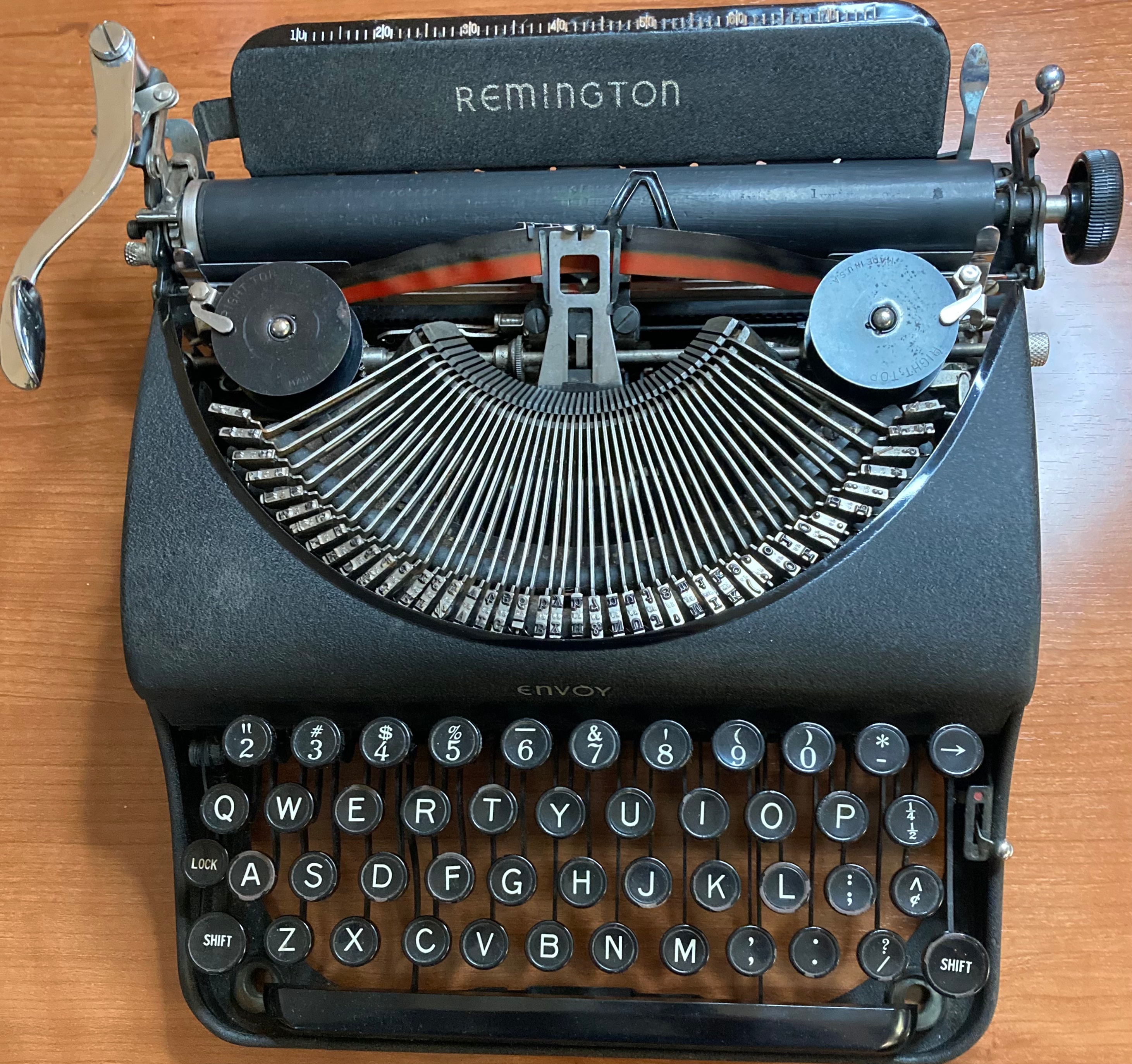
    I would guess it is a Remington, by its round keys and distinctively-hooked carriage return lever. It could be an Envoy Type 2 like the beautiful one I own. Manufactured in 1941-42, and indestructible as a cockroach, it is a sensible machine for a budget-conscious gamine to be carting to Paris seventeen years later. So far so good.

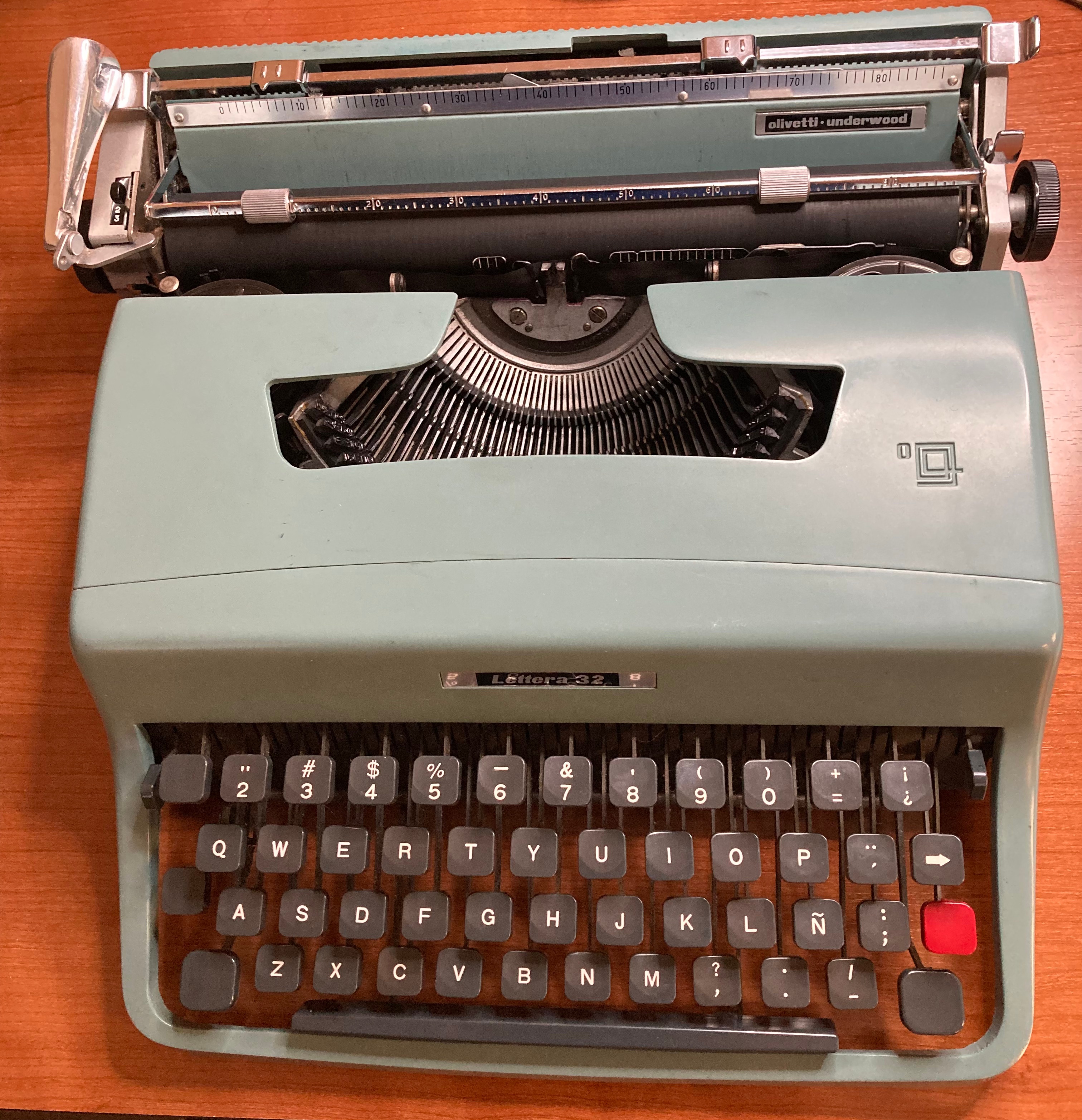
    BUT: in the otherwise-fastidious recreation of that hotel room in Nouvelle Vague, the probably-Remington has unmistakably become…an Olivetti-Underwood Lettera 32. An anachronism, since Olivetti first made this machine in 1963—and the distinctive faceplate identifies it furthermore as a later iteration, probably from the late 60s. Catastrophe!

    This machine is coded completely differently! Italian vs. American, stylish and sexy vs. boring and reliable. She might have even bought it in Paris.

    Who even is Patricia, if this is her typewriter? Other than a time traveler?

    Pour quoi?

    In a lovingly-detailed recreation and invocation of a very specific time and place…why would Linklater get the typewriter wrong?

    Well, maybe he missed it. As a cineaste friend of mine noted, “if I found out you knew more about mid-century typewriter manufacturing than Linklater’s production design team, I wouldn’t be shocked, exactly.”

    But isn’t it more interesting if he didn’t? If it is on purpose? Consider.

    Nouvelle Vague presents Godard as someone with a complicated relationship to writing. At best. A running theme of the story is that Breathless has no script. In pursuit of a purity of experience, a spontaneity, never before seen, he shot without one. The film used a camera that was too loud to allow synchronized sound, but did permit unique still-camera film that, spliced into long rolls, could capture natural light in extraordinary ways. That meant all the audio was dubbed later, and Godard could and did feed lines to the cast while filming…lines that he would read from scribbles in a series of Moleskin notebooks where he claimed to have the whole film plotted.

    Which does not mean the Godard of Nouvelle Vague fears text: he begins each day at a cafe with a pile of paper upon which he makes notes in what Seberg calls “beautiful handwriting,” and sometimes communicates important info by passing those notes to those they concern.

    What this Godard fears is committing to a text: to typing it up and saying, this is what it will be. The script manager helplessly flips a single page back and forth on her clipboard. The producer fumes at how this same spontaneous relationship to text extends to the relationship with time and budget: Godard won’t shoot if he is uninspired. Nothing on any of his private pages dictates how and when to make the film: they are just gaps of indeterminacy, as Wolfgang Iser says, that will lead to new possibilities yet unimagined.

    The fungibility of printed text in the film also boggles the digital-era, backup-savvy viewer. Presumably, the treatments we do see bandied about are bare stacks of paper, without bindings or apparent copies. (Le mimeo is glimpsed once in the background of the office: it sits silent.) A single copy of the story itself is handed back and forth between Truffaut and Godard on a metro bench; the first assistant director carries a fistful of paper through a bar, responding to Godard’s insistence that he “show it to no one” by shoving the pages briefly into the face of an innocent customer with a smirk.

    Where is the text? It is scribbled here, it is handed around there…it is none of these places.

    There is no text for Breathless: the film is the text, and the film only seeks to capture the untrained and unplanned interactions that result from Godard’s willingness to commit fully to their pursuit.

    At one point, Godard is frustrated with his two leads planning what they are about to do when camera rolls (Allez!)

    “What are you filming?” asks a passer-by. (He is shooting on the street, with real people unknowingly serving as extras.)

    In frustration, he snaps back, “A documentary about Jean-Paul Belmondo and Jean Seberg acting out a fiction.”

    Everything he didn’t want: people planning to do things, which means they will not actually be doing things. (“Though a documentary would have sync sound,” Seberg grumbles.)

    That is what Godard wanted, and got. Live action!

    And that is what he inspired in those who followed, including Linklater: to seek out reality as best they can contrive to. Linklater, who played with time itself in Boyhood and the Before trilogy–synchronically daring, insisting on time shaping what appeared and what went on the film.

    Because the text isn’t in the script, and it isn’t in the typewriter.

    And if it isn’t in the typewriter…maybe it isn’t in the choice of typewriters, either.

    Typewriters make dead fictions to be acted out, this out-of-time machine seems to say.

    This is alive.

    Even in this recreation, homage, impression, of what might have happened seventy-six years ago in the process of committing life to film…the choice seems to say: this is alive, too.

    Allez!

    *I wish I could figure out how to share screenshots from Kanopy and Netflix, but that stuff is locked down. Check out the films themselves! Get Kanopy from your library!

    **I had pretensions of using some Roland Barthes in here somewhere but it’s probably in everybody’s best interest that I didn’t.

    ***The Olivetti Studio 44, by the way, also graces Susie Myerson’s office desk in The Marvelous Mrs. Maisel–which is incongruous, being way more of a home machine. Until you consider that the office is being operated on a shoestring mainly to book Midge: she must have loaned it from home.

    Lead image from NYT.

    Share this:

    • Click to share on Facebook (Opens in new window) Facebook
    • Click to email a link to a friend (Opens in new window) Email
    • More
    • Click to share on X (Opens in new window) X
    • Click to share on Reddit (Opens in new window) Reddit
    Like Loading…
  • Dirty Jokes Across the Table

    November 9th, 2025

    This week I am listening to one song on repeat in the car, every day: “Way Back Home,” featuring Ronnie Cuber on baritone saxophone, from Steve Gadd and Friends’ 2010 album Live at Voce.

    Saxophone is, I guess, a hard thing to love now? Two NYT pieces in the last week say sax is suss: a hot take on the current preponderance of the instrument at weddings, and “5 Minutes That Will Make You Love Alto Saxophone” (because if it can’t be done in 5 minutes, it can’t be worth doing). It is certainly the instrument that never sounds like anything else. You can mute a trumpet, you can prepare a piano, and if you amplify anything you can run it through yards of effects—but sax is sax.

    I have been on a guided saxophone tour for the last few weeks, led by my youngest son. I was spinning Getz / Giberto in the car at pickup one afternoon, and he had questions. So I explained the three primary sax variants one finds in the wild. The alto: the intellectual’s horn, that of our first alchemist Charlie Parker and later technicians like Paul Desmond. The tenor: the alto’s soulful uncle, who can’t hold down a job but is out wailing on the bridge every night. Sonny Rollins, Wayne Shorter, Coltrane and of course Mt. Getz. (The fraught history of the soprano is excused for another day.)

    And the baritone…well, no bari player came to mind. So I asked Spotify for one, and it coughed up this record. Thanks, algorithm! What a gem! (Also a favorite of Donald Fagen, according to the YouTube link above: my excellent taste is affirmed.)

    Against its better-pedigreed colleagues, the bari sax always sounds like your sketchy friend leaning across the table to tell a dirty joke. The bari knows it is here for its personality, and leans into it. Perhaps the bari is the trombone of the woodwinds: it eludes its reputation only by occasionally embracing it.

    I do not know anything about Ronnie Cuber other than his long long resume on Wikipedia, and the fact that he played in the SNL band. I think I recognize his tone from bumper music in the years when you had to be up at midnight to hear it. He would probably be considered a very accessible player. “Way Back Home” has no arch bebop changes, is not “out” in the slightest. It is boogie music, feel-good music. A two-chord vamp that only goes to the third when you cannot take the pressure anymore; puts me in mind of Joe Zawinul’s “Mercy Mercy Mercy”, which despite Cannonball Adderley’s intro about persevering through adversity has always been a joyous song to me. Here to move your booty, not push you through the doorways of perception.

    And that tone! The growl and the hum and the whine. I have seen one photo of this hulking man and am put in mind of Mingus with his double bass: parity between player and instrument, clash of the heavyweights. I am pretending I know everything I need to know about him from that Wikipedia page, and I like every single bit of it. I am not looking up any more: I do not want to know if he treated his collaborators like garbage or sold his horn for smack. I want to just climb inside that tone and spend a long, lazy weekend sliding down the surface. He enjoys the lowest honks of the horn and is not afraid to let you love them too. He knows his instrument is ridiculous on the way to being sublime: that the two are inseparable.

    And he knows he can do anything he wants on it, and a big part of the joy of listening to him is the physical feat he is pulling off. Because that is the other thing about bari sax that can’t be ignored: its size. Its weight. I am finding curiously variable numbers online, and do not have one handy to check. Does it weigh twenty pounds? The neck strap introduces a whole new problem in the long term I bet. Posture implications. More than the weight, though, is the distance your air column has to traverse. All the way down to those lower notes, with the big clanging pads, is four feet at least. Bari is a physical commitment.

    I played bari for a couple of years in my high school jazz band. I was a competent clarinetist, and my indulgent band director told me I was welcome to audition if I could learn the bari. If I could hang, maybe there would be a clarinet feature in the future. Jazz band practiced at 7:15 in the morning twice a week, is my memory: you had to want to be there. I had to muscle that metal into submission almost before I was awake.

    I learned it well enough to honk along with the real saxophonists. Sax is nominally simpler than clarinet, thanks to Adolphe’s ingenious design that makes the same fingerings work for the same notes all up and down its range, vs. the clarinet, which puts you off a fifth in between octaves. And I did hang! True to his word, we did “Woodchopper’s Ball” passably, and I made an absolute wreck of Jobim’s “Wave” at a festival once.

    But the real long-term benefit for me was getting to spend hours up close and personal with a horn that big. Cuber does not seem to notice the heft of the thing. His dexterity and speed is improbable, unimaginable. Especially when you have also tried to wrestle with it and been bested. I love his playing because I know how much work it is.

    I got out my alto* this week, inspired by Cuber’s deftness and tone, and was immediately reminded how you either are married to your instrument or struggle with it.

    And I struggle on sax! Twenty years ago, I joined a band in Chapel Hill for a few months on that alto. They were named, gloriously, “The Guns of Navarone.” A serious montunos-for-miles cubop piano player, an upright bassist, a traps drummer, and a conga player. And somehow me. I knew by the second rehearsal that I was way outclassed by this project, but they kept me on, so I stayed. We worked up two sets–“Caravan,” some Horace Silver maybe?–and I played one gig in a dim weeknight room on Rosemary Street. I remember the piano player glaring at my honking, keening tone all night, waiting for my to materialize into the player of his dreams but remaining the same mess I had been in rehearsal. I quit the next day, and went back to being a well-satisfied drummer ever since.

    But I am going to keep up my honking and keening regardless. My saxophone-remembering has every place on this blog, because music-making will always be a physical act. Most of the music I love comes from real people and objects working at each other and finding harmony, or at least detente.

    And computers can now emulate nearly any sound with alarming fidelity. In my last DC band we would haul an actual Rhodes stage piano up and down stairs into second-floor clubs, cursing its weight and size all the way. Now my friend who played that Rhodes gets all its sounds and more (Hammond organ!) out of a tiny Nord that weighs less than my cymbal bag, and I am sure his back thanks him for it.

    The music I most love lets you hear a person and an instrument working it out together. I love John Bonham’s drumming because I can hear his right foot on that (squeaky) Ludwig Speed-King, can hear the lightness and the thunder exactly where he put it before you could quantize a tempo. I love Wynton Marsalis on “Jig’s Jig” because I can hear his breath easing over the top of his figures, his conservatory nimbleness trying to ooze into something looser. I love Steve Williams’ (oops, Billy Hart’s) quarter-note ride behind Shirley Horn because his swing is implied, is in the air around the notes. I love music that is people with things in the world.

    And I love Ronnie Cuber’s peace with his horn and the world he makes in it. Check it out–and then go play some yourself today, how about? Go ahead: get out your horn from high school, if it has survived the moves and yard sales, and see what you got today. I bet you’ll care less about getting it right, about being “good,” than you once did—because those are the concerns of children, aren’t they? Whether you sound “good enough”?

    Well, the concerns of children and pros like Cuber, and thank god for them. But the rest of us just get to play today, if we want. Go play in the world; go be part of it. It is still there–both the music, and the world–and it is yours for the making.

    *My alto sax was a gift from my band director, a saxophonist himself. It was his marching horn when he was a student at the University of Georgia. A splendid Noblet “Serie Maville,” it is in great shape, no leaky pads. If I could just get my embouchure in step with my horn, I would be flying high! So grateful to have his horn here, and so grateful to that man—and his co-director, and their extraordinary public school band program–that made my musical life so satisfying and durable. Go Dawgs, B.C.!

    Photo from Wikipedia, above.

    Share this:

    • Click to share on Facebook (Opens in new window) Facebook
    • Click to email a link to a friend (Opens in new window) Email
    • More
    • Click to share on X (Opens in new window) X
    • Click to share on Reddit (Opens in new window) Reddit
    Like Loading…
  • Brutalism

    November 6th, 2025

    “We can’t stand a work of architecture until we go the mat not to lose it.”

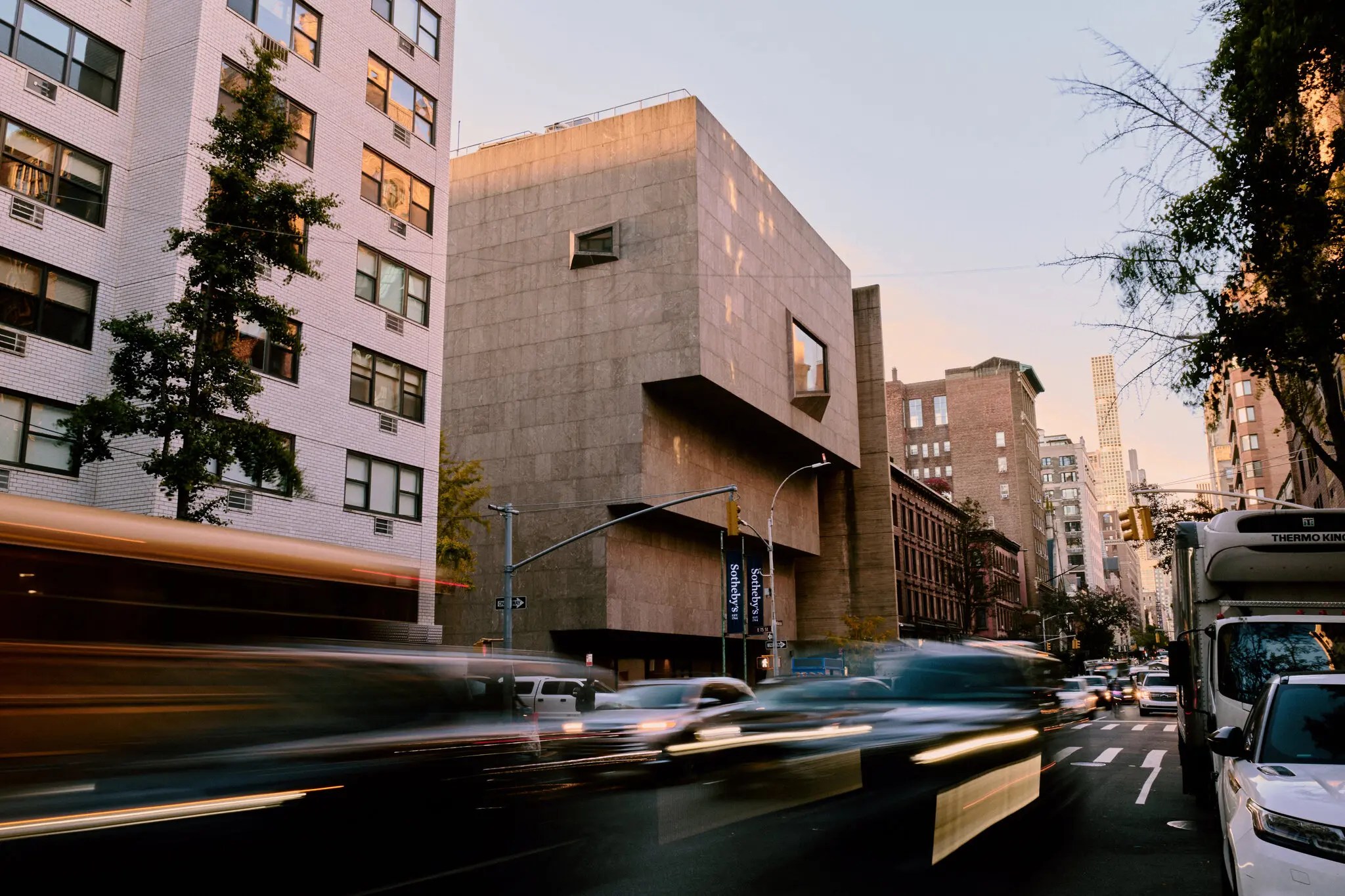
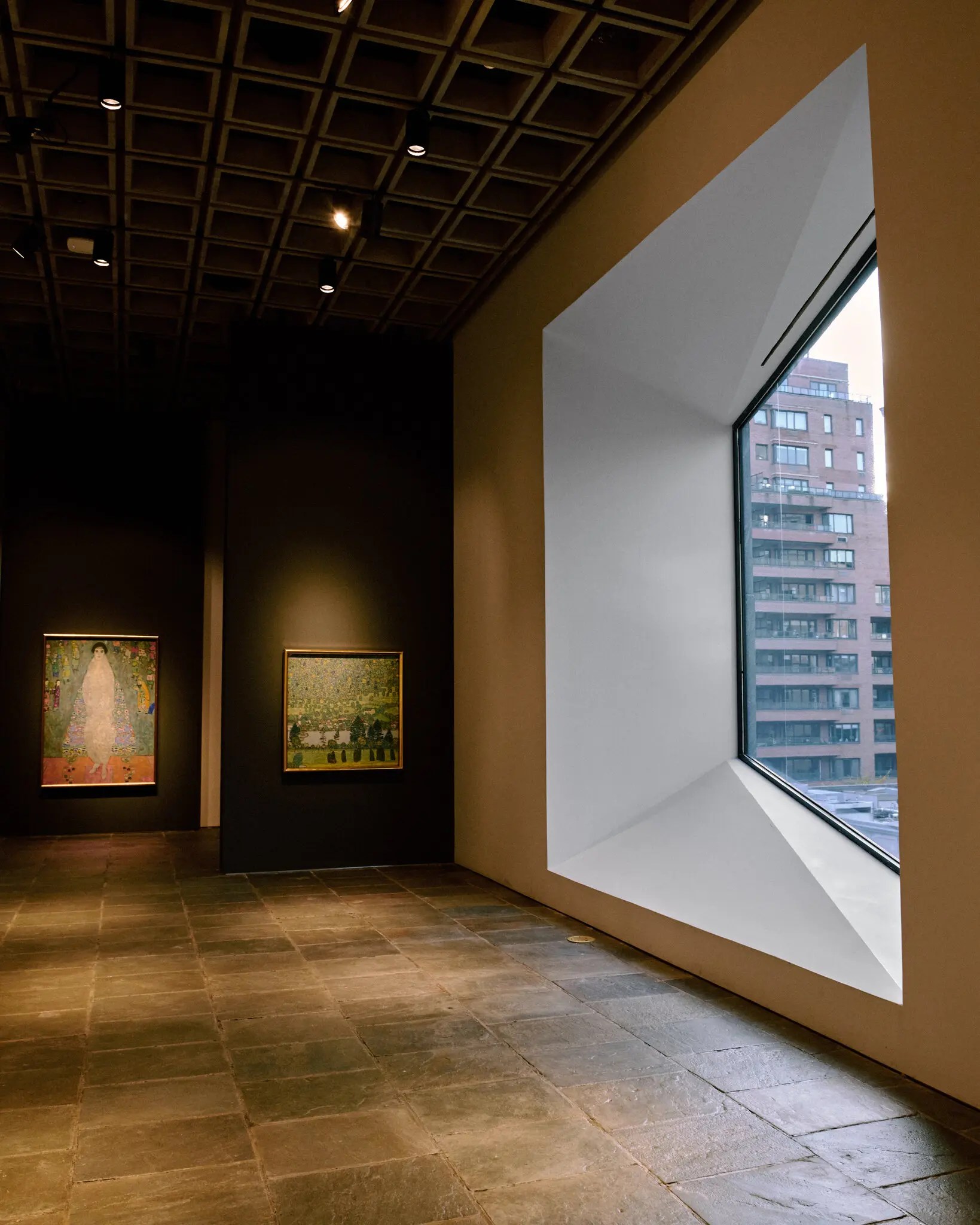
    That’s the last line of the admiring account in the NYT today of the restoration of a 1966 “Brutalist behemoth“: the former Whitney Museum, designed by Marcel Breuer. It looks like a humdinger! Regarded as unpleasant when it was first presented; with time, its virtues became apparent; now, it is precious.

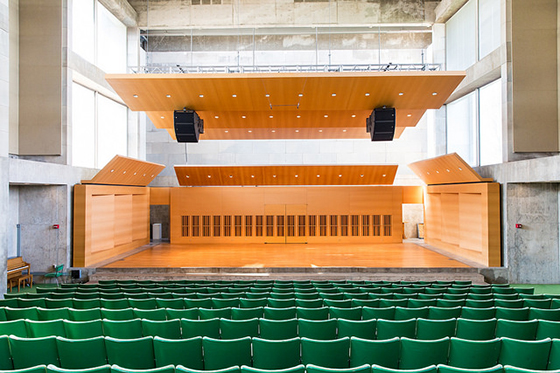
    Images of Whitney Building, from NYT article

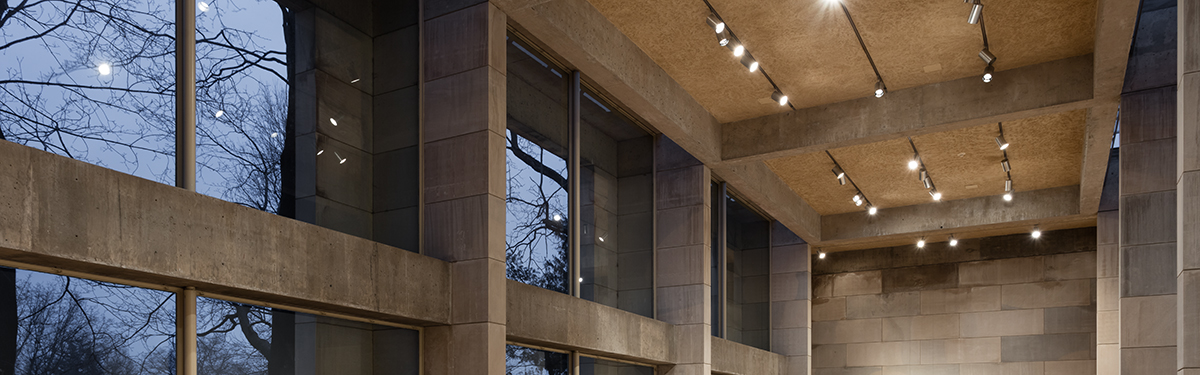
    I don’t know from architecture. But I do know how it feels to be inside a building that makes its presence known, and I have a special feeling for Brutalist spaces. Buildings that are not pretending they are not buildings. Buildings that show you what they are made of, and that they intend to do something to you.

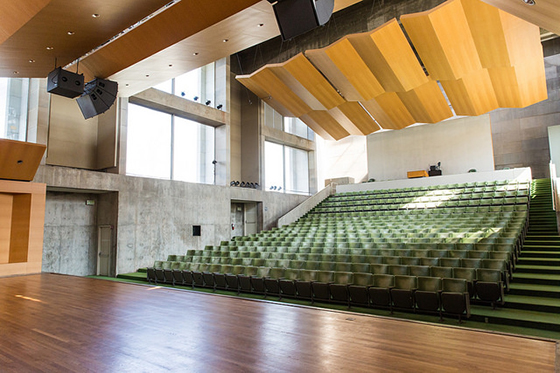
    I think I learned to love this aesthetic in my first year of college. Late in that first fall I auditioned for the annual musical review, which was staged inside the campus’s concert hall. The fine arts complex at Wesleyan was appended to the original brownstone row in the early 70s, a deliberate interruption of the “ived walls and storied halls” feel of the place before then. It was a bold flex of the university’s standing as an incubator for innovators and wayfinders.

    It still makes an impact now. Crossing Wyllys Avenue is jumping a century into a recent past, an incongruity so intentional it makes you stop and wonder what it is trying to teach you.

    I spent more time inside that limestone and poured cement pile than I did just about anywhere else that first semester, besides the then-reviled, now-mourned flying saucer dining hall. (I did not see Joni Mitchell there, but I did perform on that stage!)

    I can see now what I couldn’t then: this was a place for students to get used to working, exhibiting, and thriving in galleries. To get used to being seen and heard. To understand that they had something to make and share, and in order for them to make it, spaces like these were going to be theirs. They should get comfy in them.

    But I was not comfy back then in spaces like these. Then, they were just weird. “Modeled on Lenin’s tomb,” a smartass friend of mine would joke. “Will make great ruins someday.”

    But when I re-entered that building at my son’s frosh orientation, it didn’t feel like a tomb. It felt alive. Because cement and limestone buildings breathe, is the thing. You smell the stone and feel the damp coming off all that exposed expanse. It is like a greenhouse, but for rock, not dirt. (And for people, maybe.) Brutalist buildings are elemental places where things get broken down and maybe regrow into other things.

    The sensory charge took me right back to those first weeks, like smell and damp will. The weeks when college was in the process of blowing my damn mind. That was where I became convinced that college should smart a bit. You should wonder if you are in the right place, then find a way through to make it the right place for you.

    Wesleyan was the first place this highly-desirable discomfort was committed against me. The first place I had to realize that there were a lot more kinds of people in the world than the ones I had met so far in Mormon churches and Air Force base towns and southern suburbs.

    This is where I met real “city kids.” Kids who played speed chess and lacrosse and ultimate Frisbee very seriously; kids who were used to taking charge of what was going to happen when they walked into a room. Kids from places like Stuyvesant and Spence, where leadership was a birthright conveyed as comfortably as a pair of L.L. Bean boots. When I came to the first rehearsal of that show I looked around for the director–the grown-up that was going to validate this thing and make it good. There was none. Like so much that happens at Wes, the students were the directors, designers, and choreographers, as well as the actors. This is what we were here to do, after all. Let’s do it.

    I continue to think that college should be hard: that you should be properly dumbfounded and discomfited at first by at least some of what you find there. Not abused, of course; always respected, always seen and honored. But I still believe that student evaluations of instructors are foolish for many reasons–and not only for their well-documented bias in support of white, male, cis, people like me and against women, queer folks, and people of color.

    The first reason is that students, by their very nature, do not know what they are there to learn. They do not know what experience is the one they need. Why would we ask them if they think they got what they should have?

    I learned that at Wesleyan. My professors would sometimes really step us through a passage, or explain in those pre-Wikipedia days where a text or a painting fit into the historical sweep I barely understood. Sometimes they would slow down and make it easy. Thank God for those folks. But a lot of the time, that amazing faculty just gave us the full blast of their erudition, and it was on us to keep up. (Maybe Stuyvesant and Spence were keeping up better than me. I don’t know.)

    A lot of the time, I believe now, the overwhelm was the point. Exactly: you are uncomfortable. Exactly: who you were when you came in is not up to the demands being made upon you. So grow and change. Let it smart a little along the way.

    I couldn’t handle some of how my mind was being blown at Wesleyan that first year. Several tearful calls back home from the payphone at the end of the hall in Foss 7. (Oh the payphone call home!) Several intense moments of wondering if this had been a terrible mistake.

    In those first weeks I stepped on a rusty pipe in front of the decommissioned frat house that held the Romance Languages department. It gave me a gash in the bare top of my foot (yes, I was wearing Top-Siders without socks) that hurt and bled, and left a scar I still can still see.

    A little on the nose, but I need it simple sometimes. School can mark us. Sometimes, it should.

    I am so grateful for how Wesleyan marked me. So grateful for how it blew my mind, and how it didn’t slow down for me. Grateful that the point was for me to find a way to keep up.

    Like a bold building that once made us uncomfortable, but now we revere, maybe. At the time, maybe we couldn’t see what it was trying to do to us and for us, and we sure weren’t grateful enough for it. And now we are.

    Thanks alma mater, for the sometimes brutal love I actually needed.

    Class starts in thirty minutes. Time to pay it forward.

    (No typewriters in this post! Apologies / you’re welcome. I will note that in 1987 I brought a Brother electric typewriter along with me for my frosh year. It could remember a whole paragraph, and let you proofread it excruciatingly on a tiny LCD screen above the keyboard. Then you hit “Enter” and the whole thing clattered out on the page at once, like ChatGPT if it ran on acorns and elves. I took a long leave after that year; when I returned in Jan 1991, everyone had little beige Macintoshes.)

    Two images from Wesleyan’s Crowell Concert Hall page.; one from the Zilkha Gallery page.

    Share this:

    • Click to share on Facebook (Opens in new window) Facebook
    • Click to email a link to a friend (Opens in new window) Email
    • More
    • Click to share on X (Opens in new window) X
    • Click to share on Reddit (Opens in new window) Reddit
    Like Loading…
  • Chekhov’s Typewriter

    October 31st, 2025

    On this Halloween morning, I awake gnawing on an unexpected seasonal treat: a new-to-me horror film that delivers on all the creepy potential that makes me love the genre above all others.

    And there’s a typewriter in it too! Which, like most typewriters for most of their existence, doesn’t seem to matter that much—but actually might be the most potent symbol in this story of power craved and feared, hidden and revealed.

    The film is 2021’s Hellbender, by the independent film-making Adams Family. Married and creative partners John Adams and Toby Poser created it with their adult daughters Zelda and Lulu Adams, on their Catskills property during the Covid lockdown. And it is shot through with family intimacy and trust and dread (as well as some deliriously batshit dream sequences).

    The performances come right off the screen at you in the familiar ways real-life mother and daughter connect, resist, negotiate, and eventually evolve their relationship the only way it can go. Not since Let the Right One In have I seen domestic and supernatural powers woven together so deftly and effectively.

    Its provenance is almost otherworldly: can any family be this cool? But the resulting film gets its oomph from the reality of its surroundings. A restored nineteenth-century house with Shaker-white walls and spare furnishings hiding dark recesses; a bougey outdoor pool where ancient and modern forces sniff each other out and negotiate inevitable collisions; the revolving seasons of the gorgeous and terrifying woods, fields, streams, and creatures of rural New York state, an uncredited but witnessing presence.

    Chekhov famously said that no element in a story can be introduced without eventually becoming relevant. If a gun is shown hanging above a fireplace in the first act, goes the example, it must be fired in the third. I am no literary scholar, but Wikipedia tells me this law is meant to be broken. No less author than Hemingway loved to introduce story elements that never “go off”–because the reader’s awareness that it could go off heightens their sensitivity to what might happen, and what things might mean.

    I spotted two typewriters in Hellbender, and—spoiler, sorry—neither one ever types a word.*

    We glimpse one on a dresser in a bedroom, apparently a merely decorative or sentimental object (no one could really do any typing at a dresser). But the second lives atop a desk in a dark and hidden room behind the eaves, which can only be accessed through the coolest demonic user-authentication tech I have ever seen. It sits alongside an unassuming leather-bound book, among several old portraits of women ancestors who shared the mother/daughter bond the movie explores. Book, pictures, typewriter: that’s all the nerve center of an ancient sisterhood apparently needs to sustain itself.

    It looks like a Smith Bros. standard from the 1910s, from what I can make of its space bar design, but I am not sure. In any case, we do not get much of a look at it. It is definitely black.

    Like this one! From Richard Polt’s post about a restoration he just pulled off!

    It’s the book that gets the most play, not the typewriter. The book seems to be the repository of the ancient power these women own, celebrate, struggle with. When one of them places her hand on it, she is transported through violent visions to historical moments in their lineage, as well as possible or foretold futures. There is enormous power in the words the book, we assume, holds—because books have words in them, right?

    But as far as I can recall, after viewing the film only once (so far): we never see any words in the book. We never see anything in the book. The book never opens.

    Toby Poser’s unnamed mother possesses immense wisdom and lore about the nature of their shared power. The combinations of herbs and roots and bark that summon various capacities, the nature of the gift / curse they bear—but I never remember her reading about these things. She just does them, and explains and demonstrates them for her daughter. The wisdom is witnessed and told, not written and read. Probably for aeons.

    So…why a typewriter?

    Who has written with it, and what was written?

    Was what was written in the book?

    Is there something yet to be written?

    There is so much power swirling in the world of its film: is any of it in written words? And if not–or not yet—why is there a word-making technology at its center?

    I wonder if there might be a clue in how the daughter, Izzy, explains herself to a new friend. Her first and only friend, it seems. Mother has kept daughter isolated from the world to protect the world from this power, or maybe to exert, futilely, the parental desire to save their child from pain by shaping them in their own image. (Shades of Carrie, of Firestarter…)

    “What do you do for fun?” the friend asks her.

    “I hike…I draw…oh, and I swim, I swim a lot.”

    This answer doesn’t spark much enthusiasm from the new friend (played by Lulu Adams, Zelda’s real-life sister). So she reaches for the one other detail of her homeschooled feral-demon-child life that she hopes will give her some cred.

    “I’m in a band too!”

    “What do you play?”

    “I play the drums…

    “And I sing…

    “And uh…I write the lyrics.”

    This does the trick. The new friend accurately acknowledges that being in a band is cool. (Writing lyrics is cool, at least. “I dated a drummer once. He was dumb.”) And their relationship, for better or worse, begins.

    The band is another mother-daughter collaboration: dark metal. We see and hear them several times in the film, mother on bass and Izzy on drums, performing in their house for only themselves. Each time they are dressed and made up differently in Ziggy-Stardust-meets-Kiss makeup and accessories. Indeed it is a band! One of the ways they connect with each other, before and while they begin to connect around the emerging understanding of the powers they share.

    Mother sings, mostly—but the words are Izzy’s. Only Izzy writes in this world.

    Izzy writes the lyrics.

    Is the typewriter to be Izzy’s?

    What else is Izzy about to write?

    The movie’s logic finally becomes clear: Mother explains that their lineage reproduces by each generation consuming the one before, “like spring eats winter, and summer eats spring.” They are the titular “hellbenders”: “a cross between a witch, a demon, and an apex predator.” And in the mother’s telling, they are evolving and changing–though it is left open whether that evolution is actual, or is merely the mother’s vain hope for a kinder, gentler future for them. (Reminds of another terrific maybe-evolution, in 2016’s The Girl With All the Gifts.)

    And in the midst of that ambiguity—in that promise that, one way or another, something else is about to unfold—the typewriter sits like it always has, before now. Maybe the new something will be written and shared. Maybe it will be a new book of new power. Maybe it will activate a network of holders of this ancient power that find each other through correspondence and connection. Maybe it will write the record of what has been and what might come.

    We don’t know yet—but a typewriter will eventually type, even if it hasn’t yet. Its owner will find it and do with it the only thing it can do.

    How terrifying, how thrilling.

    How horrific!

    Happy Halloween!

    *I was hoping for a Fringe-type dimension-piercing magic typewriter. Maybe next time!

    Share this:

    • Click to share on Facebook (Opens in new window) Facebook
    • Click to email a link to a friend (Opens in new window) Email
    • More
    • Click to share on X (Opens in new window) X
    • Click to share on Reddit (Opens in new window) Reddit
    Like Loading…
  • (In) Human Spaces

    October 25th, 2025

    I am just back from the annual professional meeting of folks around the country who run programs like mine.

    Like nearly all academic meetings, it took place in a big city, in a hotel that is also a conference center. The action went down in one big ballroom and an assortment of smaller meeting rooms spread around wide central spaces, where coffee and food intermittently appeared and then was cleared away.

    It was furnished to be “nice” twenty years ago but, like all such spaces, showed the constant wear and tear of hosting one such event after another. A spot of ripped upholstery here, a missing light switch fixture there, the scuffs on the walls that inscribe a story of people constantly coming and going, presenters moving chairs and tables in an effort to make their session more collaborative, or less.

    I brought a typewriter with me, as above: my bulletproof 1965 Hermes Rocket, which has traveled with me to Hawaii and Ireland and many places in-between. My session was on manual typewriters in 2025 as an interpretive lens to understand the nature of educator burnout and find new ways through it. (Also the topic of the book I have coming out very soon with Loose Dog Press: watch this space!)

    So I got to bring the Rocket with me, and invite participants to take it for a spin. Maybe one of the latent powers of a manual typewriter in 2025 is that it is always exactly what it is, where it is. After all, it is the only object in this photo of my session that is really its own, singular thing: the tables and chairs are anonymous, and even the “slides” aren’t real.

    In every session we found ourselves sitting with strangers at a round wedding-reception-type table covered by two massive industrial tablecloths and were asked to interact, to break ice, to discuss, to synthesize, to report out, above all to network. The incongruity of the importance of the work we are striving to do at these meetings, juxtaposed with its trade show surroundings, always jars me and creates an anomie in my soul so consistent I have learned to brace for it.

    I remember attending my industry’s biggest meeting twenty years ago in San Francisco and standing on one of those terrible banquet chairs to see one of my mentors receive the organization’s highest honor, a lifetime achievement award. A deeply moving moment, thousands of lives changed for the better, world-shifting impact on education—taking place in a corner of the Moscone Center that would probably feature a refrigerator display in two days.

    My local district in opening a new elementary school on Monday, years after accepting the fact that the historic WPA-constructed building was too close to a flood-prone river to possibly be reclaimed, Hurricane Helene displaced the kids from it anyway; they have been meeting for a year in donated halls, and so having a home at last is a major achievement. But of course, as one of my sons (a former student of the school) commented upon viewing an online video tour, it looks like a Hampton Inn inside.

    I have not seen the video but do not need to. I know what educational “nice” looks like. I know exactly what he means. Indestructible carpet with fierce patterns overlaying neutral texture that will hide stains and wear for two decades. Ranks of plastic tables and chairs that can be rolled around and reconfigured, but never really fit together. Indirect lighting that will still make everything cold and sallow.

    (I also read that the university building where I was so splendidly taught by that grad school mentor just re-opened after a comprehensive refresh. In the photos, I see the Hampton Inn aesthetic, filtered through a lot more money.)

    I am grateful to the designers and the builders and everyone for a new building, don’t get me wrong. I just want to note that any public institutional space has to meet its contemporary demands to look “nice,” to accommodate hundreds, and to last for fifty years.

    Spaces that tick all those boxes will never be humane spaces. They will never build in the evidence of human existence that so many of us find comforting in older, lived-in educational spaces. Worn spots on terrazzo floors where three generations of chairs have been scraped. Formica tabletops with the edges worn from students leaning over books, then laptops, late into the night. Chalkboards from the 60s peeking out around the edges of whiteboards from the 90s that were mounted right on top of them, to not leave divots in the drywall.

    My favorite educational meeting has always happened in the same physical place, and has since the late 70s. It’s a Catholic retreat center near Dayton. I am not Catholic, but I read in its low-slung brick and monastic rooms and stained-glass chapel a strong presence of the liberation theology of fifty years ago. Ecumenical, peacenik, a little woozy, earth-tone woodcuts of venerated elders and saints painted on burlap. The rooms redolent of thousands of urns of coffee and the adequate but unpretentious on-site dining service. Brick and coffee and just a little warm damp: a terrarium, nearly, for people who seek to care for other people.

    Overwhelmingly human and cozy, Feels like home to me, anyway, who is old enough to remember Air Force Base chapels built in the same vibe. Feels like room to sit and rest, room to hole up and read, room to make a new friend. The meeting itself the historic home of the last educational moment, IMHO, when we took seriously the interpersonal, the autobiographical, the human becoming of our work. The last moments before Reagan and measure-to-manage became commonsensical, before the ground opened and swallowed it all up in a conflagration of accountability that now feels like the only way to do school. (But isn’t.)

    Of course, the real kicker is that every educational space that feels humane now was just “nice” when it opened, according to whatever “nice” meant at the time. The modernist / Brutalist cement and chrome piles I remember fondly from undergrad were built in the 60s as interruptions of the previous century’s brownstones. They only feel human to me because I was a human in them. (Oh look, one of those just got torn down and replaced too.)

    Maybe the real point of this reverie on human living in inhumane spaces is that only by living in them do cold spaces warm up. Places where we do sacred work become sanctified. Churches and schools. Why does an empty classroom feel different than an empty hospital ward, than an empty prison cell? Exactly.

    Maybe one of my deepest disquiets about online Zoom classes is that Zoom will never feel lived-in. A Zoom meeting is always the same, because a Zoom meeting is not a place. Evening class in Zoom can never feel different than every other meeting you have had in Zoom that day. It is the same not-space, and unless we who teach there make a real effort to make it otherwise, what is conveyed therein will just be more content to be consumed and optimized and turned into deliverables and accountabilities.

    (And easily 1/3 of the sessions at my meeting were about incorporating AI into the teaching, writing, and mentoring work we do: another irreality that is changing the scope of what we can imagine doing with our students. For another day.)

    We need real places to feel ourselves as real people undertaking real experiences. A sentence even John Dewey, that Lorax of experience, could not have imagined uttering in his day.

    Don’t know how to end this. Maybe with the suggestion that we all notice and value what the real spaces we live in do for us. Whether welcoming and accommodating or brutal and indifferent, we make ourselves and each other as we share those spaces and work toward our shared intentions.

    What do we want them to feel like? What can we do to make them more so?

    Whatever they start out as, they end up…ours.

    This whole blog SHOULD be about my amazing encounter this week with Bryan Kravitz of Philly Typewriter. What a shop, what a project! Typewriter Valhalla! More to come!

    Share this:

    • Click to share on Facebook (Opens in new window) Facebook
    • Click to email a link to a friend (Opens in new window) Email
    • More
    • Click to share on X (Opens in new window) X
    • Click to share on Reddit (Opens in new window) Reddit
    Like Loading…
  • Clankers in the Wiki

    October 14th, 2025

    I really have no time for blogging today, but I have to share Wikipedia’s “Signs of AI Writing” advice page that I stumbled across while not sleeping last night. It is sort of an internal white paper for those who edit that remarkable resource: not definitive, but trying really hard to be helpful.

    I had no idea this existed. But it turns out to be the most explicit list of tells, bugaboos, and quirks of LLM output in fall 2025 I that have ever seen.

    Last week I taught my doc seminar on scholarly writing, and was informed by my doc students that “em dashes mean AI wrote it.” A quick web search shows I am a few months behind this supposed wisdom, and it is included.

    (Though sadly, the only essential thinkpiece on the issue is not.)

    The first takeaways are pretty breathtaking. I will quote widely from the page (linked above) because no time to paraphrase.

    [snip]

    LLM writing often puffs up the importance of the subject matter by adding statements about how arbitrary aspects of the topic represent or contribute to a broader topic…Words to watch: stands as / serves as / is a testament/reminder, plays a vital/significant/crucial role, underscores/highlights its importance/significance, reflects broader, symbolizing its ongoing, contributing to, enduring/lasting impact, watershed moment, key turning point, deeply rooted, profound heritage, steadfast dedication, indelible mark, solidifies …

    AI chatbots tend to insert superficial analysis of information, often in relation to its significance, recognition, or impact. This is often done by attaching a present participle (“-ing”) phrase at the end of sentences, sometimes with vague attributions to third parties…Words to watch: ensuring …, highlighting …, emphasizing …, reflecting …, underscoring …, showcasing …, aligns with…

    LLMs have serious problems keeping a neutral tone, especially when writing about something that could be considered “cultural heritage”—in which case they will constantly remind the reader that it is cultural heritage…Words to watch: rich/vibrant cultural heritage/tapestry, boasts a, continues to captivate, groundbreaking, intricate, stunning natural beauty, enduring/lasting legacy, nestled, in the heart of  …

    LLMs often introduce their own interpretation, analysis, and opinions in their writing, even when they are asked to write neutrally, violating the policy No original research. Editorializing can appear through specific words or phrases or within broader sentence structures. This indicator often overlaps with other language and tone indicators in this list. Note that humans and especially new editors often make this mistake as well…Words to watch: it’s important to note/remember/consider, is worth mentioning …

    [/snip]

    It goes on and on; you should check it out.

    We are of course beyond “gotcha” AI moments, at least in my institution. We are encouraged to “teach the controversy,” surely, and encourage students to begin to use these tools critically because job skills.

    But if you are someone who cares about words, or was taught to, or make at least part of your life with words, I ask you: what do you notice about these “tells”?

    That they are, and have always been, the hallmark of inexperienced writers trying to find their way into what they have to say.

    When we who care about words say that AI output is “bad” I can begin to see now what we mean. It is vague; it pretends to perspective it does not have; it leans into gravity while being featherweight.

    In other words: it is a lot like the papers many of our students would be writing on their own–if they were actually writing their papers.

    So where’s the problem?

    The problem is: until you write like this on your own, and get told you are writing like this and shown how to do better…you will continue to write like this.

    Worse, you will be satisfied with this writing as “enough.” It looks “smart” and “authoritative,” so it must be.

    And this is only the writing-skill part of the deeper issue, described in the lengthy quote from an associated page:

    [snip]

    LLMs are pattern completion programs: They generate text by outputting the words most likely to come after the previous ones. They learn these patterns from their training data, which includes a wide variety of content from the Internet and elsewhere, including works of fiction, low-effort forum posts, unstructured and low-quality content for search engine optimization (SEO), and so on. Because of this, LLMs will sometimes “draw conclusions” which, even if they seem superficially familiar, are not present in any single reliable source. They can also comply with prompts with absurd premises, like “The following is an article about the benefits of eating crushed glass”. Finally, LLMs can make things up, which is a statistically inevitable byproduct of their design, called “hallucination“…

    As LLMs often output accurate statements, and since their outputs are typically plausible-sounding and given with an air of confidence, any time that they deliver a useful-seeming result, people may have difficulty detecting the above problems. An average user who believes that they are in possession of a useful tool, who maybe did a spot check for accuracy and “didn’t see any problems”, is biased to accept the output as provided; but it is highly likely that there are problems.

    [/snip]

    If you care about writing–or if you don’t care about writing, but do care about critical thinking, bias, or plausible-sounding and confidently-expressed things being accepted as true–well then, there is much to fear here.

    Thoughts?

    My typewriter sits in the corner and shakes its shaggy head at me…

    Image borrowed from this Axios story on the apparent currency of the term “clanker” for undesired and ineffective AI. Image possibly AI generated, who can know anymore ¯\_(ツ)_/¯.

    Share this:

    • Click to share on Facebook (Opens in new window) Facebook
    • Click to email a link to a friend (Opens in new window) Email
    • More
    • Click to share on X (Opens in new window) X
    • Click to share on Reddit (Opens in new window) Reddit
    Like Loading…
1 2 3 … 12
Next Page→

Website Powered by WordPress.com.


Loading Comments...
 

    • Subscribe Subscribed
      • Chris Osmond PhD
      • Join 57 other subscribers
      • Already have a WordPress.com account? Log in now.
      • Chris Osmond PhD
      • Subscribe Subscribed
      • Sign up
      • Log in
      • Report this content
      • View site in Reader
      • Manage subscriptions
      • Collapse this bar
    %d