Here is my post from 9/11/2011, on yet another morning when we wake up horrified by the news and braced for what might come next.
Yet again, I am weighing the events of the moment against the peremptory start of class at 9:30. A teacher’s capacity to be ready for the start of class is one of our many superpowers–but that singular focus blinds as well as illuminates.
In my 2011 post, I wonder if I should have pushed for sharing more info with our young students that morning. As it turned out, my instinct not to say anything and keep a news blackout all day was what we did, as a school. And I wonder if it was right, and decide that if I had it to do over I would instead share the news and be part of discussing it with them.
This morning, though, I am not at all inclined to address the events of the day in class. It is a different landscape, of course, than we met in 2001. One in which what might materialize in the next few days is also unpredictable, but is uniquely inflamed by the extremity of the rhetoric–and the technologically-weaponized speed with which information travels and is converted to sensation, message, and action.
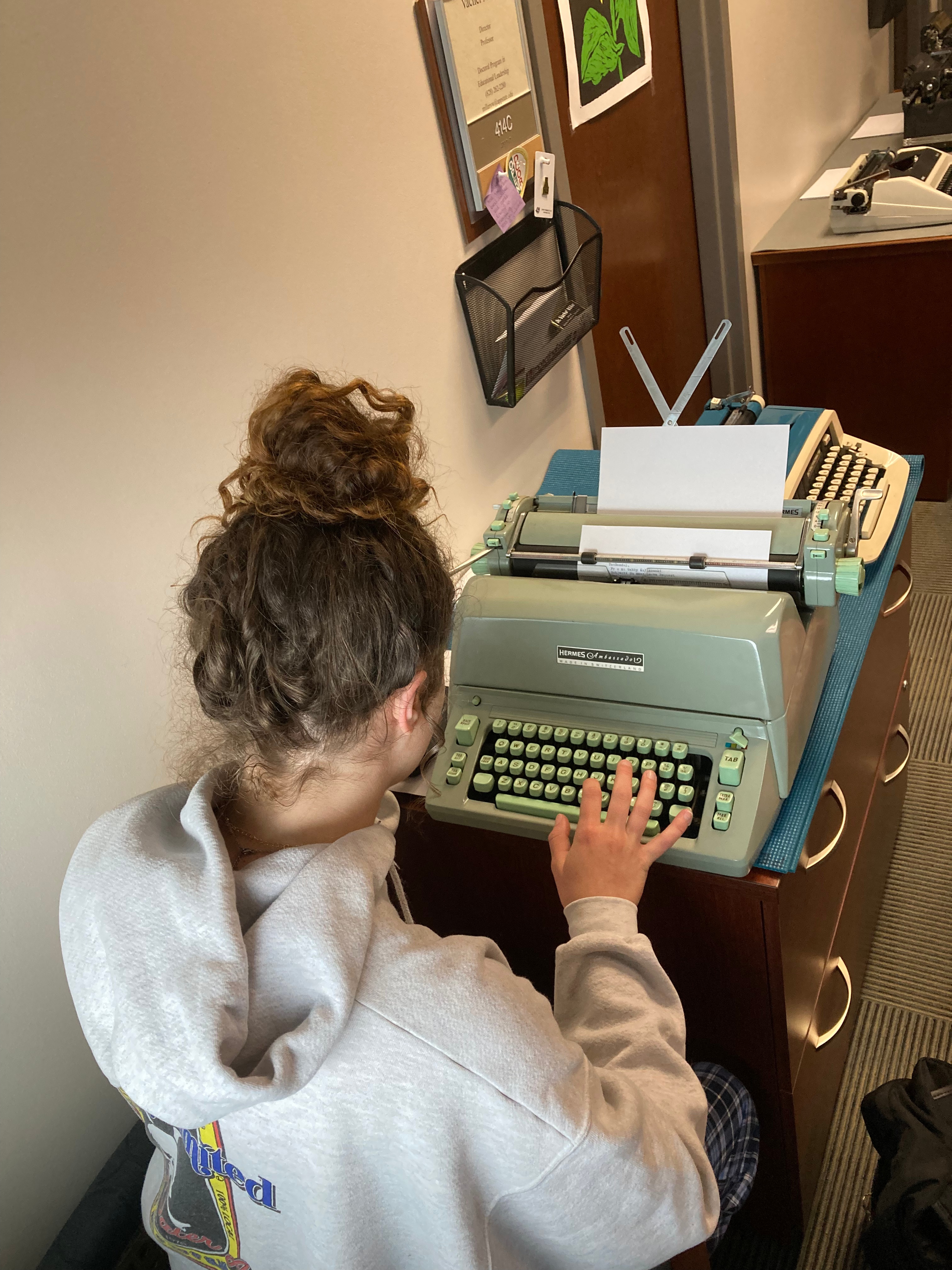
My scheduled work in class today includes a good amount of semi-structured time with my manual typewriters. I am using them 1:1 with my undergrads this year, once a week. They each choose a machine to work with for a few weeks, and I am building in time for reflective human words typing about both our shared curriculum and their daily experience of life.
I am doing this to invite them to discern the different levels of experience they get to choose to have. To help them feel the rarest of feelings in the swirl of messages we receive every day: like a subject acting, rather than an object acted upon. This seems to be a fundamental capacity for people we will soon trust with our youngest and most vulnerable humans.
Perhaps the best I can offer them today is exactly that: a moment away from phones and socials and provocations and interpretations for them to try to discern who they are, how they feel, and what they want to do next. In the slow, letter-at-a-time process that the typewriter requires: the only thing it can do, and the thing it does without peer.
With a typewriter in front of you and nothing to do but write, you find yourself saying to yourself, what about this? And this? And this? In 2025, the typewriter gives you back to yourself, sentence upon sentence.
I hope we all find ourselves today.
 Chris Osmond PhD