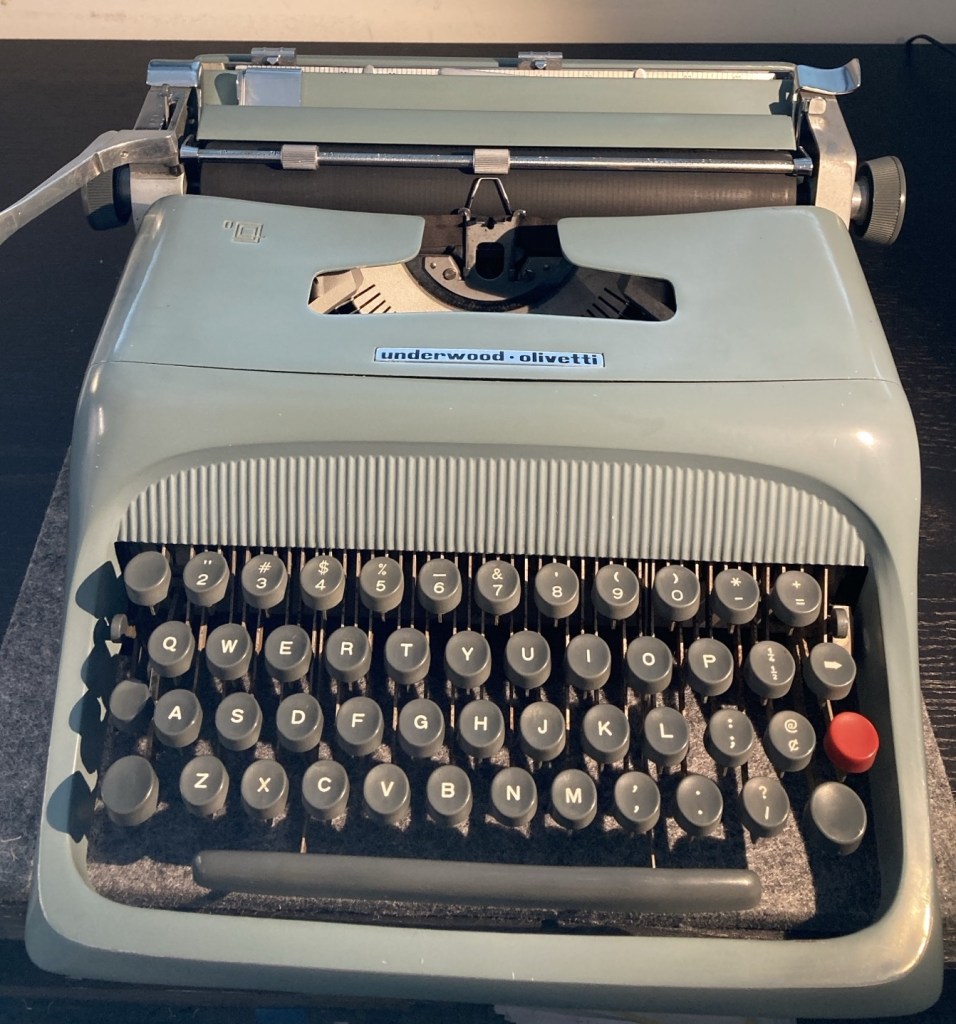
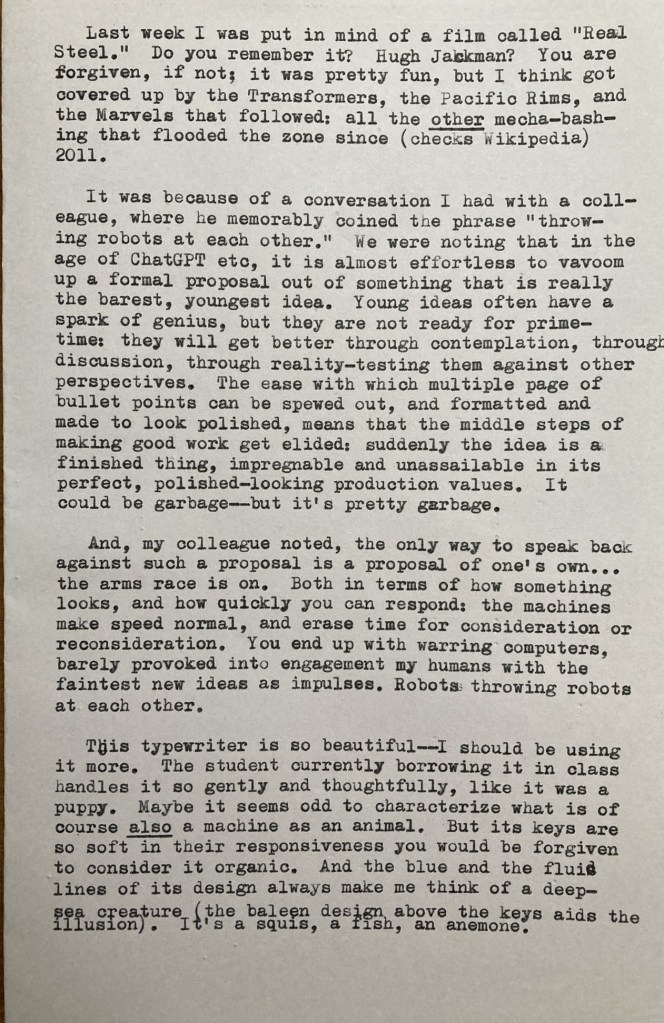
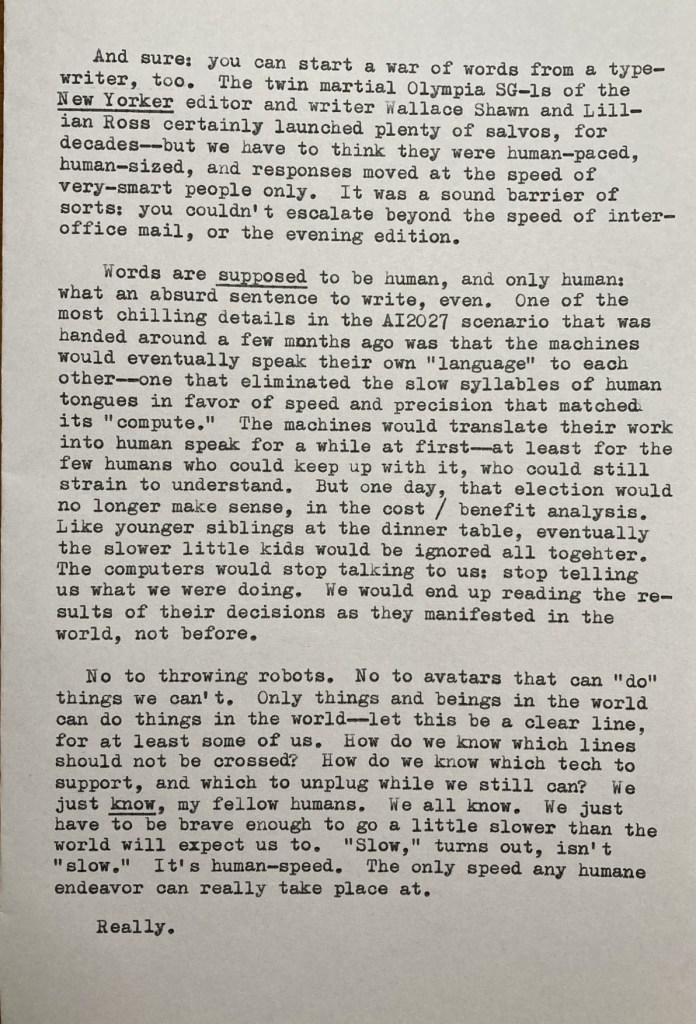
Here’s the 1961 Olivetti Studio 44 I typed these pages on. My deep-sea creature! My Nautilus, my Monstruo!
Links referred to:
Here’s the 1961 Olivetti Studio 44 I typed these pages on. My deep-sea creature! My Nautilus, my Monstruo!
Links referred to:
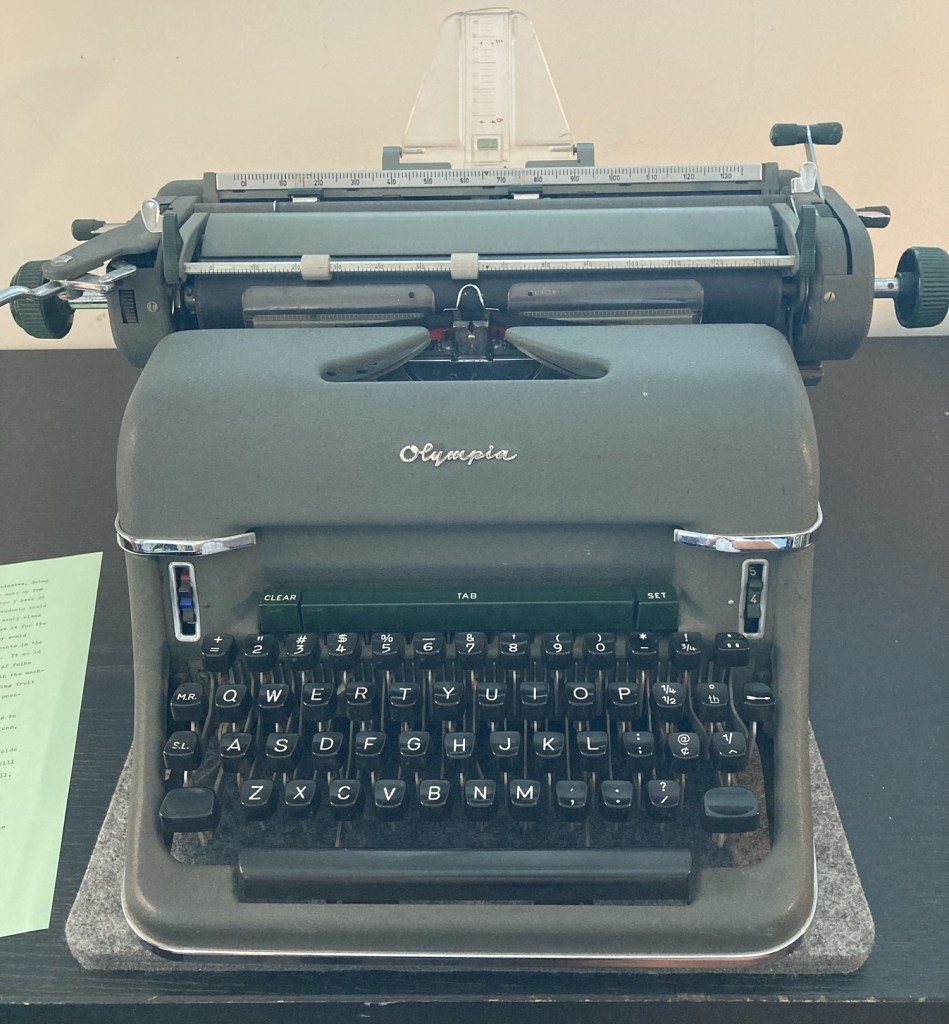
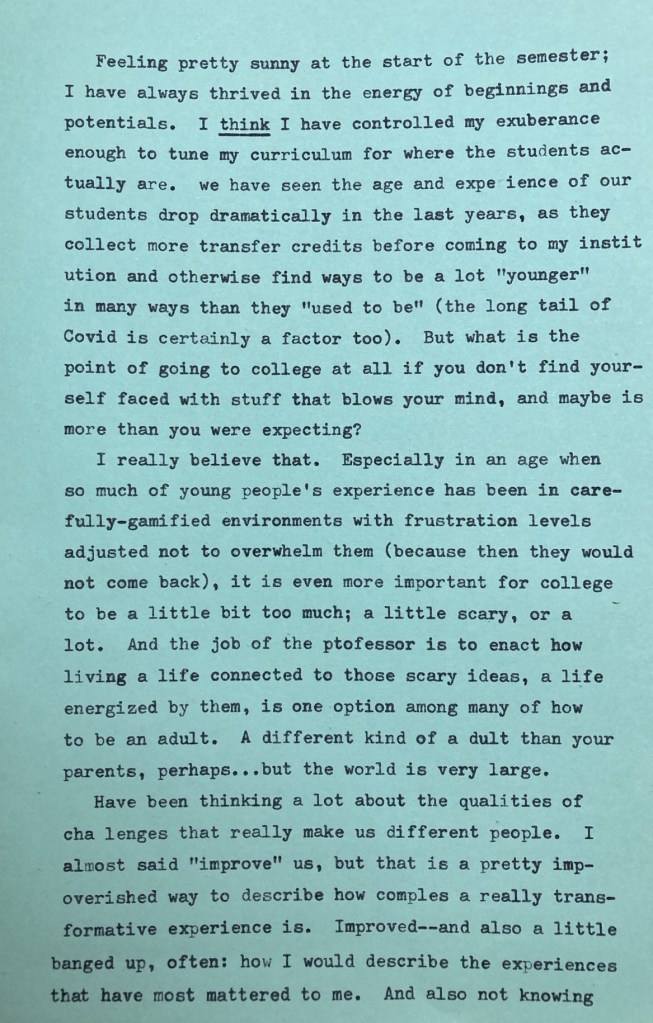
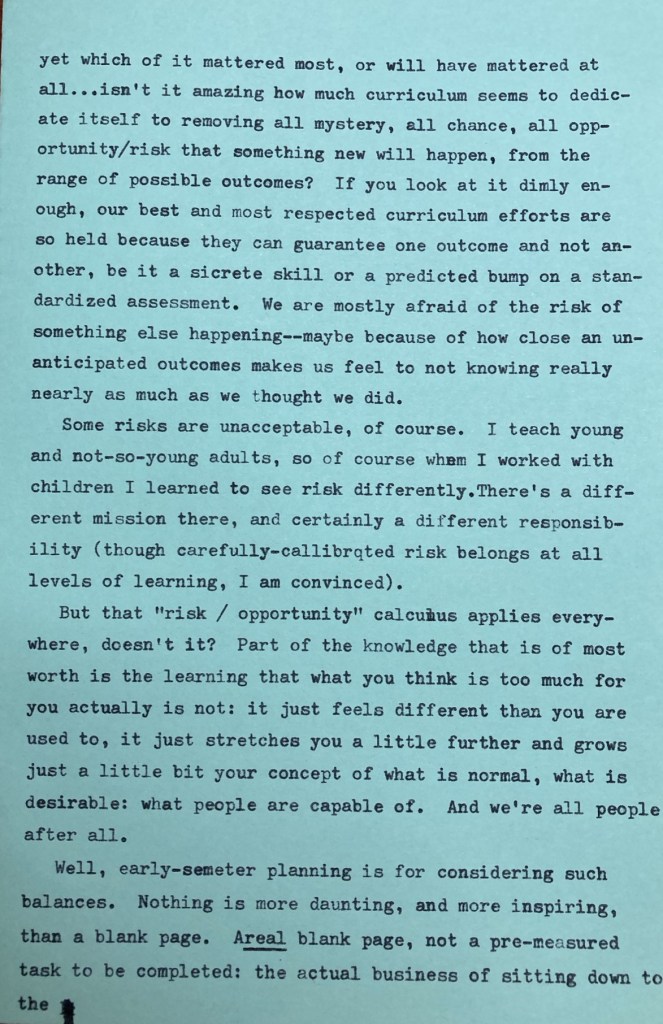
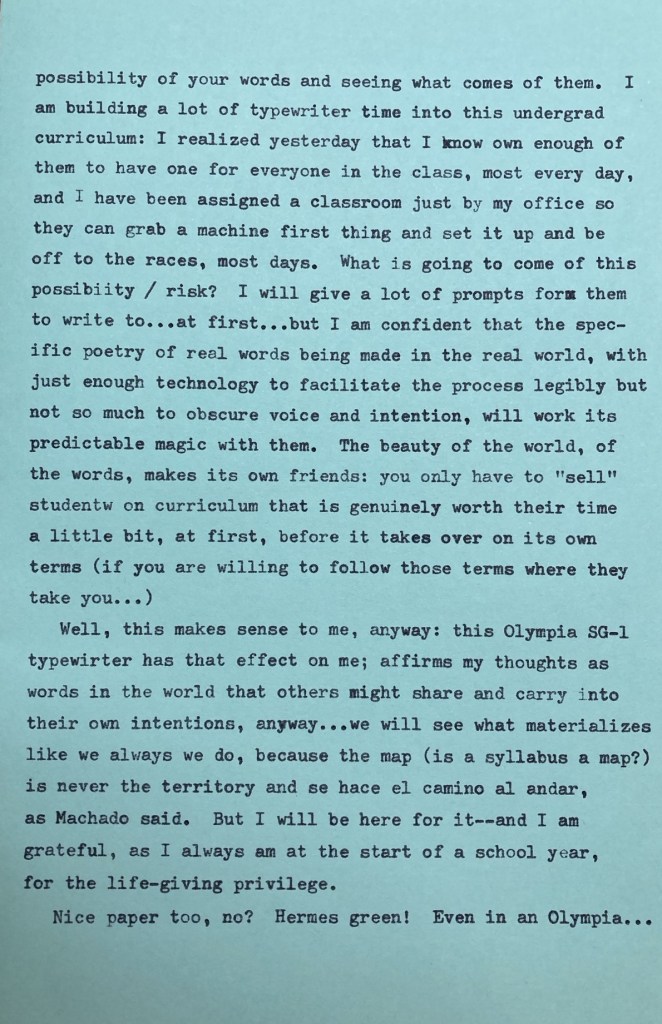

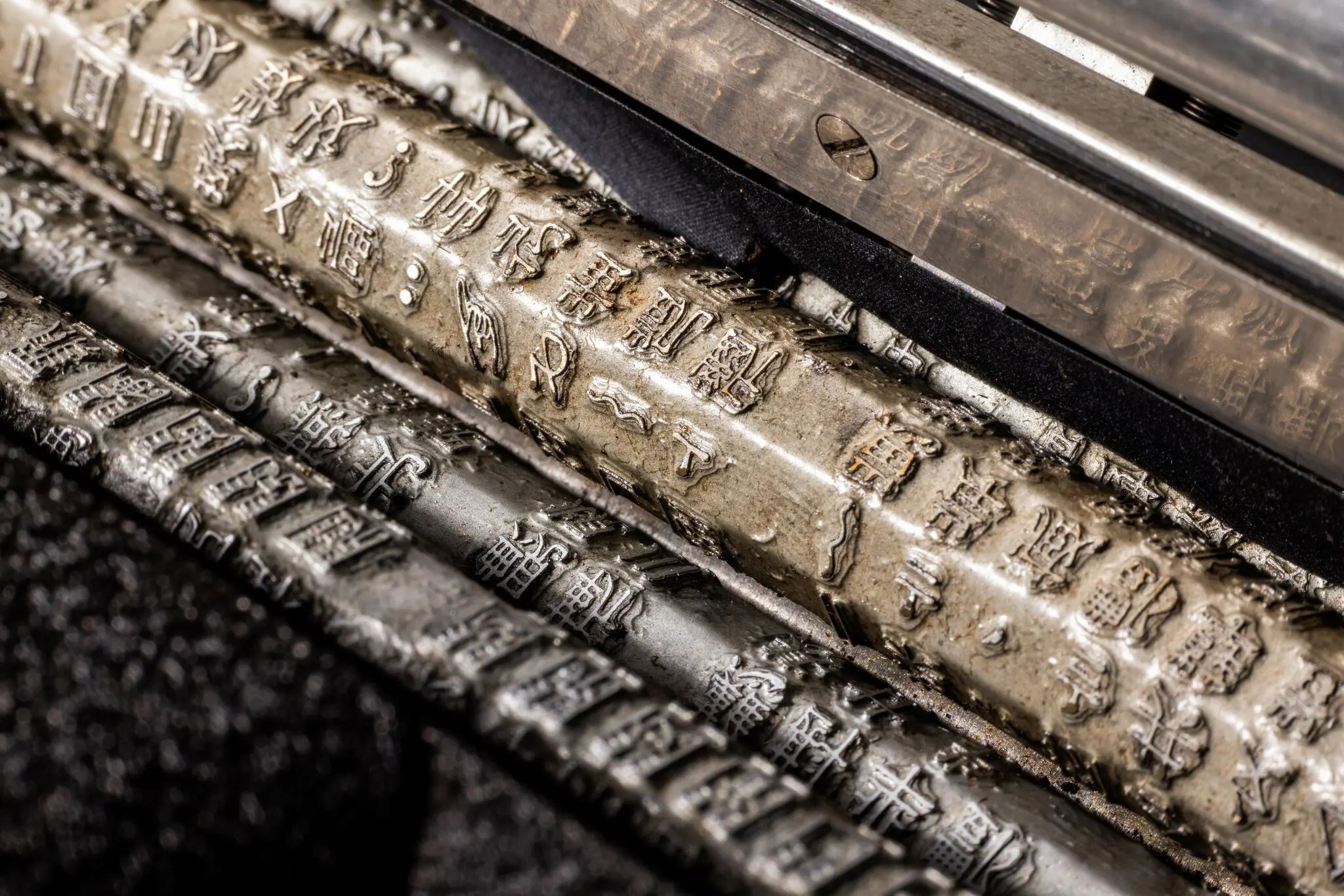
I might get to yell “first” in the Typosphere for blogging this terrific NYT article on the rediscovery of the “MingKwai” Chinese typewriter.
It details the thrill of Tom Mullaney, an obsessive history professor (I thought I had it bad) searching out, finding, and saving the only extant example of this machine from oblivion.
I have never seen any Asian language typewriter in person, but the gorgeous photos here really give a sense of the engineering feat accomplished in this protoype.
Imagine!
Any two keystrokes, representing pieces of characters, moved gears within the machine. In a central window, which Mr. Lin (YuTang, the inventor) called the Magic Eye, up to eight different characters containing those pieces then appeared, and the typist could select the right one.
Mr. Lin had made it possible to type tens of thousands of characters using 72 keys. It was almost as if, Dr. Mullaney said, Mr. Lin had invented a keyboard with a single key capable of typing the entire Roman alphabet.
He named his machine MingKwai, which roughly translates to “clear and fast.”
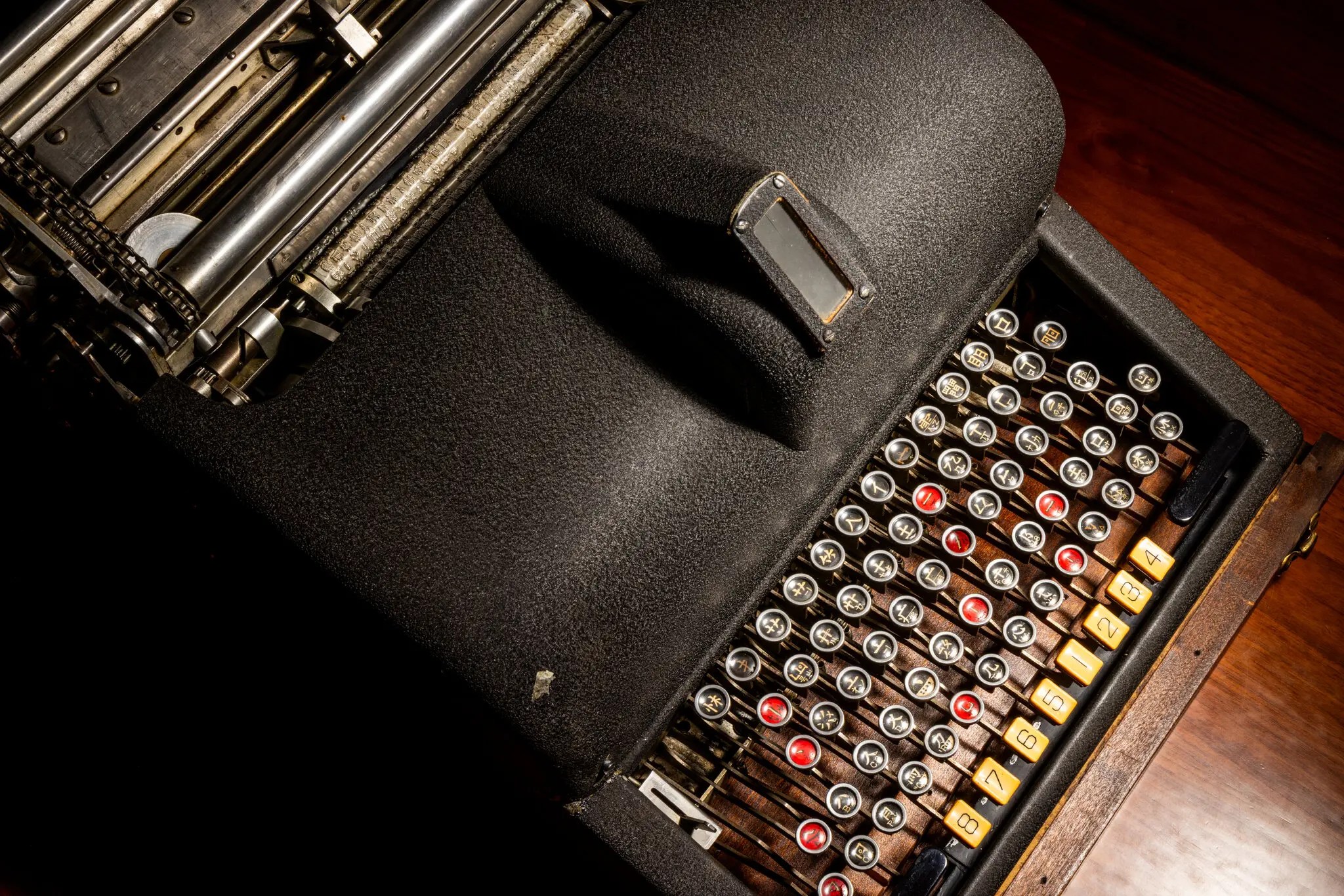
It was never manufactured. Lin had a single prototype made in the 30s at his own enormous expense, and tried to sell it to Remington, the General Motors of the era’s American typewriter industry. It failed during the demo; he went bankrupt; the machine was stashed at his job, then moved here, then there, and was presumed lost.
“Gone the way of most obsolete technology…had most likely ended up on a scrapheap. The right person hadn’t been there to save it, to tell its story.”
What is worth saving?
I think typewriters tend to be! My typewriter collection does not enter Dr Mullaney’s rare air, for sure. All of my machines were made in the hundreds of thousands, if not more, and none could be considered truly scarce. Though some, like the 1967 Hermes Ambassador that tops my blog, are definitely scarcer than others.
But the course of the Ambassador is exemplary of the path I think once-precious things often take when they become outmoded. It got stashed in the back of a dry closet, under a cheap plastic cover someone had the presence of mind to replace before forgetting about it for decades. And that afterthought by some anonymous someone is why it surfaced in an estate sale, perfectly functional, when so many others that were left uncovered in damp basements or attics do not. (Cover your typewriters, children!)
I think so many manual typewriters are still around because they were so expensive. They were workaday tools–well, some were more stylish than others, and they had different price points, so maybe they were more like automobiles than tools–but they were dear to acquire, about the price of a laptop today. So even when they were no longer needed, and were replaced by an electric or a desktop computer, folks couldn’t imagine tossing them out.
That cover wasn’t an afterthought. The Ambassador was a luxury model! I like to imagine that it was the owner’s child, or grandchild, that finally made the choice to store it safely. Maybe because they had been told over and over that it wasn’t a toy. You can’t play with it. It’s precious. Treat it like something precious. And that someone–or their child–did.
So maybe that’s why one generation’s expensive stuff tends to still be around for future generations to rediscover, reassess, and decide if it has anything new to offer in a present-day recontextualization. The kids get told to take care of it–and they do.
But…what about the true ephemera of our daily lives? Will we miss any of it when it is gone?
Cruise FB Marketplace’s “free stuff” section in a college town right around the end of July, when all the student apartments are turning over, and wonder. Will anyone ever miss flatpack furniture? Entry-level vacuum cleaners? Futons? (So many futons.)
So much hideousness. Here in my personal college town, our sustainability-branded university students used to collect all the discarded stuff, spend a few weeks cleaning and sorting it, and then sell it back to the incoming frosh in “The Big Sale” that happened at Legends, proceeds to scholarships. A one-day Black Friday delirious feeding frenzy of plastic and upholstery and area rugs. It was a gas.
Unimaginable with social distancing, “The Big Sale” got cancelled during COVID…then, like so many things, just quietly never started up again.1 I have a mediocre electric fan from the last one in 2019. It cools nothing, but reminds me of stomping around the bedlam of that sunny hot morning in a packed Legends with my then six-year-old in wide-eyed tow. Glorious memory.
You miss the ephemeral stuff if you have reason to miss it; you miss stuff if it has a reason to matter. It was from the last “Sale.” I didn’t know it was the last sale, any more than Lin knew the typewriter would be the only one ever made. The meaning got loaded into it after.
And of course you can’t save everything just in case it matters later–because that is the high road to hoarding. If you never throw anything out, how will anything ever be precious?
You have to miss something for anything to matter. Like Sheryl Crow sang, “there ain’t nothin’ like regret / to remind you you’re alive.” Better to lose too much and make space for the new, run the risk of having tossed something you long for, than be hemmed in by stacks of everything in case some of it happens to matter to you again…
Right?
So: save some of it, I guess?
Maybe that is how to honor a past you were part of–and, eventually, as you grow older and more judicious about what is beautiful, a past you weren’t part of too.
But also, let the world have its way with ephemera, which of course is most everything. Burn through stuff made to be burned through.
What matters will become clear later…and we will have the delectable chance then to rediscover what once we could not even see, and treasure it up in our new world for the preciousness it brings us from the old.
Here he is! You probably didn’t even know he existed.1 He messes up what you are trying to write. He introduced the errors that have grown like mushrooms in your draft since you last looked at it. His industry is your weakness. It’s not you–it’s him! The lord of all typos, the demon of scribes: meet Titivullus!2
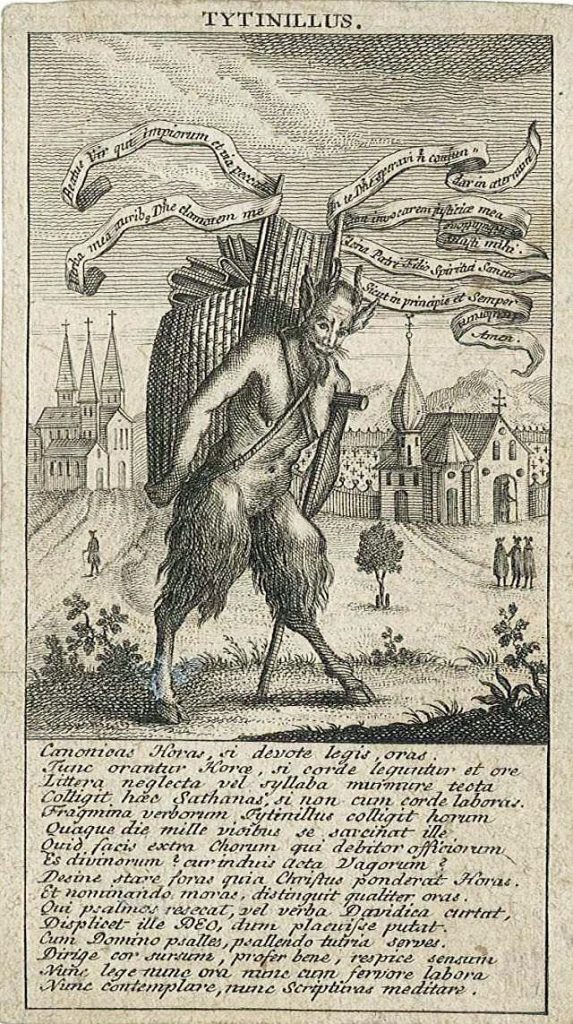
I understand he was originally two demons! One who gathered up all the poorly-spoken and mumbled sermons of the preachers and prayers of the laity in a big sack–the image above has him in this form, toiling toward his quota of a thousand per day (!). And a second who compiled and tallied them, to be held against the poor mumbler and lazy parishioner on the judgment day.
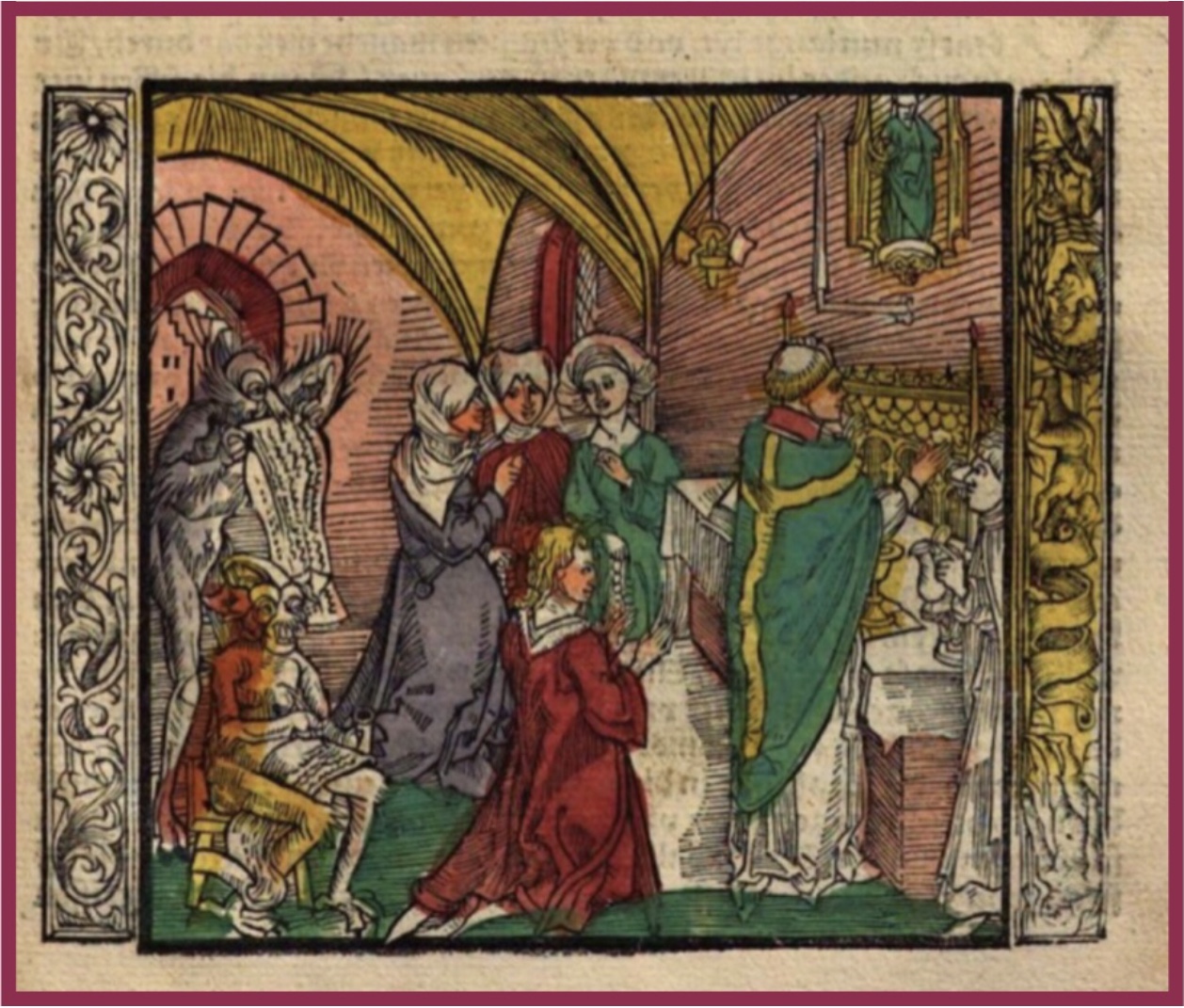
Thus the medieval church installed a panoptic anxiety among the faithful.
In Margaret Jennings study of Titivillus she wrote the point of this Medieval demon was to remind clergy and laity of the danger of “spiritual sloth.” The litany of the service, each prayer and each song were to be unhurried, expressed clearly and with fervor.
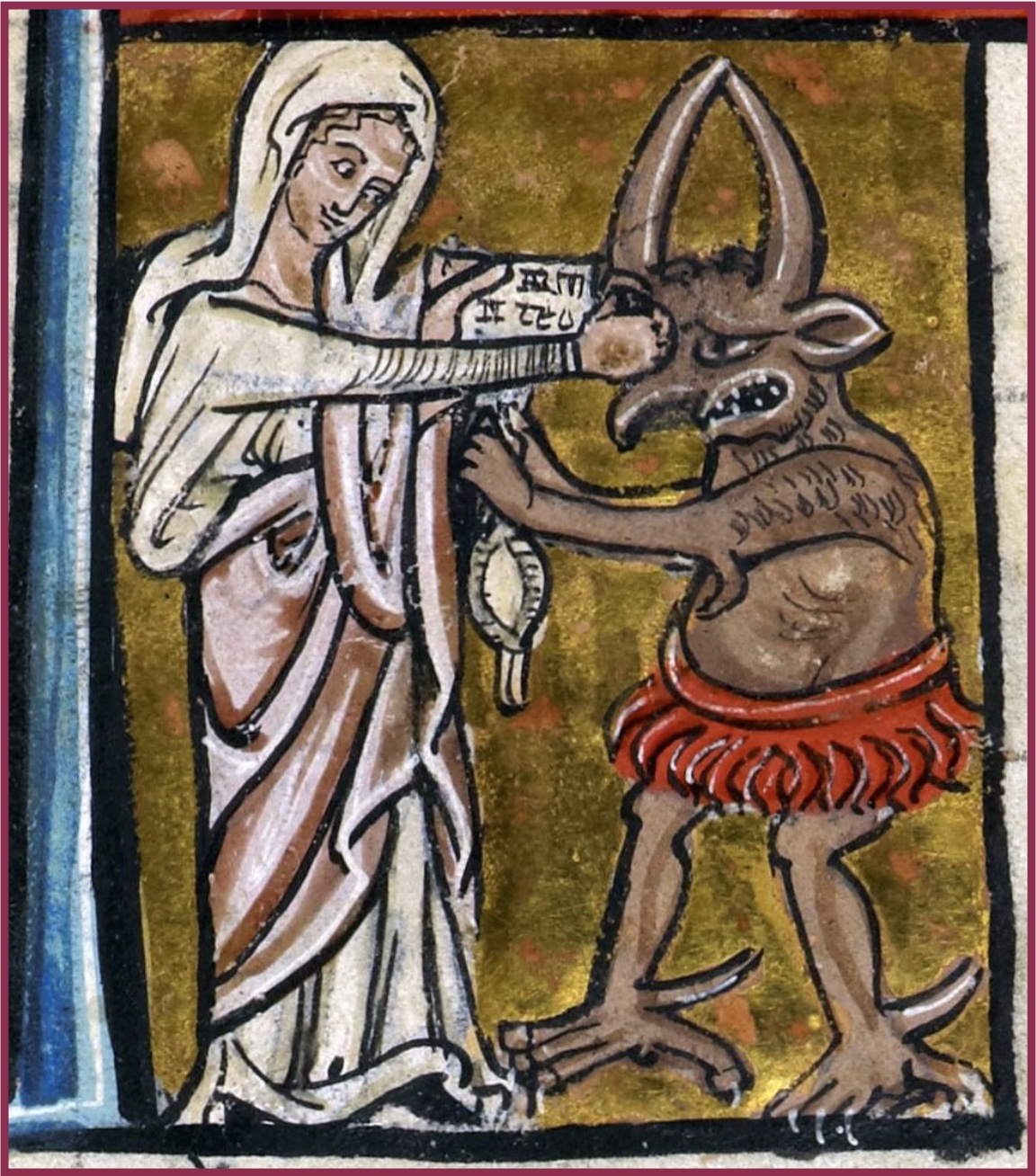
To say or sing by rote and without care, to attend church, but not participate wholly was to open oneself to sin. Hence, visual reminders of a recording demon, as well as other devilish minions, were found on wood, walls and paper. In the hand-colored woodblock above three women gossip, one demon scribbles away and the second demon stretches a scroll with his teeth because they need more paper!
He sees you when you’re sleeping, he knows when you’re awake…and he knows if you have been phoning in your devotions, too. So look sharp, lest your imperfect words be held against you in the final tally and toss you into the jaws of hell (below, right).
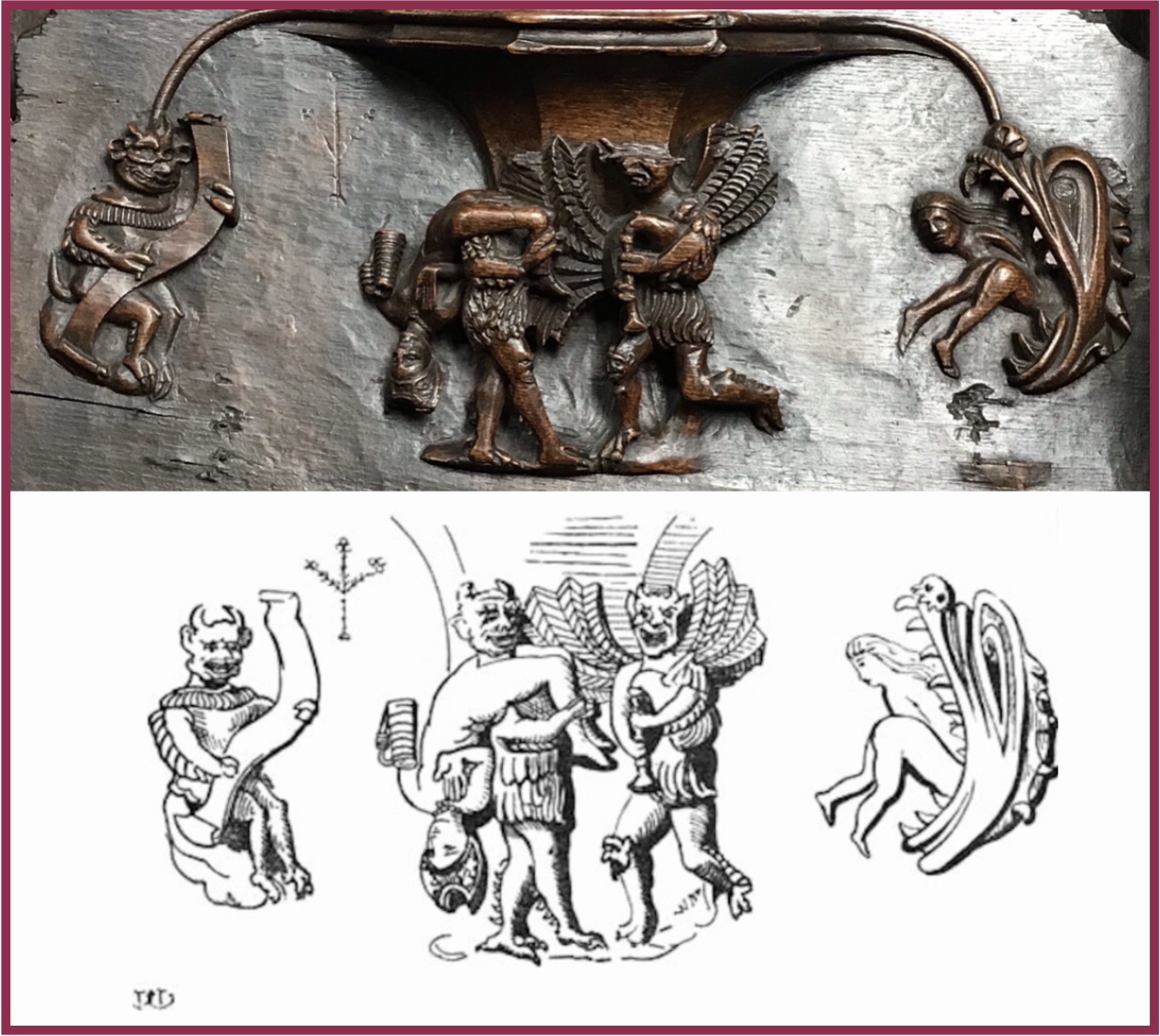
From the demon monitoring and keeping track of our language shortcomings, it was a small step to the demon actually interpolating such errors. Mischief not just recorded, but instigated. And thus T became the active cause of our imperfections, not just their registrar.
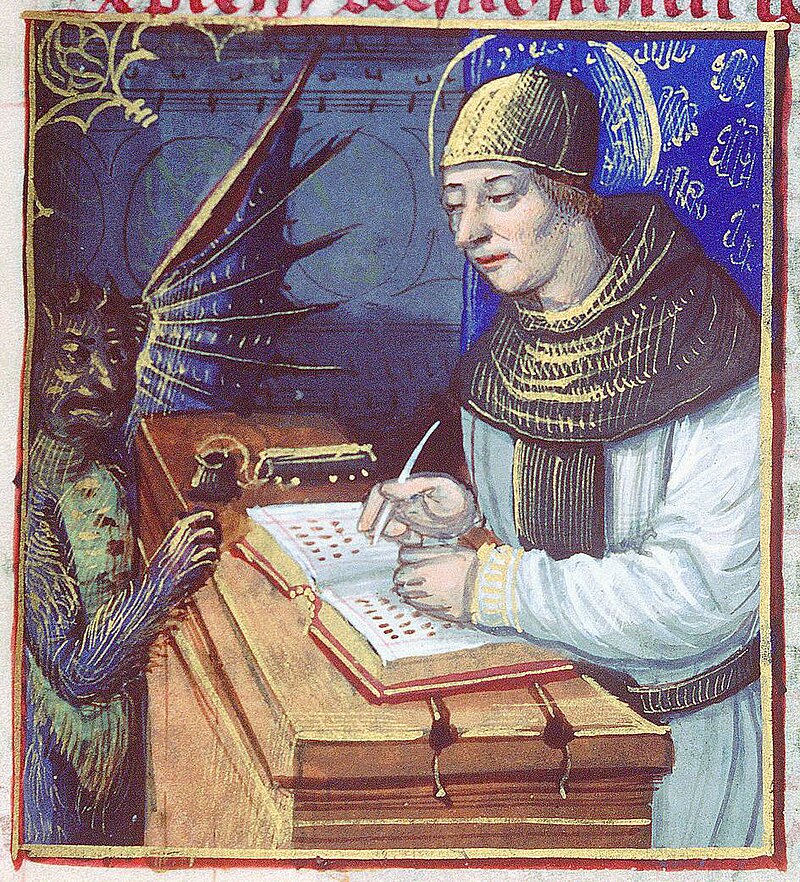
Titivullus’s relation to Ceiling Cat’s many forms is as yet undocumented, and awaits future research.

Fun fact: he is apparently the source of the “printer’s devil,” the name given to apprenticed boys who scurried around eighteenth- and nineteenth-century printshops pulling fresh pages out of the press and collecting errant type to melt down. Because their hands were blackened by ink; because they were underfoot; because they made mischief!
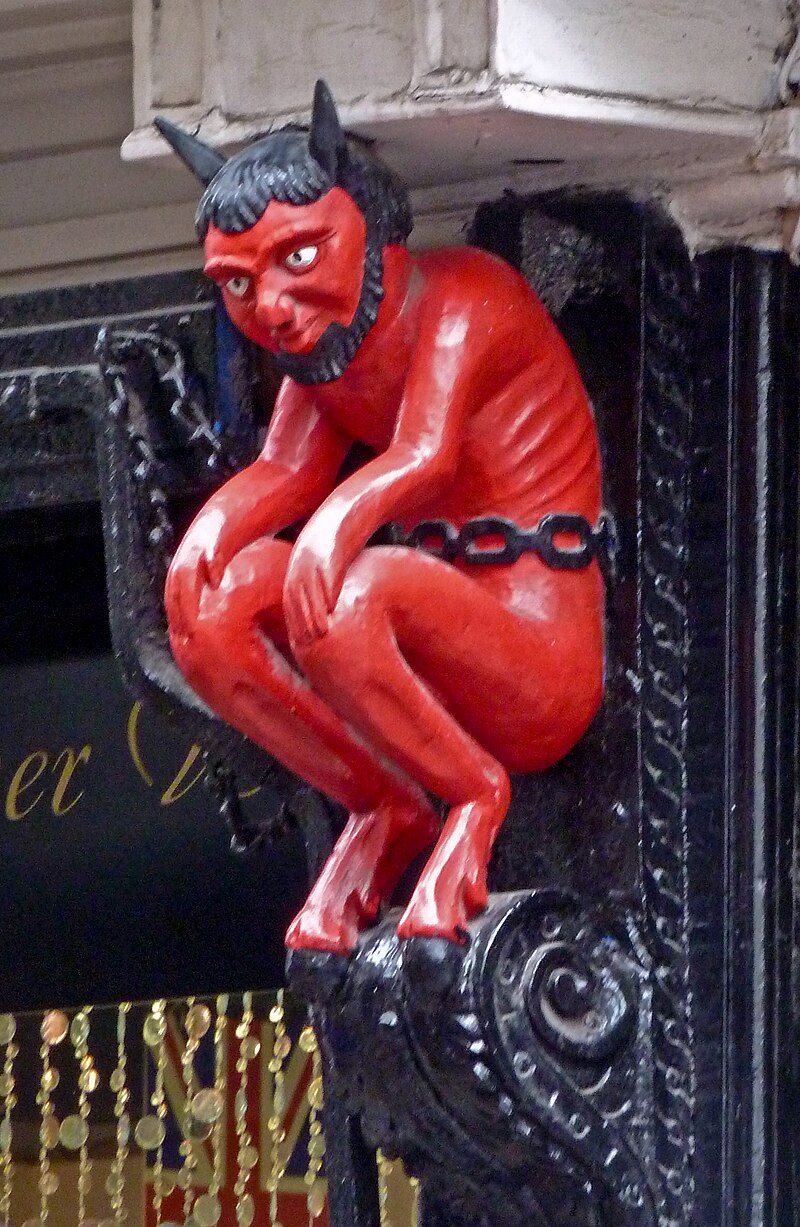
Holy cow! No wonder we are so averse to typos and other false steps in our writing. We liberal arts undergrads who sort-of remember our sort-of reading of Max Weber shake our woolly (or bald) heads and think, yes: sloth in all its forms does not compute with the rational pursuit of economic gain. So mis-writing is a crime against God, and also profit.
Are we still in thrall to Titivullus? Well…does this track?
Typos are sin! And must be stamped out, even (especially?) if doing so requires an internalized self-loathing that is activated whenever we make a mistake.
Whenever we read back what we just wrote and think, that is not what I meant at all. That sounds stupid, and I misspelled “stupud” too…that voice is the spirit of Titivullus, living for free in our heads!
And loading up the very fallible (but passionate) humanity that led us to write anything at all with…well, wow, with what?
Guilt?
Nagging sense of inadequacy?
Embarrassment at having thought we had anything to say in the first place?
Much safer to not write anything at all…
And If we are already primed to feel bad about our writing’s syntax inconsistencies, then the prevalence of effortless “typesetting” technologies will make us feel even worse.
We all know two spaces after a period in word processing is a tell that your author is a recalcitrant from the age of typewriters. Word processing automates the monospace of typewriting: just put in one space and let the rock that thinks figure it out.
And everything written should look perfect now, whether or not it is actually flawless. Canva is the tip of the spear, here; a friction-free tool that raises all our expectations that whatever we dare to inscribe should be Instagram-ready, should look cute on a Stanley cup or an Etsy t-shirt.
When you know about Titivullus, you see his minions everywhere. Making you feel bad about all the ways real human words are imperfect when they first come out of us.
And making you think that until they are perfect, they are wrong and unworthy. And maybe even evil: maybe even will be held against us in some final accounting that awaits us, and our wordmaking.
What bunk, friends!
Let’s embrace an enlightened perspective that we all make and consume our words exactly the best way we can and should, exactly as we are!
Especially when the demon’s AI great-great-great grandchildren are offering us the false promise that we need never feel bad about our words again–as long as we just let them write for us. (“It’s cheating, but I don’t think it’s, like, cheating.”)
Subtle temptor indeed.
Long live typos–because they affirm the real-world and real-person provenance of what you are reading!
Go to hell, Titivullus! Let us type in peace!

Today I stand for:
Liberty from computers that finish my sentences for me
Liberty from corporations that use every word I write to tune the ads they show me
Liberty from tyrannies of grammar, usage, and punctuation as the sole arbiters of value in prose
Liberty from poorly-understood technologies that compress my thoughts inevitably toward a “gentle singularity” that is anything but gentle
Liberty to know my own mind through my own words at the exact pace that is right for me
Liberty to make words in the world that can matter in the world, instead of cartoons of words on a screen
Liberty to write without distraction, notification, or interruption using an elegant single-use device
Liberty to share my words with exactly whom I wish to, exactly when and how I wish to
Liberty to air-gap my words from being scraped to train AI
The manual typewriter: the best companion for your own great democratic experiment today! Happy 4th!

