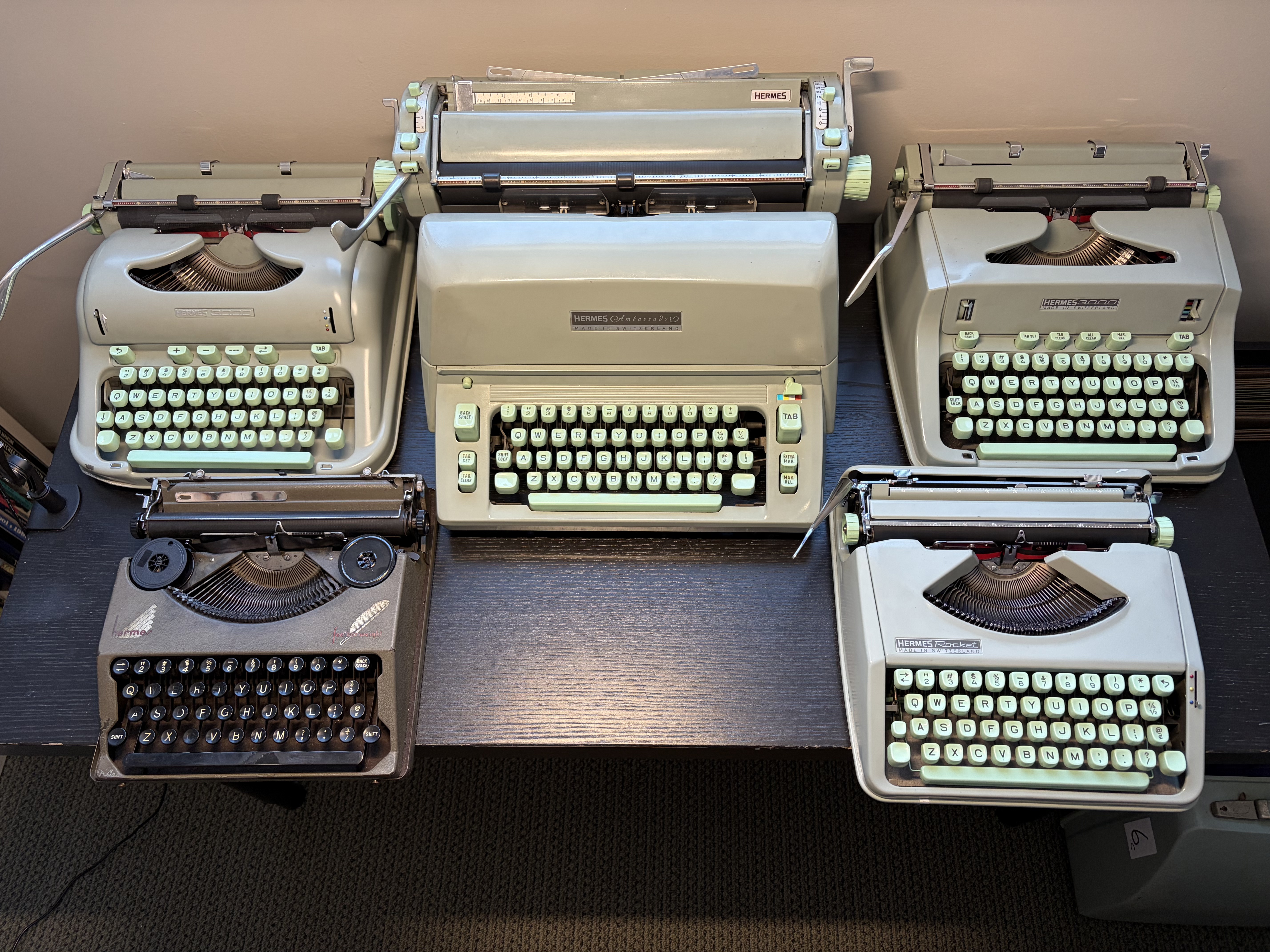
This morning I was confronted by the New Yorker’s annual seasonal gift guide. It’s not paywalled, and if past years are any indication, it won’t be for the duration of the two months that it will remain on their home page.
It’s part of that innovation in print and digital media that makes shopping part of reading. Affiliate links! And since it is so important to support journalism, by any means necessary, then that is fine with me.
(Also: please subscribe to your local paper. Right now, if you do not yet. I’ll wait.)
The story’s hook is terrific: “Tech Gifts That Won’t Rot Their Brains.” I will boost their signal gratis by sharing the whole pitch:
Binge-watching. Doomscrolling. Rabbit-holing. Brain-rotting. These, it seems, are the behaviors encouraged by our computers and digital devices—intoxicating masterworks of engineering that we stumble away from, glassy-eyed. It’s a sad state of affairs, especially if, like me, you grew up in the nineteen-eighties and nineties, when digital technology was exciting and liberatory. Back then, Steve Jobs called the computer a “bicycle for the mind”; parents bought PCs hoping that their kids would become “computer whizzes.” The idea was that circuits and software could unleash our potential.
Today, of course, we associate screens with mindlessness, and computers with distraction and drudgery. But it doesn’t have to be that way. Gadgets are still great, and computers remain delightful. In fact, it’s easy to turn your personal tech dystopia into a utopia: all you have to do is shift from being a consumer to becoming a creator. We live in a golden age of digital creativity. Forget A.I.: you, yourself, can record an album from your sofa, or curate a photo-essay on the train. In that spirit, here are some of my favorite creative digital tools.
I remember the “bicycle of the mind” age of computing, more or less. I remember, or perhaps hallucinate, the Whole Earth Catalog appearing in my childhood home for a little bit, with its bracing mix of articles on homesteading self-reliance and ads in the back for build-your-own computers.
So these newfangled New Yorker gadgets, with which you can make your own fun: heck yeah. Bring them on! Let’s make it all up ourselves. Let’s speak back to the content machines that feast on our eyeballs and anxieties. Let’s put on a show! We can use the old barn!
Except…most of these gadgets will run you hundreds if not thousands of dollars.
And many of them are but slight innovations of the capacities of stuff you already own. The horror of obsolescence wasn’t invented by the personal computer, but it sure amplified it.
Meanwhile, there remain millions of manual typewriters available for purchase at bargain-basement prices.
So I need you to buy and gift manual typewriters this holiday season.
Here’s my thinking:
The manual typewriters built between 1930 and 1970 competed with each other as high-quality technologies first, and en vogue objects of desire second. Even as the portables market began to identify color–and more color–and finally design as the key to the hearts of those seeking to make a typewriter part of what was not yet called their “personal brand,” they were still made with high-quality materials, precise engineering, and exacting build.
In those decades, one rarely replaced one’s typewriter because it wore out! You might get it repainted, or have a new keyset dropped in: everyone loves a refresh. But they just didn’t break, if you took basic care of them.
And the quantity being purchased meant that economies of scale not only kept prices accessible, but also supported the legion of well-trained workers needed to keep making them.
This is why a “new-old” typewriter (do not buy here–for illustrative purposes only) for $300 will never be as good an investment as a sixty-year old one. There just isn’t enough demand to support anyone making a decent machine new. (And IMHO you need too many well-machined parts to even contemplate a bespoke “custom” market.)
So we are left to shift around the abundant stock of vintage machines that are being pulled out of attics and donated to thrift stores. And that is great news for us!
Yes, they are more expensive than they used to be. Even in my five short years of collecting I feel like prices have gone up, especially for desirable models like the stables of Hermes machines that I have amassed, and feature in my top image.
But they are still super cheap, considering their shelf life! Especially if you are willing to educate yourself a bit about which machines are worth acquiring, and then wade through the shopgoodwill auction site, or even the badlands of Facebook Marketplace to find the gems in the mud.
And you will probably need to do some cleaning and light deferred maintenance on what arrives–skills you do not have yet, probably. (Most “broken” typewriters are just dirty and need new ribbons.)
But these skills are easily acquired! And manual typewriters are one of the few consumer technologies that are exactly what they look like. You can learn how to fix them by spending time with them, maybe with the targeted help of a robust online repair community.
Also, by choosing to gift a typewriter this year to a special someone in your life, you will be helping to distribute the wealth that is currently concentrated in the hands of only a few.
We who collect these machines are a mild-mannered and well-meaning bunch, to be sure! And many of us make a point to share our bounty, by using them in our teaching and bringing them to libraries and type-ins and doing street poetry and art installations and all manner of civic-minded effort.
But still: why do I own five exquisite Hermes typewriters? This is not right!
If you just did your part, and acquired and gifted a few, you would strike a blow for access and resource distribution equity that will raise all our boats.
We who stockpile collect them need you to thin the herd. Please, save us from ourselves.
And I have buried the lede: by gifting a refurbished manual typewriter, you will be inviting someone special to have their life enriched by one of the original and most powerful creative technologies.
So much of what matters to our cultural life has been crafted with these machines!
Find your favorite author on Richard Polt’s master list of Writers and their Typewriters.
Marvel at Gabriel García Márquez and the infinite scroll of paper running through his Olivetti Lexicon.
Dig the intensity of Joan Didion interrupted from a self-knowledge sesh with her Ambassador.
Imagine tiny Lorraine Hansberry at the helm of her wheezing and pounding IBM Model 01 (an early electric, granted, but we’ll allow it).
Or James Baldwin caught at home in Turkey with his Olympia SM7.
A gift of a manual typewriter invites the recipient to join this long line of people who decided to make work the only way that work is ever made: a word at a time, in the endless cycle of doing and undergoing that leads to the specific beauty that makes life worth living.
And the reintroduction of a way to have that experience uninterrupted by notifications, likes, upvotes, bings, boops, and everything else that comes with the supercomputer in your pocket is so precious–especially to the young folks.
I know, because I invite my undergrads to spend time each week reflecting on our class topics and their relevance to their own lives and teaching careers in front of a manual typewriter. Over the semester, their pages pile up in the folders that live in my office, a real-world palimpsest of the textures not only of their intellectual lives during these months but also their real lives. They were here, on that morning, living through that day; even as they inscribed knowledge that would inform their futures, they were ineluctably immersed in their present. And the pages give their present back to them, as the recent past…which in turn feeds back into their intentions for what is next.
This opportunity matters to them! It is so precious. They tell me so; they tell me how they look forward to this time dedicated to figuring out what they think, to being themselves.
You can give that experience to someone you care about!
Or you can buy the newest gewgaw for too much money and let them push it around for a year, until it becomes obsolete and ends up in a landfill.
So make the right choice this holiday!
Save us typewriter obsessives from ourselves!
Buy some old stock, and fix it up–and pay it forward!
(And no, none of mine are for sale.)

