I don’t speak Latin. I am putting on airs. But this phrase has been rattling in my mind since I first read it.
Not in its original source, Rudolf Otto apparently–but in Parker Palmer’s sublime Let Your Life Speak, a little book on finding your purpose in life and letting yourself be exactly who you are on the journey. And also 20 years ago, when I was a goat among sheep at a school of medicine, when Rachel Naomi Remen checked it in an essay about what might lie beyond the edge of our understanding of healing.
Funny how I am doing the defensive academic flex: citing how other people have already thought about this thing so I get to think about it too. It is the simplest idea in the world, really, and it doesn’t need a pedigree.
It is just acknowledging the “awe-inspiring and fascinating mystery” that lies around and within the stuff that matters most to us.
I have long been drawn to thinkers and writers and teachers who work to make the case for the irreducible reality and precious value of mystery. Especially in a world that only values certainty and deductive proof more each day. I collect them–these fellow travelers–like marbles in my pocket. Look, here’s someone who thinks so too. Here’s someone else.
We who love the mystery need a posse. We do! It’s a lonely place to live, in the mystery. Lonelier and lonelier.
Lonely–because of the rampant conviction that competent people doing life-impacting work like education and healing need to eliminate the mystery. Need to get down to what is always true. What always happens when you do this or that.
Because it’s important work, right? Being rigorous about finding out and tracking what always works is how we get “best practices,” and we love to be told by scientific types what the right answer is. It makes us feel like serious people.
Not goofing around anymore, not us. “Best practices” tell us THAT our work can be serious–because “best practices” say, “this can be science,” and the people with the science are the most serious people. Serious people do the “best” things, the most important things. (They are the sheep, not the goats…)
God, I love it when someone refers to “serious people.” I love how immediately everyone at the table sits up a little straighter. Whatever else happens, let’s NOT be mistaken for unserious people. I sit up straighter too.
But I also suddenly want to spill Kool-Aid on everyone’s papers. Serious people? LOL.
Because what if the most serious people working on important stuff like education and healing were also brave enough to acknowledge that they DON’T know everything?
That they don’t know what will happen THIS time when they try something out?
Would your doctor, or your teacher, admitting that they don’t know the best answer to a mystery yet–but they want to keep finding out, so much–make you feel more secure with them, or less?
More secure, for me, by a country mile.
One of the most impactful ideas I learned in education school was that most of the stuff we most care about in life is more like art than like science. Not because it is beautiful, or gives us pleasure, though it sometimes does.
But because most of what we care most about doing is a mystery while we are doing it. And surprises us with what it ends up being, when we decide it is done.
You can do a paint-by-numbers painting, or a jigsaw puzzle, or make a cake from a box for that matter. Those endeavors are entertaining, and they are great for relaxing and passing the time (or getting a task done quick, with the cake mix).
But no one would say jigsaw-puzzle-assembling is the same as artmaking…because you have the picture it will end up looking like right there, on the box.
Real artmaking is real because you never know exactly what you will end up with when you start. You might have an idea, a destination–or even better, an intention. “I want to paint this day lily.” And it helps to have an intention when you get started, sometimes. It gets you to put brush to paint to canvas. To do it instead of merely intending it.
But the painting will unfold before you, brushstroke by brushstroke. And–unless you are completing an art class assignment to “paint a day lily”–if your accumulating brushstrokes end up looking more like a Studebaker than a day lily, maybe you decide mid-course that you are actually painting a Studebaker.
You discover what you are painting WHILE you are painting it. And BECAUSE you are painting at all.
Have you ever heard the idea that a sculptor’s task is simply to take away everything that is NOT the statue? That the work is already in there, and they just need to let it out?
Maybe! That’s a kind of mystery to consider too. What if what you find in that block of clay isn’t what you thought it would be? Wouldn’t it be great if blocks of clay came labelled with what was inside them?
No, that would be a nightmare. That would take all the fun out of it. That would eliminate the mystery.
Here’s a humdinger: Where’s the mystery in the thing you care about most? In the thing you have spent the longest time doing? Painting, or running, or gardening…or teaching?
Does the mystery get solved, the longer you spend caring about it and doing it?
Or does the mystery change and shift? If you are doing the same thing now that you did at the beginning of your career, are you trying to understand the same mysteries, or different ones?
Or is it a combination of solved and not-so-solved–always depending on the day, the light, what you had for breakfast, what was in the paper this morning?
These are the questions of serious people! Of people who love the world and the magnificent mysteries in it, exactly on their own terms and exactly as they present themselves to those of us who try to pay attention.
I have been serious about playing drums longer than I have been serious about nearly anything. It’s true! Longer than I have been a father or a husband, longer than I have been a teacher…even longer than I have owned a drum set.
I listened this morning on the way in to work to one of the first records that made me fall in love with playing drums. One of the first records that told me, you have to do this in your life, with your life. This is for you.
How differently I hear that record than I did when I was thirteen! I am working on different mysteries now than I was forty-plus years ago.
And how completely the same mystery of that drummer’s feel and time, that drummer’s sense of what could be in this song, in this take, is waiting there as well.
Some mysteries solved and transcended on the way to others: I know full well what to do with this foot and hand, this stick and this cymbal.
And some: as mysterious as ever. Even more so, knowing what I know now.
I almost had to pull over to collect myself, meeting that mystery again today. To reintroduce myself to an old, astonishing, tantalizing friend, and wipe my eyes, and listen again, and then again, and again. As seriously as I can.
God save us from a world where the serious people know everything they know for sure, and are no longer baffled, mesmerized, by what is bigger and older and wiser than they are.
Long live the awe-inspiring and fascinating mysteries–in our eyes and ears, in our work, in our hearts. In our classrooms. What a privilege to spend our lives with them.
However serious we may become: may we never pretend to have them solved.
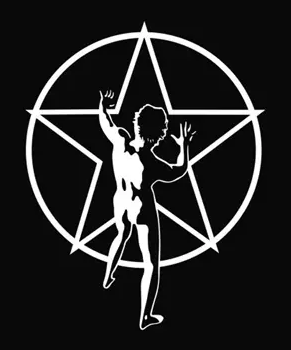
Image borrowed gratefully from this retrospective on the album art of Hugh Syme, and if you know you know. Retconned to represent confrontation with awe-inspiring and fascinating mystery! We have assumed control!

