
I learned of Wendell Berry’s passing last night, from the New York Times. They had an “advance obituary” on file, “which are prepared for notable people so they can be published quickly upon their deaths.” It is lovely, and benefits from the time taken.
Though I personally think he might have been a bit embarrassed by its excesses. Its opening paragraph noting that he wrote “mostly in pencil and without electric light,” as if that were the most relevant aspect of his work. His description as “lanky and rawboned in middle age, with melancholy eyes, a jutting chin and a widow’s peak reminiscent of Lincoln’s.” A little purple for his taste.
These all might be true statements–but somehow his own capacity for evocation seems misplaced when applied to him. The media takes liberties, of course. It chooses words and images for impact in the moment, whether or not those words and images have integrity, or are contiguous with what is real. They are chosen to sell papers, in his time; to drive clicks and shares and likes, in ours.
This is precisely the problem, I imagine him saying, though better than I just did. How we are harmed, and do harm, through our shortsightedness. Our willingness to go for the quick satisfaction at the cost of truer things. He talked like that.
I do not share the NYT’s foresight, or perspicacity. (Berry loved the perfect word carefully chosen, and here is one to hand.) I do not have any thoughts ready that can squeeze Berry’s impact upon me into a ball and roll it toward you with piercing insight. I can share my gratitude that I found his work when I did, and have lived with it so close to my own mind and heart and teaching for a long time.
And I am no Berry scholar. I have read comparatively little of his extensive output. But what I read, I kept–and more importantly, taught.
Here’s the five-inch shelf of Wendell Berry that has got me this far, and that my students have likewise thanked me for keeping on the syllabus. Especially in the courses I have taught on burnout prevention and sustainable practice, where he’s fundamental to many disciplines’ efforts.
Solving for Pattern (1981). (Opens in PDF.) The first thing of his I encountered, and I cannot remember how or why it came to me. Grad school I hope. An early essay, more about farming methods than deeper theory, though the wisdom is not hard to find. How many times have I read with students about “the solution that causes a ramifying series of new problems”–and stood before them with my arms branching wildly above my head to drive home how things branch out, how unintended consequences overtake one’s plans?
Restraint – for us, now – above all: the ability to accept and live within limits;
to resist changes that are merely novel or fashionable; to resist greed and pride; to resist the temptation to “solve” problems by ignoring them, accepting them as “trade-offs,” or bequeathing them to posterity. A good solution, then, must be in harmony with good character, cultural value, and moral law.
The Hurt Man (2003). (Opens in PDF.) A short story that has been the glowing jewel at the core of any class on the mystery that permeates healing practice. Everything is here: how compassion may bloom from our own suffering, can turn either to empathy or rot. How the need transcends the judgment of who deserves to be needy. And above all, in the breathtaking final paragraph, how love is deeper and older than any of our days’ concerns or preferences or fears. How we who wish to be of use to other peoples’ children are invited to connect to something wise that we can trust, that will last–and can.
It All Turns on Affection (2012). His victory lap, arguably: his center-court NEH Jefferson Lecture. He could have retread what he had already explored. Who would fault him? But instead, his erudition and compassion combined into an accessible and moving treatise on how what we love, we imagine–and how what we imagine, lives.
This teaches so great! With some useful swipes at big data too, for those who persevere.
I will say, from my own belief and experience, that imagination thrives on contact, on tangible connection. For humans to have a responsible relationship to the world, they must imagine their places in it. To have a place, to live and belong in a place, to live from a place without destroying it, we must imagine it. By imagination we see it illuminated by its own unique character and by our love for it. By imagination we recognize with sympathy the fellow members, human and nonhuman, with whom we share our place. By that local experience we see the need to grant a sort of preemptive sympathy to all the fellow members, the neighbors, with whom we share the world. As imagination enables sympathy, sympathy enables affection. And it is in affection that we find the possibility of a neighborly, kind, and conserving economy.
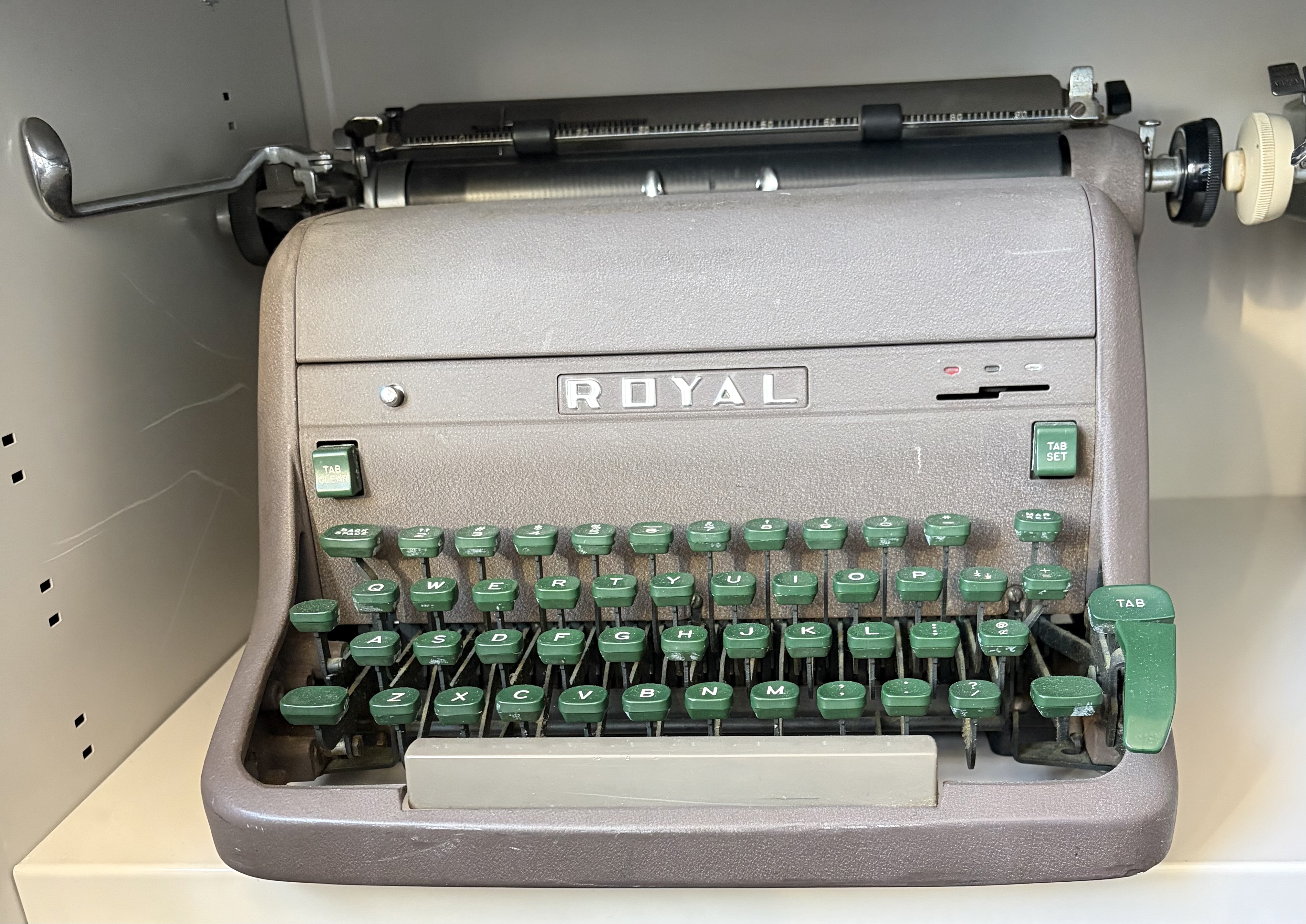
Why I Am Not Going to Buy a Computer (1987). (This appreciative essay links to it in the first sentence.) A minor piece in the big picture, that nonetheless presages our current tech mania by asking what tech improves that isn’t already working fine, and at what cost.
He got heat for acknowledging that his handwritten manuscripts had been prepared for editing and publication on a manual typewriter by his wife for decades, which smacked of exploitation to many. Typical comment: “Wendell Berry provides writers enslaved by the computer with a handy alternative: Wife – a low-tech energy-saving device.”
Berry does not back down. Let’s savor his prose. I’d hate to have him disappointed in me.
I understand that it is impossible to make an adequate public defense of one’s private life, and so I will only point out that there are a number of kinder possibilities that my critics have disdained to imagine: that my wife may do this work because she wants to and likes to; that she may find some use and some meaning in it; that she may not work for nothing. These gentlemen obviously think themselves feminists of the most correct and principled sort, and yet they do not hesitate to stereotype and insult, on the basis of one fact, a woman they do not know. They are audacious and irresponsible gossips.
Like so many writers and thinkers I love, Berry defies litmus tests and troubles pieties. He won’t be who you think he is: he’ll be himself, and you can do what you wish with that.
A Poem on Hope (I do not know when he wrote it, but you can find it in Collected Poems 1957-1982). Frequent readers of this blog have seen this one before. I think of it every time I glimpse one of the great blue herons in the New River on my morning run, and wonder at how nature shows us every day how many ways there are for things to be, and still be perfect. I end nearly every class I teach with it, and will give you a bit at the end of this post. You’re welcome.
I am not a perfect acolyte of Mr Berry. Which of us could really walk a path as strait as his? Leave a rising career path to return to one’s home place, and assiduously learn its lessons by farming the same patch of dirt all your life. Maintain your principles utterly, in your work and your daily choices. That path would mean no burgers handed to me through drive-through windows, and no Diet Pepsi, that’s for sure. It’s too much.
But we probably do him, and ourselves, a disservice when we make him so singular. Like most paragons, he has served me more as a source of calming truth than a blueprint for daily living. When my own rhythm gets too chaotic, and I lose the pattern, his work is a source that remains deep and nourishing. It is good-enough, and so am I–and getting better all the time. Enough purity tests: listen harder to what is older and wiser than you today, and do what comes next. That is all.
And my students are emailing me as they see the news. Their own brush with his thought in the classes that we have shared left a mark, they tell me: gave them something to also hold onto when they need it most. This makes me so happy, and hopeful.
It wasn’t until last semester’s class that I realized most of my idols share an ambivalence toward the path that was laid out for them. Most are reluctant members of the higher education culture–or fled it outright, due to that combination of arrogance and insecurity that if you spot it, you got it. (I got it.)
W. Berry. M.C. Richards. Parker Palmer. And my cousin Ed Abbey, who took the same Stegner Fellowship Berry did the following year, and with whom apparently he enjoyed a collegiality of ends if not means. Berry was no monkeywrencher. (Thank heavens for that, probably–we only need a little leaven in the loaf.)
So personally, I thank him for the path he showed that helps me find my own. I’ll read him again this semester with those whose attention I am entrusted to focus profitably. I hope they find what they need in him, or file it away until the need can be felt.
He is gone, but his work remains–as long as we enliven it with our own affection, and gratitude.
Belong to your place by knowledge of the others who are
your neighbors in it: the old man, sick and poor,
who comes like a heron to fish in the creek,
and the fish in the creek, and the heron who manlike
fishes for the fish in the creek, and the birds who sing
in the trees in the silence of the fisherman
and the heron, and the trees that keep the land
they stand upon as we too must keep it, or die.
This knowledge cannot be taken from you by power
or by wealth. It will stop your ears to the powerful
when they ask for your faith, and to the wealthy
when they ask for your land and your work.
Answer with knowledge of the others who are here
and of how to be here with them. By this knowledge
make the sense you need to make. By it stand
in the dignity of good sense, whatever may follow.
Image of young Berry in his writing cabin, looking especially lanky, rawboned, and Lincoln-like, borrowed with thanks from The Guardian.

