Here are three reality-adjacent (and typewriter-enabled!) flashes of hope: two from this week, and one from way back that’s finally finished its lesson.
- An error in the New York Times.
September 23rd’s web page featured this headline for a story in The Athletic:
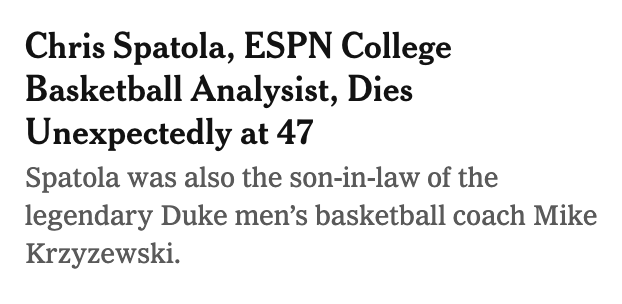
Tragic news, marred by what we still call a “typo.” (You might need to look for it again, unless you are a former English teacher proofreader-type too.)
Frequent and discerning readers of The Gray Lady know that repeated words, misspellings, and false start sentences are not uncommon, even in 2026. They are invariably corrected the next time you think to refresh the page–but they still happen (and some make a cottage industry of noting them).
Whenever I encounter one I treasure it. Because it means there is a real person on the other side of my screen, in Times Square or L.A. or Paris or Baghdad, going hell-for-leather to make deadline. Not an A.I. agent. (Well, not until AI starts putting the right titration of typos into its prose to meet its ends.)
I have held for a few years now that soon actual “typos” will be precious, almost-boutique experiences, like face-to-face schooling. Because they will mean a real person is passing through an experience alongside you, sharing your time and space and making sense of the world too. I think that time is already now.
(And as a waggish friend noted: “I also love that the NYT could misspell ‘analyst’ but spell ‘Krzyzewski’ correctly.”)
2. The Kids Are Alright, and Angry.
I brought Stanford’s AI howler to both my undergrad sections of preservice teachers this week.
We use my collection of manual typewriters for reflective writing, to find the contemporary themes of historical reading and make connections to experience that transform ideas into learning. Inevitably, work with these beautiful hands-on machines invites excursions into what technology does, can’t do, and might do to and for the yet-hypothetical classroom of their subject and level.
As I never tire of reminding them: my phone distraction / using AI “for brainstorming”/ reality bending teaching problem today is their problem in @ 3 years. What are they going to do about it?
I have to screenshot the image from the NYT story, in case you have somehow missed it. You need to have the same chance to react that they did.
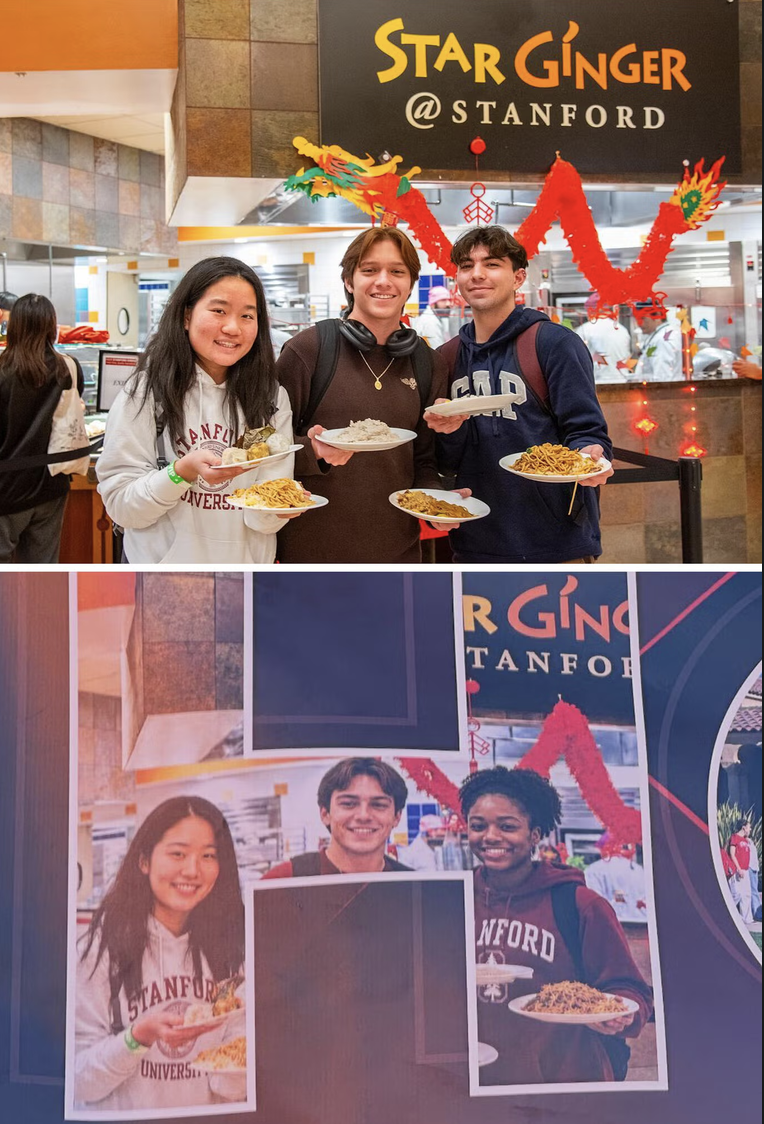
The first photo was snapped of three undergrads at a “Lunar New Year Party in 2024.” I imagine this was a late night dining promotion, like midnight breakfast during exams. The second appeared in online university promotional materials last week.
The student on the right in the original photo, Billy Ramirez, seems remarkably good-humored about the revision, though also unsparing. After all, university students, staff, and faculty of color are used to having their images centered, altered, or removed, as suits the branding need of the moment.
“To see me erased like that so easily was kind of very upsetting,” Mr. Ramirez, who is Hispanic, said in an interview on Tuesday.
Mr. Ramirez, a senior who is majoring in human biology, said there was “a comedic element” to the matter. Nevertheless, he said that he was frustrated by Stanford’s move, which he learned about from a friend.
The other students in the original photo “did not respond to emails on Tuesday.” The student on the right in the altered photo could not be reached for comment, obviously, because she does not exist. (Her AI sister Tilly might be game to offer some word salad, in a language or two, maybe.)
My own undergrads’ response didn’t start with racial / ethnic erasure, though. Instead they zeroed in on the revisions to make the other two students more conventionally attractive.
“They made them hotter,” was the first, dismayed comment in one class. “It’s the dining hall late at night. No one is camera-ready. People are just wearing whatever and trying to get something to eat.”
We went on to talk about that mix of aspiration and self-loathing that powerful advertising sparks inside us. Obvs, they agreed.
But then a student said, “If I see the second photo in an ad, it makes me not want to go to Stanford. No one really looks like that. Where would I fit in?”
In one acid take that student undid a century of marketing campaigns, and decided to let be be finale of seem.
I tried the counterpunch: “But what if you are the UComm employee who has to finish this web page and two more before midnight. You do not have the actual image you think you need! Can you see why maybe, just this once, you could fudge it with AI, and make up people who don’t exist?”
Absolutely not, both groups roared back at me. Not even worthy of response. Authenticity above all. Reality above all, said the room.
“Besides,” came the coup-de-grace: “This same university will bust you for using AI to write a paper.
“How can they turn around and use it themselves?”
3. The Canoe
Twenty years ago I helped start a microschool in the North Carolina piedmont. It did not survive past its first year. The experience taught me gratitude for institutions, for existing infrastructure that doesn’t need to invent a way to get attendance to the front office by 9 AM every day, etc.
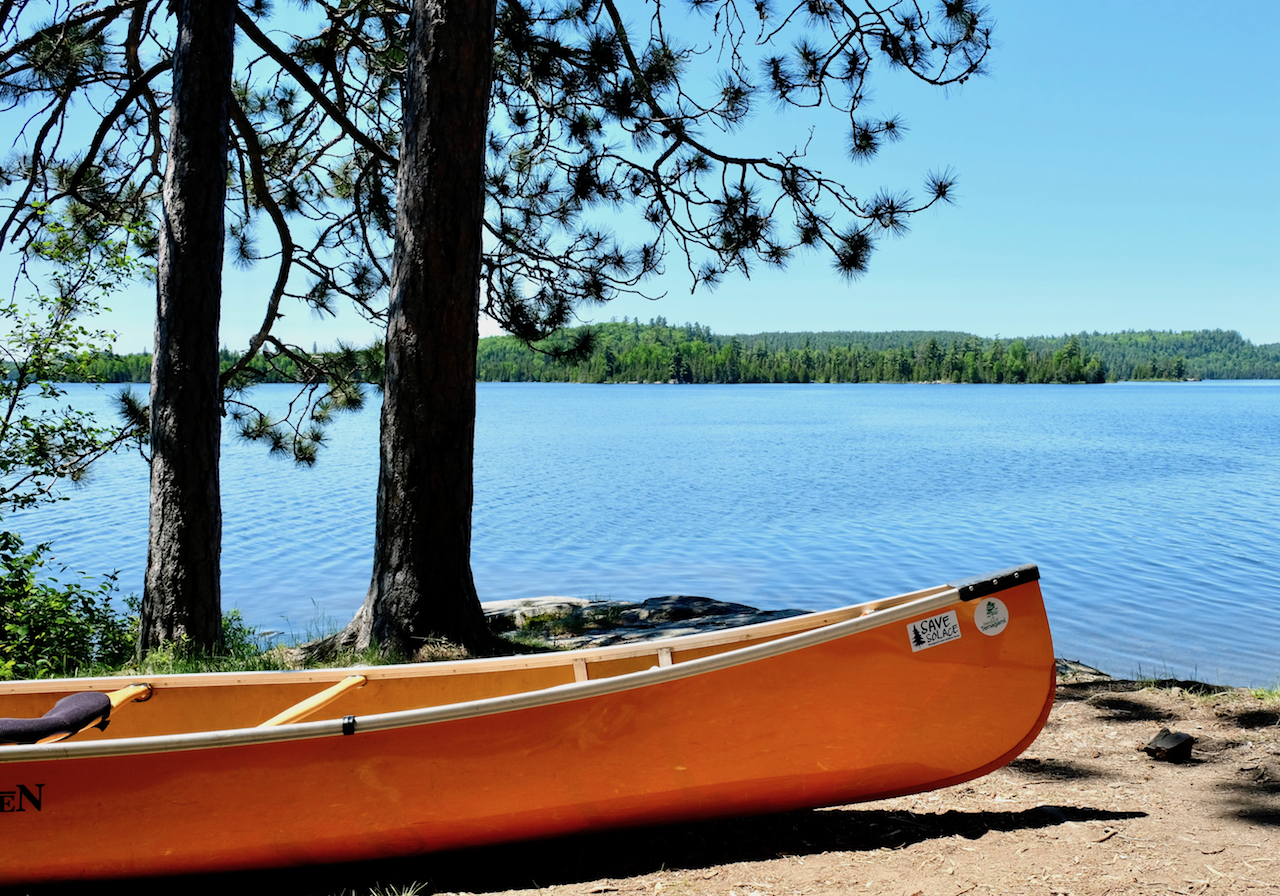
But in class this week, another lesson from that time came back to me. One of our organizing team was tech-savvy, and used PhotoShop (oh innocence) to place the name of the school in many becoming photographs that supported its vibe. Our building backed on a lovely river; one photo depicted a Coleman canoe nosing into a sun-dappled autumn stream, with the school name now proudly lettered in gold on the transom.
We are all dazzled, excited by how our nascent website would be zhuzhed up by these gorgeous images. We will have so many prospective students applying!
But one of the teachers contemplated the pictures silently for several moments. Then she asked,
“What do we tell the student who shows up on the first day and says, ‘I want to see the canoe’?”
She was right.
The trust of a young person in the intentions and credibility of a new school comes down to whether or not it is what it says it is.
How can a student know they are safe–know they can relax and trust–know they are free to do the work they are here to do–without that rock-solid confidence?
The photos were forgotten.
The young people are done with appearances and promises.
They just want to see the canoe.
Lead image borrowed from The Happy Adventure, with thanks.

