Skip to content

Chris Osmond PhD

  • Typewriter Agonistes
  • Human Words Project
  • Human Teaching: Get The Book!
  • About
  • Contact

  • for a vast future also

    November 6th, 2012

    Last spring, there were reports of Mitt Romney bullying another boy in grade school. Charles Blow’s NY Times op-ed helped me think about it then. Today, as it seems every bump in this eighteen-month presidential campaign (from the dog on the roof to the empty chair) is being compiled and re-run, I find this story curiously absent. I wonder what it means for our times, and our election today. It seems pretty important to me.

    After the story broke, Romney apologized, after a fashion:

    Back in high school, I did some dumb things, and if anybody was hurt by that or offended, obviously I apologize for that…I participated in a lot of hijinks and pranks during high school, and some might have gone too far, and for that I apologize.

    And Blow cries foul:

    If someone was hurt or offended, “I apologize” isn’t a real apology. Even if no one felt hurt or offended, if you feel that you have done something wrong, you can apologize on that basis alone. Remorse is a sufficient motivator. Absolution is a sufficient objective. Whether the person who was wronged requests it is separate.

    Blow calls Romney out for the insufficiency of a hands-in-the-air “no harm, no foul” approach. He fumbled “an amazing teaching moment about the impact of bullying,” and thereby failed to show leadership. True enough, maybe.

    But for me the issue turns on that little word “obviously.” I think it reveals contempt for the person who was wronged. It says more about the speaker than it does about the hearer: that s/he is saddened by suffering because any decent person would be, and of course s/he are one of those (decent people). “Obviously” trails a tacit “but,” in the clause of the sentence that’s rarely said (until the “apologizer” gets angry that what he’s proffering hasn’t been accepted).

    I’ve mentioned elsewhere the bullying reported by Dan Savage’s husband Terry in their “It Gets Better” video (the one that started a national movement). The “but” is silent, and especially searing:

    My parents went in once to talk to the school administrators about the harassment I was getting in school, and they basically said, “if you look that way, walk that way, talk that way, act that way, then there’s nothing we can do to help your son.”

    Once your ear gets tuned to it, you can hear the “but” all over the place. It’s in the defense proffered by the Birmingham clergymen who decried the unwelcome presence of the “outside agitators” like Dr. King who were upsetting their congregation’s apple carts, and called for “the principles of law and order and common sense” to prevail. I’ve used it myself: as a freshman in 1987, I was told I was required to attend an LGBT sensitivity session with the rest of my hall. I took my RA aside after and told him that I would not be attending, since I was at the time an active member of a faith community that found homosexuality sinful. “Obviously,” I felt that no one should be subject to violence or discrimination (I was a good and decent person, after all) – “but” I had another, higher allegiance, don’t you see: one that certainly opted me out of being made uncomfortable by hearing stories of difference from the people whose lives I’d be sharing for the next years.

    In hindsight I can see that sexual difference was deeply unsettling to me, a small glimpse of how unsettled that tradition left me generally. My RA, to his great credit, informed me that my discomfort was sort of the point: that my obligations as a “good person” in fact extended beyond me, and that my membership in the larger human community implied allegiances that might need to transcend my faith. He didn’t say that I needed to change my mind or my heart, but he did say that I needed to understand how life felt in another’s shoes. The conversation got intense – quite, considering I had been at college one week and we barely knew each other. I think I finally mumbled something about agreeing to disagree.

    I share my story because it’s personal and uncomfortable (that’s why stories teach, BTW – and precisely why they belong in teaching, especially the teaching of teachers and other caring professionals). I think it illuminates the difference between “sympathy” and empathy,” to start – a difference made and articulated in medical education (important as it is to training up compassionate doctors):

    In social psychology, both empathy and sympathy can lead to a similar outcome (e.g., prosocial behavior), albeit for different behavioral motivations. For example, a prosocial behavior that is induced by empathic understanding is more likely to be elicited by a sense of altruism. A prosocial behavior that is prompted by sympathetic feelings, however, is more likely to be triggered by egoistic motivation to reduce personal distress…

    This is stunning insight: it helps us see the difference between attending another’s suffering because not to would mean you were a bad person, and attending another’s suffering because you wish to live in a world where we care about other’s suffering. Sympathy, then, is a defensive, frightened, isolating experience. Empathy is an opening, peaceful, connecting experience: a glimpsing of the interdependence of you and me that Karen Armstrong states lies at the heart of all world religions, succinctly expressed in the universal dictum not to do to another that which would be painful to yourself. The first is base, the second transcendent. The first has a “but” (I’d do more, but I am not like you), while the second has an “and” (I am like you, and will strive to regard you as I myself would be regarded).

    I’m not blogging for or against a candidate – it’s not my place, not here. Who can really say how revealing a youth’s actions are of his adult heart (mine has certainly been changed since my freshman year); besides, I am in the business of believing that education changes hearts and minds. But I began this post months ago, and was drawn back to it on Election Day as I reflect on where our nation might be headed tonight: what it might mean for policy deadlock and civil rights, for our nation’s role in the world. Not militarily or educationally but morally, as a nation whose system was forged to allow compassion as compromise, empathy as coming to understand the others’ perspective and needs and working to accede to it as one can. If we have a destiny in this interconnected world, I would hope it would be as an example of how thoroughly we embrace the possibility of compromise – compromise born of empathy for the other.

    Last month I went with my family to Washington D.C. and saw the monuments, stood in the temples of universal suffrage and enlightenment that we rally around: the Lincoln Memorial, The Library of Congress. I heard how in 1861, Lincoln noted that the struggle engulfing his nation “is not altogether for today–it is for a vast future also.” I feel the same resonance today, in the hope that whatever might come of our struggle today will foremost be a call for coming together despite our discomforts, for embracing empathy rather than sympathy for all those who constitute our People. And whatever the outcome, I hope for a future of commitment to compromise that hurts sometimes: compromise that makes both sides uncomfortable in the name of seeing the world from another’s shoes, and reaching out to meet another’s needs. Perhaps starry-eyed to wish for, but I am a patriot, and believe we can do better.

    Obviously. May we.

    Image from Wikipedia.

    Share this:

    • Share on Facebook (Opens in new window) Facebook
    • Email a link to a friend (Opens in new window) Email
    • More
    • Share on X (Opens in new window) X
    • Share on Reddit (Opens in new window) Reddit
    Like Loading…
  • the lion’s other name

    September 25th, 2012

    In A Primate’s Memoir, Robert Sapolsky tells a story I can’t shake. I think it has something to teach me.

    It’s his memoir of years in Africa conducting neuroscience research on baboons, which involved a lot of hanging nose-to-nose with species – and people – far different from he. One such person was Rhoda, a woman half-Masai and half-Kikuyu, whose heritage meant that she understood the outside world better than most of her tribe despite having been raised within the legendary insularity of Masai culture.

    Sapolsky asks Rhoda if what he has learned from his new Maa dictionary is true: that there are two names for “lion” in her language. The one he had been taught (by her) was actually the fake name, to be used out in the open. But the real name was only to be said in the safety of your house, at night. That the Masai believed that if you say the real name outside, the lion will hear its name and come and eat you.

    Howzabout it, Rhoda., is that true? Yes, it is true: you should not say that name; she gets visibly itchy each time I do. Aw, come on, Rhoda, the lion isn’t going to come. Yes, I have seen that many times, it will come and eat you. Aw, come on, really. Yes, I heard that it will happen.

    I push harder. Come on Rhoda, are you telling me that the lion will hear its name, you know that lions cannot understand that, they wouldn’t come.

    Yes, they will come.

    The lion understand Masai language?

    Finally, she gets irritated, and in one petulant paragraph sums up the two worlds she knows about and how she balances them.

    “The lion cannot understand its name. Anyone who has been to school knows that a lion cannot understand the language of people…But if you say that word too many times outside, the lion will come and eat you.”

    The subject was closed, as far as she was concerned (pp 51-52).

    On the surface, this is a straightforward story of how deeply culture has its teeth in us: how even when we have trained our rational minds and become enlightened, we remain in thrall to the earliest messages we were given about the way the world works. We would do well, it seems, not to leave the “subject closed” – to ventilate the closed closets of our minds and our souls, open them to the clear light of reason and research and give up our old superstitions.

    But the story sticks with me, I think, because of the petulance with which she acknowledges her own contradiction (or, maybe her “negative capability,” Keats’ lovely phrase for the capacity to hold on to opposing truths without rushing to resolve dualisms or shorting out your sanity).  Why is she reluctant to give up what she knows cannot be true?

    Perhaps, I wonder, because it is true. True in a different way than can be demonstrated: true because it is wise, and innate, and deeply felt in a place that includes her mind but is not exhausted by it.

    Her we are entering the realm of “body-knowing.” I explore elsewhere Grumet‘s take on the phenomenological notion that “the world is answer the body’s question” – that it “arranges itself around our hopes, needs, and possibilities, real and imagined.” It’s a powerful idea for reasserting the value of subjectivity in a culture that finds it increasingly suspect. But Sapolsky’s story helps me see just how deeply our embodied knowing about the world shapes our engagement with that world – and how well-served we are by holding on to our deep, primal knowings, even when they are called out as irrational or counter to “best practice” or just plain not-valued.

    I think the apparent esoterics of what is known and not-known actually have vivid application to teacher education. Teaching is increasingly considered a closed science by the teacher education and assessment models that have become nearly hegemonic (as the closing credits of Waiting for Superman have it, “we know what works”).  Any body-knowing that the prospective teacher might bring to the work in this environment is suspect at best and counter-revolutionary at worst. Our own experiences of having been taught – in our culture of compulsory education, the very experiences that formed both who we are and, later, our sense of vocation to enter practice – is to be abandoned, or at least seriously questioned, in the light of “research-based” pedagogies which we must adopt if we are to be serious about this work.

    It is certain that some of our stories about the world must be interrogated and ultimately discarded. The great gain of No Child Left Behind (for all its tragic losses) was its articulation of the “soft bigotry of low expectations,” which opened ground for serious exploration of bias, stereotype threat, and the rest of the complex of self-fulfilling prophecies (or heuristics, if you agree with them) that maintain the yawning achievement gap. My “hopes, needs, and possibilities, real and imagined” may involve the short-circuiting of another’s, based on assumptions baked into my stories about the capacities and intentions of student race and ethnicity. gender, socioeconomic status, sexual orientation. I completely accept the presence of bias in our educational culture, and support our best efforts to counteract its miseducative legacy.

    But still, there must be a place for the wisdom of my students’ stories about teaching: a place front and center in my curriculum, not sneaked in around the edges as reflective essays about my “favorite teacher” or my “favorite class” that future teachers write and then go through the pockets of for insight into how to go and do likewise. It is so much deeper than that – or must be, if we are to take seriously the implications of understanding this work as vocation, not job (or even profession).

    I am coming to see that perhaps the greatest value of the work I do with future teachers, nurses, and social workers with stories and poems about giving care is that reading someone else’s stories calls out our own. Inevitably, reading a poem like “Call Room” in a group brings into that group the stories that each member also carries from her days of training; “September, The First Day of School” invites bright recollections of all our first days of school (for all of us have been one end of that hand-holding at the classroom door, and many of us have been on the other). By giving place to an absent teacher or nurse’s story, suddenly we have a unique place to reflect upon our own  – even if it contradicts what we are “supposed to think or do” in our practice. Even if it doesn’t make sense logically, but does, deeply, to us.

    And maybe Sapolsky’s rollicking and overflowing stories have called out my truth here, helping me really understand that in my deepest self I feel that our stories must be a part of how we engage with our teaching world, why that’s the engine that drives my own research. And for that I’m grateful.

    Image from the National Zoo site.

    Share this:

    • Share on Facebook (Opens in new window) Facebook
    • Email a link to a friend (Opens in new window) Email
    • More
    • Share on X (Opens in new window) X
    • Share on Reddit (Opens in new window) Reddit
    Like Loading…
  • the joy of grading papers

    September 20th, 2012

    TL;DR: Can thinking about how we enjoy art help teachers enjoy the drudgery of their work? I think so.

    I am in the weeds of some headache-inducing philosophy today: trying to understand some rather abstruse ideas, because I keep glimpsing ways I think they can help us understand some of the most pressing and practical issues in teaching. I grow so impatient with some philosophers, especially phenomenologists like the guy I am working with right now (Roman Ingarden). I am all in favor of saying something specific using lots of words, if you need all the words (and specialized vocabulary) to get across something that has not been said before – and I think that’s what he’s doing here. But still – uy.

    There was a time when the music of long words and complex arguments was entrancing to me for its own sake. The ability to use those words had self-esteem value as a marker of how well-read I was becoming as much as for their actual import. But I am at a different place now, and am eager to understand high-minded stuff in ways that I can really relate to pressing questions that I face as an educator, and that my students will face eventually. I value erudition clearly expressed, above all.  (I don’t find this an anti-intellectual stance, incidentally: if anything it is energetically pro-intellectual, believing as it does that the life of the mind has vital contributions to make to policy and practice. So there.)

    I’m also working on a paper for a philosophy conference next month, and these ideas are finding their way into that project, in the specialized language that is always a part of professional boundary maintenance. But this blog always helps me find (I hope) a clear way to express sometimes muddy concepts. So here I’ll try to explain clearly why I find this 1961 paper by Roman Ingarden so exciting, and why I think its insights have a lot to offer people who are engaged in the vocation of teaching. (And if you’re attending the conference too, well – spoilers ahead.)

    Ingarden’s main project is to understand what we are doing with our mind when we become so engaged by an object that we get “swept away” by it into a rapturous engagement with it that he (among others) calls an “aesthetic experience.” The exciting idea he brings to this question is the notion that you – the viewer of a painting or a statue, or the hearer of a song – are participating in making that art object the something special that it is.

    On the one hand, the idea that we participate in making art special is not so new or groundbreaking – I blogged about it earlier today, in fact, maintaining that it’s the specificity of our own engagement with this viewing of a film, or that listening to of a record, in a particular moment in space and time that makes it so moving to us. But I think he is going my idea one better: he is suggesting that we are actually doing some of the work that makes that painting, statue, or record so entrancing to us – that without us, it maybe is not so special. The work we are doing involves our willingness to cooperate with the object itself to make it all it could be, even if that means willfully ignoring some of its faults that might detract from its beauty, or becoming “complicit” in agreeing to imagine parts of it that are not there yet or never were, but that – if imagined – make it even more gorgeous.

    He uses a vivid example: the iconic statue of Venus de Milo. The one thing everyone in the world knows about this statue is that it does not have arms, and yet most of the world still finds it ineffably beautiful. How come? Ingarden thinks it’s because the statue’s present qualities – the ones that are really there – are so engaging and promising that we willfully overlook any qualms we might have about looking at an armless statue and cooperate in imagining their presence (or, at the very least, not letting their absence detract from our experience of its beauty). The arms are only the most apparent example of the willful fooling-ourselves that we are willing to do: we will work to overlook all other kinds of flaws that might be found in this or any physical object or its presentation (e.g., pits in the marble, discolorations, bad lighting, a noisy tour group) if we are so engaged by the possibility of gorgeousness that we think it’s worth the effort.

    So in a real way (this is what he finds most interesting, though not me), the object we are looking at and digging so hard is not actually a real object: it’s a constructed one in our minds, one where we have willfully filled in all the holes and glossed over all the faults in order to better render it something gorgeous and satisfying. He has some interesting ideas about how we know we are actually having an “aesthetic experience” because we can actually track our having of it by how completely we forget, if only for a moment, the everyday world we are in (we stop “dead in our tracks” to contemplate a gorgeous sunset, then have to remember what we were up to before we can continue on with it).  Which is cool, because it helps explain (justify?) the way the arts interrupt everyday life and (hopefully) change our perception of everyday life when we have to get back to things.

    But the reason I find this whole consideration of aesthetic experience most interesting and exciting is because I think it helps explain a big part of teacher’s daily work and why (how?) they find it satisfying.

    It seems pretty inescapable to me that teachers (English teachers and education teachers, in my personal experience, though I am pretty confident this holds for all other disciplines too) spend huge amounts of time hanging nose-to-nose with incomplete, underdeveloped, and sometimes just plain bad work. That’s because teachers, by definition, work with people on things that those people are not good at yet. or not-as-good-at-yet as the teacher is. The writing teacher became a writing teacher by reading a LOT and doing a LOT of writing; that’s what makes her someone in a position to help other people get better at writing. But that also means she’s spending practically her whole professional life with incomplete, underdeveloped writing – the exact thing she has spent a career identifying and, presumably, learning to avoid. How is she of all people – someone who KNOWS good writing, and presumably LOVES it – supposed to stay engaged and compassionate and focused and productive through hours and hours of reading POOR writing? Put this way, teaching – or at least marking up and grading student papers – seems like torture, and any pleasures that might derive from it seem masochistic or, at least, a little twisted.

    Enter Ingarden. Maybe what the writing teacher who thrives in this work is doing is a version of what Ingarden talks about: she is becoming arrested by the potential beauty that even incomplete or underdeveloped writing has within it, and is willfully doing the aesthetic work of creating another, “aesthetic” object of that writing in her mind: something that is more fulfilling, more satisfying. The “teacherly” part of this aesthetic work, of course, is the sharing of her own aesthetic construction of “what this paper could be” with the student and encouraging the student toward a better-developed next draft. Which draft may or may not conform directly to the aesthetic vision of the instructor, to be sure – but perhaps the aesthetic “object” conjured up by the professor will offer one possibility among many of where to go next. (This model does not, I think, have to be overly didactic – it’s a way of visioning and communicating potential and next steps, not a prescriptive recipe that removes the student’s voice and will.)

    More to the point that I find most urgent: this way of thinking about the drudgery of spending days with incomplete work empowers the teacher to be not just a proofreading, red-pen automaton, but rather a constant seeker of aesthetic experience. And that’s an endlessly rewarding endeavor. We all LOVE aesthetic experience: by definition, really, it’s all the stuff we do not because we have to, but because we WANT to, because it gives us pleasure. Seen this way, perhaps the reading of student work becomes intrinsically satisfying to a teacher, BECAUSE she is doing the aesthetic work in her mind to make it so. And then, in handing along her vision of “what might be” to the student, she is also fulfilling her teacherly duty to help the student develop new knowledge, skills, and attitudes (not least, the attitude that “hey, maybe I have the germ of something beautiful within this draft. Let me go back to it and work on it more”).

    Teaching is an uncertain business: despite the ever-mounting accountability measures that pretend otherwise, teachers really cannot see with clarity the full result of their efforts. They cannot know for certain that the sum of all the parts they work through with students will have been worth the work; they cannot know for sure that the drudgery aspects of their practice will always pay off. I am deeply impressed by how similar these teacher challenges are to the challenges that face other “caring professionals” like doctors, nurses, social workers, ministers: all people who work  on one issue after another, usually for long periods of time in under-resourced, high-stress environments, usually without much sense of the actual impact of their efforts. All of these fields struggle with burnout, “compassion fatigue,” and high attrition rates: all of them desperately need ways to engage their work in ways that find intrinsic satisfactions in the doing of the work. And I believe they all need to evolve to the point where asking that question (“what in this work can feed me?”) does NOT break the deep cultural codes of service at the expense of well-being that saturate all these professions, but especially the lower-status ones historically dominated by women: teaching, nursing, social work.

    These same themes – perseverance in the face of uncertainty; faith that the result of what we are doing will be more than the sum of its parts; acceptance that some parts of the work are drudgery, but still have value even though it’s not immediately apparent – happen to be part of what leads Hansen to claim that teaching is best understood as a “vocation” (rather than a job, an occupation, or even a profession). Hansen (convincingly, IMHO) argues that vocation is the word that best describes what we do for two reasons: because the work is important for reasons BEYOND self-satisfaction (i.e., it has moral value) while at the same time giving us some sense OF self-satisfaction (affirming our sense of identity and worth, helping us feel we are doing the work only we can do). Only “vocation” gets at that quality of teaching, and in Hansen’s hands a big part of keeping that inside satisfaction / outside importance synergy going is remaining genuinely engaged in the parts of the job where the payoff is uncertain. where we need faith that it will all be worth it someday, and where we might be worn down by the work but need to see that the wearing-down parts also have deep meaning and significance (however invisible that may be in the moment). Only “vocation” gets at the quality of caring work that invites the practitioner to find ways to feed her own needs for pleasure and satisfaction WHILE meeting the needs of her students.

    It seems to me that if we can find ways to talk about the intrinsic pleasures of doing caring work, and empower practitioners to bring satisfying ways of engaging tasks to their practice, we’ll have made significant progress toward addressing the burnout and attrition issues (at least on the individual, disposition level: institutional factors are a whole other bag of cats). We’ll improve the work experience of caring professionals, and along the way improve the quality of the care they are capable of giving. Aesthetic theory might seem like an odd place to look for ideas that can do that for us, but I say if the shoe fits, let’s invite people to wear it.

    If this all makes sense to you, I’d love to hear your own thoughts.

    Image from Wikipedia.

    Share this:

    • Share on Facebook (Opens in new window) Facebook
    • Email a link to a friend (Opens in new window) Email
    • More
    • Share on X (Opens in new window) X
    • Share on Reddit (Opens in new window) Reddit
    Like Loading…
  • angels in the architecture

    September 20th, 2012

    In December of 1989, I was living in a remote and very cold Spanish town. I had chosen to be disconnected from most of the world for the previous year – no news, little connection with family or friends – and only listened to sacred music, if any. I was enjoying a newly-arrived cassette copy of an album of hymns that a friend had made for me, and the album ran out before the tape did. In the palimpsestic way that we shared music back then, the cassette had previously held a copy of U2’s The Joshua Tree. So I suddenly and inadvertently found myself listening to the last moments of “Trip Through Your Wires,” followed by the chiming introduction of “One Tree Hill.”

    Things got very complicated. In my world of that moment, such music threatened the spiritual equanimity I was trying to maintain, and I reached to turn it off. But I couldn’t, swept up in the spacious architecture that spanned between The Edge’s arcing lead lines and the gentle train-track rattle and sway of Larry Mullen’s rhythm. I had a transcendent experience, best I can tell: my definition of “sacred music” grew three sizes that day.

    The song is drawn like that. It progresses through the most essential tensions and releases of the American sacred and secular idiom – but like so much blues, it never makes it to the five, too busy with the implications of the one and fours. (Put another way: “Amazing Grace” let’s you off the hook, but “Boom Boom” never does.) U2 were deep into blues and Americana at that point, and nothing was an accident on that record. That was enough for me, apparently. Of course I knew the album, but had never heard the song – in my defense, it’s a deep cut, the penultimate one, if one of the biggest albums of the century can be said to have deep cuts. I was rapt, and transformed when it ended, come through Saturday night all the way into Sunday morning.

    Cut to eight years later. I am in Spain again, this time with a group of high school students on a homestay. I am in another extreme state here, perhaps back to Spain to try to set right some of what had been amiss the first time, ghosts everywhere. Spinning U2’s anti-manifesto Zooropa in my host teacher’s guest room, I get that same zing listening to “Dirty Day” (also the second-to-last song on that record). Again, the track is a consummation intimated but never attained, as the four-chord vamp falls endlessly but never hits the bottom. This time the architecture burrows rather than soars, and down I go along with it. A little light breaks through on a single, pale bridge, but that only makes the following darkness deeper.

    So, I met God and the devil at the crossroads of two U2 songs. I know: check please. But both these experiences keep rising to the surface as I read considerations of whether there’s a science, or at least a system, to what makes music affect us. Slate has a nice summary of some recent articles in this vein, which turns especially on the power of Adele’s mega-single “Someone Like You,” and it was on our mind before that thanks to Oliver Sacks’ Musicophila (and not a little thanks to SNL). I find ditherings about the science of music kind of beside the point, actually (all respect to Dr. Sacks). Efforts to account for art’s power to move predate brain scans by a fair piece, and when I read some of them back in the aesthetics class I took at Duke I remember being amazed just how far the algorithmic impulse seems to stretch, and to how little effect; how much we want to be able to rationalize what’s going on, in order to duplicate it for greater profit or psy-op it into a more persuasive jingle for our soap or our cheeseburgers.

    More interesting, I think, is David Byrne’s new book. I’ve only read the free chapter, but he is definitely onto something as he explores the upside-down idea that “context largely determines what is written, painted, sculpted, sung, or performed”:

    That doesn’t sound like much of an insight, but it’s actually the opposite of conventional wisdom, which maintains that creation emerges out of some interior emotion, from an upwelling of passion or feeling, and that the creative urge will brook no accommodation, that it simply must find an outlet to be heard, read, or seen. The accepted narrative suggests that a classical composer gets a strange look in his or her eye and begins furiously scribbling a fully realized composition that couldn’t exist in any other form. Or that the rock-and-roll singer is driven by desire and demons, and out bursts this amazing, perfectly shaped song that had to be three minutes and twelve seconds — nothing more, nothing less. This is the romantic notion of how creative work comes to be, but I think the path of creation is almost 180 degrees from this model. I believe that we unconsciously and instinctively make work to fit preexisting formats.

    Byrne is exactly the guy I want to hear hold forth thusly, as my generation’s premier pomo artist/musician/fellow who’s thought a lot about this (he went to art school first, remember: Velvet Underground found art through music, Talking Heads brought art to music, maybe). His thesis is really fun to follow, as he wonders at how everything from Ramones to Bach to Wagner to Ghanian drum circle happens the way it does because of the place in which it happens, first and foremost: rocks and trees, and physical culture.

    So maybe music is about a feeling that you are more or less likely to have in a particular place. And if in our culture there are some moves to get you there that always work, that’s not the same as having a formula. “Why are the Black-Eyed Peas so popular? They can’t sing!” bemoans my youngest son. “Dirty Bit,” I reply, and he reflexively begins singing the buzzing bass line of their elementary-school anthem “The Time” – itself built on the irresistible chorus that made it essential to my generation’s school dances too. That’s why: The Black-Eyed Peas know where your button is, and they push it again and again. It’s not about singing – it’s about knowing where you live. Just ask will.i.am:

    I don’t write it on paper; I record and write into the machine. I would mumble a cadence. I know if it feels good or not because I’m hearing it rather than writing it on a piece of paper.

    The interview’s amazing to hear, as he freestyles rhythms into a recorder on the spot, discarding what doesn’t work and repeating what does until he’s got something intense that moves his personal motorbooty. And that’s the song. The space will.i.am records for is the space inside his head – a space that, somehow, also leads to sounds that work in cars, and clubs, and Super Bowl halftime shows.

    Maybe we should acknowledge that fitting music to its space includes its cultural space too, and maybe Black-Eyed Peas inhabit one of those rare, global pop spaces where their personality overwhelms their sound. In other words, they don’t HAVE to sound especially appropriate to their space, because their appeal in large part comes from their presence in all spaces. They seem content enough to inhabit Total Media Saturation uncritically (and lucratively). Not so U2, whose present work is constantly inflected by echoes of what’s gone before. Zooropa’s inevitably built in the shadow of the band’s monolithic previous success:  Achtung Baby was made to “chop down the Joshua Tree” and try to give them some creative space outside the earnest, brooding, Catholic high ground they had invented for themselves and were so viciously parodied for (Zooropa’s essentially its B-side, tracked during the two-year tour for AB). While Black-Eyed Peas sits still, like a slow-moving hurricane dumping rain until we’re all flooded out, U2 wants to move away from all they’ve built. Sometimes we go with them, sometimes we don’t.*

    My U2 experiences are inextricably connected to the spaces and times where and when they happened. Part of what makes music so universal is, paradoxically, how personally situated experiences of it are, even when it’s listening to a CD for the first time in a certain room, with a certain person (a timeless record of a performance rendered a single performance). Music can do that: inscribe a specific moment in time and place forever. I’ll end this with a memoir of just such an experience, names changed to protect the innocent:

    When I was twelve, I loved classical music. Maybe it was a nerdy act of self-empowerment; maybe I was scared by the cooler kids, unable to find any purchase in their world or their stuff; maybe it was just because those were the records I found in my grandmother’s basement, together with some Paul Mariat, some Herb Alpert, and an album of yodeling with a family of grim blonde people on the front in lederhosen. In any case, classical worked for me. It impressed grown ups, and there was tons of it in the house. I brought the set of all twelve Tchaikovsky symphonies into school for my sixth-grade teacher to spin on the record player while we did individual work. The others must have loathed me, but I was a pig in mud. My parents let me move the massive tube radio into my room so I could listen to the public radio’s classical broadcast while doing my homework. My grades were good. And so it went.

    The Anderson girls changed all that. They were four sisters I knew from church, as close in age as was physically possible, from high school on down. They loved me, like a little brother I guess. They were part Cheryl Tiegs and part Joan Jett, identically feathered hair running blonde to dark black; they wore faded, snug Lee jeans, matching white leather Nikes, and menacing black T-shirts featuring musicians I did not know.

    One shirt in particular of Elaine’s stands out: a blue baseball jersey with white sleeves that featured the fierce glare of the yeti-owl from the cover of Rush’s “Fly By Night.” Of course, I did not know about Rush, or any rock music, until one day at their house. We were in the eldest’s room, where a dozen posters of hulking, homely men in tight silks, hair flowing like gladiators, loomed on the walls. Fog and sweat abounded in concert photos, glowering intensity in the portraits. I asked her who they were. Incredulous, she pushed me down on the bed. “You gotta hear this,” she said, and clapped enormous pre-Walkman headphones on me, the cable coiling like a viper across my lap. Turning to the massive stereo’s turntable, she carefully set the needle on “YYZ”, an instrumental track from Rush’s just-released live double album “Exit…Stage Left,”  and left me alone in the room, like Tommy before the Acid Queen.

    Scratchy quiet. Then, an urgent, stuttering rhythm on a tiny triangle, a sledgehammer of dense articulation. It was so loud, low and high hurtling together through a dissonant pair of notes to the same rhythm, a wash of space synthesizers descending beneath it to the tonic to end with eight epic, ostinato pulses. A second of silence echoed in the hall – punctuated by a  joyous whoop from a blissed-out fan – and the guitar, bass and drums blew back into the room, now in ascending unison, an irregular figure worked out according to logics sensed but not evident, spinning in filigree until it swooped like a shimmering dragon into the abyss as the drums settled into a driving pulse beneath the snarling guitar theme.

    It ran for seven minutes. I cowered slack-jawed between the cans, battered by my first onslaught of deadly serious high-baroque progressive rock. Neil Peart’s legendary drum solo was impressive, but its details were lost to me on this first listen; I was snowblind, overwhelmed by the sparkling brilliance of this new territory, barely hanging on through to the song’s end. I took off the headphones as she came back in the room, the joyous grin that comes from sharing something very precious breaking over her face. “What did you think?” she asked.

    *apropos to nothing, but still awesome: I think Britney Spears’ “Til The World Ends” is a block-rocking beat in part because, in the single mix, they slyly muffle the high end and boost the midrange of the out chorus so it sounds like it’s coming through the walls of a club you’ve been waiting all night to get into. Suddenly, in the middle of an obliterating dance track, there’s a pressure drop, and a sense of space evoked in your mind, if not your body. This music belongs to a certain kind of room, it says – won’t you come with me there, now?

    Thanks to Scott Shephard for image – used under Creative Commons license.

    Share this:

    • Share on Facebook (Opens in new window) Facebook
    • Email a link to a friend (Opens in new window) Email
    • More
    • Share on X (Opens in new window) X
    • Share on Reddit (Opens in new window) Reddit
    Like Loading…
  • you better recognize

    August 21st, 2012

    The knee is letting me run again, so I’ve been out around the campus and Boone a few mornings this month. Running outside and running on a treadmill shouldn’t even use the same verb. To run is to be in the world, but not of it, a twenty-first century flaneur granted permission to see everything while remaining mostly invisible. What a pleasure.

    Except that when you’re a professor on the campus you’re running around, you’re not invisible, of course. One of my students from two years ago spotted me in my fourth mile trance last week. When I waved, she startled, then waved back, saying, “Oh, I didn’t recognize you!” My endorphin-rattled brain produced a very odd reply:

    “That’s OK: I don’t even recognize myself.”

    What could I possibly have meant by that?

    I think I probably was trying to laugh off that weird frisson that students experience when they see a teacher in an un-teacherly place (remember bumping into yours in the grocery store, at the movies? A universally weird and memorable sensation).  I was probably also mitigating a little of the self-consciousness I felt, sensing the distance between the floppy, sweaty profile I cut de pie and the more-or-less tucked in persona I inhabit professionally.

    But today, the first day of classes, I am thinking about just how aptly my malaprop describes what we are up to here in undergrad education, on our best days: providing opportunities for students not to recognize themselves.

    I am playing with “recognize” here of course, thinking about it as “re-cognizing:” actually engaging with a perception anew, “cogitating” upon what you’re perceiving until you know what to do with it next. The brilliant Elliot Eisner taught me (after Rudolf Arnheim, I think) that the arts help us understand education because we look at art to really “re-cognize” what’s there, rather than just recognize it as harmful/benign/useful/not-useful and file it away accordingly. I love how the word reveals that every time we regard something, we have a chance to re-engage it, re-see it, re-experience it as part of our world.

    But the experience I hope my undergrads can get in my class is an even deeper disorientation – one that tilts the table and actually invites a completely new way to see. Call it not-re-cognizing, but getting lost, if only for a few minutes. I’ll be experimenting this semester with different ways to invite that productive estrangement, especially on the topic of teacher burnout and how to engage the role in sustainable ways. As always, the opportunities that literature provide to inhabit another world and thereby gain new perspective on your own will be front-and-center. I am especially psyched to teach Dinaw Mengestu’s The Beautiful Things That Heaven Bears for the first time, as well as some other tried-and-true short stories about teaching.

    This notion of pedagogy is conceptual, but also deeply autobiographical, since the moments of my undergrad career that most affected me were usually the most disorienting ones. I’ve had some splendid professors – people who really knew how to get a guy lost, who I’ll re-cognize here:

    • Dean Edgar Beckham, who introduced me to Achilles and Agamemnon and helped me see how profoundly selfishness and duty could canker each other’s best intentions (I didn’t meet Odysseus until I taught him to ninth graders – I prefer him, for the long haul, to either of those spoiled children);
    • Professor Enda Duffy, who read Discipline and Punish with us and helped us see what something called “postmodernism” was through a newly-published Fred Jameson book. He thoroughly blew both my mind and my confidence that anything I was learning was in fact completely “right” (he also introduced me to the pomo tic of hyphenating otherwise benign words to smartypants effect – sorry, Prof. Duffy);
    • Professor Bernardo Gonzalez, who helped me see the world through the eyes of Spain’s greatest poet and martyr and introduced me to the surreal, dark, and deep parts of my own.

    And that was just undergrad. Each course shorted me out in ways that permanently altered my cognizing of everything that came after. My greatest teacher, though, may have been the exquisite film series where I spent a hundred hours getting bent by Blue Velvet and River’s Edge, My Life as a Dog and Delicatessen, Top Hat and Adam’s Rib (not all disorientation is unpleasant), and of course that capstone achievement of Western civilization, Raising Arizona. Those were the experiences we took back to the dorms and argued about for the rest of the night: the moments of being lost in the dark before alien worlds that someone had dared make real for us.

    The opportunity to not recognize oneself, to come back from a book or a discussion or a movie permanently changed. That’s probably my highest aspiration for my classes this year. because if my students have that capacity, they’ll be that much closer to the ability to see the classroom world they create through eyes other than their own; that much more likely to empathize with other’s needs and adapt to meet them; that much more likely to succeed at the daily balancing act of being who they really are in their vocations while also being who others need them to be.

    What brings us deeper nostalgia than the first day of school? We have all experienced dozens of them, on one end of a held hand or the other. My campus today is so much like the one I left twenty years ago. The poster sale in the Student Union does brisk business (Bob Marley and Joe Strummer remain in full effect), new clothes and backpacks sparkle on some and not others (socioeconomic difference being, perhaps, the most immediate diversity most of my students grok – and the one my class begins with).  Some of the styles are even coming around again, for better or worse (Frankie Says Neon: Hide Yourself). It’s school: deeply familiar, but with the constant possibility of finding something new, of the familiar becoming strange, of not recognizing yourself.

    I wish my students and colleagues a wonderful, strange year. See you ’round the campus.

    Thanks to Ken Davenport’s blog for image.

    Share this:

    • Share on Facebook (Opens in new window) Facebook
    • Email a link to a friend (Opens in new window) Email
    • More
    • Share on X (Opens in new window) X
    • Share on Reddit (Opens in new window) Reddit
    Like Loading…
  • dishonor

    July 18th, 2012

    I wore my Cub Scout uniform to school the day after I received it – even though I didn’t belong to the school’s pack; even though my Mom had yet to sew on any of the insignia or badges or anything. I was too excited about finally being a Scout to wait. I remember deep Cub Scout blue on a hot Maryland day, the way the crummy web belt’s buckle bit into my stomach when I sat down, the way the new neckerchief itched, how I craned my neck in the bathroom mirror to see its drape on my back.

    A deep impulse to join burns developmentally inside pre-adolescent boys. It’s connected to a desire to belong, and all the self-esteem and social issues that our culture piles on through high school. But joining is something else: for me, anyway, it was about the deep desire to make myself more than I was by fitting myself into a new, larger structure. Pre-adolescence is the age of spontaneously-formed clubs, secret hideouts and passwords and handcrafted codes for official missives and tapped-out messages through walls. It’s also the age of the nonsense songs, the deep desire to master their twists and turns so you can sing them knowingly together with everyone else. Everything in me wanted to know stuff that not everyone else knew; to join up, learn the code, wear the uniform.

    So I memorized the Oath and the Law, learned the knots and the knife safety, and began Scouting’s long meritocratic march of rank and recognition. It ended for me seven years later when I completed my service project (a monument to my hometown’s three Congressional medal of Honor winners) and became an Eagle Scout, third generation after my Dad, and his.

    Scouting’s lasting legacy in my life has been complicated. I developed some valuable skills – nothing falls of the roof of my car when we go on vacation, I’ll tell you that – as well a mixed relationship with life’s opportunities to meet goals for public recognition. Scouts is where I learned to set a goal and meet it, but it’s also the place I learned how personally devastating it can be to set your self-worth on an external result and not attain it. I think my Scouting experience bubbles beneath my compulsion to support future teachers in finding the engine of their practice within instead of without: self-worth is too essential a commodity to be assigned to others’ criteria. I don’t really enjoy camping as an adult: odd, for someone who did so much of it as a Scout. But a lot of that camping was happening to provide an opportunity to earn badges and meet requirements, so there’s probably a deep anxiety still associated with pitching a tent that, once we’re out here, there will be many chances not to measure up. (Or it might just be the result of too much winter camping in upstate New York with an inadequate sleeping bag).

    All these fragments are prelude to expressing my deep shame at the Boy Scouts of America’s reaffirmation of their policy to “not grant membership to individuals who are open or avowed homosexuals.” This statement should surprise exactly no one: the BSA’s largest private sponsor has pledged to disassociate itself from the organization were this position ever changed, and the numbers of Scouts affected, though dramatic, would pale next to the financial divot left in their books (actual numbers on this are as hard to come by as any other accounting of that sponsor’s financial dealings, but I think the dots connect easily).

    Besides, I can’t find a thoughtful argument for this decision, even one I disagree with. Poisonous stereotypes about the fitness of gay adults to serve as leaders of children were soundly debunked long ago, as have been all other hedges against full legal and civil membership for LGBT persons in our society. It’s especially baffling in light of the BSA’s progressive membership stance in other eras, and the undeniable fact that public attitudes toward LGBT discrimination has changed dramatically puts them on the wrong side of history.

    As an educator I am doubly appalled, though, because I understand the deep relationship between homophobia, bullying, and violence among children and teens -a relationship long assumed to be “part of growing up” that has thankfully been called out from the top down. There are policy changes and new institutional commitments to making that link clear and ending it – even a nationally-released film, for better or worse (for if the Weinstein Company is with us, who shall stand against us?). We’re in a moment when the “F word” that’s been hurled for generations in school halls and on playgrounds – and in Scout tents – might finally receive the disgust we now assign other words from our culture’s shameful past of hate and pain.

    It’s my fear of what now can continue to be said and affirmed in the private places of Scouting that saddens me most. How so many boys’ desires to join and belong – to wear the uniform, to be part of something bigger than themselves – have been officially thwarted. Words about respect and reverence are hollow when policy and practice contradict them. It is tragic that another generation of boys in Scouting will be denied the chance to understand that men and women who love others of their same gender can be trusted and loved. But it is doubly tragic that an organization with 2.7 million members and 1 million adult leaders has missed a chance to stand for the safety and dignity of all people.

    In the video that started the It Gets Better phenomenon, Dan Savage’s husband Terry remembers what his school’s administration told his parents when they sought protection against the vicious hate crimes he endured:

    If you look that way, walk that way, talk that way, act that way, then there’s nothing we can do to help your son.

    The BSA could have put their rhetoric about diversity on its feet; they could have stood for a world where everyone is fit to belong. This decision dishonors their own legacy, and my own; it hurts boys, and the adults who care for them.

    Image from dallasvoice.com, with thanks.

    Share this:

    • Share on Facebook (Opens in new window) Facebook
    • Email a link to a friend (Opens in new window) Email
    • More
    • Share on X (Opens in new window) X
    • Share on Reddit (Opens in new window) Reddit
    Like Loading…
  • for lack of a place to light

    June 27th, 2012

    Our drive up to Michigan next week will take us through Western Virginia, and I look forward to some time in the beautiful, terrifying strangeness of the part of the world where we were fortunate to light two years ago. Here’s Greil Marcus describing it (no, I haven’t put Invisible Republic down since the Bob Dylan thing). He started out editing Lester Bangs, you know. Happy summer.

    Glimpsed whole and on high, the mountains around Norton, through the Jefferson National Forest, into Daniel Boone country, could make you think nowhere on earth looked any different: they were that implacable. Merely hills on a map – the highest peak in Virginia doesn’t reach six thousand feet – on some days they can seem bigger than anything on Colorado, rising up so suddenly an unwary traveler can find herself staring into the likes of a tornado. From one vantage point, you can see the leavings of strip mining and human devastation of the crudest kind: from another, with no sign of smoke or cut trees, you can see an entire landscape of hideouts, a world will people will never be found if they want it that way; the same view can let you imagine the land was never inhabited, not by Indians and not by Europeans. The huge upsurges of earth and the blue haze around them can seem to say that in some impenetrable way this country can never be claimed, can never be home; the cuckoo flies on for lack of a place to light. “Men can see nothing around them that is not in their own image,” Marx wrote. “Everything speaks to them of themselves.” Here you could look for a lifetime and not see your reflection. Invisible Republic, pp 158-159

    Thanks to this guy for image.

    Share this:

    • Share on Facebook (Opens in new window) Facebook
    • Email a link to a friend (Opens in new window) Email
    • More
    • Share on X (Opens in new window) X
    • Share on Reddit (Opens in new window) Reddit
    Like Loading…
  • look out kid, they keep it all hid

    June 5th, 2012

    Teaching is intimate, personal work. It’s about content – transmitting knowledge, helping students acquire skills and develop attitudes – to be sure. But it is also about connections between people: the sense of students that they are seen and cared about, the presence of a grown up in their lives who shows a way of being in the world and is not a parent. This means that being taught is as much about becoming someone different from who you were when you started as it is about knowing something different.

    The developing human’s capacity to join its culture by embodying the actions it sees other members completing is unique. It’s been called “mimesis,” which Merlin Donald (2005) distinguishes from mimicry and imitation in some relevant ways:

    Mimicry is the deliberate reduplication in action of a perceived event without careful attention to, or knowledge of, its purpose. The actor’s attention is directed to the surface of the action, with varying degrees of success. Some examples are a young bird duplicating the song pattern of its conspecifics, a parrot mimicking speech, or a human mimicking an accent in an unreflective manner,

    Imitation is a more flexible, abstract reduplication of an event with closer attention to its purpose. This implies varying degrees of success. It is common to discriminate between means-ends imitation and what Tomasello (1999) calls “emulation”, which involves achieving the result or goal of the observed action but not copying the observed means to this result. Primates and young children often emulate, without successfully imitating, an action.

    Mimesis is the reduplication of an event for communicative purposes. Mimesis requires the audience to be taken into account. It also demands taking a third-person perspective on the actor’s own behaviour. Some examples are children’s fantasy play, the iconic gestures used in a social context, and the simulation of a “heroic” death during a theatrical performance. (Donald, 2005, p. 286)

    I break these distinctions down to identify “mimesis” as the capacity to assimilate what someone else is doing into your own action for deliberate purpose. It means getting inside the heads of those who will see you doing something and imagining what they will think. It’s copying, like the other two, but gone way way meta: not just doing what you see done, but breaking it down to its basic components and using it to cause a particular effect.

    This is deeply relevant to understanding how regular people turn into teachers: to figuring out, as an education professor, how to talk to my students about the rich and sometimes harrowing stories they bring to class about teaching episodes they have been part of as students. Those stories have either showed them how they want to to do this work or, emphatically, how they don’t.  How do I best support my students in their process of transmuting what they have seen in countless hours of being educated into their own role as educator? I am eager to help them think about those experiences as models of ways to do this work, but also to avoid overdetermining outcomes by insisting they will inevitably become like what they saw. And there’s another layer, of course, because I am also a teacher, and any work in an education class is inevitably both about the “thing you are learning” and the pedagogical choices you are making.

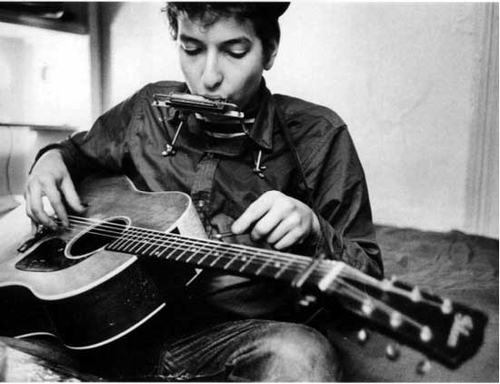
    This is why I am very interested in moments when extraordinarily formed people talk about how they got that way. It’s the unexpected pleasure I had viewing Marty Scorcese’s Bob Dylan biopic No Direction Home over the last few days (it streams on Netflix). It’s a fan’s detailed exploration of how a Jewish kid from Duluth, Minnesota became the most influential popular figure of the 1960s.

    For the younger among us: Dylan’s impact on the world we inhabit really can’t be overstated. His was a persona that the children of post-war conservatism embraced when they went looking for someone else to be besides the product-consuming, job-holding-down, duck-and-coverer their parents had shown them (“Bring the wife and kids. Bring the whole family. Yippee“). His sneering, acid lyrics, in large part, invented irony for a generation boggled by the perfidy and madness on display in their nation’s several follies in Vietnam, in the segregated south, in the White House. As Wikipedia has it, “Dylan invented the arrogant, faux-cerebral posturing that has been the dominant style in rock since, with everyone from Mick Jagger to Eminem educating themselves from the Dylan handbook.” I am as burned out on boomer worship as any other aging Gen-Xer, but respect here must be paid. How did he come to be that person? What mix of intention and accident created Bob Dylan out of Robert Zimmerman?

    In Scorcese’s hands, Dylan’s formation story is about content and connections. Perhaps befitting a director obsessed  both with naming his own influences and preserving the past so that the present and future can continue to grow from it, great swaths of the first 90-minute episode are dedicated to cataloging what Dylan was listening to and HOW he was listening to it. On the first point, we learn how Dylan’s first record was an impossibly square side by Johnnie Ray who nonetheless sounded to him like someone “with a strange incantation in his voice, like he’d been voodooed.” It’s the first glimpse of Dylan’s unique capacity to hear in sounds that his contemporaries dismissed as old and outworn something timeless and endlessly strange, and therefore renewing and vital. For Dylan, it’s the connection a performer can make as much as the song itself he’s singing. It helps explain, perhaps, Dylan’s capacity to write songs that sounded 200 years old that were still completely contemporary. It’s the core of Dylan’s sensitivity to the emotional power of what Greil Marcus names “The Old, Weird America” in his own fever-dreams about these same records, their impact on Dylan’s sensibility and, in turn, the rest of the culture.

    Back to mimesis: it seems to me that Dylan is not copying these influences so much as metabolizing them. His relationship with Woody Guthrie’s music seems the strongest example of mimetic process.

    These songs sounded archaic to most people. I don’t know why they didn’t sound archaic to me. These songs sounded like they were happening at the moment to me.

    Others can talk better than I about just how Dylan digested Guthrie (see Marcus’s dizzying book, for sure) and the other influences he found on the first records he borrowed (and sometimes stole) from better stocked libraries than his. But what I most note is how wide open Dylan was not just to the techniques and liturgies of those traditions, but to their energy and intentions. He’s not just “reduplicating the action of perceived events” – it’s a lot more intense than that, this process of dismantling what affects you and reusing it with an eye to how its new intentions impact those who are watching you do it.

    The process continues as Dylan finds his way to the hothouse of Greenwich Village in 1960, for a few transformative months of playing and listening to others play in endless evenings of “basket-passing” poetry and music happenings in the boho coffeehouses. He notes that some performers have something behind their eyes that suggests they know something the audience does not; something precious and hard-earned that, therefore, is not to be given away easily. He hits this theme repeatedly in the long interview that strings the film together: how he learned not to give it all away, ever; to be cagey, careful of whom you trust and who you let see how you do what you do, what allegiances and commitments really make you go.

    Maybe that’s why so many of his contemporaries describe him as a shape-shifter: an opportunist who could identify a chance for something big to happen and deliver himself in the version that would best meet the possibility. He created his character endlessly – the assumed name, borrowed from far-away Wales; his bogus, ever-evolving bio, about both sitting at the feet of the greats and still being wide-eyed in wonder at the Big City, where he “saw his first banjo” (ha). Even his observation that he himself did not fully understand what the ranting free-associative lyrics he was writing meant. His wildly-meta comment to girlfriend Joan Baez that his critics will figure it out later belies the earnest intention and certainty with which he delivered them at Newport and elsewhere. (Baez tell the story herself, at 1:00 here – and her Dylan impersonation is deadly, maybe the last one we’ll ever need to hear.)

    Deep in the second episode, D.A. Pennebaker describes the process of filming Dylan without relief for his 1967 documentary Don’t Look Back, and marvels at Dylan’s capacity to become an actor who easily accommodates a documentary camera tracking his every move:

    That’s what he’s good at: getting used to the way things are, knowing that time changes everything.*

    To close this already too-long thing (no time to write a short thing, so I wrote a long one): I think Dylan’s capacity for mimesis gives us who help prepare teachers for their work some very sharp knives with which to help students parse and assimilate their own many experiences of being educated.

    • We can help them reserve the right to decide what in their life was important: which songs they heard, so to speak, had the “voodoo” in them and which did not;
    • We can help them realize their capacity to make themselves for the audience they’ll be playing for. We can empower them to create their own teaching persona which, while related to the engine of vocation and compassion that brought them to this work, is not the same thing.
    • And finally, they can learn a self-protective cageyness in the construction of role. And if someone asks them to do something ridiculous (like “suck on your glasses“) – they can know how to give it right back to them.

    *NB – His critics – many his performing contemporaries – eventually derided this flexibility as “selling out,” the worst epithet (other, perhaps, than “Judas!“) they could throw at him.  But as one of them notes in the film, Dylan’s commercial success only called out how hungry they all were for some validation that their work was reaching an audience, that it mattered. Since admitting the desire for success would itself be a repudiation of the ethic of detachment from “all that” they claimed to uphold, all they could do instead was turn on the one who had made it happen.

    Thanks to thezorch.com for image; thanks also to Phil Chappell’s terrific blog for hooking me up with the Donald stuff.

    Share this:

    • Share on Facebook (Opens in new window) Facebook
    • Email a link to a friend (Opens in new window) Email
    • More
    • Share on X (Opens in new window) X
    • Share on Reddit (Opens in new window) Reddit
    Like Loading…
  • three drummers on craft

    May 6th, 2012

    In 1988 I got the chance to see Ed Blackwell, the great free jazz drummer, play in the Student Union with Anthony Braxton. Wesleyan at the time seemed a sort of retirement home for jazz monsters entering their dotage. I didn’t really know who any of those guys were, but I knew they were a big deal. I wasn’t really playing drums yet – not unless you count all that banging on books on my bed I had done through middle school, and all the time on other people’s sets I cadged through high school by dating girls who were either drummers or had brothers who were. But I remained impressed that drumming was something you could learn by watching drummers closely. There were no hidden embochure techniques or obscure valve positions to learn. Just pay attention and do likewise. So I went, and I did.

    I don’t remember anything that night past the first note of the show: the way Ed sat slumped behind a tiny kit and began the first number with a swat at the ride cymbal. He  swatted it the way a guy his age might swat a fly after sitting on the front porch for forty years – a fly that had also been there for forty years, or its fathers or grandfathers, a fly that no matter how much he swatted would always come back. It was a swat of intimacy with the cymbal; he knew exactly where it was and what it would do when he made contact, exactly how hard to stroke it and where and how to bring the hand back around for the next stroke without wasting any energy. The cymbal responded with equal composure, swaying ever so slightly on its fulcrum and returning to meet Ed’s next stroke. The fly wheeled away and looped back in again to restart the eternal cycle. It was magnificent, and permanently etched in my mind: this was what it looked like when you played every night of your life, and now found yourself playing again.

    Perhaps I am making too much of this: it’s just an old guy hitting a cymbal, after all. But it reminds me of how frequently in education someone will say something about teaching being “an art and a science,” then lean back in a satisfied way as if they have Really Said Something There. I know what they are getting at, I think: they are trying to say that teaching includes touch and judgment and transcendence and aesthetic inspiration as well as mastery of predictable, tried-and-true algorithms and formulas. That it is both beautiful and serious, and that we would do well to remember it as such in a time when most forces wish to make it only the latter.

    But I don’t think teaching is really either an art or a science. I think it is a craft.

    “Craft” is what Elliot Eisner is getting at when he describes the foolishness of trying to prescribe and automatize an event that is, in so many ways, not reproducible from student to student:

    Theory is general. What the teacher must be able to do is see the connection – if there is one – between the principle and the case. But even where such a connection exists, the fit is never perfect.

    It’s what the National Board of Professional Teaching Standards is reaching for when they define “What Teachers Should Know and be Able to Do” thusly:

    As with most professions, teaching requires an open-ended capacity that is not acquired once and for all. Because they work in a field marked by many unsolved puzzles and an expanding research base, teachers have a professional obligation to be lifelong students of their craft, seeking to expand their repertoire, deepen their knowledge and skill, and become wiser in rendering judgments. Accomplished teachers are inventive in their teaching and, recognizing the need to admit new findings and continue learning, stand ready to incorporate ideas and methods developed by others that fit their aims and their students. What exemplifies excellence, then, is a reverence for the craft, a recognition of its complexities, and a commitment to lifelong professional development.

    But it is also the word that includes not only responding to the moment of inspiration that engenders learning, but also finding within you the capacity to do it again in forty-five minutes. This is the sort of insight David Sedaris describes when he works for a season making jade clocks for craft shows and realizes the backbreaking boredom that accompanies the intention to do the same thing well more than once. Put another way: the artist can abandon an unsatisfying canvas, or paint it over, or rip it in two. The teacher has another class coming in third period.

    That’s why I am so interested in watching and listening to drummers who have enjoyed long careers and are still enthralled by doing what they do. Neil Peart remains first among these: his precision and imagination and technical prowess are widely revered, but what I most notice is how hard he still hits. The first rule of recording is to hit the drums hard, but the cymbals softly (to get consistent levels. and to keep the wash out of the tom mix). I can still hear in studio and live recording how fully he applies himself: you can’t mix in those bright attacks, that blindingly-even speed. There’s stamina here, of course, but also something to learn about what keeps one engaged with playing parts that are, in Rush’s case anyway, mostly the same every night.

    What’s keeping him engaged? Here’s some insight:

    Has your relationship with the instrument changed over the years?

    Enormously so, in all those inner ways that might be boring to somebody else, but I feel them strongly…part of it’s been deliberate, in that I’ve studied with teachers from time to time…I had a great old-time teacher in the mid-90s that kind of helped me reinvent the way I approached the instrument that still nourishes me now. The inspiration of other players too, old or new, inspires you…Eric Clapton said he wanted to burn his guitar after hearing Jimi Hendrix. I never understood that. When I hear somebody great, it makes me want to go home and play.

    How great to hear that from the guy whose tapes were usually on when it was book-banging time (and whose latest records still get shout-outs and love from the fans – and members – of Foo Fighters, Pantera, Metallica). I hear a respect for oneself in relation to the instrument, and a growing respect for the instrument itself as something that outlasts the technicalities of any given show, or session, or evening, or even band. The drums are always there. Its reminiscent of physician’s description of medicine being a relationship to “the truth of the pathological lesion,” a relationship that transcends any single patient (to the chagrin of those who seek to develop physician empathy).

    Peart also reaffirms that much of this learning and self-transformation takes place “beneath the water” of his actual performance:

    The big change I made was in 95 when I changed everything – the set up of the drums, even the way I held the sticks for a time. I dedicated myself to doing everything different. And when I first came back, (Geddy) Lee was listening to the demos and he said, “It doesn’t sound that much different to me.” And to me that was a compliment,  because I had changed everything and it still sounded like me.

    But the changing nature of his relationship to his craft did yield other, deeper transformations:

    I worked so much with click tracks and sequencers that I had become remarkably metronomic. But that had a rigidity that went with it. So my mission then became to conquer that and become looser. I want to become more improvisational, because I am compositional…now the first half of my solo is completely improvisational…I do challenge myself because there are no consequences. There’s no mistake. If I do something weird play it twice, and it’s a new part, a jazz instrumentalist once told me.

    I wonder at how another drummer I grew up with – Phil Collins – has stayed engaged with his own playing in ways that keeps it fresh. He’s a harder one to get a bead on: a dry New Yorker sketch from 2006 portrays him as fastidiously self-absorbed and remote, certainly not as open to discussing his own process and evolution as a musician. Maybe he didn’t do what Peart did: reinvent himself, change it all around sometimes, burn everything he owned now and then to see what might grow from the ashes.

    But change is there to be heard, for sure, in the progress from the first mewlings of prog freak-out to John Bonham-heaviness to the playful looseness I still ape in my own playing (witness the gorgeous weak-hand drag roll that kicks off “I Missed Again,” or the terrific three cymbal crashes as the verse drops into the bridge of “Easy Lover“).  His story seems sadder, since he’s now too incapacitated to play and actually retired from music with an apology to his haters for his unimaginable success (“I’m sorry that it was all so successful. I honestly didn’t mean it to happen like that”). I hope I’m around for his rehabilitation in the hipster mind; maybe his lessons for sustainable practice are some negative ones – fix your posture! (OK.) Don’t get too popular! (Really?) – but also to respond to the changes in your world and bring who you really are to what you do, since that’s the energy that makes you go anyway.

    Not sure how to end this except to note how valuable it is for me to pay close attention to the folks who have spent their lives doing things well, and to consider how to bring their practices into my own work as a teacher, a researcher, a member of an academic community. It’s where most of what I write ends: wondering how to keep ourselves tapped into the source of energy that makes our work as teachers sustainable and effective. I’m grateful to have had so many great examples – so much to think about.

    image from last.fm.

    Share this:

    • Share on Facebook (Opens in new window) Facebook
    • Email a link to a friend (Opens in new window) Email
    • More
    • Share on X (Opens in new window) X
    • Share on Reddit (Opens in new window) Reddit
    Like Loading…
  • Sustainable Practice: “Thriving, not Surviving”

    April 21st, 2012

    Teaching Fellows Honors Day Keynote Address, Appalachian State University, Boone NC, April 20, 2012

    Good morning. It’s an honor to be with you today to help you celebrate your successes. It’s been my privilege to teach many of you, and as I see you here I am filled with excitement and joy about the transformational experiences you’ll bring your students; the thousands of lives that this group will go forth to touch, to mold, and to change.

    This is a day of celebration, so I want to keep it light. But at the same time, I have a heavy thought: the chances are that many of you won’t be teaching any more in a little while.

    Nationally, as many as 50% of new teachers leave within the first five years of entry into the occupation, and approximately 33% of new teachers leave within the first three (Corbell 2009). North Carolina’s new teacher turnover rates in the first three years of teaching are slightly higher than that national average – and while this group is better prepared, and perhaps more committed, than a random sample, the sobering reality of teacher attrition remains real.

    What’s going on? There are systemic issues here: family issues, quality of administrative support and mentoring, and of course the persistent gap between what competent young people can earn teaching vs. what they can find in the private sector. But I am coming to believe that another significant factor is what we as a field are asking of new teachers: how school routinely asks new teachers to do more than they can, then punishes and shames them when they fall short. We seem to work on the assumption that the schools will enjoy an endless supply of new, young energy like yours, and that we can “run you hot” for the first few years in order to reap the benefits of your increased output. This strikes me as a cynical and fruitless strategy, one that ultimately guarantees working conditions that will drive many out, and will drain the energy and spirits of those who stay.

    I think the most important part of my job is supporting future teachers as they find ways not just to survive this work, but to thrive in it. So that’s what I would like to take a few minutes to share with you today: three thoughts about how to thrive in this profession. They come from three doctors, two real ones and one I wish were: the failed-philosopher-turned-professional-development-guru Dr. Parker Palmer; the great, unsung pediatrician Dr. Alan Cross; and the terrifically strange theoretical physicist from The Big Bang Theory, Dr. Sheldon Cooper.

    These are insights I am trying to understand as ways to define “sustainable professional practice,” a project that brings the language we use for environmental sustainability into the serious problem of training caring professionals who are likewise self-supporting and healthy. I hope these thoughts are a good fit for what you are thinking about today. At this point, I think they might be some of the most important.

    1. Sustainability means protecting yourself against fear, resentment, and bitterness.

    We are working in the golden age of teacher accountability. In the last decade, the rhetoric of school change has shifted from socioeconomic issues (like funding levels and sources) and administrative issues (like class size) to a universally-held, common-sense conviction that teacher quality is the most important factor in student success. As you know, North Carolina’s Race to the Top funds are going in large part toward refining our teacher assessment and data collection system to enable classroom-level assessment of teacher effectiveness. Your students’ outcomes will be linked directly to your teaching practice, and will be used as an important criterion in judging the quality of your work.

    This means that the teacher’s daily sense of her ultimate responsibility for her students’ success is going to be even stronger and more demanding than it used to be. After all, the whole institution has identified your practice as what matters most to your students. Not poverty, not nutrition, not administrative inefficiency, not race or class or gender or sexual orientation or any of the inequities that continue to haunt our culture: you. That’s a lot of pressure.

    How do we respond when we feel administrative, top-down pressure to perform? Well, if we are confident that we are going to make the grade, we feel fine. It always feels good to get an A, or to win a race. But if we have even the slightest doubt that we’ll measure up, we mostly we feel scared: scared we’ll be punished, or humiliated, or have our worst suspicions about our inadequacy confirmed.

    I think that when we feel fear, we rarely express it as fear: we usually express it as anger, at others or at ourselves. It is easier, as a rule, to say “I am angry” than it is to say “I am scared.” So, if you follow: in a professional world that lends itself to creating fear, those who work in it are at risk for anger. As well as anger’s passive-aggressive cousins: resentment and corrosive, creeping, bitterness.

    We need the energy to speak truth to power: we need to be forthright and articulate when we see things that our wrong with our work, and confident and powerful as we work to change them. But I think we need to be careful to use that energy in positive, productive ways, because it also has the potential to hurt us. Parker Palmer (2009) is thinking this way in his essay “The New Professional,” which I’ll quote here:

    We professionals—who by any standard are among the most powerful people in any society—have a bad habit of telling ourselves victim stories to excuse unprofessional behavior: “The Devil [read, ‘the system’] made me do it.” We are conditioned to think this way. The hidden curriculum of our culture portrays institutions as powers other than us, over which we have marginal control at best—powers that will harm us if we cross them. But while we may find ourselves marginalized or dismissed for calling institutions to account, they are neither other than us nor alien to us: institutions are us. The shadows that institutions cast over our ethical lives are external expressions of our own inner shadows, individual and collective. If institutions are rigid, it is because we fear change. If institutions are competitive, it is because we value winning over all else. If institutions are heedless of human need, it is because something in us also is heedless.

    I think Palmer is calling us here to identify the places where we feel bitter and be honest with ourselves about how we use that bitterness to let ourselves off the hook of responsibility for our own professional experience. He is calling us to resist bitterness – because, in fact, our institutions have no power over us that we do not give them. This is a high-minded principle, mighty close to Gandhi’s assertion that we must be the change we wish to see in the world. Taken wrong, it could sound like yet another impossibly-high goal of personal perfection – one that no mortal teacher could ever reach, and that perfectionists, like many of us, could use to beat ourselves up with.

    But that’s not what Palmer – or I – am trying to say here. I think there is a secret here that can help us avoid burnout and the bitterness that corrodes our capacity to care for others. We must take responsibility for what happens behind our closed classroom door – which as Larry Cuban states, remains the most powerful institution in American education, despite the accountability measures that would reach through it and control every choice a teacher makes. The choice of what to do next in your classroom remains yours. You are empowered to choose what you will do, and more importantly, whether you are an actor or a victim – a subject or an object – as you do it. Keeping that truth in mind helps us find our power and focus our energy outwards, not inwards – out to where it can really make a difference.

    2. Sustainability means remaining curious and humble and attentive.

    This brings me to my second doctor: Dr. Alan Cross, a pediatrician I worked closely with for five years at the UNC School of Medicine. He passed away this January, and in part I wish to honor him here as one my master teachers by passing on some of the precious lessons of sustainable practice he taught me.

    Dr. Cross was an old white guy. He was a true preppie: John Kerry was his roommate at Yale, and he actually said “rawther” instead of “rather.” He wore a navy blazer with brass buttons and Top-Sider boat shoes each day, without irony. From one perspective, Alan had less reason than almost anybody in the hospital to care about people who had less cultural power than he did. After all, he was the natural possessor of all the qualities of someone who runs our culture: white, male, well-bred and extravagantly well-educated, competent, and tenured.

    And yet Dr. Cross was more concerned with the daily realities of socioeconomic and other inequities in our society than almost anyone I have ever known. He wore a Human Rights Campaign pin on that navy blazer every day, silently championing the rights of gay, lesbian, bisexual and transgender people as a traditionally-married father of four daughters. He dedicated the last years of his life to transforming the med school curriculum to include far more effective teaching about the social and cultural realities of patient care. Despite his own position of power, he was an unfailing champion of the powerless.

    Why did he do that? More to the point: how did he find the energy and optimism to, when so many other forces were working against the ends he fervently sought?I think part of it was how he regarded his work with his patients. Over his thirty-year career, Alan treated thousands of patients – and, as a pediatrician, most of those came in for predictable and non-exciting reasons like runny noses and ear infections. Yet despite the numbing sameness of the clinical care he provided, Alan remained completely, utterly absorbed by the particular stories of every patient he saw. Alan would frequently receive and send texts from patients he had known since infancy – kids who were now in high school or college, texting him about all the health issues that confront emerging adults. Watching an almost seventy year-old man learn to text, because that’s how his patients were most comfortable coming to him, taught me a lot about commitment to the individual needs of those who trust us to help them.

    The most powerful lesson Alan gave me, though, had to do with how we need to engage with those who are different than we are. This is an area that medical education has come to call “cultural competence:” the goal of preparing physicians to reach across language, social, and cultural differences in order to make effective diagnosis and care decisions for all the patients they encounter. Dr. Cross loathed the term “cultural competence,” and especially disliked the trend of giving medical students laminated 4 x 6 cards that summed up the cultural preferences and tendencies of different cultures in neat bullet points, so med students could keep them in the pockets of their white coats and cram before entering exam rooms. (“If your patient is a Sikh, then remember…”) “I am not even competent in my own culture,” he would frequently say.

    He much preferred the term “cultural humility:” a deep willingness to be taught, every day, about what you needed to do next, by whomever it was your responsibility to serve.And, I venture, that humility – the willingness, even after all those years, to show up in a patient’s room ready to admit that he did not really know what was going on, did not fully understand his patient’s needs and desires, and needed to mind closely everything he heard and saw and smelled and touched – that is why he remained a terrific physician for his whole career. That is why his patients texted him twenty years after he did their first well-baby exam.

    And that is why he ended his career as a content, engaged, effective practitioner of one of the least prestigious, yet most important, specialties in medicine: he remained completely absorbed with how the patient, the illness, the thing before him was different than what he had seen before, not how it was the same. He remembered everything he knew, of course, but remained willing to learn here, now, today. By giving what he brought to each moment, each moment in turn gave to him, invigorated and energized him. His attention brought him exactly what he needed to continue attending.

    3. Sustainability means not breaking yourself against arbitrary standards and expectations, and staying in tune with what you need.

    We watch a lot of The Big Bang Theory in my house. It’s a terrific comedy about the adventures of four young genius academics who struggle with the social realities of life in the big, confusing world outside the laboratory. Dr. Sheldon Cooper is the quirkiest of them, and his Spock-like, purely rational engagement with the world gives us our biggest laughs.

    Here Sheldon has decided to begin running, as part of his new and utter commitment to caring for his physical form so he can still be alive when science catches up with his desire to transplant his intelligence into a machine. He’ll take his first run with Penny, the gorgeous hopeful-actress but present-day Cheesecake Factory waitress who lives across the hall from them. Here’s their conversation.

    Penny: Hey, nice knees.

    Sheldon: Thank you. They’re my mother’s.

    Penny: Oh. And the Flash shirt is what? Because you’re gonna run really fast?

    Sheldon: No, the Flash shirt is because it’s Friday, but it’s nice when things work out. Where’s your heart rate monitor?

    Penny: I don’t have one.

    Sheldon: What about your pedometer?

    Penny: Don’t have one.

    Sheldon: Do you have telematics in your shoes connected to an iPod?

    Penny: Uh, no.

    Sheldon: What do you do, you just go out there and gambol about like a bunny?

    Penny: No. I just run till I’m hungry, then I stop for a bear claw.

    I think Penny is on to something here. Running – like teaching – can be seriously measured and monitored, and frequently is. But measuring and monitoring can get in the way of our ability to actually do it.

    I ran a lot for several years, and ended up acquiring a complicated watch and several pages of carefully documented logs, completed with my split times and my pace and my race results. Three years ago I decided it was time to train to race a new, longer distance, and used an online algorithm to generate a four-month training regimen. I did the math, and had the plan.

    But as I started adding mileage, my knee started to hurt in a different and scarier way than it had before. It hurt enough to make me wonder if something was seriously wrong. But my algorithm had told me I was going to be fine, so I ignored the pain and dealt with it in other ways – ice baths, 600 mg of daily ibuprofen – and called it normal. You probably know the end of the story: I got hurt, tore a meniscus, and stopped running for almost two years. My conviction that the numbers told me I should be doing OK blinded me to the clear fact that I was not.

    In the measured and monitored educational world you are entering, there will be many benchmarks and numbers that tell you what you should be doing and whether or not you are on track. But I suggest that the authority of those indicators to tell us who we are – and how we are – is not absolute, and that if we give them absolute power we run the serious risk of breaking ourselves against them. This insight does not, I think, mean we should just go out there and gambol about like a bunny. We can and should take advantage of the data that tell us things that help us do what we need to do. But it does call us to pay attention to our experience of what we are trying to accomplish, and its effect on us. It calls us to stop when we are tired, or at least take a break. And it prescribes, as Penny says, a bear claw now and then.

    This is not touchy-feely talk: it is hard, rigorously-demonstrated fact, substantiated by research into how physicians and other caregivers who work in high-stress, low-resource situations manage nonetheless to thrive in those environments. They monitor their own health and wellbeing, and create communities with other caregivers to keep an eye on each other. They do things like meditate, go to church, write, exercise, and talk about what they are really feeling in order to stay connected with themselves and those around them. They do not pretend that everything is going OK when it is not. And they thrive in their work to the degree that they stay in touch with their actual experience, and trust their own sense of their wellbeing instead of an arbitrary, external indicator. I am happy to say I have begun running again. But I am trying hard to let my body be in charge, not an arbitrary distance or pace or time. It is hard, different – against the grain of how the world tells me to run. But I think it is the only way, because I want to run for the rest of my life, and the only variables that will make that possible are the ones I carry in my body every day.

    So, to sum up: these are my three best ideas this morning about how to thrive in the work you are preparing to enter:

    • Understand that you are the institution you are part of, and that you are the actor that will set the priorities, tone, and energy of the classroom world that you will create;
    • Strive to remain humble, curious, and enthralled with every student and learning situation you come to engage with;
    • Stay in close touch with how you are doing, and never let an external indicator be the final word on whether or not you are succeeding – on whether or not you are OK. Only you, in your heart and your soul and your body, can really know that.

    I know these are big ideas; the kind you can spend a lifetime (or at least a career) working on. In closing, let’s share our faith that we all have what we need to do this work, and our confidence that we will be able to find the strength and vision, and develop the compassion, that our work demands. I am convinced that we can teach in ways that sustain us: that our institutions are not faceless bureaucracies, that effective teaching is not a martyrdom, and that our love for our students and our commitment to their success can become the very engine that drives our fulfilled, whole, thriving lives – if we make the choices that let it happen.And I have every confidence that you will.

    Congratulations! Thank you.


    REFERENCES

    Corbell K (2009). “Strategies That Can Reduce New Teacher Attrition in North Carolina.” The Friday Institute White Paper Series. Raleigh NC: The William & Ida Friday Institute for Educational Innovation. Retrieved April 14, 2012.

    Palmer PJ (2007). “A New Professional: The Aims of Education Revisited.” Change: The Magazine of Higher Learning. November-December 2007. Retrieved April 14, 2012.

    Share this:

    • Share on Facebook (Opens in new window) Facebook
    • Email a link to a friend (Opens in new window) Email
    • More
    • Share on X (Opens in new window) X
    • Share on Reddit (Opens in new window) Reddit
    Like Loading…
←Previous Page
1 … 8 9 10 11 12 13
Next Page→

Website Powered by WordPress.com.

Loading Comments...
  • Subscribe Subscribed
    • Chris Osmond PhD
    • Join 64 other subscribers
    • Already have a WordPress.com account? Log in now.
    • Chris Osmond PhD
    • Subscribe Subscribed
    • Sign up
    • Log in
    • Report this content
    • View site in Reader
    • Manage subscriptions
    • Collapse this bar
%d