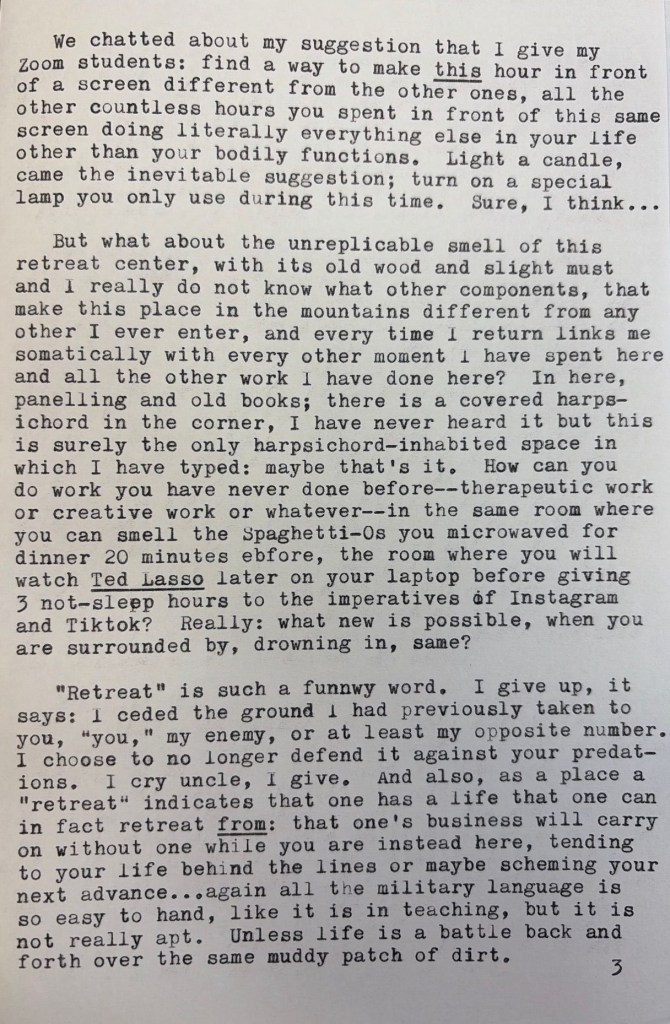
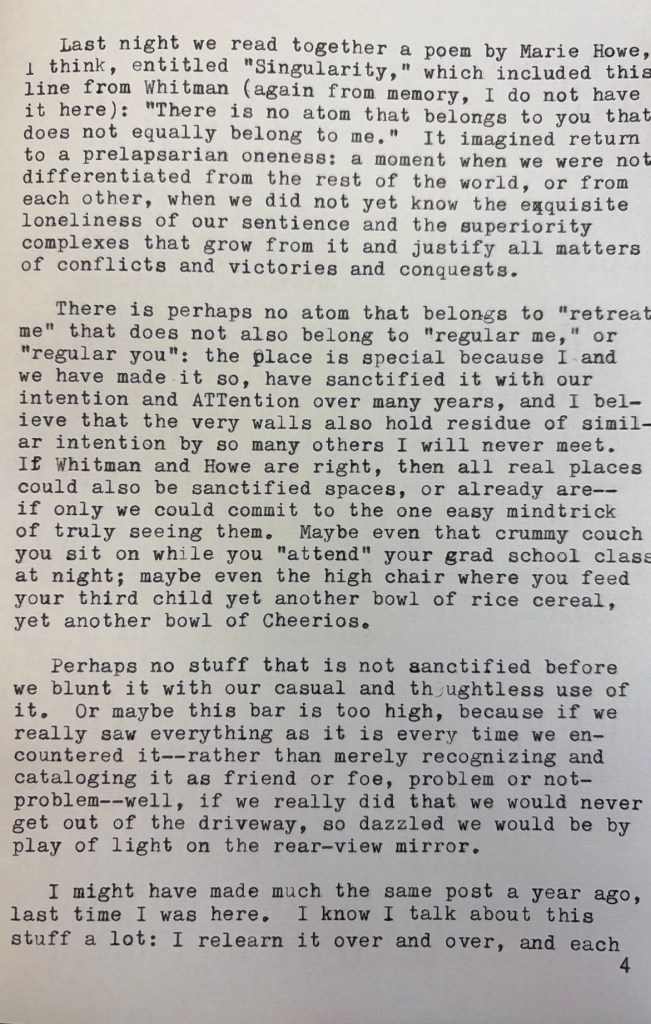
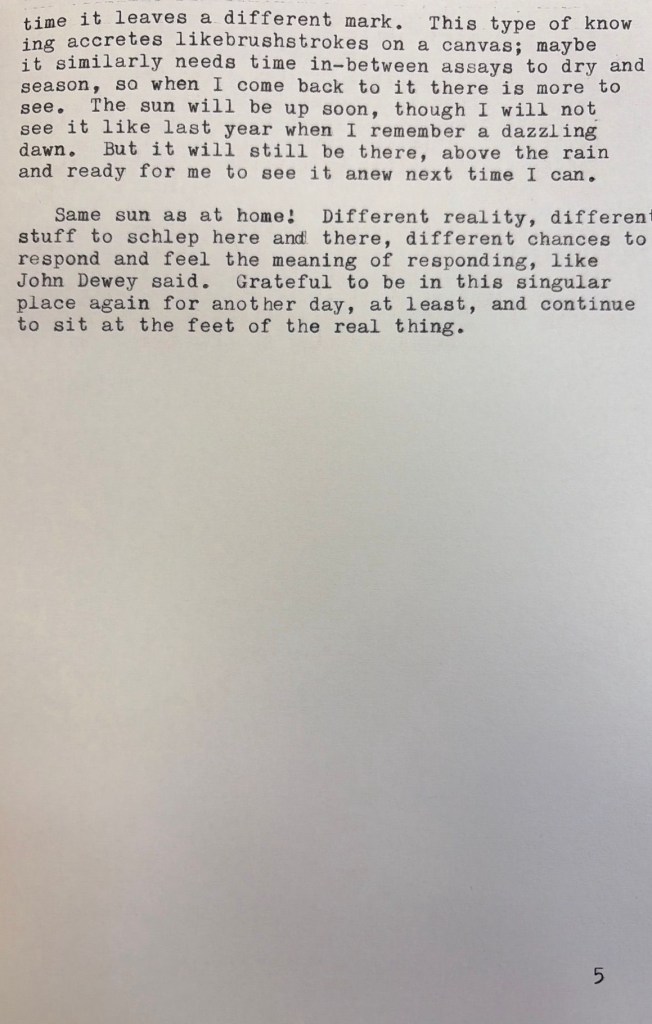
The poem: https://poets.org/poem/singularity
The poem: https://poets.org/poem/singularity
“Of all the vices, I find books to be the least dangerous…I think it’s possible his landlord might have their priorities misplaced, or might not understand him. If you’re not steeped in his culture, maybe his library does look chaotic. But I’d argue it only looks like a mess. I’ll bet he can tell you where every single book is in his apartment.”
That’s bookseller Israel Mizrahi on Mendel Uminer’s collection of thousands of books, and his resultant eviction from his Upper East Side apartment. Here’s a picture of only some of them.
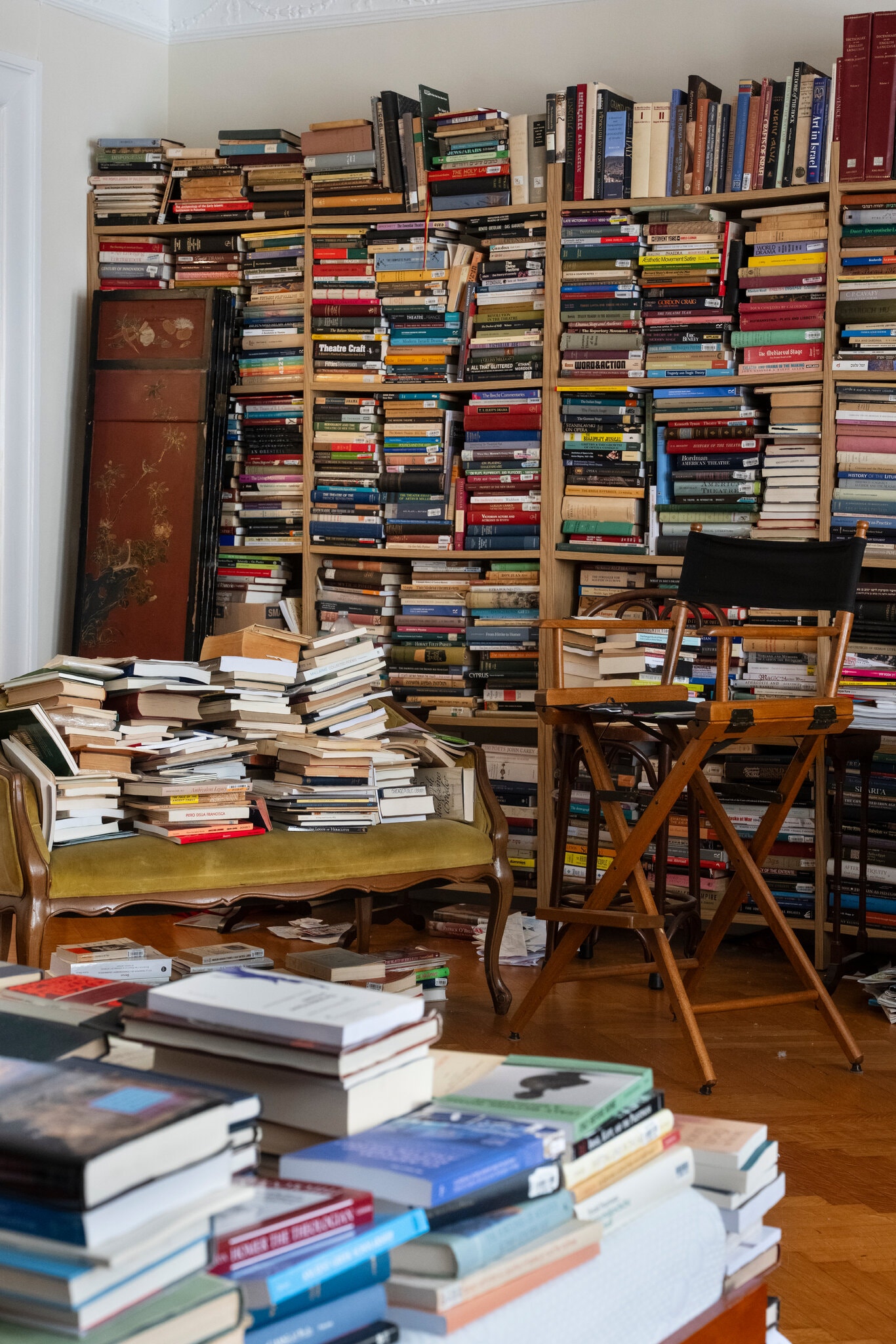
According to yesterday’s NYT piece, the stated grounds are fire hazard–but, as becomes clear in the article, his true infraction is unseemly eccentricity. Too many books!
We have a word for people whose relationship with their stuff doesn’t track with the sleek, beige, gentrified, laptop-and-tablet-and-phone lifestyle promoted on the socials: “hoarder.”
Like so many words borrowed from clinical psychology, its casual use dishonors the suffering caused by its authentic manifestation. It feels edgy, using words about real pathology to describe behaviors that are a little outside the norm–feels knowing and hip. It’s also kind of stupid, since it blunts an edge that can be so helpful to so many. We should do it less.
But in this case it mostly serves to reveal a high cultural antibody titer…against stuff. The manufactured challenge that so many of us feel: too much stuff in our lives, and not enough room for it.
Why can’t our spaces look as curated and spare as the ones we see in the media, in the ads that sells us the storage and cleaning technologies we “need” to so appear? Uncluttered space=clear mind, we are told to believe, and so we are supposed to discard what doesn’t spark joy. Or, if our nerves fail us, hide it in the garage.
I am maybe a little sensitive about my stuff right now! I am in the middle of an office move, from one end of my College’s massive building to the other. And while it will not involve an elevator or staircase, it is still a physical and emotional heavy lift.
I have been in my present space for eight years. And the vagaries of summer schedules mean I am moved “out” of my present space as of three days ago–but will not be “in” my next space for a couple of weeks, after its present occupant has time to clear it.
This means that all of my stuff, at present, is stashed in two corners of the big seminar room of the Program I have helped run for eight years. It is out of the way, functionally; the truth is we rarely use the space for student events anymore anyway, since the entire Program moved online in 2019.
One wall is stacked with liquor boxes of books and files and papers and pictures and lamps and all the crockery and trophies and such that didn’t fit at home, and so found their way to work.
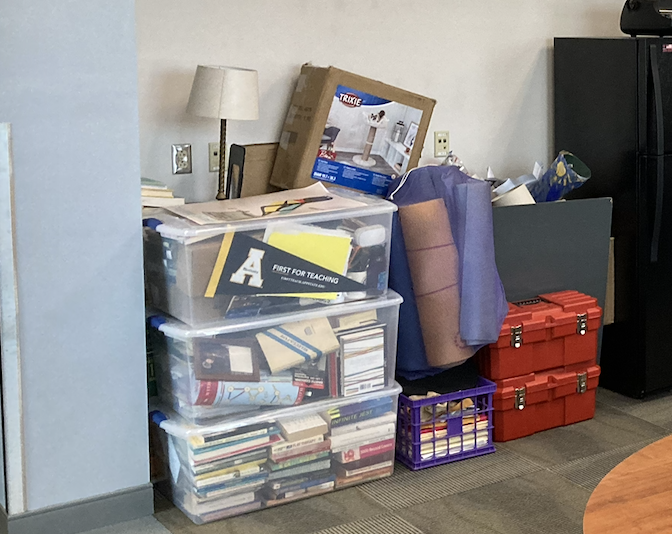
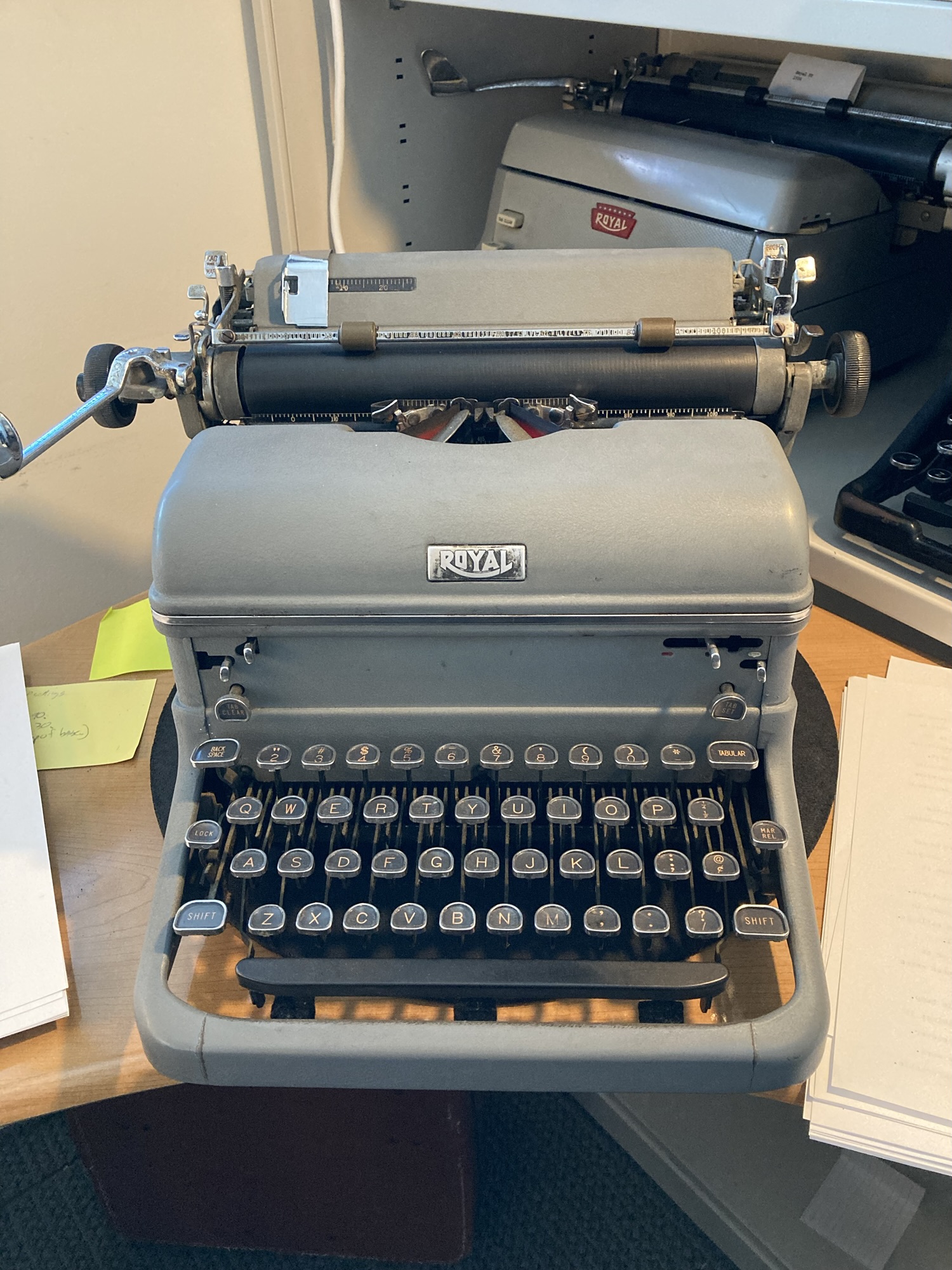
And the opposite corner is stuffed with my working collection of 40 +/- typewriters, and the shelves that have archived them and will again in a couple of weeks.
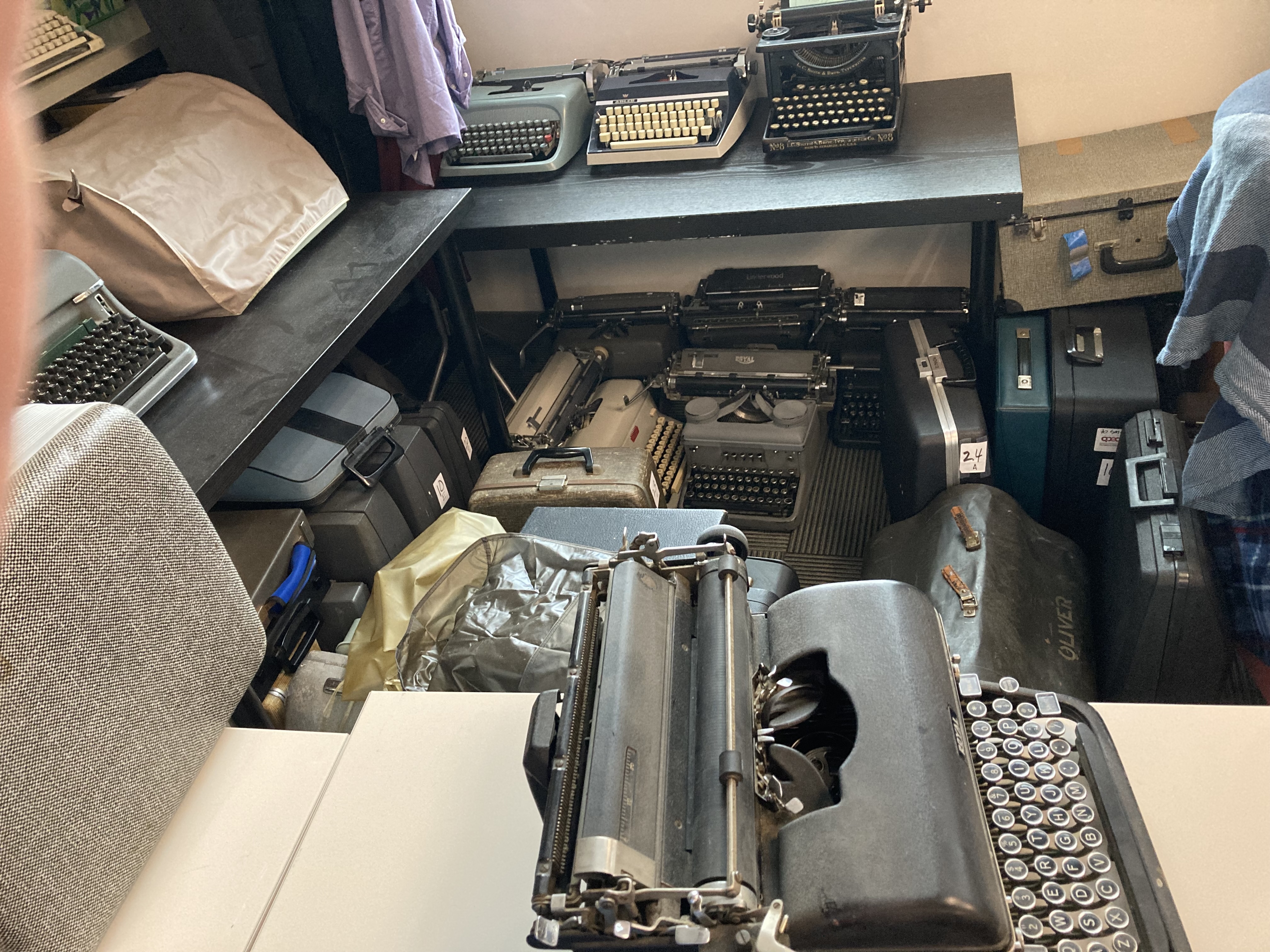
It’s a jumble, it’s a mess. And it invites inevitable feelings of reproach.
Why do I have so much stuff, when of course I can run 95% of my professional life off this laptop?
Why do I have so many books, when so much of their contents is available digitally via the University library?
And dear heavens: what of the typewriters?
Constant readers of this blog will know that my typewriters are in heavy service during the school year. (I wrote a book about it!)
They are the core of my undergraduate teaching, which asks students to retrieve a machine from my office at the start of one class session a week and use it to create a few pages of “human words” in response to a few prompts I provide. The prompts ask for reflection and consolidation of the themes in the readings we are handling that week–but also provoke about medium and technology, about attention and memory. About how the stubborn reality of the anachronistic tech in front of them refuses to let things feel normal, and what that discomfort could allow to happen next for them.
The majority of the machines I use for this teaching are “portable,” in the way that word in the 50s and 60s conveyed a machine with a case and a handle that conceivably could be carried from one writing site to the next.
But “portable,” in 2026, means something a lot lighter than the 20+ lbs of each of these machines. So their weight is a constant topic with my Gen Z students at the start of the semester: how schlepping a typewriter from my office to the classroom and back again isn’t effortless.
And of course, the new office location will require baroque calculations on my part about classroom location, changing floors, timing, frustration tolerance…learning spent with reality is rarely convenient, but the inconvenience is often the point.
Portable-but-heavy, it turns out, is an auspicious combination, if your goal is to invite students to notice stuff they haven’t before. It’s all curriculum.
And it is a nice characterization of the books in the article. Look at them! No one book is too much to manage, but taken together they are quite a phenomenon. There they sit, spines toward you for easy selection and delectation, tumble-bumble on shelves and tables and stacked along walls. Redeemed, somehow, in the opening quote, by the insistence that there is an organization to their stacking: you just don’t understand it. (If there’s a method, it’s not a mess.)
But also behold the boxes of books, so like mine. See their progress as the article unfolds: loaded up, with friends’ help, into almost-carryable batches. Hauled down beautiful but tortuous old stairways. Bunged into open minivans, in the rain of course–and finally stacked ignominiously in his parents’ apartment, in the middle of the floor, awaiting whatever is next, whatever can be allowed.
Somewhere along the line I learned, from a striving realtor probably, that the risk of many books in a home is not primarily fire: it is weight. Books are usually stacked in shelves along the edges of rooms. That concentrated weight at the borders, vs. the much-lighter foot traffic through the middle, over decades will lead to warped floorboards, settling, even foundation issues. Get rid of your books, I remember one realtor telling me. They will hurt your home’s value. Shed the weight.
But books as weighty signifiers of value, of seriousness and taste on the part of those who display them, is also nothing new.
Your books “say something” about you, we are told! You can curate them by the yard, “by color, theme, or size,” for your study decor.
You can place them strategically (or images of them) for your Zoom flex.
You can even dial them up on AI for unfathomable reasons. (No, wait–they’re real. Real fakes. Try to keep up.)
Have books, the big world seems to say, or simulacra of books: just make them tidy and hep. And for heaven’s sake, don’t make them towering ziggurats of Strand cutouts. That is not cute.
What does a wall of typewriters in a faculty office “say”?
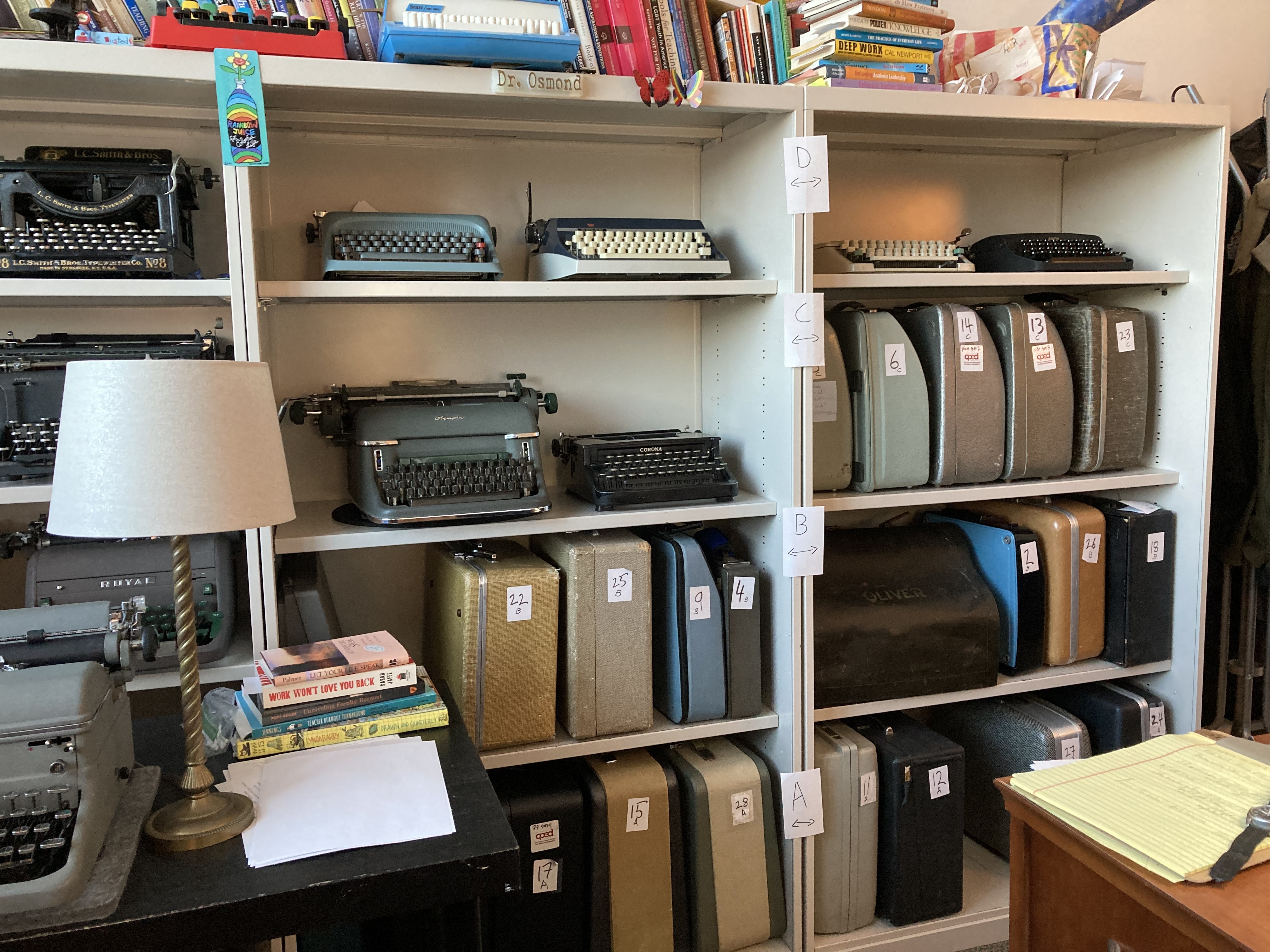
Other than giving one less floor space to maneuver through, and the comforting eau-de-typewriter-ribbon and whiff-of-mold that greets me every morning?
Well, I suppose it also communicates an eccentricity. a willingness to commit to something unusual and unwieldy, for reasons that will soon become clear if you can stay with me long enough to find out what it is.
I think teaching with typewriters is just a physical manifestation of an emotional dynamic that pervades every classroom:
-the teacher is convinced that something new should be attended to;
-the students are not so sure;
-the teacher’s first job is to make the case that a new enthusiasm is warranted;
-the teacher lends their own enthusiasm, generously, until the students’ own can be unearthed and engaged.
And a reliable way to concentrate that enthusiasm and pique that interest is to present a puzzle, an artifact, a curiosity, a weirdness. Any provocation that heightens engagement, and therefore attention, just enough for what students actually care about to run parallel to what the curriculum hopes they will start to care about. Just long enough to catch fire, like a fresh match set alongside a lit one.
Typewriters are great for that, whatever else they become over fifteen weeks of living with one.
And my wall of typewriters also gives a sense of history: a heightened sense of being in this moment by acknowledging that other moments have happened too.
This is surely a core reason why I am comforted by antique stores, especially the ones that are more rummage sale than curated display. These things all mattered once, those places say, for people who are not here anymore but were, just as you and I are here. We will eventually matter probably no more than they did, but certainly no less. Our now can be imbued with meaning by the artifacts of their now. Whether or not we take any of their stuff home, hanging out for a spell with their stuff makes our stuff–and our lives–more real.
I cannot tell you where every single book is in my boxes right now. (I also doubt Mendel can, and don’t need him to in order to have them.) I will not pretend otherwise.
But: I am definitely keeping it all. All the books, all the files, and definitely all the typewriters. (Most of the crockery.) It is all going into the new room at such time that the new room is available. I will not be culling the stacks much more than I already have, though I will probably continue to insist I intend to.
Because here’s the thing: an empty room is exciting, inspiring, bracing in its possibility. Isn’t it?
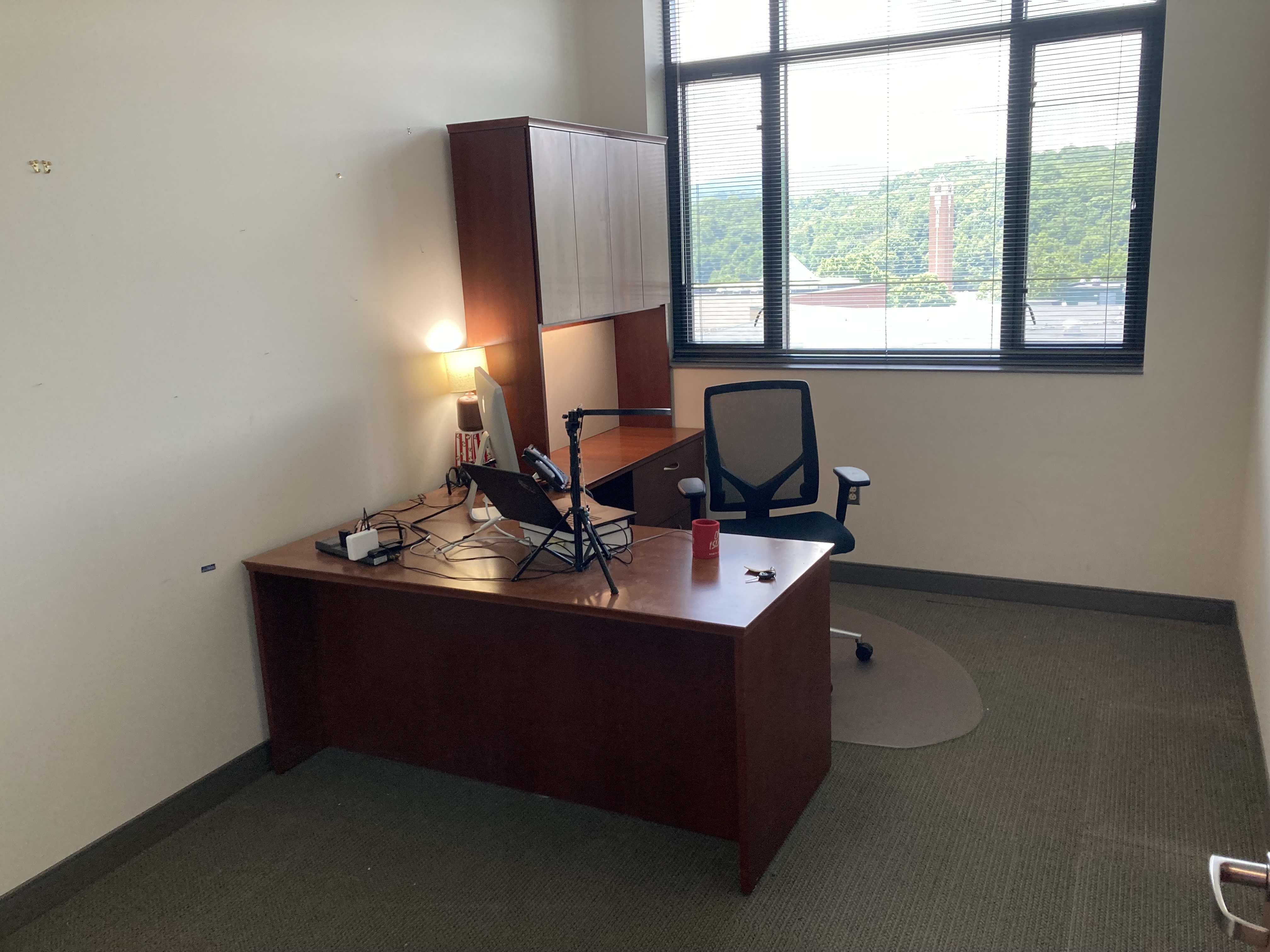
As I have worked in my now-empty office for the last couple of days, I have wondered: why do I not keep my office this empty all the time? So much space and aether; so little to hook onto from the past when I cast my eyes around it looking for the next sentence to write.
But empty rooms aren’t the ones we live in.
And they sure aren’t the ones we learn in.
And they aren’t the ones we stash the tokens and memories of the things we do that matter to us in.
You know, surgical suites are nearly-empty rooms. So are those interfaith chapels you can still find in airports. No specific tokens there to comfort or enrage; bring your own, or do without, for your devotions. Passing-through places are usually empty places.
But empty is not good for dwelling–except in someone else’s Instagram pic of how you should dwell.
Empty is not good for living–except according to someone else’s rules about how you should live.
We real humans live with our stuff: with our books, with our stacks, with our typewriters, with our ephemera that becomes less ephemeral the longer we keep it around. And sure, we can become prisoners of our stuff–but before things go that far, consider who we become when we let ourselves be owned by our stuff.
“It makes sense to me that Mendel, a Brooklyn yeshiva kid, would come to the Upper East Side and make this world for himself here, only to get rejected from it…There’s a New York now, keyed into professionalism and uniformity, that sees a guy like him and thinks something must be wrong. There’s an element to the city now that’s hostile to the life of the mind, to the eccentricity that might produce it.”
I hope you can find your own personal way to push back today against the forces of uniformity. The hostility to living one’s own life that is sure to come at you, in ways great and small, every time you ask the monoculture for input on how you should live.
After all, we are way harder to market to when we don’t like the things we are supposed to.
We are way harder to control when we don’t share our every word and image with the algorithms.
We are way harder to pathologize and shame into buying stuff we don’t need if we won’t be who we are told to be.
So blow up your TV, like John Prine told us fifty-five years ago. Delete your account, we would say now.
And go buy a used book, or an antique typewriter, and put it right in the middle of the table, right where it doesn’t belong.
Then get another one. And another.
Top image by James Estrin, from Alex Vadukul’s linked NYT story and reproduced here with thanks. All other images my own.
Today marks thirty years since the publication of David Foster Wallace’s failed entertainment, Infinite Jest. Click away if you must–but I hope you will stay.
The anniversary snuck up on me. In my defense, I have also been consumed with the publication of my own personal big book (more about that in a minute), and managing both a few winter storms and the world’s first four-thousand day-long January. There’s been a lot going on.
But since the book had such an impact on my own personal life and work, I have got to have something to say about it. So, provoked by Hermione Hoby’s excellent reassessment this week at The New Yorker, I’ll try.
This book landed smack in my sweet spot: right at the end of that part of my life when my sweet spot was still accepting applications, wide-eyed and willing.
I have read it multiple times, alone and with others (especially with others). I have read it in hardback first edition, in trade paperback, upon a Kindle, once in its entirety upon the tiny screen of an iPhone (!). I have taught it to two Honors College seminars, and would do still if the English dept hadn’t gotten wind of my efforts and wondered mildly if I had the bona fides to do so (no, but try me).
I own an autographed first edition, which he signed in the middle of the tour when I saw him read at Politics & Prose just a few days before he met David Lipsky. He read about Lyle, and the woman who said she’d come, I think.
I have even read much of the the terrific scholarship emerging around it, and made some small CV bones of it.
I have not pressed the book on many people. (Except my ninth grade English students in 1996, whom I subjected to period-long readings from the book that spring. Apologies?) Recommending a book is always a big risk, and even bigger when the book is massively long (it is) and infamously difficult (not really) and a bit of a cultural taser (ymmv).
But I have lived with it myself for thirty years, through many of my own changes and shifts. It was present at my creation as an adult as surely I was present at its. So it is my ur-text: the book against which I measure the ambition, the impact, and the faults of nearly anything else I read. Respect must be paid.
Hoby does the honors, so well. Born in 1985, she is sixteen years younger than me (and three years younger than those ninth graders). Her take is well-programmed. We suppose we can know what this book meant to folks like me who hoovered it up in our twenties, and what it means now in our fifties, if anyone cares. But what does it mean now, to the youngs?
Well, she writes directly to the heart of IJ’s maintenance in the cultural consciousness (mostly by those who have not read it) as a red flag for self-involvement, for “performative reading,” for male toxicity. And plaintively wonders:
The occasion is a moment to ask how a novel that mourns addiction and venerates humility and patience became a glib cultural punch line…At a thousand and seventy-nine pages, Infinite Jest has become a one-liner.
Amen, sister. It’s not right that a book that works so hard to make a case for simple connection between people, and depicts so vividly the horrorshows that nonetheless keep us apart, would be reduced thus.
Part of it is conflation of book and flawed author, who of course is not around to speak to our evolving takes on the work for good or ill–or evolve himself, like so many fathers, Shakespearean and other. He is gone and the book remains. If we still want to read it, we are on our own to explore why.
I bought my first edition of Infinite Jest at a chain book store in Dupont Circle, selecting my copy carefully from a teetering ziggurat of blue-sky-with-white-clouds covers that dominated the entrance. It was expensive–thirty bucks, on a beginning teacher’s salary!—but I dropped the coin.
I did so at the urging and in the company of my best friend at the time, a fellow teacher at my first school. He was nine years older than me (still is, strangely), and had already become a sort of pace horse for me in the three years I had known him.
He showed me a way of being an adult that I had never seen up close, and didn’t really know was possible. He was deadly serious about the things I was beginning to care about more than air and water: music, stories, teaching, beauty where you found it. He had taught at this place right out of college, like me, then left to go to a really good law school and become a big deal lawyer.
And then he had dramatically quit the law and come back to teaching—because he had come to realize that some ways of spending your life deadened your soul, and some ways expanded it. This made an abiding impression on me. When you figure out what matters, perhaps you should immediately begin devoting all your energy to it, hang the cost.
This relationship matters most here because it points to a type of experience that IJ catalyzed for me. It could have NOT been a big hard smartypants book that my friend and I had in common. It could have been working on our cars on the weekend, or playing in a band together (actually, we did that too), or playing D&D or rock climbing or building houses. Youngish people have lots of salubrious things they find to get into together.
But it wasn’t: it was reading a hard book that was heady and inane, hilarious and heartbreaking, in turns—sometimes on the same page. Reading alone to ourselves (like we all do, if elementary school works), and then talking about what we had read.
That spring, we mostly kept in step with each other, not spoiling events coming up if one of us pulled ahead by a few pages. We tried out theories about whether this character or plot point contributed to the whole huggermugger or would be a red herring; we reminded each other of what someone who sounded suspiciously like this character actually said in a group conversation a hundred pages back.
Put another way: we made an asynchronous individual experience into a time-wedded shared one. If the way to make friends is in fact going through stuff with people—well, we went through it together, for months. We remain close friends despite distance and decades, with the book remaining a touchstone of our shared formative time even as other experiences have followed for each of us.
(Do the youngs still have these experiences? Do the young men? That’s another post. The double bind especially young men find themselves in when they run the risk of being tarred “LitBros” for caring inordinately about something that speaks to them.)
I think that the best of these relationships happen around actual made-by-human texts, not engine blocks or soccer pitches. Texts that are too big to be held in your own head alone. Texts that insist on stopping time for you until you find someone else to help you make it real. Those texts can be films, too, I know–or videogames, I hear. (My son chats “on the phone” online with a friend while they build and explore Minecraft realms together. That sure sounds like kind of the same thing.)
But caveat: the shared text has to be too much to be managed alone.
And that is why it has to be human-made.
Because tech can give you too much, too–but why would you care to spend time with its excesses, when there is no too-much human behind the scenes to try to know?
My strongest memory of meeting Wallace in DC was looking at his head and wondering: this all came out of that? What structured it and contained it? What, even after 1079 pp, has not yet been said? How unfathomably broad the backfields inside each of our skulls* really are, bandanna-wrapped or not.
Making sense of that landscape is usually beyond us. As I read the early critical responses to IJ, I notice again and again how Wallace is taken to task for his “excess”. Again, Wikipedia:
Some early reviews, such as Michiko Kakutani‘s in The New York Times, were mixed, recognizing the inventiveness of the writing but criticizing the length and plot. She called the novel “a vast, encyclopedic compendium of whatever seems to have crossed Wallace’s mind.” In the London Review of Books, Dale Peck wrote of the novel, “… it is, in a word, terrible. Other words I might use include bloated, boring, gratuitous, and—perhaps especially—uncontrolled.”[ Harold Bloom, Sterling Professor of Humanities at Yale University, called it “just awful” and written with “no discernible talent” (in the novel, Bloom’s own work is called “turgid”). In a review of Wallace’s work up to the year 2000, A. O. Scott wrote of Infinite Jest, “[T]he novel’s Pynchonesque elements…feel rather willed and secondhand. They are impressive in the manner of a precocious child’s performance at a dinner party, and, in the same way, ultimately irritating: they seem motivated, mostly, by a desire to show off.”
A.O., my man! Simmer down!
Many of these opinions became revised with time. Criticism of course usually happens on deadline, when even an advance copy only comes a couple of weeks before an assessment is due. A big work, one that overflows convention and expectation, must be resented on some level–must be punished for overflowing, maybe. As Joe Jackson says, on a near-perfect and almost-entirely-forgotten album:
And when I die and go to pure pop heaven
The angels will gather around
And ask me for my whole life story
And for that fabulous sound
But I know they’re gonna stop me
As I start going through every line
And say please–not the whole damn album
Nobody has that much time.
Just the hit single.
I needed every month of the last thirty years to make sense of this book, deeply and gratefully. Its excess is its economy: messy, overbearing, too much. Human, at our very best.
My own book could only happen once I gave myself two permissions:
To say exactly what I meant, for exactly the reader I wanted to hear it, however it came out on the page.
And to feel and speak the anger I felt–and still feel–toward every mechanistic, logical, algorithmic attempt to rationalize and make more manageable our real human experiences in the name of efficiency, economy, and “accountability” that rarely brings us any returns.
To be against such things is inevitably to be for excess, for mess, for reality exactly as it is.
And I can see that, at this point, IJ’s lasting legacy for me has been permission to do my own thing as fulsomely as Wallace did his.
I’m not Wallace, and neither are you…but my words can find the reader who needs them, too, as surely as his did. And as surely as yours can.
I don’t remember if I thanked him in the acknowledgments, but if not I thank him here.**
And I hope you find your own DFW too. Your own permission; your own cage that liberates and sustains both.
*Permit me but one footnote, ’tis but a wafer thin: skulls are structures that contain what is precious so that it can thrive. What happens to us without the right structures–and what can happen, if we find and commit to them– is one of my favorite concatenating themes in the Sierpiński Triangle of the book. Without skulls, without frameworks, without principles, without cages, we are lost, or at least seriously compromised. Do not draw to yourself weight that exceeds your own weight. Find your cage.
** Yeah, I did.
Image approximating cover of first printing borrowed from Mental Floss, with thanks.
I am thinking a lot lately about places. What being in a place, or being of a place, gives us. What we need from our places that we don’t even realize we need–until we don’t have it anymore.
For example: as education becomes more virtual each year, “where you went to school” becomes almost meaningless.
Last Friday I met a doctoral student of mine face-to-face for the first time, when she came to campus to attend commencement and receive her degree. Zoom meetings are such an unremarkable part of our work now that I had not realized we had never met in the flesh.
After commencement, I walked with her family up through campus to the bookstore and gave them a little tour of “her” school–where she had never set foot in her life. She didn’t know where the bookstore was. Why would she?
What do we lose from being placeless when we learn and teach?
I used to think typewriting in the 21st century was about being “distraction-free.” But for me, it increasingly is more about being “place-full.”
Every day I type with a particular machine, on a particular sheet of paper, atop a particular desk. When I do that, my writing is happening both in a place (this room, this desk, this machine) and upon a place (this page). My utter control over what I write stems from its place-ness.
Do I mail this page to one other person, and make its words happen in one other place too?
Do I scan it and put it on my blog, instantly making it happen in countless places everywhere? (Though possibly less seen than the page I mailed to one reader.)
Do I send the manuscript to an editor and get it published? Or do I rip it up and burn it, and make it no longer exist in any place?
I have total control over what happens next—but only because I am here in this place with these words on this page. If I had written it in Google Docs instead, the words would be every place there is a computer…and also no place.
And they would belong to…well, to Google, as these words belong to WordPress. And by courtesy, to me and to you…for now…
(Stephen King’s wife famously fished the first typed pages of Carrie out of the wastebasket and suggested to him that he keep telling that story. “‘You’ve got something here,’ she said. ‘I really think you do.’” How many drafts abandoned on hard drives will never see other eyes beyond their frustrated authors?)
It turns out that the constraints we wanted so badly to slip out of when we first met our word processors are now actually freedoms.
In the 80s, when my family acquired our first home computer, I longed to be free from typos, from spelling errors, from typing clean versions of rough drafts. I longed to be able to change and change and change what I was saying and how I was saying it with no resistance whatsoever.
Now, with all my computer writing being ephemeral and inscrutable (“where” really “is” my document, on my hard drive or in the cloud?), my typewriter gives me back the freedom to do with my words exactly what I will. Nothing, or everything. My words are now truly free in the world, exactly to the degree I wish them to be, intelligible and malleable and fungible. Or not.
Typewriters have always happened in places. They came from places, first of all: factories in Connecticut or New York, in Ivrea, Italy or Wilhelmshaven, West Germany, or Yverdon, Switzerland.
They came in crates, they came from the office supply store downtown. For a little while, they were dropped from planes.
And once purchased, they got set up on desks in offices and bedrooms and studies–and many times they stayed there for decades.
Many times they also got crated about everywhere the writer had to be. Which was sometimes a lot of places.
The Digital Watauga project features 53 images tagged as having typewriters in them. Their spaces are filled with ephemera and helpfully-dated calendars. There are pages in many of the typewriters, and the trash cans are often full. Their users are sometimes named and sometimes not; the photographer’s jokes they are often smiling at are gone, but their typewriters remain.
So do many of the buildings where these offices were, in my historic town where some buildings are historic and some are just old, and most of both are still around.
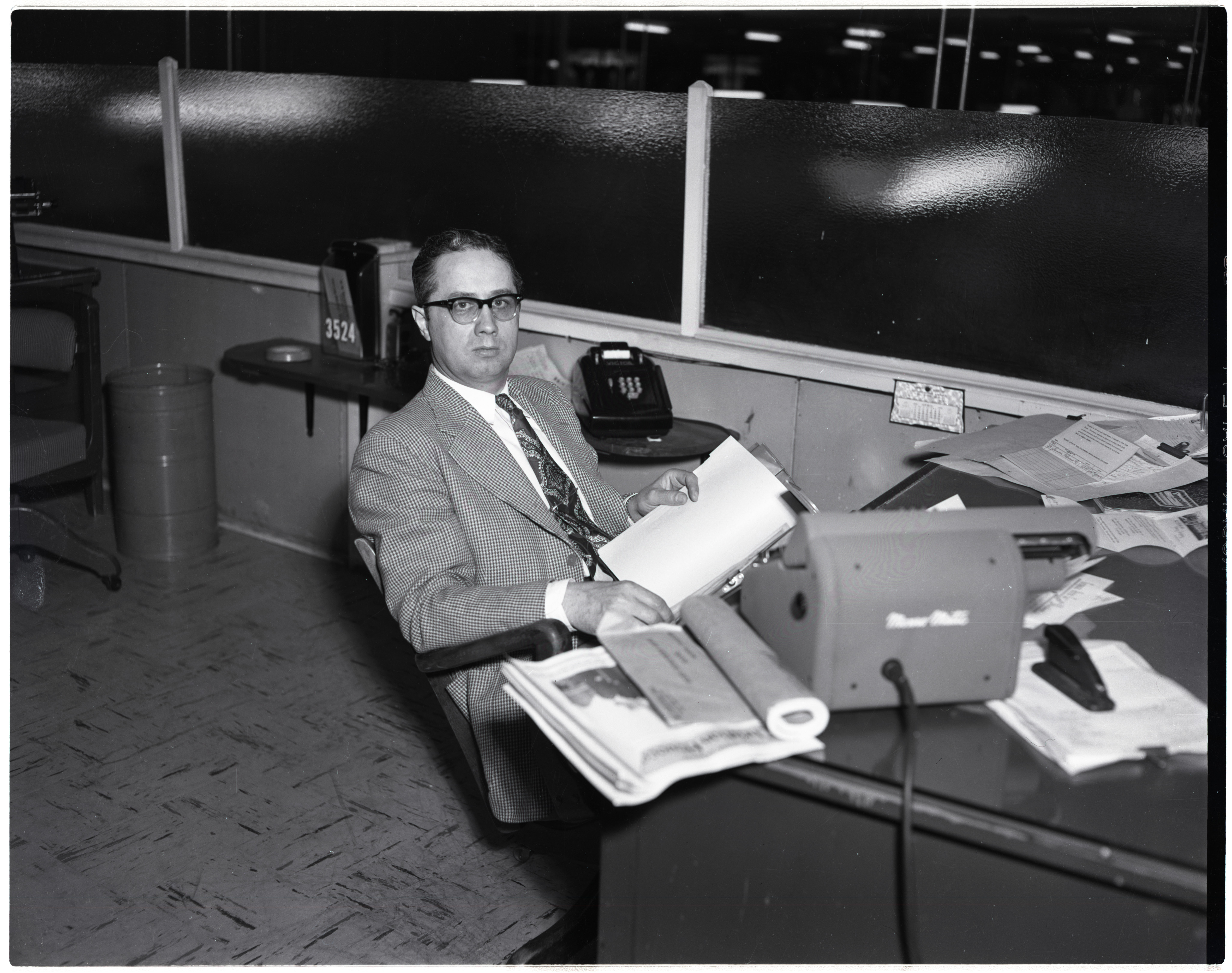
What does it mean to walk into the Antique Mall that now occupies the old Belk department store building, and look up at the balcony where the manager leaned back in his office chair in 1952 and glanced at the photographer interrupting his afternoon?
(NB: His typewriter is barely visible in the back left corner; the desk holds an adding machine, which is not yet an obsession of mine.)
Is the woman using the typewriter here inside the WPA-era Appalachian High School (now Chappell Wilson Hall), as the distinctive stone work might suggest? That building is right next to the new library now.
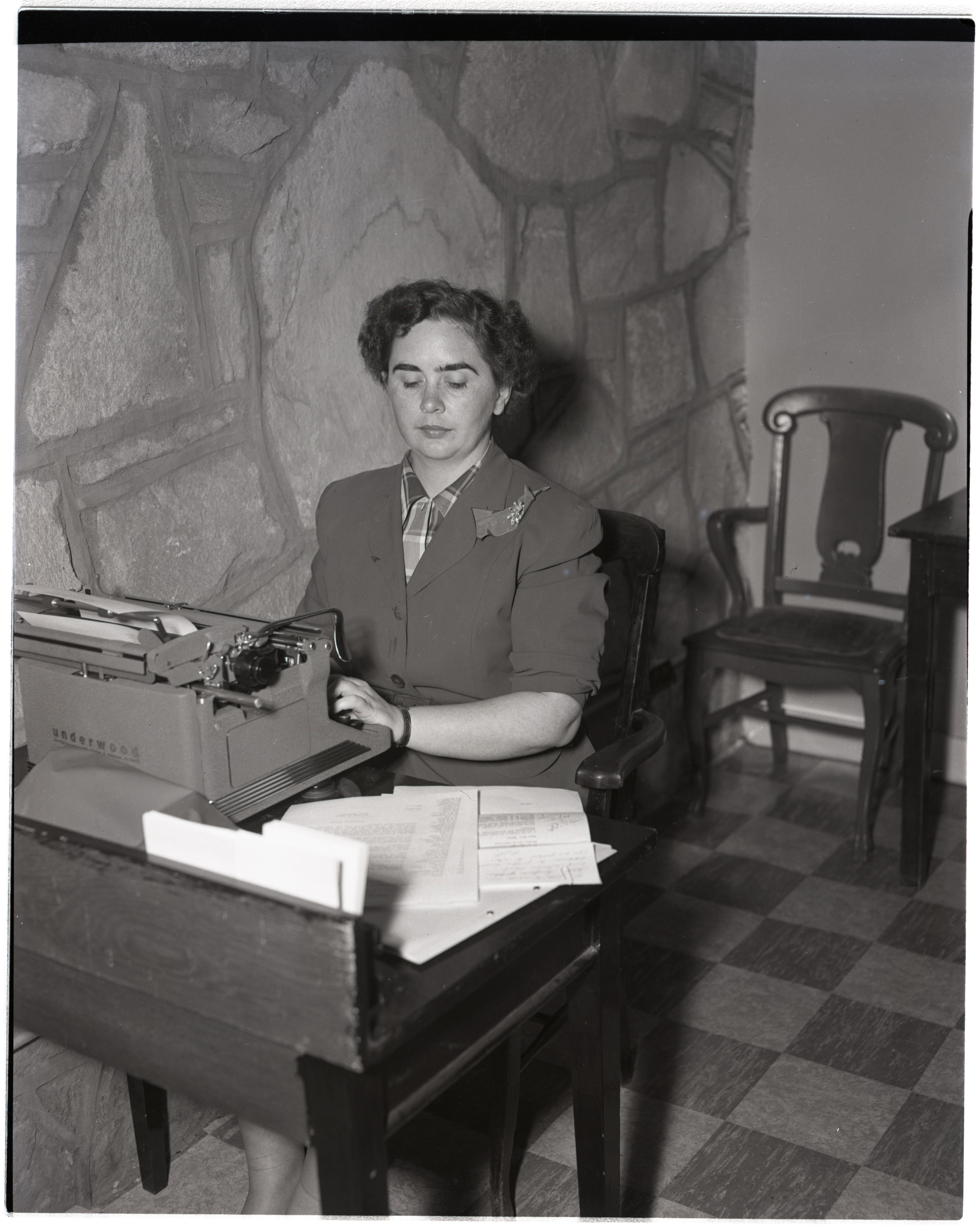
Maybe not. There are a lot of stone walls in Boone. Or maybe…
What’s this guy so happy about? Could it have something to do with his silk jacket? That jacket would make me happy, all right.
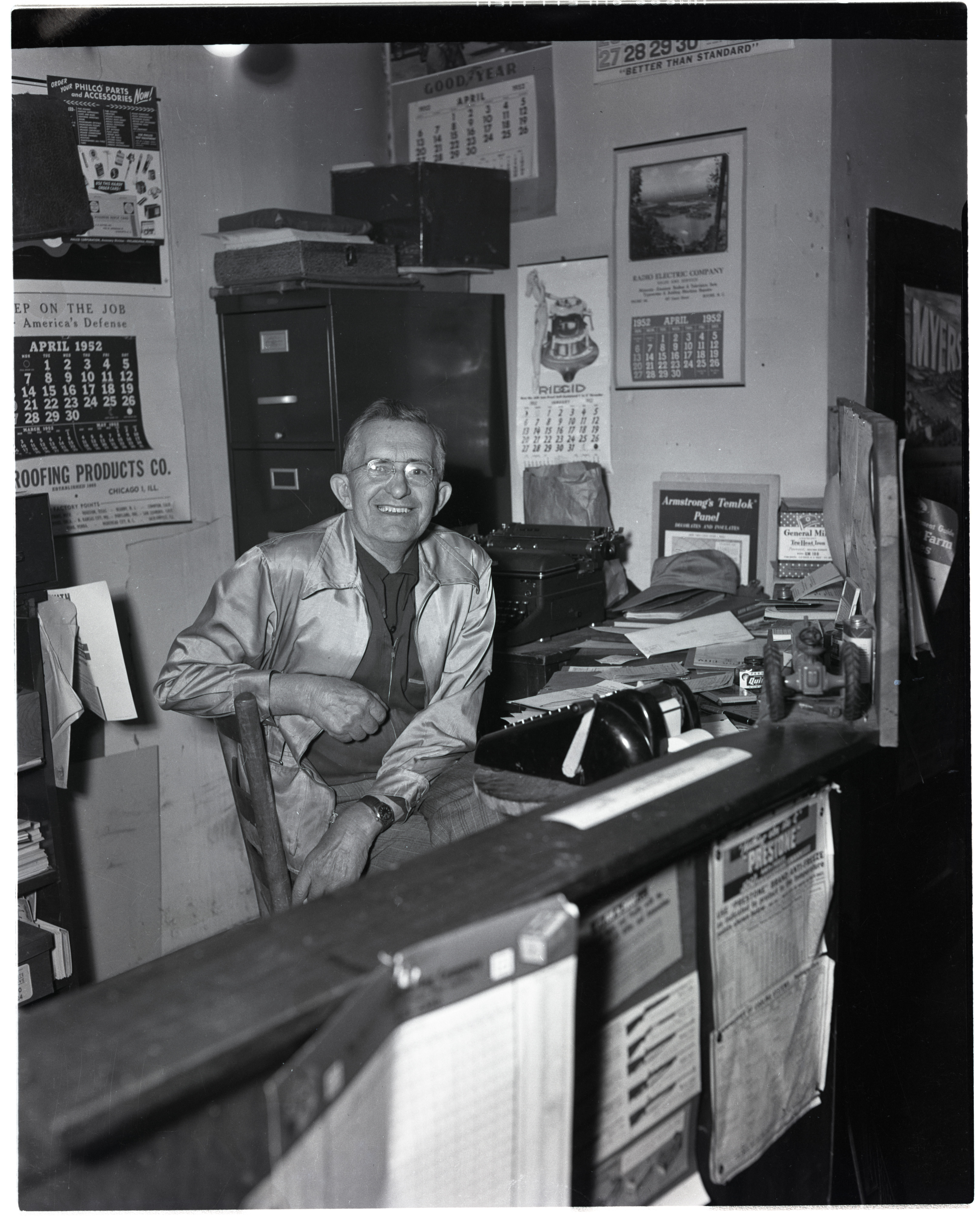
What about her? Maybe she is happy that her typewriter has already lasted twenty years, and shows no signs of stopping.
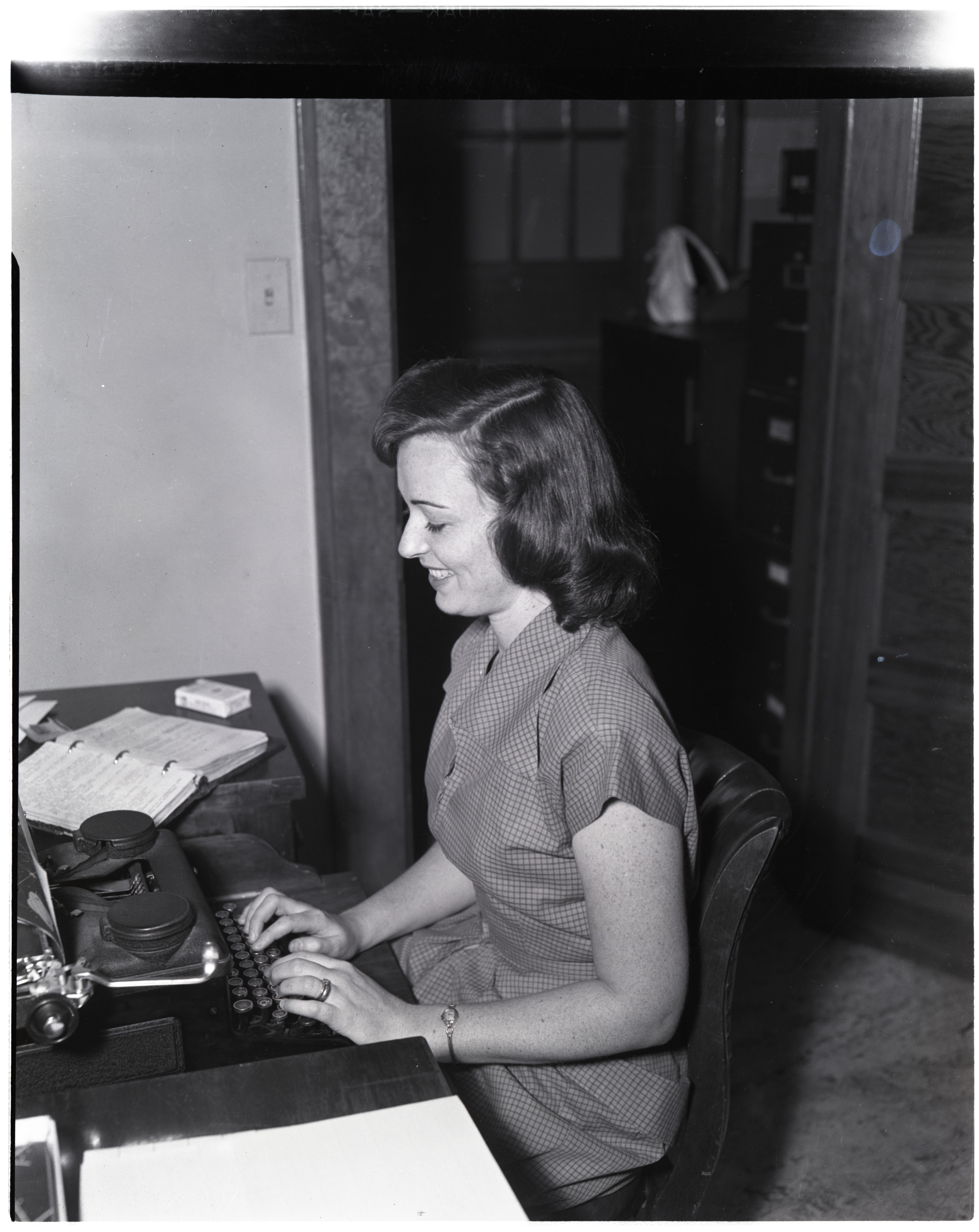
I own most of the typewriter models in these photos. They weren’t rare then, and they aren’t now, if you are looking for one.
But seeing the actual machine on your desk, next to a photo of a different machine on a different desk from 75 years ago that sat less than a mile from where you do, imbues it with a different power.
You look at the real typewriter, and you look at the photo. You are here, they both say to you, with your machine. And also, this person was here, with their machine…that was their turn to have their say, and now it is your turn.
You are different, and your life is different, than theirs. And it is not.
You labor differently today, over different tasks, than they did. You fret over different news that you receive differently.
But when you are done you will also get up and leave and go home to your family and your dinner, and your Christmas in a week, just like they did.
Those moments are yours…and they are theirs too. They are all of ours.
A typewriter is a token of the freedom to be oneself and to have one’s say…and the freedom to know you are one of the crowd too.
That was then, and then, a thousand million thens.
But you are here, and so is your typewriter. You are alone together in the world, right now.
What will you say?

Being some half-baked thoughts on Dana Goldstein’s December 12th article, “Kids Rarely Read Whole Books Anymore. Even in English Class.”
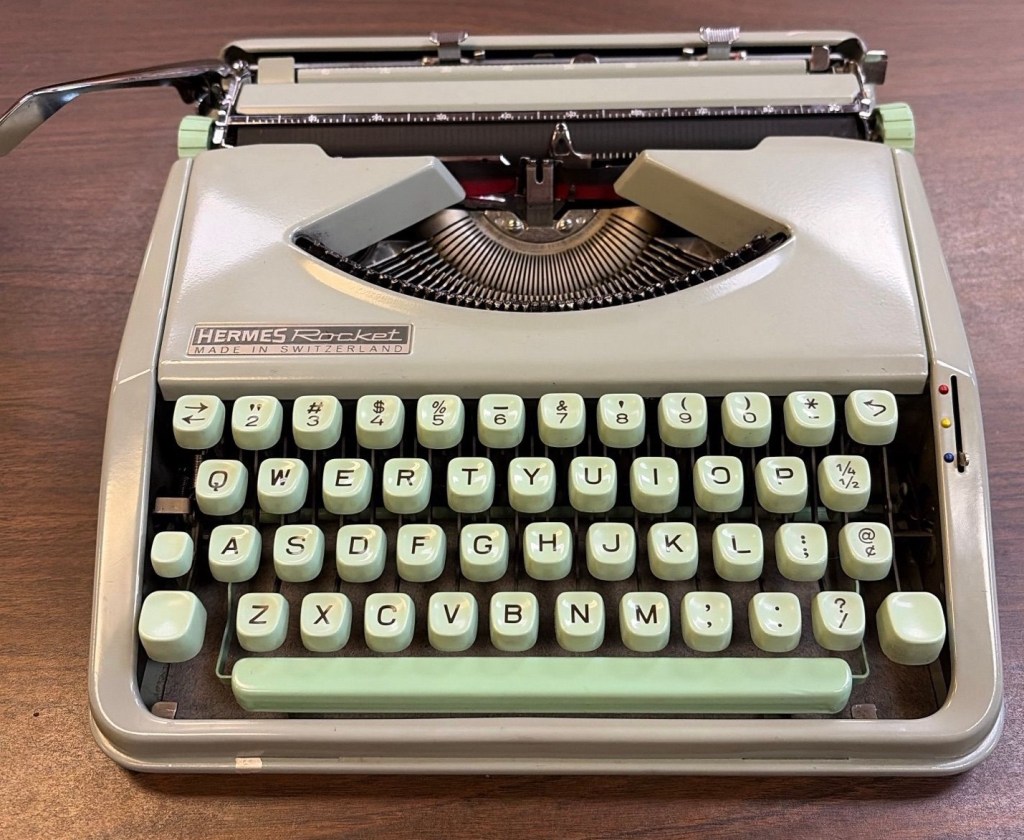
Excited to try a new scanning process to make my typed human words more legible and accessible! I am still with the charming ’63 Hermes 3000. We’re developing a serious long-term relationship. It really gets me…
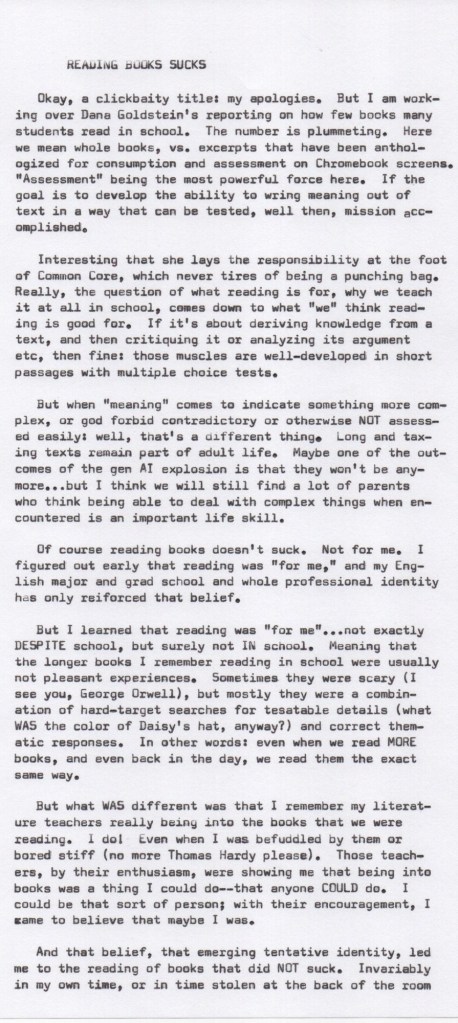

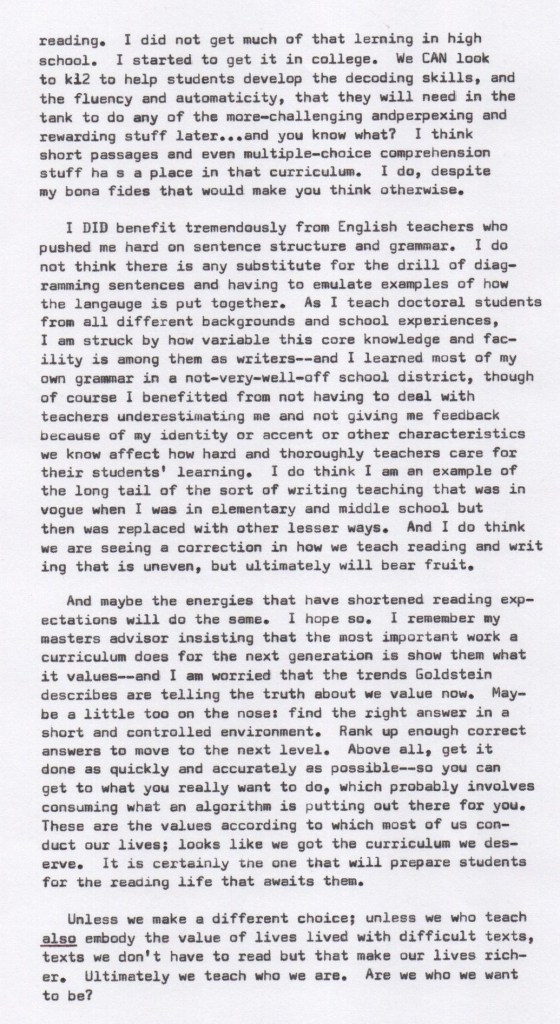
I have no rights to the B&B image, which is the cover of an out-of-print anthology, but hope Mike Judge would consider it fair use. FWIW, you can buy it here.
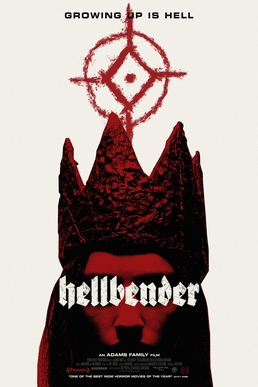
On this Halloween morning, I awake gnawing on an unexpected seasonal treat: a new-to-me horror film that delivers on all the creepy potential that makes me love the genre above all others.
And there’s a typewriter in it too! Which, like most typewriters for most of their existence, doesn’t seem to matter that much—but actually might be the most potent symbol in this story of power craved and feared, hidden and revealed.
The film is 2021’s Hellbender, by the independent film-making Adams Family. Married and creative partners John Adams and Toby Poser created it with their adult daughters Zelda and Lulu Adams, on their Catskills property during the Covid lockdown. And it is shot through with family intimacy and trust and dread (as well as some deliriously batshit dream sequences).
The performances come right off the screen at you in the familiar ways real-life mother and daughter connect, resist, negotiate, and eventually evolve their relationship the only way it can go. Not since Let the Right One In have I seen domestic and supernatural powers woven together so deftly and effectively.
Its provenance is almost otherworldly: can any family be this cool? But the resulting film gets its oomph from the reality of its surroundings. A restored nineteenth-century house with Shaker-white walls and spare furnishings hiding dark recesses; a bougey outdoor pool where ancient and modern forces sniff each other out and negotiate inevitable collisions; the revolving seasons of the gorgeous and terrifying woods, fields, streams, and creatures of rural New York state, an uncredited but witnessing presence.
Chekhov famously said that no element in a story can be introduced without eventually becoming relevant. If a gun is shown hanging above a fireplace in the first act, goes the example, it must be fired in the third. I am no literary scholar, but Wikipedia tells me this law is meant to be broken. No less author than Hemingway loved to introduce story elements that never “go off”–because the reader’s awareness that it could go off heightens their sensitivity to what might happen, and what things might mean.
I spotted two typewriters in Hellbender, and—spoiler, sorry—neither one ever types a word.*
We glimpse one on a dresser in a bedroom, apparently a merely decorative or sentimental object (no one could really do any typing at a dresser). But the second lives atop a desk in a dark and hidden room behind the eaves, which can only be accessed through the coolest demonic user-authentication tech I have ever seen. It sits alongside an unassuming leather-bound book, among several old portraits of women ancestors who shared the mother/daughter bond the movie explores. Book, pictures, typewriter: that’s all the nerve center of an ancient sisterhood apparently needs to sustain itself.
It looks like a Smith Bros. standard from the 1910s, from what I can make of its space bar design, but I am not sure. In any case, we do not get much of a look at it. It is definitely black.
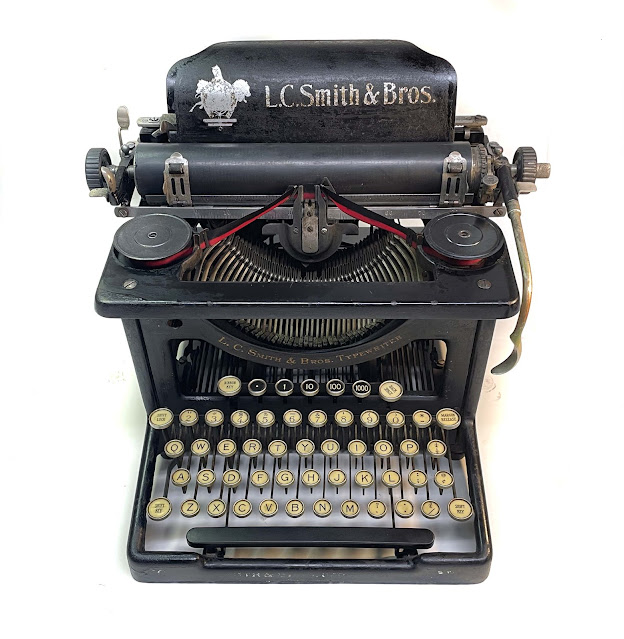
It’s the book that gets the most play, not the typewriter. The book seems to be the repository of the ancient power these women own, celebrate, struggle with. When one of them places her hand on it, she is transported through violent visions to historical moments in their lineage, as well as possible or foretold futures. There is enormous power in the words the book, we assume, holds—because books have words in them, right?
But as far as I can recall, after viewing the film only once (so far): we never see any words in the book. We never see anything in the book. The book never opens.
Toby Poser’s unnamed mother possesses immense wisdom and lore about the nature of their shared power. The combinations of herbs and roots and bark that summon various capacities, the nature of the gift / curse they bear—but I never remember her reading about these things. She just does them, and explains and demonstrates them for her daughter. The wisdom is witnessed and told, not written and read. Probably for aeons.
So…why a typewriter?
Who has written with it, and what was written?
Was what was written in the book?
Is there something yet to be written?
There is so much power swirling in the world of its film: is any of it in written words? And if not–or not yet—why is there a word-making technology at its center?
I wonder if there might be a clue in how the daughter, Izzy, explains herself to a new friend. Her first and only friend, it seems. Mother has kept daughter isolated from the world to protect the world from this power, or maybe to exert, futilely, the parental desire to save their child from pain by shaping them in their own image. (Shades of Carrie, of Firestarter…)
“What do you do for fun?” the friend asks her.
“I hike…I draw…oh, and I swim, I swim a lot.”
This answer doesn’t spark much enthusiasm from the new friend (played by Lulu Adams, Zelda’s real-life sister). So she reaches for the one other detail of her homeschooled feral-demon-child life that she hopes will give her some cred.
“I’m in a band too!”
“What do you play?”
“I play the drums…
“And I sing…
“And uh…I write the lyrics.”
This does the trick. The new friend accurately acknowledges that being in a band is cool. (Writing lyrics is cool, at least. “I dated a drummer once. He was dumb.”) And their relationship, for better or worse, begins.
The band is another mother-daughter collaboration: dark metal. We see and hear them several times in the film, mother on bass and Izzy on drums, performing in their house for only themselves. Each time they are dressed and made up differently in Ziggy-Stardust-meets-Kiss makeup and accessories. Indeed it is a band! One of the ways they connect with each other, before and while they begin to connect around the emerging understanding of the powers they share.
Mother sings, mostly—but the words are Izzy’s. Only Izzy writes in this world.
Izzy writes the lyrics.
Is the typewriter to be Izzy’s?
What else is Izzy about to write?
The movie’s logic finally becomes clear: Mother explains that their lineage reproduces by each generation consuming the one before, “like spring eats winter, and summer eats spring.” They are the titular “hellbenders”: “a cross between a witch, a demon, and an apex predator.” And in the mother’s telling, they are evolving and changing–though it is left open whether that evolution is actual, or is merely the mother’s vain hope for a kinder, gentler future for them. (Reminds of another terrific maybe-evolution, in 2016’s The Girl With All the Gifts.)
And in the midst of that ambiguity—in that promise that, one way or another, something else is about to unfold—the typewriter sits like it always has, before now. Maybe the new something will be written and shared. Maybe it will be a new book of new power. Maybe it will activate a network of holders of this ancient power that find each other through correspondence and connection. Maybe it will write the record of what has been and what might come.
We don’t know yet—but a typewriter will eventually type, even if it hasn’t yet. Its owner will find it and do with it the only thing it can do.
How terrifying, how thrilling.
How horrific!
Happy Halloween!
*I was hoping for a Fringe-type dimension-piercing magic typewriter. Maybe next time!

I might get to yell “first” in the Typosphere for blogging this terrific NYT article on the rediscovery of the “MingKwai” Chinese typewriter.
It details the thrill of Tom Mullaney, an obsessive history professor (I thought I had it bad) searching out, finding, and saving the only extant example of this machine from oblivion.
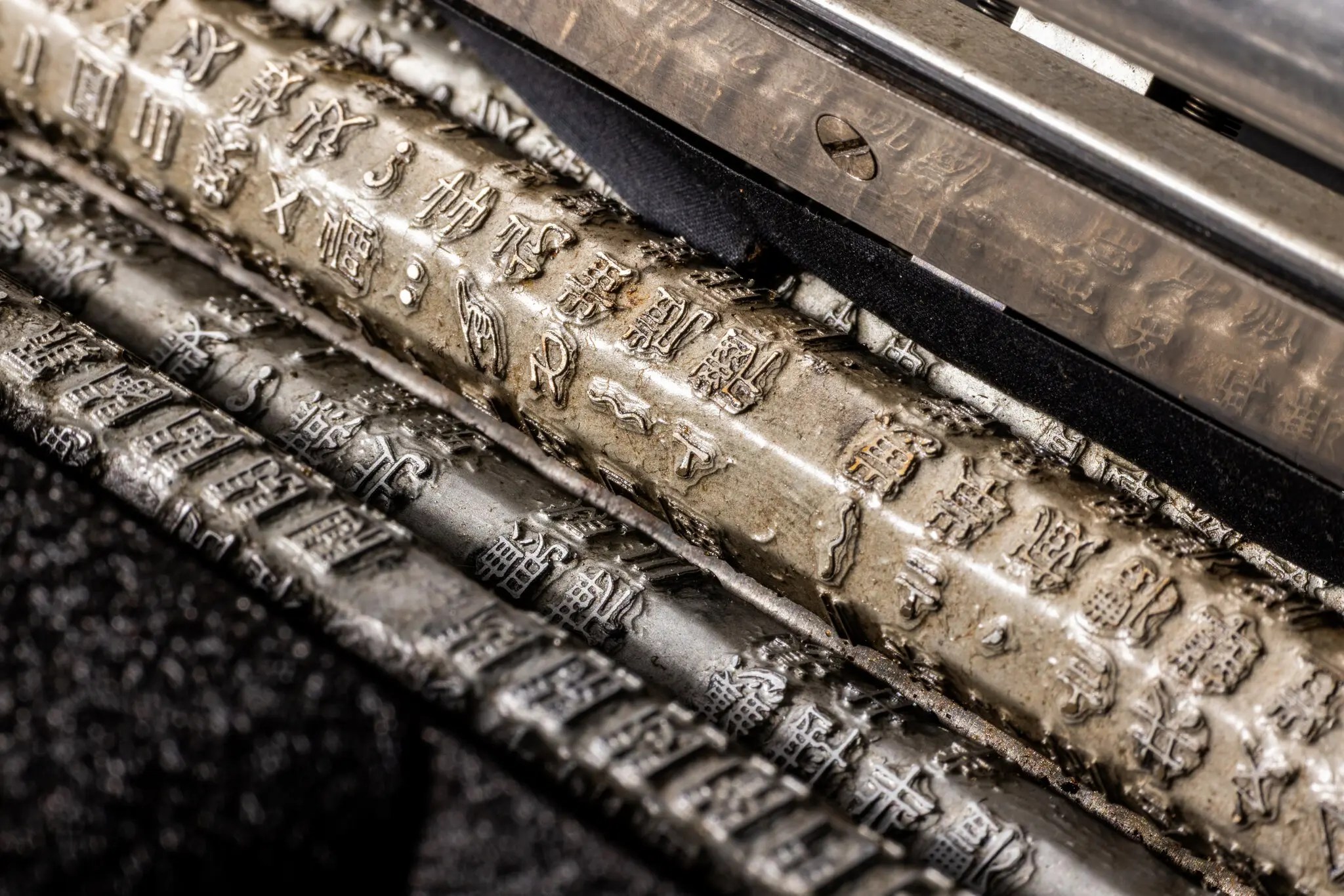
I have never seen any Asian language typewriter in person, but the gorgeous photos here really give a sense of the engineering feat accomplished in this protoype.
Imagine!
Any two keystrokes, representing pieces of characters, moved gears within the machine. In a central window, which Mr. Lin (YuTang, the inventor) called the Magic Eye, up to eight different characters containing those pieces then appeared, and the typist could select the right one.
Mr. Lin had made it possible to type tens of thousands of characters using 72 keys. It was almost as if, Dr. Mullaney said, Mr. Lin had invented a keyboard with a single key capable of typing the entire Roman alphabet.
He named his machine MingKwai, which roughly translates to “clear and fast.”
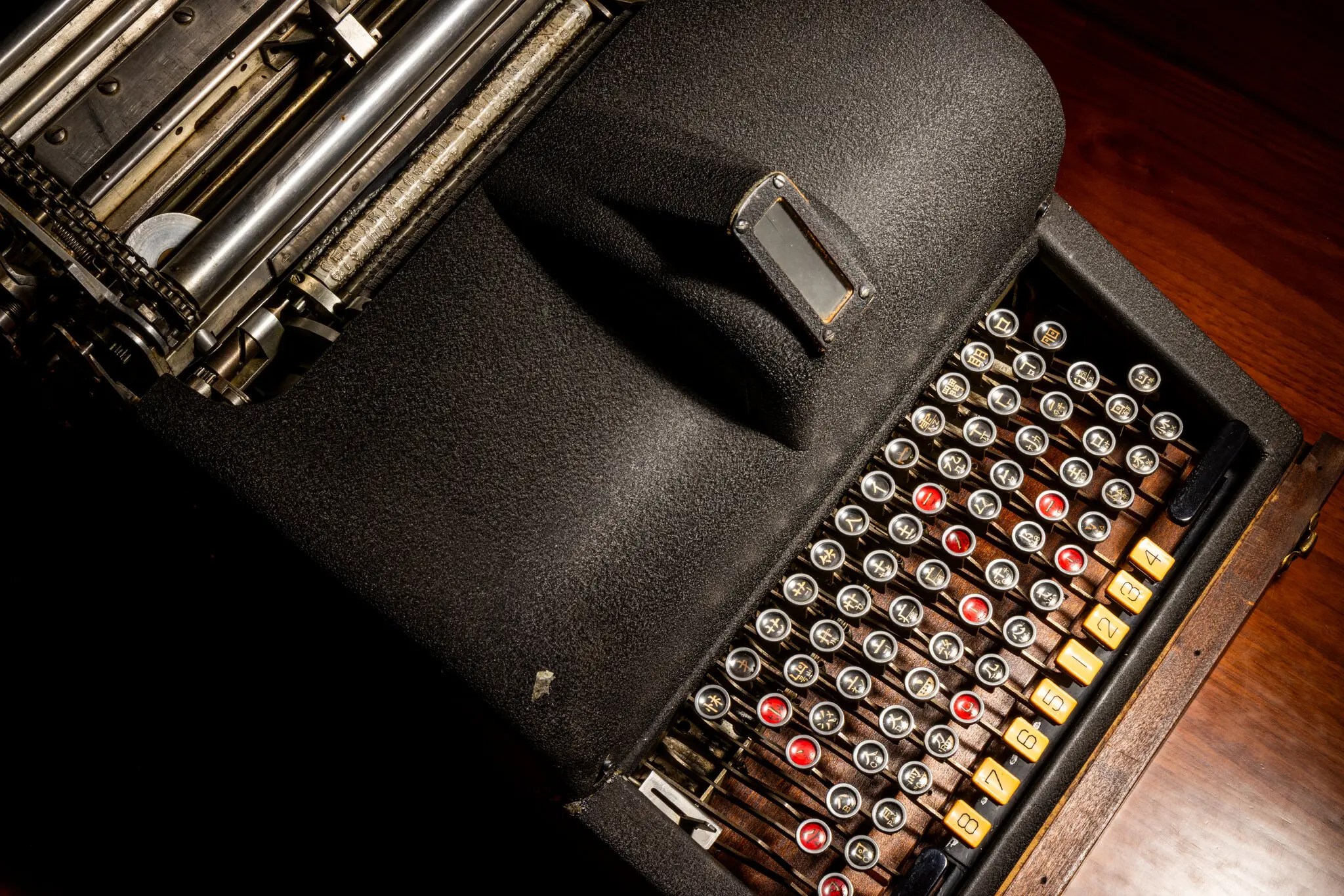
It was never manufactured. Lin had a single prototype made in the 30s at his own enormous expense, and tried to sell it to Remington, the General Motors of the era’s American typewriter industry. It failed during the demo; he went bankrupt; the machine was stashed at his job, then moved here, then there, and was presumed lost.
“Gone the way of most obsolete technology…had most likely ended up on a scrapheap. The right person hadn’t been there to save it, to tell its story.”
What is worth saving?
I think typewriters tend to be! My typewriter collection does not enter Dr Mullaney’s rare air, for sure. All of my machines were made in the hundreds of thousands, if not more, and none could be considered truly scarce. Though some, like the 1967 Hermes Ambassador that tops my blog, are definitely scarcer than others.
But the course of the Ambassador is exemplary of the path I think once-precious things often take when they become outmoded. It got stashed in the back of a dry closet, under a cheap plastic cover someone had the presence of mind to replace before forgetting about it for decades. And that afterthought by some anonymous someone is why it surfaced in an estate sale, perfectly functional, when so many others that were left uncovered in damp basements or attics do not. (Cover your typewriters, children!)
I think so many manual typewriters are still around because they were so expensive. They were workaday tools–well, some were more stylish than others, and they had different price points, so maybe they were more like automobiles than tools–but they were dear to acquire, about the price of a laptop today. So even when they were no longer needed, and were replaced by an electric or a desktop computer, folks couldn’t imagine tossing them out.
That cover wasn’t an afterthought. The Ambassador was a luxury model! I like to imagine that it was the owner’s child, or grandchild, that finally made the choice to store it safely. Maybe because they had been told over and over that it wasn’t a toy. You can’t play with it. It’s precious. Treat it like something precious. And that someone–or their child–did.
So maybe that’s why one generation’s expensive stuff tends to still be around for future generations to rediscover, reassess, and decide if it has anything new to offer in a present-day recontextualization. The kids get told to take care of it–and they do.
But…what about the true ephemera of our daily lives? Will we miss any of it when it is gone?
Cruise FB Marketplace’s “free stuff” section in a college town right around the end of July, when all the student apartments are turning over, and wonder. Will anyone ever miss flatpack furniture? Entry-level vacuum cleaners? Futons? (So many futons.)
So much hideousness. Here in my personal college town, our sustainability-branded university students used to collect all the discarded stuff, spend a few weeks cleaning and sorting it, and then sell it back to the incoming frosh in “The Big Sale” that happened at Legends, proceeds to scholarships. A one-day Black Friday delirious feeding frenzy of plastic and upholstery and area rugs. It was a gas.
Unimaginable with social distancing, “The Big Sale” got cancelled during COVID…then, like so many things, just quietly never started up again.1 I have a mediocre electric fan from the last one in 2019. It cools nothing, but reminds me of stomping around the bedlam of that sunny hot morning in a packed Legends with my then six-year-old in wide-eyed tow. Glorious memory.
You miss the ephemeral stuff if you have reason to miss it; you miss stuff if it has a reason to matter. It was from the last “Sale.” I didn’t know it was the last sale, any more than Lin knew the typewriter would be the only one ever made. The meaning got loaded into it after.
And of course you can’t save everything just in case it matters later–because that is the high road to hoarding. If you never throw anything out, how will anything ever be precious?
You have to miss something for anything to matter. Like Sheryl Crow sang, “there ain’t nothin’ like regret / to remind you you’re alive.” Better to lose too much and make space for the new, run the risk of having tossed something you long for, than be hemmed in by stacks of everything in case some of it happens to matter to you again…
Right?
So: save some of it, I guess?
Maybe that is how to honor a past you were part of–and, eventually, as you grow older and more judicious about what is beautiful, a past you weren’t part of too.
But also, let the world have its way with ephemera, which of course is most everything. Burn through stuff made to be burned through.
What matters will become clear later…and we will have the delectable chance then to rediscover what once we could not even see, and treasure it up in our new world for the preciousness it brings us from the old.
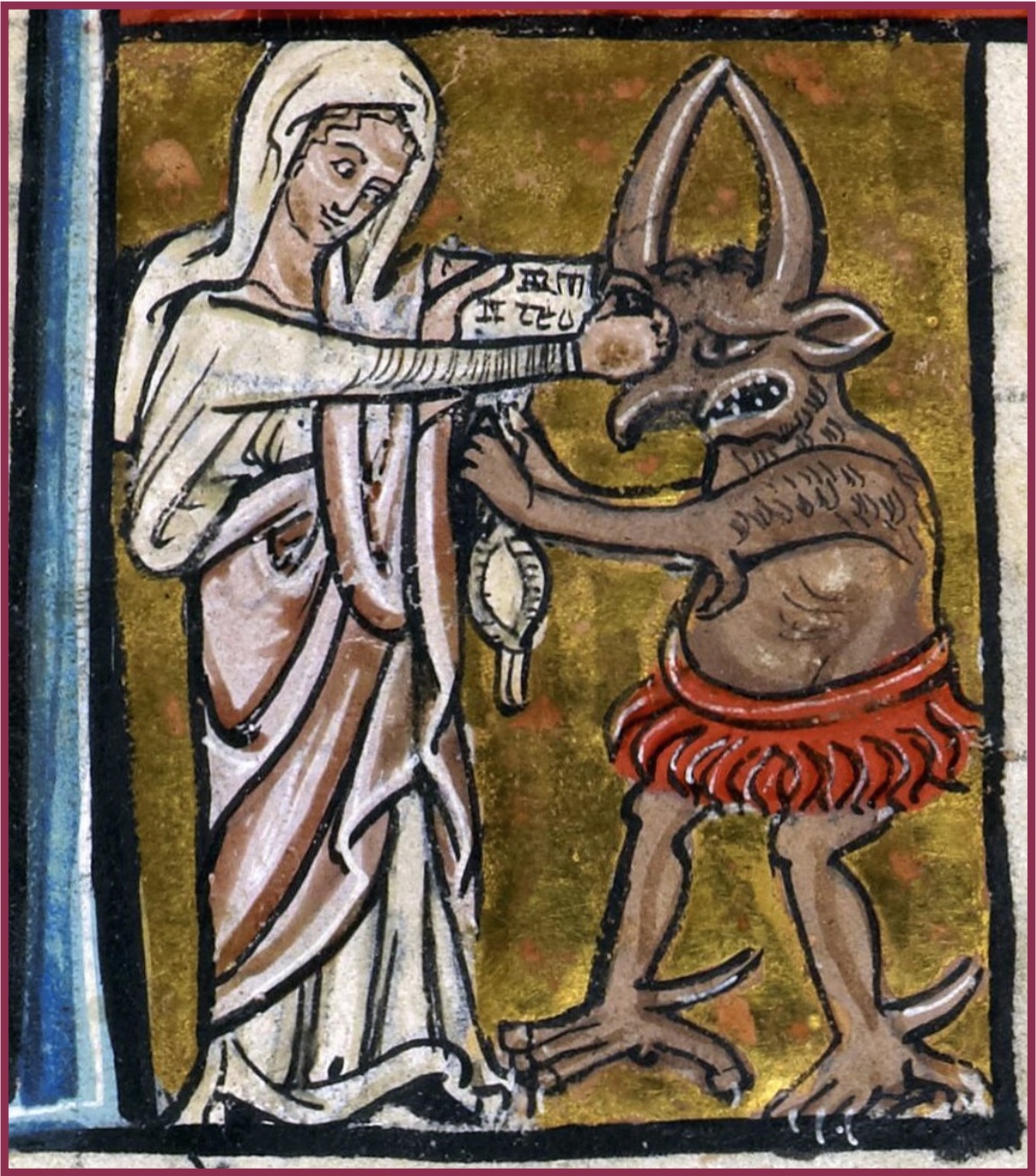
Here he is! You probably didn’t even know he existed.1 He messes up what you are trying to write. He introduced the errors that have grown like mushrooms in your draft since you last looked at it. His industry is your weakness. It’s not you–it’s him! The lord of all typos, the demon of scribes: meet Titivullus!2
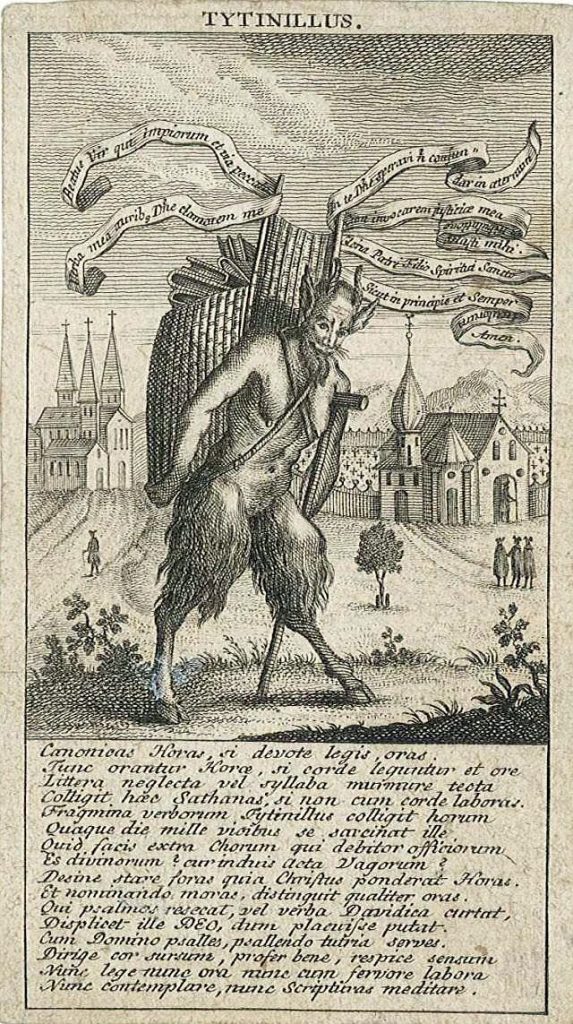
I understand he was originally two demons! One who gathered up all the poorly-spoken and mumbled sermons of the preachers and prayers of the laity in a big sack–the image above has him in this form, toiling toward his quota of a thousand per day (!). And a second who compiled and tallied them, to be held against the poor mumbler and lazy parishioner on the judgment day.
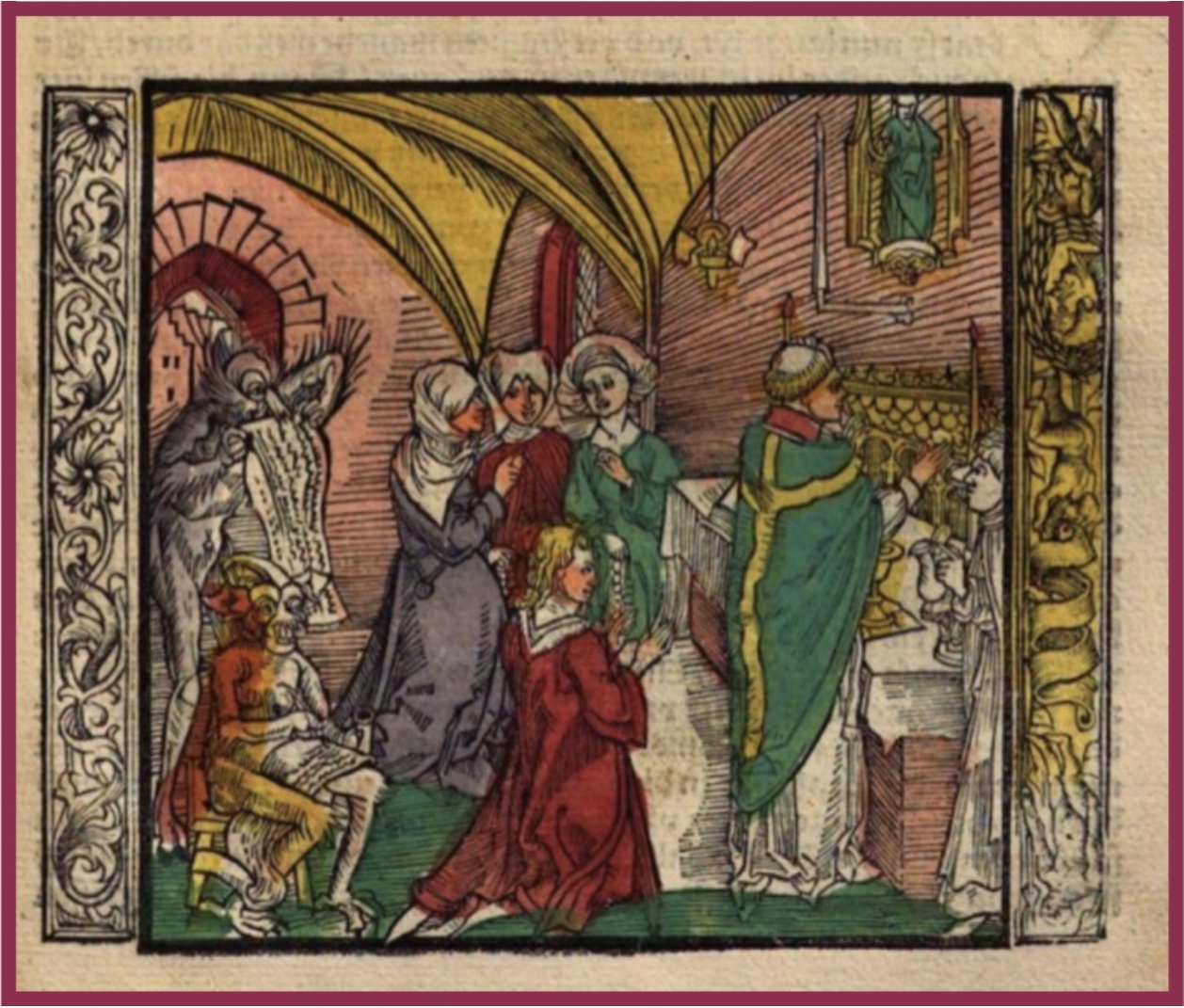
Thus the medieval church installed a panoptic anxiety among the faithful.
In Margaret Jennings study of Titivillus she wrote the point of this Medieval demon was to remind clergy and laity of the danger of “spiritual sloth.” The litany of the service, each prayer and each song were to be unhurried, expressed clearly and with fervor.
To say or sing by rote and without care, to attend church, but not participate wholly was to open oneself to sin. Hence, visual reminders of a recording demon, as well as other devilish minions, were found on wood, walls and paper. In the hand-colored woodblock above three women gossip, one demon scribbles away and the second demon stretches a scroll with his teeth because they need more paper!
He sees you when you’re sleeping, he knows when you’re awake…and he knows if you have been phoning in your devotions, too. So look sharp, lest your imperfect words be held against you in the final tally and toss you into the jaws of hell (below, right).
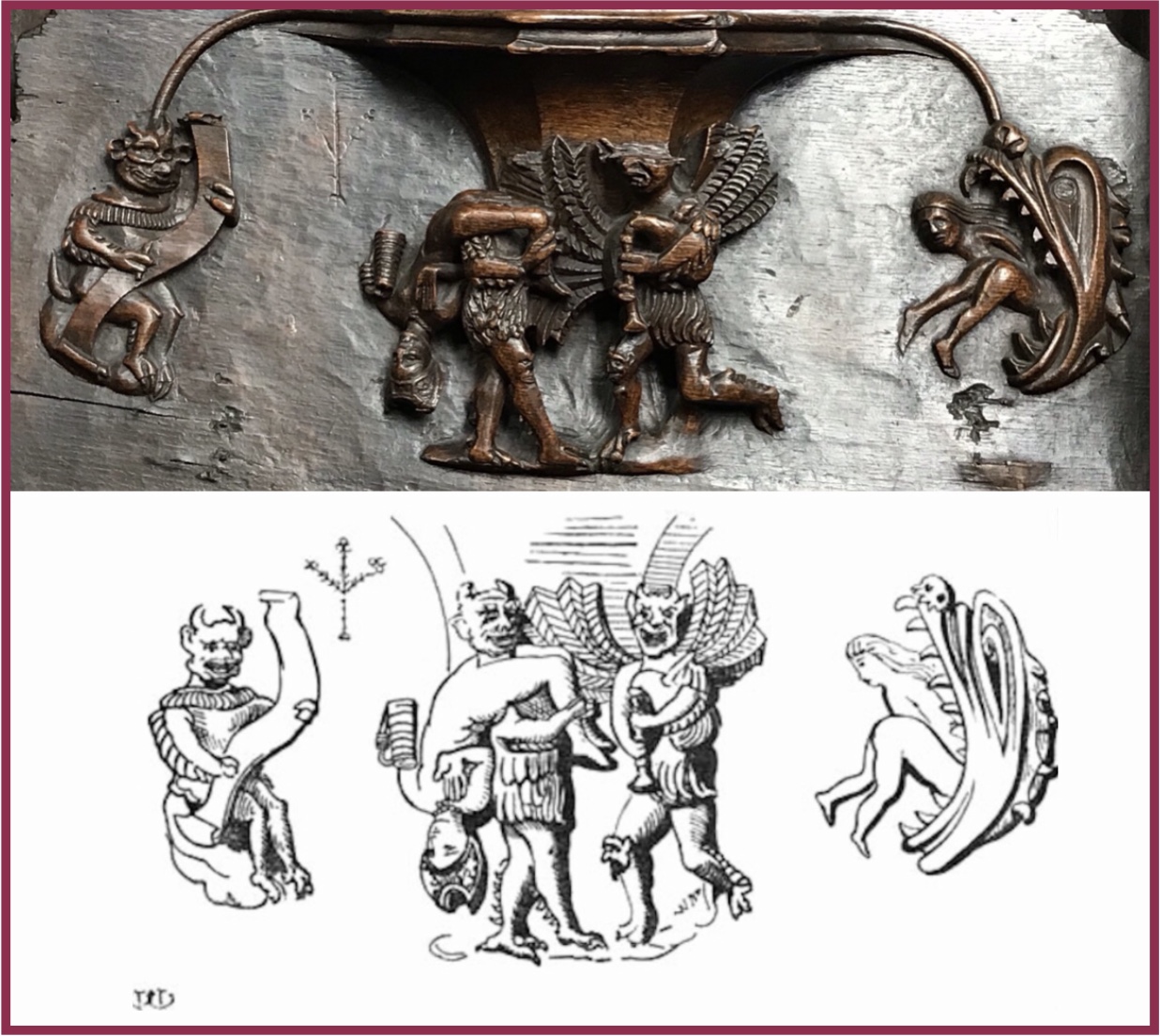
From the demon monitoring and keeping track of our language shortcomings, it was a small step to the demon actually interpolating such errors. Mischief not just recorded, but instigated. And thus T became the active cause of our imperfections, not just their registrar.
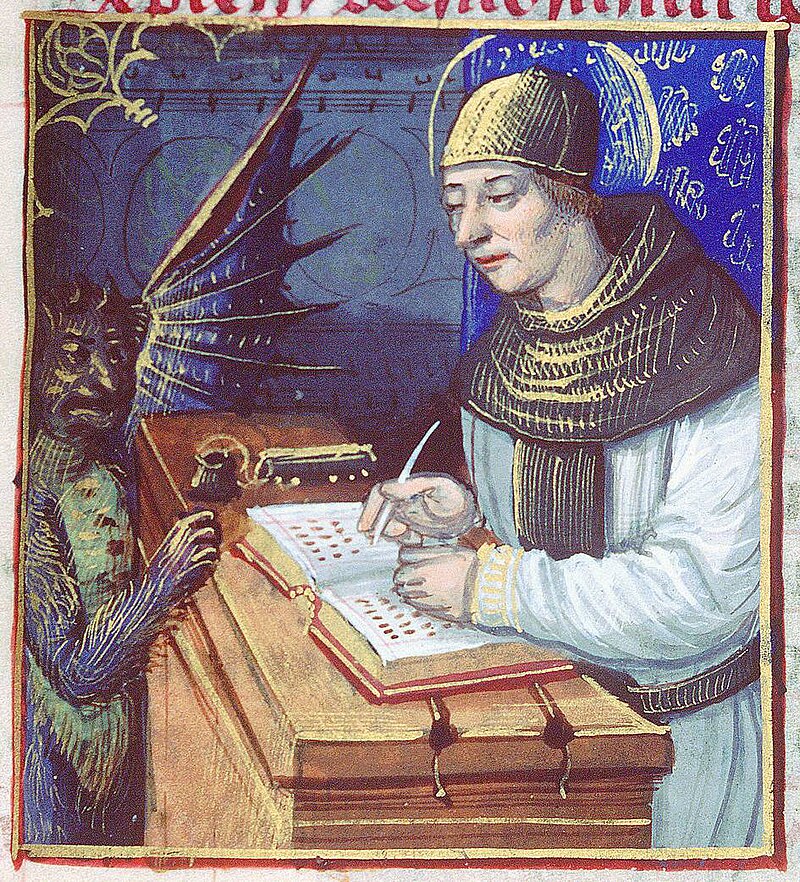
Titivullus’s relation to Ceiling Cat’s many forms is as yet undocumented, and awaits future research.

Fun fact: he is apparently the source of the “printer’s devil,” the name given to apprenticed boys who scurried around eighteenth- and nineteenth-century printshops pulling fresh pages out of the press and collecting errant type to melt down. Because their hands were blackened by ink; because they were underfoot; because they made mischief!
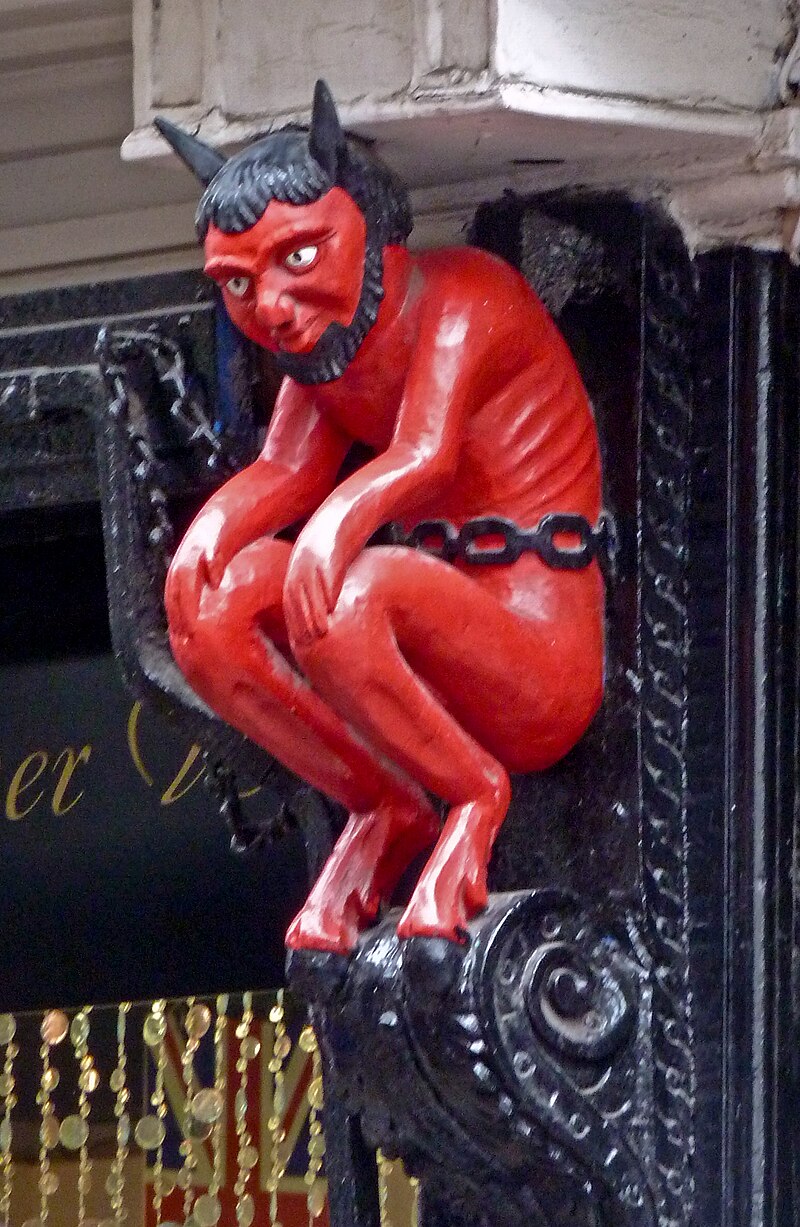
Holy cow! No wonder we are so averse to typos and other false steps in our writing. We liberal arts undergrads who sort-of remember our sort-of reading of Max Weber shake our woolly (or bald) heads and think, yes: sloth in all its forms does not compute with the rational pursuit of economic gain. So mis-writing is a crime against God, and also profit.
Are we still in thrall to Titivullus? Well…does this track?
Typos are sin! And must be stamped out, even (especially?) if doing so requires an internalized self-loathing that is activated whenever we make a mistake.
Whenever we read back what we just wrote and think, that is not what I meant at all. That sounds stupid, and I misspelled “stupud” too…that voice is the spirit of Titivullus, living for free in our heads!
And loading up the very fallible (but passionate) humanity that led us to write anything at all with…well, wow, with what?
Guilt?
Nagging sense of inadequacy?
Embarrassment at having thought we had anything to say in the first place?
Much safer to not write anything at all…
And If we are already primed to feel bad about our writing’s syntax inconsistencies, then the prevalence of effortless “typesetting” technologies will make us feel even worse.
We all know two spaces after a period in word processing is a tell that your author is a recalcitrant from the age of typewriters. Word processing automates the monospace of typewriting: just put in one space and let the rock that thinks figure it out.
And everything written should look perfect now, whether or not it is actually flawless. Canva is the tip of the spear, here; a friction-free tool that raises all our expectations that whatever we dare to inscribe should be Instagram-ready, should look cute on a Stanley cup or an Etsy t-shirt.
When you know about Titivullus, you see his minions everywhere. Making you feel bad about all the ways real human words are imperfect when they first come out of us.
And making you think that until they are perfect, they are wrong and unworthy. And maybe even evil: maybe even will be held against us in some final accounting that awaits us, and our wordmaking.
What bunk, friends!
Let’s embrace an enlightened perspective that we all make and consume our words exactly the best way we can and should, exactly as we are!
Especially when the demon’s AI great-great-great grandchildren are offering us the false promise that we need never feel bad about our words again–as long as we just let them write for us. (“It’s cheating, but I don’t think it’s, like, cheating.”)
Subtle temptor indeed.
Long live typos–because they affirm the real-world and real-person provenance of what you are reading!
Go to hell, Titivullus! Let us type in peace!
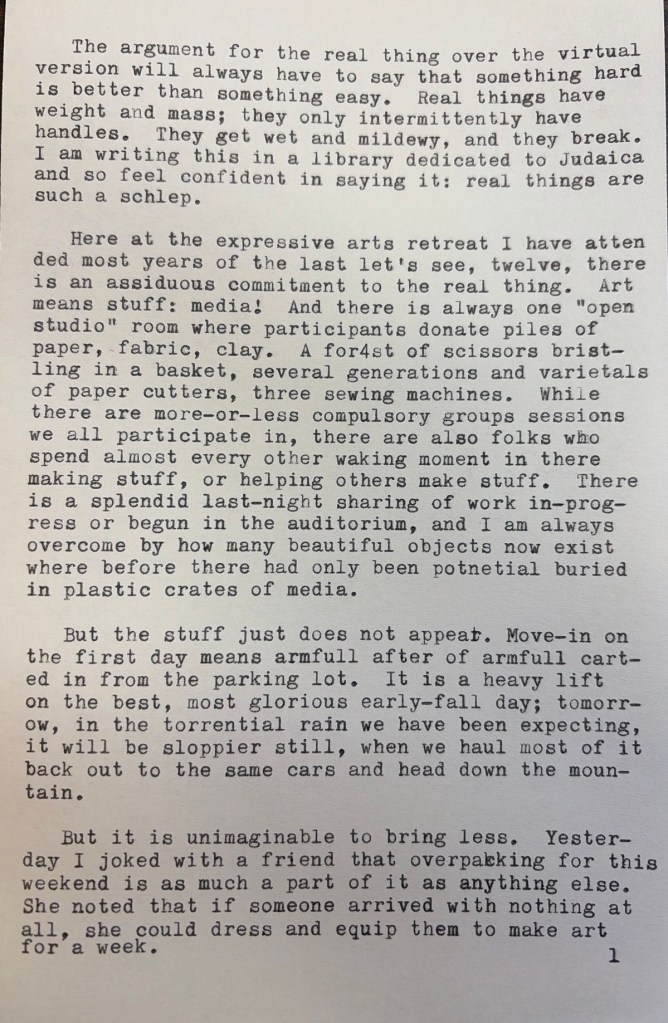
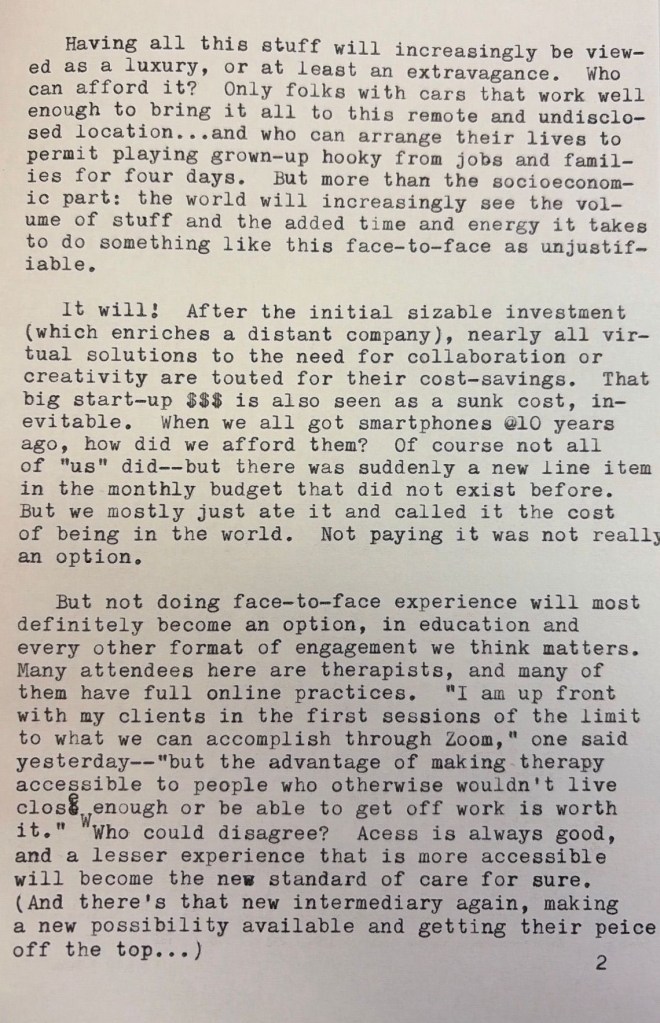
Here are a couple of pages I typed this morning on my ’67 Hermes 3000.
Well: first, here is the ’67 Hermes 3000 in question. My ten year-old named all my typewriters when he was in my office last month, but I have mixed up the placards. This is either “Smith” or “Inigo Montoya.” It will probably answer to either.
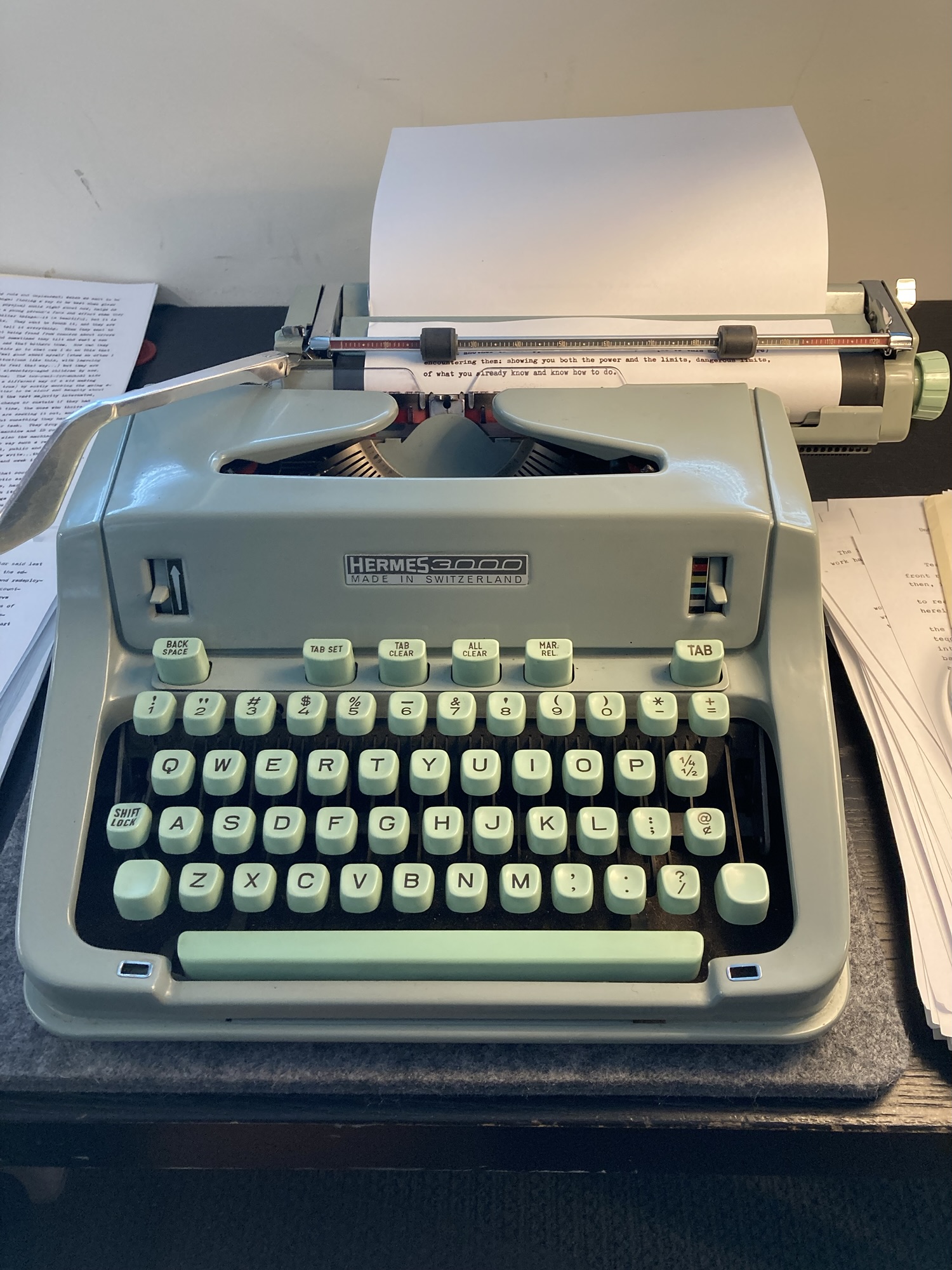
I am in love with the wonderful ease with which a typewriter like this calls you in to think something through. There is nothing else to do but decide what comes next on a typewriter like this. Nothing else to do but find out what comes next. Can you stay with it long enough to see?
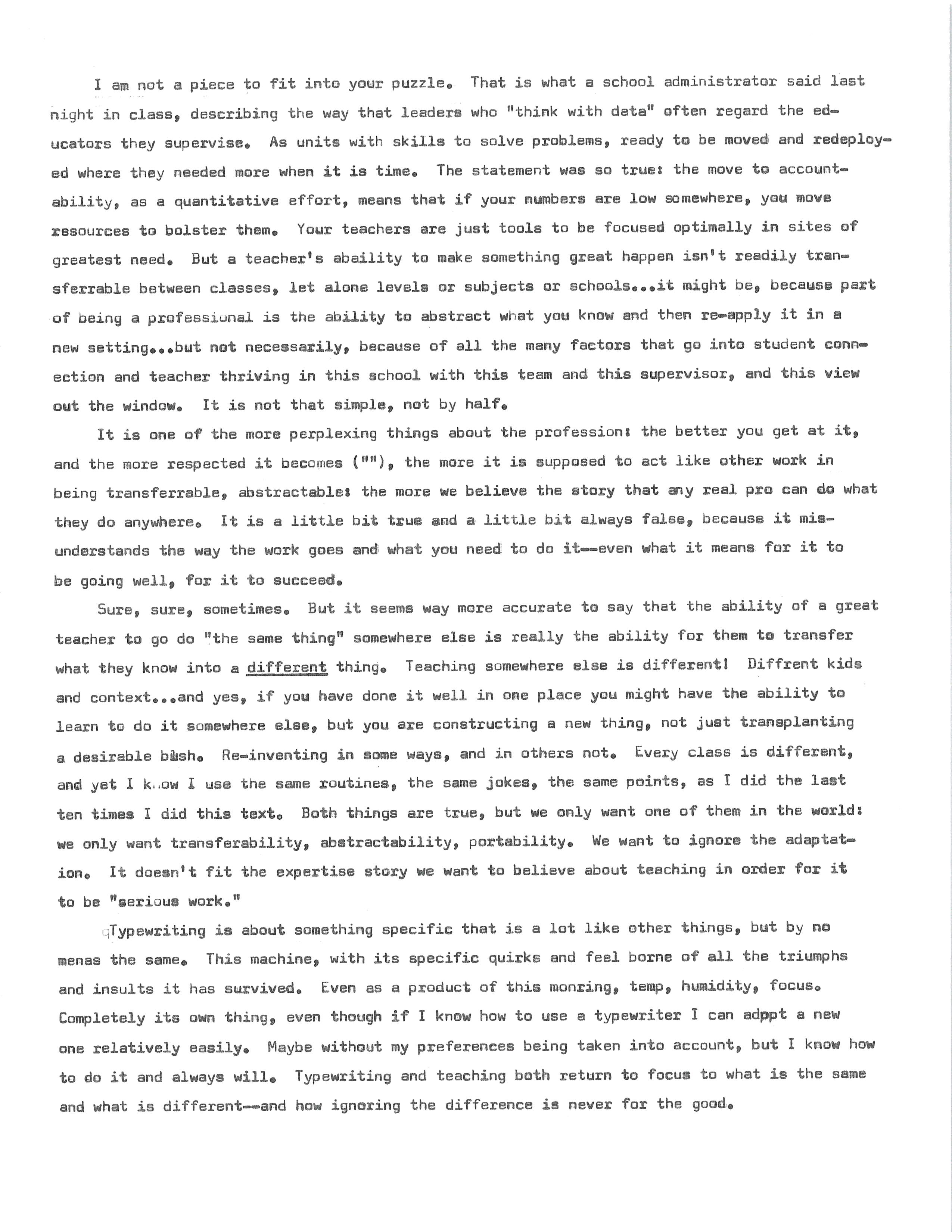
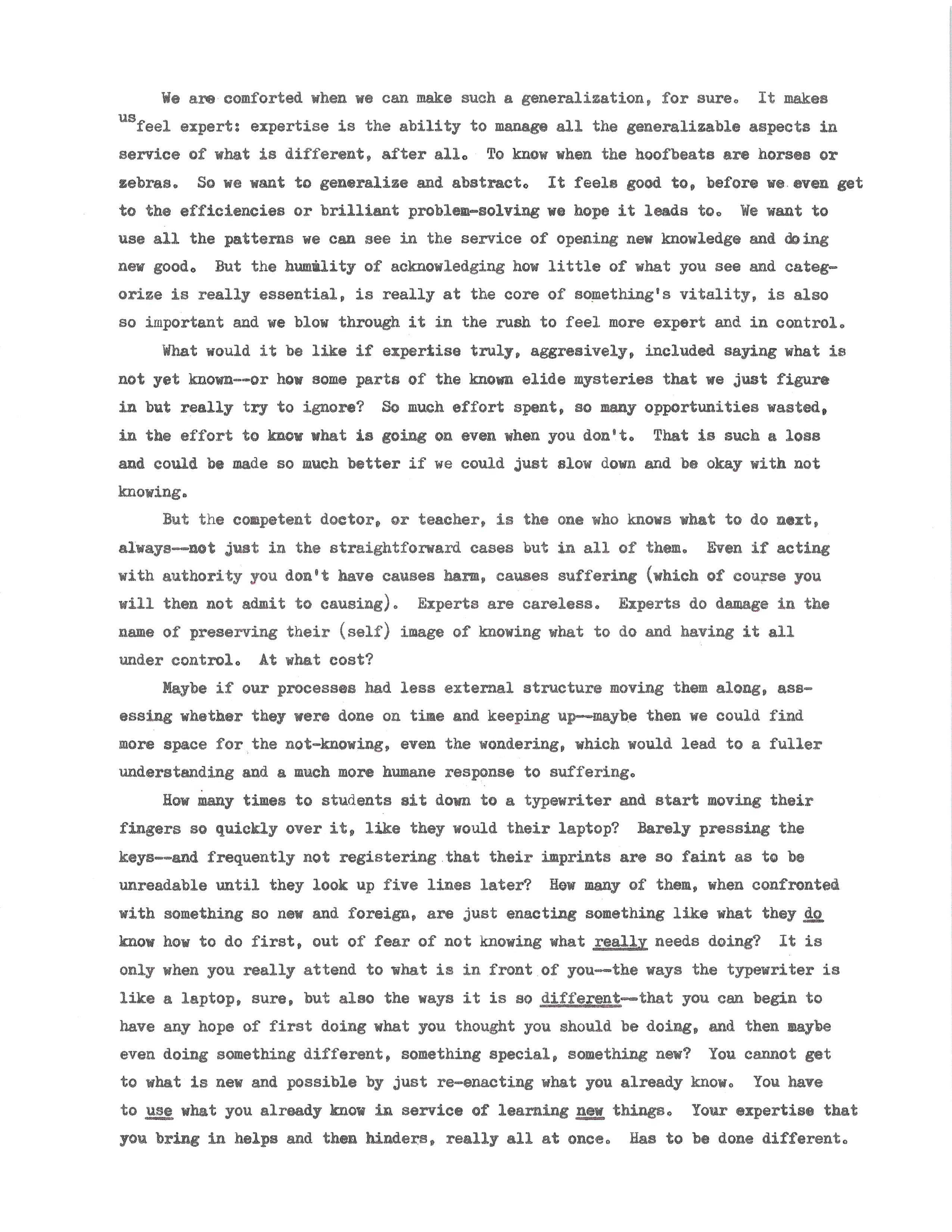
(Oops–astute readers will note that I changed typewriters halfway through, from the ’63. Still Hermes though.)
URGENT QUESTION, for me:
Is the first-draft typing, as above, “the writing”?
Or is it only “writing” if it gets revised, marked-up, turned into a second draft, then read and marked up again incorporating feedback? Round and round until it gets codified and published, somehow–the final version erasing memory (and if digitally edited, existence) of everything that went before?
I am convinced that our appetite for revised, polished, perfect prose is pretty much sated. Especially because machines can make perfect prose now. Boring and predictable prose, to be sure, but free of syntax error and misspellings.
Polished and perfect is easy now, and (feels) free (though isn’t).
First-draft prose, on the other hand, is now reinvented as human words, verifiably one imperfect-but-motivated human having their say to another, or many others–who might even have human words to share back.
We became allergic to typos over the decades because perfect prose was the ultimate respect for the reader. And the capacity to make that perfect prose was the ultimate sign of writing expertise. I honor you enough to conform to your expectations of how this will be put together, our careful proofreading said: I care enough to remove any obstacles that get between you and my meaning, intimation, implication.
Awesome–but now, can we respect our readers enough to show that we are actually people like them? Having false starts and repetitions, and misplaced fingers and smudgy ribbons–or sometimes catching fire for a page or two and producing a unitary thought that hangs together in its (im)perfect but alive way?
Can we respect our readers enough to share the real heat of what we think, rather than run the risk of homogenizing it through rewrites, or Grammarly, or god forbid ChatGPT? Is imperfect authenticity on the way as the new quality we want to find in what we read?
And if so…won’t it change how we read? Won’t we who benefited from excellent reading and writing educations, whose work was pored over with a red pen and corrected and corrected until we could correct ourselves–won’t we need to UNLEARN a lot of that? Since it has become a dead expertise, one that a machine can do better?
Won’t we want to read with a different calculus of quality: one that can’t be fooled by a machine? At least not yet?
Of course, I agree that there will always be a hunger for well-formed prose, made and revised and perfected by humans, using whatever human-throttled technology we prefer.
And there will always be those among us capable of making such prose, evolving along with the tools and holding onto their voices and our rapt attention despite tech’s incursions. I watched the Joan Didion documentary on Netflix, astounded to watch her move seamlessly from tiny portable typewriter in and after college (writing her first novel: “I sat on one of my apartment’s two chairs and set the Olivetti on the other and wrote myself a California river”) through big desktop typewriter to more expensive and better big desktop typewriter to hideous-but-state-of-the-art IBM Wheelwriter and finally, in her last years, to cowering before a massive Retina display like the rest of us.1 That’s a writer, babe. Oh yes.
And I, many of us, will always love that art. But I think we will evolve to love the first draft too. Awash in perfect, meaningless robot prose, we will learn to crave any sign of life–and what is more alive than a first draft? If it is typewritten, it might even be legible.
(Meta-moment: if you are still reading, did you scroll past the typewritten pages and jump down here to the more congenial-looking, fit-to-your-screen digital stuff? What would it take for us to WANT to read the stuff that doesn’t leap into our eyeballs most easily? If that is really where the life is?)
Will you love imperfect writing differently, in the next months and years? Writing that is different, and shows traces of its provenance in its imperfections?
As surely as a handworked quilt with uneven stitches is a precious heirloom, while a mass-produced comforter from Wal Mart is disposable?
What do you think?
(Title from what is apparently emphatically NOT a Lao Tzu quote, but I like it anyway. “If you want to become whole, let yourself be partial.” Beauty’s where you find it.)
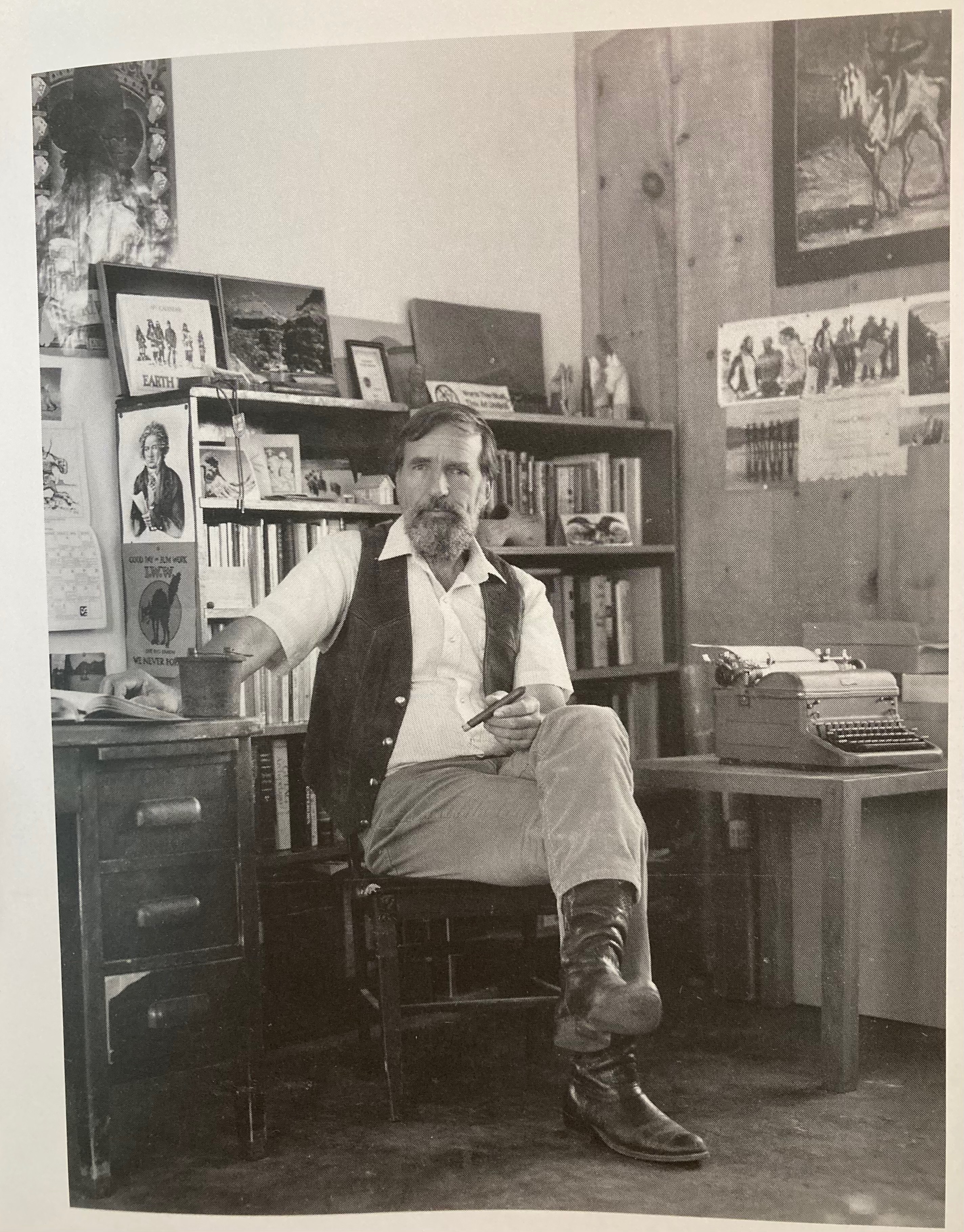
Grateful to the inimitable Richard Polt for his own post about the quixotic Ed Abbey this morning–check it out!
We all have relations. This is one of mine: Edward Abbey, writer, naturalist, anarchist, and hellraiser. He is my first cousin, once removed, as I finally established and wrote down for my eldest son, so I would never forget it again. Thus:
Edward Abbey’s father was Paul Revere Abbey (1901-1992). Paul Revere Abbey’s father was John Henry Abbey (1850-1931): he is the grandparent my grandma and Edward Abbey have in common.
John Henry Abbey and his wife, Eleanor Jane Ostrander (1856-1926) had eight children, and Paul Revere Abbey was the youngest. The eldest, Estella Wilhelmina Abbey Bake (1880-1960), had two children: Joseph Abbey Bake (1908-1979), and my grandmother, Estella Mae Bake Howard (1915-1989). Grandma Stell, as we knew her, married Clyde Dehn Howard (1915-1976), who was my Grandpa Clyde. Their one child was my mom and your grandma.
This is the sort of thing I find myself doing intermittently over the last five years or so, since Covid. Theorizing the blood that runs through my veins based upon available records.1 Finding firm ground for my feet beneath the shifting daily sands of an increasingly-virtual life. Who am I, really? Well, that is each of ours to answer–but demonstrably, I am of these folks.
Cousin Ed has been in my mix for decades, vaguely. I knew he was a semi-famous relation, but I didn’t know what to do with him. If you are from the Southwest, or love the desert, or are a hellraiser conservationist yourself, you probably know him. I was none of these three. I was born in Salt Lake City, but have lived in the east my whole conscious life except for–like him–a formative year at Stanford.2 He rose to prominence upon the publication of Desert Solitaire in 1968, and again with his novel The Monkey Wrench Gang in 1975. But he wrote and published incessantly beyond these two works, and was never satisfied with being a “mere” nature writer. Like so many authors, he always felt his best work was in front of him, and that he was not delivering on his potential. He was by most accounts a complicated and difficult person. Like most people I admire, I emulate some parts of him, and not others.
My university library has an astonishing number of his works in the collection. I imagine this is because two generations ago, he typified an independent and ferocious champion of the natural world against development. And a university in the southern Appalachians can really get behind that, especially one that grew to embrace “sustainability” as one of its primary brands. He wrote on my region too, a bit; born in Home, PA, he claimed an Appalachian heritage, before decamping to Utah and Arizona. But he also taught for a year at what is now Western Carolina University, two hours away in Cullowhee, and hated it (“all those pink faces in the classroom three f–ing hours, five f–ing days per week…always there’s tomorrow’s s–t to prepare. to read, to grade…”). Like I said: complicated.
I am drawn to him right now, though, because of his unfailing commitment to calling out the truth even when his world would prefer most folks to believe untruths. Because this feels like my business right now too–in a different but equally precious realm that is in the process of being pillaged and ruined.
To him, one of the undeniable truths of his time was that those officially interested in preserving and honoring the natural world were actually pursuing profit, and were convinced that growth was always a positive goal. “Growth for the sake of growth is a cancerous madness,” he declaims in Desert Solitaire: by definition, the development of American wilderness into “accessible” national parks destroys much of what makes them precious to experience in the first place.
He is tireless in asserting that once the desert is broken apart, interpreted, and rendered into bite-size chunks that can be consumed through a car window on a blacktop highway, it is already gone.
There is something about the desert that the human sensibility cannot assimilate, or has not so far been able to assimilate…even after years of intimate contact and search this quality of strangeness in the desert remains undiminished. Transparent and intangible as sunlight, yet always and everywhere present, it lures a man on and on, from the red-walled canyons to the smoke-blue ranges beyond, in a futile but fascinating quest for the great, unimaginable treasure which the desert seems to promise. Once caught by this golden lure you become a prospector for life, condemned, doomed, exalted.
This is a milder expression of his concern than you will find elsewhere in the book, and in his letters. He seems pretty uninterested in adjusting his message to suit the sensibilities of his readers and listeners. He just knows he is right, and that the world that thinks otherwise has to be called out for their destructive foolishness. He doesn’t care if his message makes you uncomfortable. He doesn’t work for you.
Human Words Project started as an expression of alarm upon the public release of ChatGPT in fall 2022. The alarms have only grown louder as universities across the county have resigned themselves to accepting the capacity to use AI as a new turnkey job skill, which of course has to be on the syllabus.
Granted: I am in a college of education, and know through participation in campus-wide efforts to craft policy and guidance for our colleagues that there are plenty of critical sites elsewhere in the academy. But witnessing the wholesale turn of teachers to AI, at all levels, leads me to mourn a rapidly-vanishing time when the skills of shaping words to achieve specific ends are themselves outcomes of school. We are certainly hurtling toward a horizon that regards wordmaking as a drudgery to be automated, whenever possible, like dishwashing, or digging post holes.
Perhaps some wordmaking is: the necessary, purely “efferent” texts, as the no-longer-fashionable reading theorist Louise Rosenblatt styled them, can perhaps be automated through pattern-recognizing digital agents. Though today we laugh hollowly at how willingly a programmed-to-please AI just makes up substitute facts about, say, recommended books for summer reading.
Is there such thing as a text only about meaning that can be “carried away”? Where would you draw the line around information to be communicated that has no “aesthetic” element? Weather reports? Sports scores?3
And Cousin Ed will have none of it! He says it is supposed to be hard to get to things worth seeing! The easy, paved road, with attendant comfort stations and Coke machines, make places of wild beauty into an entirely different, hopelessly diminished thing.
In Desert Solitaire‘s “Polemic: Industrial Tourism and the National Parks,” he lays it out plain (much quoted, but needs to be here in its entirety):
There may be some among the readers of this book, like the earnest engineer, who believe without question that any and all forms of construction and development are intrinsic goods, in the national parks as well as anywhere else, who virtually identify quantity with quality and therefore assume that the greater the quantity of traffic, the higher the value received. There are some who frankly and boldly advocate the eradication of the last remnants of wilderness and the complete subjugation of nature to the requirements of—not man—but industry. This is a courageous view, admirable in its simplicity and power, and with the weight of all modern history behind it. It is also quite insane. I cannot attempt to deal with it here.
Well, I am trying to deal with it. I think Abbey would agree, were he still among us: Our human words are the some of the last wild places we can visit, enjoy, and share. And they are ALL our wild places–as close to hand as a pen and paper, a typewriter, a letter, a book, a conversation. Why in the world would we abandon them to development, in the name of convenience and efficiency, to enrich those who would sell us the lie?
Cousin Ed is exactly the companion I need for this journey down the river: someone else who will fight you to put an uncrossable line around something precious.
A river that, like his beloved Glen Canyon, seems doomed. Desert Solitaire‘s longest essay is a memoir of a ten-day float through it–a journey remembered years later, as the author is assembling the book and remarks that the Glen Canyon Dam has flooded everything he saw and remembers.
Again, his words are better:
The beavers had to go and build another goddamned dam on the Colorado. Not satisfied with the enormous silt trap and evaporation tank called Lake Mead (back of Boulder Dam) they have created another even bigger, even more destructive, in Glen Canyon. This reservoir of stagnant water will not irrigate a single square foot of land or supply water for a single village; its only justification is the generation of cash through electricity for the indirect subsidy of various real estate speculators, cottongrowers and sugarbeet magnates in Arizona, Utah and Colorado; also, of course, to keep the engineers and managers of the Reclamation Bureau off the streets and out of trouble.
The impounded waters form an artificial lake named Powell, supposedly to honor but actually to dishonor the memory, spirit and vision of Major John Wesley Powell, first American to make a systematic exploration of the Colorado River and its environs. Where he and his brave men once lined the rapids and glided through silent canyons two thousand feet deep the motorboats now smoke and whine, scumming the water with cigarette butts, beer cans and oil, dragging the water skiers on their endless rounds, clockwise.
PLAY SAFE, read the official signboards; SKI ONLY IN CLOCKWISE DIRECTION; LET’S ALL HAVE FUN TOGETHER! With regulations enforced by water cops in government uniforms. Sold. Down the river.
Once it was different there. I know, for I was one of the lucky few (there could have been thousands more) who saw Glen Canyon before it was drowned. In fact I saw only a part of it but enough to realize that here was an Eden, a portion of the earth’s original paradise. To grasp the nature of the crime that was committed imagine the Taj Mahal or Chartres Cathedral buried in mud until only the spires remain visible. With this difference: those man-made celebrations of human aspiration could conceivably be reconstructed while Glen Canyon was a living thing, irreplaceable, which can never be recovered through any human agency.
(Now, as I write these words, the very same coalition of persons and avarice which destroyed Glen Canyon is preparing a like fate for parts of the Grand Canyon.)
What follows is the record of a last voyage through a place we knew, even then, was doomed.
He has been around long enough to remember how it used to be: he keeps fresh the account of what has been lost in the rush to development, and will not be told it was worth it.
Well, neither will I. But our words aren’t gone yet. We can make the quixotic effort to push back the dam and keep the river.
I was perhaps an unsuccessful Spanish major, in that I failed to read Don Quixote, in either language. But I did gather its message that maybe the apparent fools are really the wise ones–because they can discern what is essential, and will struggle immoderately to protect it.
May we all be so foolish.