Chris Osmond PhD

  • typewriter agonistes
  • human words project
  • about
  • contact

  • for lack of a place to light

    June 27th, 2012

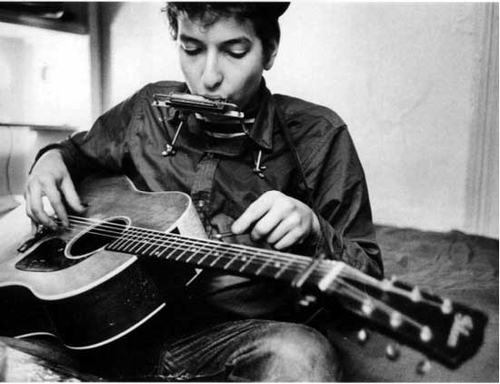
    Our drive up to Michigan next week will take us through Western Virginia, and I look forward to some time in the beautiful, terrifying strangeness of the part of the world where we were fortunate to light two years ago. Here’s Greil Marcus describing it (no, I haven’t put Invisible Republic down since the Bob Dylan thing). He started out editing Lester Bangs, you know. Happy summer.

    Glimpsed whole and on high, the mountains around Norton, through the Jefferson National Forest, into Daniel Boone country, could make you think nowhere on earth looked any different: they were that implacable. Merely hills on a map – the highest peak in Virginia doesn’t reach six thousand feet – on some days they can seem bigger than anything on Colorado, rising up so suddenly an unwary traveler can find herself staring into the likes of a tornado. From one vantage point, you can see the leavings of strip mining and human devastation of the crudest kind: from another, with no sign of smoke or cut trees, you can see an entire landscape of hideouts, a world will people will never be found if they want it that way; the same view can let you imagine the land was never inhabited, not by Indians and not by Europeans. The huge upsurges of earth and the blue haze around them can seem to say that in some impenetrable way this country can never be claimed, can never be home; the cuckoo flies on for lack of a place to light. “Men can see nothing around them that is not in their own image,” Marx wrote. “Everything speaks to them of themselves.” Here you could look for a lifetime and not see your reflection. Invisible Republic, pp 158-159

    Thanks to this guy for image.

    Share this:

    • Click to share on Facebook (Opens in new window) Facebook
    • Click to email a link to a friend (Opens in new window) Email
    • More
    • Click to share on X (Opens in new window) X
    • Click to share on Reddit (Opens in new window) Reddit
    Like Loading…
  • look out kid, they keep it all hid

    June 5th, 2012

    Teaching is intimate, personal work. It’s about content – transmitting knowledge, helping students acquire skills and develop attitudes – to be sure. But it is also about connections between people: the sense of students that they are seen and cared about, the presence of a grown up in their lives who shows a way of being in the world and is not a parent. This means that being taught is as much about becoming someone different from who you were when you started as it is about knowing something different.

    The developing human’s capacity to join its culture by embodying the actions it sees other members completing is unique. It’s been called “mimesis,” which Merlin Donald (2005) distinguishes from mimicry and imitation in some relevant ways:

    Mimicry is the deliberate reduplication in action of a perceived event without careful attention to, or knowledge of, its purpose. The actor’s attention is directed to the surface of the action, with varying degrees of success. Some examples are a young bird duplicating the song pattern of its conspecifics, a parrot mimicking speech, or a human mimicking an accent in an unreflective manner,

    Imitation is a more flexible, abstract reduplication of an event with closer attention to its purpose. This implies varying degrees of success. It is common to discriminate between means-ends imitation and what Tomasello (1999) calls “emulation”, which involves achieving the result or goal of the observed action but not copying the observed means to this result. Primates and young children often emulate, without successfully imitating, an action.

    Mimesis is the reduplication of an event for communicative purposes. Mimesis requires the audience to be taken into account. It also demands taking a third-person perspective on the actor’s own behaviour. Some examples are children’s fantasy play, the iconic gestures used in a social context, and the simulation of a “heroic” death during a theatrical performance. (Donald, 2005, p. 286)

    I break these distinctions down to identify “mimesis” as the capacity to assimilate what someone else is doing into your own action for deliberate purpose. It means getting inside the heads of those who will see you doing something and imagining what they will think. It’s copying, like the other two, but gone way way meta: not just doing what you see done, but breaking it down to its basic components and using it to cause a particular effect.

    This is deeply relevant to understanding how regular people turn into teachers: to figuring out, as an education professor, how to talk to my students about the rich and sometimes harrowing stories they bring to class about teaching episodes they have been part of as students. Those stories have either showed them how they want to to do this work or, emphatically, how they don’t.  How do I best support my students in their process of transmuting what they have seen in countless hours of being educated into their own role as educator? I am eager to help them think about those experiences as models of ways to do this work, but also to avoid overdetermining outcomes by insisting they will inevitably become like what they saw. And there’s another layer, of course, because I am also a teacher, and any work in an education class is inevitably both about the “thing you are learning” and the pedagogical choices you are making.

    This is why I am very interested in moments when extraordinarily formed people talk about how they got that way. It’s the unexpected pleasure I had viewing Marty Scorcese’s Bob Dylan biopic No Direction Home over the last few days (it streams on Netflix). It’s a fan’s detailed exploration of how a Jewish kid from Duluth, Minnesota became the most influential popular figure of the 1960s.

    For the younger among us: Dylan’s impact on the world we inhabit really can’t be overstated. His was a persona that the children of post-war conservatism embraced when they went looking for someone else to be besides the product-consuming, job-holding-down, duck-and-coverer their parents had shown them (“Bring the wife and kids. Bring the whole family. Yippee“). His sneering, acid lyrics, in large part, invented irony for a generation boggled by the perfidy and madness on display in their nation’s several follies in Vietnam, in the segregated south, in the White House. As Wikipedia has it, “Dylan invented the arrogant, faux-cerebral posturing that has been the dominant style in rock since, with everyone from Mick Jagger to Eminem educating themselves from the Dylan handbook.” I am as burned out on boomer worship as any other aging Gen-Xer, but respect here must be paid. How did he come to be that person? What mix of intention and accident created Bob Dylan out of Robert Zimmerman?

    In Scorcese’s hands, Dylan’s formation story is about content and connections. Perhaps befitting a director obsessed  both with naming his own influences and preserving the past so that the present and future can continue to grow from it, great swaths of the first 90-minute episode are dedicated to cataloging what Dylan was listening to and HOW he was listening to it. On the first point, we learn how Dylan’s first record was an impossibly square side by Johnnie Ray who nonetheless sounded to him like someone “with a strange incantation in his voice, like he’d been voodooed.” It’s the first glimpse of Dylan’s unique capacity to hear in sounds that his contemporaries dismissed as old and outworn something timeless and endlessly strange, and therefore renewing and vital. For Dylan, it’s the connection a performer can make as much as the song itself he’s singing. It helps explain, perhaps, Dylan’s capacity to write songs that sounded 200 years old that were still completely contemporary. It’s the core of Dylan’s sensitivity to the emotional power of what Greil Marcus names “The Old, Weird America” in his own fever-dreams about these same records, their impact on Dylan’s sensibility and, in turn, the rest of the culture.

    Back to mimesis: it seems to me that Dylan is not copying these influences so much as metabolizing them. His relationship with Woody Guthrie’s music seems the strongest example of mimetic process.

    These songs sounded archaic to most people. I don’t know why they didn’t sound archaic to me. These songs sounded like they were happening at the moment to me.

    Others can talk better than I about just how Dylan digested Guthrie (see Marcus’s dizzying book, for sure) and the other influences he found on the first records he borrowed (and sometimes stole) from better stocked libraries than his. But what I most note is how wide open Dylan was not just to the techniques and liturgies of those traditions, but to their energy and intentions. He’s not just “reduplicating the action of perceived events” – it’s a lot more intense than that, this process of dismantling what affects you and reusing it with an eye to how its new intentions impact those who are watching you do it.

    The process continues as Dylan finds his way to the hothouse of Greenwich Village in 1960, for a few transformative months of playing and listening to others play in endless evenings of “basket-passing” poetry and music happenings in the boho coffeehouses. He notes that some performers have something behind their eyes that suggests they know something the audience does not; something precious and hard-earned that, therefore, is not to be given away easily. He hits this theme repeatedly in the long interview that strings the film together: how he learned not to give it all away, ever; to be cagey, careful of whom you trust and who you let see how you do what you do, what allegiances and commitments really make you go.

    Maybe that’s why so many of his contemporaries describe him as a shape-shifter: an opportunist who could identify a chance for something big to happen and deliver himself in the version that would best meet the possibility. He created his character endlessly – the assumed name, borrowed from far-away Wales; his bogus, ever-evolving bio, about both sitting at the feet of the greats and still being wide-eyed in wonder at the Big City, where he “saw his first banjo” (ha). Even his observation that he himself did not fully understand what the ranting free-associative lyrics he was writing meant. His wildly-meta comment to girlfriend Joan Baez that his critics will figure it out later belies the earnest intention and certainty with which he delivered them at Newport and elsewhere. (Baez tell the story herself, at 1:00 here – and her Dylan impersonation is deadly, maybe the last one we’ll ever need to hear.)

    Deep in the second episode, D.A. Pennebaker describes the process of filming Dylan without relief for his 1967 documentary Don’t Look Back, and marvels at Dylan’s capacity to become an actor who easily accommodates a documentary camera tracking his every move:

    That’s what he’s good at: getting used to the way things are, knowing that time changes everything.*

    To close this already too-long thing (no time to write a short thing, so I wrote a long one): I think Dylan’s capacity for mimesis gives us who help prepare teachers for their work some very sharp knives with which to help students parse and assimilate their own many experiences of being educated.

    • We can help them reserve the right to decide what in their life was important: which songs they heard, so to speak, had the “voodoo” in them and which did not;
    • We can help them realize their capacity to make themselves for the audience they’ll be playing for. We can empower them to create their own teaching persona which, while related to the engine of vocation and compassion that brought them to this work, is not the same thing.
    • And finally, they can learn a self-protective cageyness in the construction of role. And if someone asks them to do something ridiculous (like “suck on your glasses“) – they can know how to give it right back to them.

    *NB – His critics – many his performing contemporaries – eventually derided this flexibility as “selling out,” the worst epithet (other, perhaps, than “Judas!“) they could throw at him.  But as one of them notes in the film, Dylan’s commercial success only called out how hungry they all were for some validation that their work was reaching an audience, that it mattered. Since admitting the desire for success would itself be a repudiation of the ethic of detachment from “all that” they claimed to uphold, all they could do instead was turn on the one who had made it happen.

    Thanks to thezorch.com for image; thanks also to Phil Chappell’s terrific blog for hooking me up with the Donald stuff.

    Share this:

    • Click to share on Facebook (Opens in new window) Facebook
    • Click to email a link to a friend (Opens in new window) Email
    • More
    • Click to share on X (Opens in new window) X
    • Click to share on Reddit (Opens in new window) Reddit
    Like Loading…
  • three drummers on craft

    May 6th, 2012

    In 1988 I got the chance to see Ed Blackwell, the great free jazz drummer, play in the Student Union with Anthony Braxton. Wesleyan at the time seemed a sort of retirement home for jazz monsters entering their dotage. I didn’t really know who any of those guys were, but I knew they were a big deal. I wasn’t really playing drums yet – not unless you count all that banging on books on my bed I had done through middle school, and all the time on other people’s sets I cadged through high school by dating girls who were either drummers or had brothers who were. But I remained impressed that drumming was something you could learn by watching drummers closely. There were no hidden embochure techniques or obscure valve positions to learn. Just pay attention and do likewise. So I went, and I did.

    I don’t remember anything that night past the first note of the show: the way Ed sat slumped behind a tiny kit and began the first number with a swat at the ride cymbal. He  swatted it the way a guy his age might swat a fly after sitting on the front porch for forty years – a fly that had also been there for forty years, or its fathers or grandfathers, a fly that no matter how much he swatted would always come back. It was a swat of intimacy with the cymbal; he knew exactly where it was and what it would do when he made contact, exactly how hard to stroke it and where and how to bring the hand back around for the next stroke without wasting any energy. The cymbal responded with equal composure, swaying ever so slightly on its fulcrum and returning to meet Ed’s next stroke. The fly wheeled away and looped back in again to restart the eternal cycle. It was magnificent, and permanently etched in my mind: this was what it looked like when you played every night of your life, and now found yourself playing again.

    Perhaps I am making too much of this: it’s just an old guy hitting a cymbal, after all. But it reminds me of how frequently in education someone will say something about teaching being “an art and a science,” then lean back in a satisfied way as if they have Really Said Something There. I know what they are getting at, I think: they are trying to say that teaching includes touch and judgment and transcendence and aesthetic inspiration as well as mastery of predictable, tried-and-true algorithms and formulas. That it is both beautiful and serious, and that we would do well to remember it as such in a time when most forces wish to make it only the latter.

    But I don’t think teaching is really either an art or a science. I think it is a craft.

    “Craft” is what Elliot Eisner is getting at when he describes the foolishness of trying to prescribe and automatize an event that is, in so many ways, not reproducible from student to student:

    Theory is general. What the teacher must be able to do is see the connection – if there is one – between the principle and the case. But even where such a connection exists, the fit is never perfect.

    It’s what the National Board of Professional Teaching Standards is reaching for when they define “What Teachers Should Know and be Able to Do” thusly:

    As with most professions, teaching requires an open-ended capacity that is not acquired once and for all. Because they work in a field marked by many unsolved puzzles and an expanding research base, teachers have a professional obligation to be lifelong students of their craft, seeking to expand their repertoire, deepen their knowledge and skill, and become wiser in rendering judgments. Accomplished teachers are inventive in their teaching and, recognizing the need to admit new findings and continue learning, stand ready to incorporate ideas and methods developed by others that fit their aims and their students. What exemplifies excellence, then, is a reverence for the craft, a recognition of its complexities, and a commitment to lifelong professional development.

    But it is also the word that includes not only responding to the moment of inspiration that engenders learning, but also finding within you the capacity to do it again in forty-five minutes. This is the sort of insight David Sedaris describes when he works for a season making jade clocks for craft shows and realizes the backbreaking boredom that accompanies the intention to do the same thing well more than once. Put another way: the artist can abandon an unsatisfying canvas, or paint it over, or rip it in two. The teacher has another class coming in third period.

    That’s why I am so interested in watching and listening to drummers who have enjoyed long careers and are still enthralled by doing what they do. Neil Peart remains first among these: his precision and imagination and technical prowess are widely revered, but what I most notice is how hard he still hits. The first rule of recording is to hit the drums hard, but the cymbals softly (to get consistent levels. and to keep the wash out of the tom mix). I can still hear in studio and live recording how fully he applies himself: you can’t mix in those bright attacks, that blindingly-even speed. There’s stamina here, of course, but also something to learn about what keeps one engaged with playing parts that are, in Rush’s case anyway, mostly the same every night.

    What’s keeping him engaged? Here’s some insight:

    Has your relationship with the instrument changed over the years?

    Enormously so, in all those inner ways that might be boring to somebody else, but I feel them strongly…part of it’s been deliberate, in that I’ve studied with teachers from time to time…I had a great old-time teacher in the mid-90s that kind of helped me reinvent the way I approached the instrument that still nourishes me now. The inspiration of other players too, old or new, inspires you…Eric Clapton said he wanted to burn his guitar after hearing Jimi Hendrix. I never understood that. When I hear somebody great, it makes me want to go home and play.

    How great to hear that from the guy whose tapes were usually on when it was book-banging time (and whose latest records still get shout-outs and love from the fans – and members – of Foo Fighters, Pantera, Metallica). I hear a respect for oneself in relation to the instrument, and a growing respect for the instrument itself as something that outlasts the technicalities of any given show, or session, or evening, or even band. The drums are always there. Its reminiscent of physician’s description of medicine being a relationship to “the truth of the pathological lesion,” a relationship that transcends any single patient (to the chagrin of those who seek to develop physician empathy).

    Peart also reaffirms that much of this learning and self-transformation takes place “beneath the water” of his actual performance:

    The big change I made was in 95 when I changed everything – the set up of the drums, even the way I held the sticks for a time. I dedicated myself to doing everything different. And when I first came back, (Geddy) Lee was listening to the demos and he said, “It doesn’t sound that much different to me.” And to me that was a compliment,  because I had changed everything and it still sounded like me.

    But the changing nature of his relationship to his craft did yield other, deeper transformations:

    I worked so much with click tracks and sequencers that I had become remarkably metronomic. But that had a rigidity that went with it. So my mission then became to conquer that and become looser. I want to become more improvisational, because I am compositional…now the first half of my solo is completely improvisational…I do challenge myself because there are no consequences. There’s no mistake. If I do something weird play it twice, and it’s a new part, a jazz instrumentalist once told me.

    I wonder at how another drummer I grew up with – Phil Collins – has stayed engaged with his own playing in ways that keeps it fresh. He’s a harder one to get a bead on: a dry New Yorker sketch from 2006 portrays him as fastidiously self-absorbed and remote, certainly not as open to discussing his own process and evolution as a musician. Maybe he didn’t do what Peart did: reinvent himself, change it all around sometimes, burn everything he owned now and then to see what might grow from the ashes.

    But change is there to be heard, for sure, in the progress from the first mewlings of prog freak-out to John Bonham-heaviness to the playful looseness I still ape in my own playing (witness the gorgeous weak-hand drag roll that kicks off “I Missed Again,” or the terrific three cymbal crashes as the verse drops into the bridge of “Easy Lover“).  His story seems sadder, since he’s now too incapacitated to play and actually retired from music with an apology to his haters for his unimaginable success (“I’m sorry that it was all so successful. I honestly didn’t mean it to happen like that”). I hope I’m around for his rehabilitation in the hipster mind; maybe his lessons for sustainable practice are some negative ones – fix your posture! (OK.) Don’t get too popular! (Really?) – but also to respond to the changes in your world and bring who you really are to what you do, since that’s the energy that makes you go anyway.

    Not sure how to end this except to note how valuable it is for me to pay close attention to the folks who have spent their lives doing things well, and to consider how to bring their practices into my own work as a teacher, a researcher, a member of an academic community. It’s where most of what I write ends: wondering how to keep ourselves tapped into the source of energy that makes our work as teachers sustainable and effective. I’m grateful to have had so many great examples – so much to think about.

    image from last.fm.

    Share this:

    • Click to share on Facebook (Opens in new window) Facebook
    • Click to email a link to a friend (Opens in new window) Email
    • More
    • Click to share on X (Opens in new window) X
    • Click to share on Reddit (Opens in new window) Reddit
    Like Loading…
  • Sustainable Practice: “Thriving, not Surviving”

    April 21st, 2012

    Teaching Fellows Honors Day Keynote Address, Appalachian State University, Boone NC, April 20, 2012

    Good morning. It’s an honor to be with you today to help you celebrate your successes. It’s been my privilege to teach many of you, and as I see you here I am filled with excitement and joy about the transformational experiences you’ll bring your students; the thousands of lives that this group will go forth to touch, to mold, and to change.

    This is a day of celebration, so I want to keep it light. But at the same time, I have a heavy thought: the chances are that many of you won’t be teaching any more in a little while.

    Nationally, as many as 50% of new teachers leave within the first five years of entry into the occupation, and approximately 33% of new teachers leave within the first three (Corbell 2009). North Carolina’s new teacher turnover rates in the first three years of teaching are slightly higher than that national average – and while this group is better prepared, and perhaps more committed, than a random sample, the sobering reality of teacher attrition remains real.

    What’s going on? There are systemic issues here: family issues, quality of administrative support and mentoring, and of course the persistent gap between what competent young people can earn teaching vs. what they can find in the private sector. But I am coming to believe that another significant factor is what we as a field are asking of new teachers: how school routinely asks new teachers to do more than they can, then punishes and shames them when they fall short. We seem to work on the assumption that the schools will enjoy an endless supply of new, young energy like yours, and that we can “run you hot” for the first few years in order to reap the benefits of your increased output. This strikes me as a cynical and fruitless strategy, one that ultimately guarantees working conditions that will drive many out, and will drain the energy and spirits of those who stay.

    I think the most important part of my job is supporting future teachers as they find ways not just to survive this work, but to thrive in it. So that’s what I would like to take a few minutes to share with you today: three thoughts about how to thrive in this profession. They come from three doctors, two real ones and one I wish were: the failed-philosopher-turned-professional-development-guru Dr. Parker Palmer; the great, unsung pediatrician Dr. Alan Cross; and the terrifically strange theoretical physicist from The Big Bang Theory, Dr. Sheldon Cooper.

    These are insights I am trying to understand as ways to define “sustainable professional practice,” a project that brings the language we use for environmental sustainability into the serious problem of training caring professionals who are likewise self-supporting and healthy. I hope these thoughts are a good fit for what you are thinking about today. At this point, I think they might be some of the most important.

    1. Sustainability means protecting yourself against fear, resentment, and bitterness.

    We are working in the golden age of teacher accountability. In the last decade, the rhetoric of school change has shifted from socioeconomic issues (like funding levels and sources) and administrative issues (like class size) to a universally-held, common-sense conviction that teacher quality is the most important factor in student success. As you know, North Carolina’s Race to the Top funds are going in large part toward refining our teacher assessment and data collection system to enable classroom-level assessment of teacher effectiveness. Your students’ outcomes will be linked directly to your teaching practice, and will be used as an important criterion in judging the quality of your work.

    This means that the teacher’s daily sense of her ultimate responsibility for her students’ success is going to be even stronger and more demanding than it used to be. After all, the whole institution has identified your practice as what matters most to your students. Not poverty, not nutrition, not administrative inefficiency, not race or class or gender or sexual orientation or any of the inequities that continue to haunt our culture: you. That’s a lot of pressure.

    How do we respond when we feel administrative, top-down pressure to perform? Well, if we are confident that we are going to make the grade, we feel fine. It always feels good to get an A, or to win a race. But if we have even the slightest doubt that we’ll measure up, we mostly we feel scared: scared we’ll be punished, or humiliated, or have our worst suspicions about our inadequacy confirmed.

    I think that when we feel fear, we rarely express it as fear: we usually express it as anger, at others or at ourselves. It is easier, as a rule, to say “I am angry” than it is to say “I am scared.” So, if you follow: in a professional world that lends itself to creating fear, those who work in it are at risk for anger. As well as anger’s passive-aggressive cousins: resentment and corrosive, creeping, bitterness.

    We need the energy to speak truth to power: we need to be forthright and articulate when we see things that our wrong with our work, and confident and powerful as we work to change them. But I think we need to be careful to use that energy in positive, productive ways, because it also has the potential to hurt us. Parker Palmer (2009) is thinking this way in his essay “The New Professional,” which I’ll quote here:

    We professionals—who by any standard are among the most powerful people in any society—have a bad habit of telling ourselves victim stories to excuse unprofessional behavior: “The Devil [read, ‘the system’] made me do it.” We are conditioned to think this way. The hidden curriculum of our culture portrays institutions as powers other than us, over which we have marginal control at best—powers that will harm us if we cross them. But while we may find ourselves marginalized or dismissed for calling institutions to account, they are neither other than us nor alien to us: institutions are us. The shadows that institutions cast over our ethical lives are external expressions of our own inner shadows, individual and collective. If institutions are rigid, it is because we fear change. If institutions are competitive, it is because we value winning over all else. If institutions are heedless of human need, it is because something in us also is heedless.

    I think Palmer is calling us here to identify the places where we feel bitter and be honest with ourselves about how we use that bitterness to let ourselves off the hook of responsibility for our own professional experience. He is calling us to resist bitterness – because, in fact, our institutions have no power over us that we do not give them. This is a high-minded principle, mighty close to Gandhi’s assertion that we must be the change we wish to see in the world. Taken wrong, it could sound like yet another impossibly-high goal of personal perfection – one that no mortal teacher could ever reach, and that perfectionists, like many of us, could use to beat ourselves up with.

    But that’s not what Palmer – or I – am trying to say here. I think there is a secret here that can help us avoid burnout and the bitterness that corrodes our capacity to care for others. We must take responsibility for what happens behind our closed classroom door – which as Larry Cuban states, remains the most powerful institution in American education, despite the accountability measures that would reach through it and control every choice a teacher makes. The choice of what to do next in your classroom remains yours. You are empowered to choose what you will do, and more importantly, whether you are an actor or a victim – a subject or an object – as you do it. Keeping that truth in mind helps us find our power and focus our energy outwards, not inwards – out to where it can really make a difference.

    2. Sustainability means remaining curious and humble and attentive.

    This brings me to my second doctor: Dr. Alan Cross, a pediatrician I worked closely with for five years at the UNC School of Medicine. He passed away this January, and in part I wish to honor him here as one my master teachers by passing on some of the precious lessons of sustainable practice he taught me.

    Dr. Cross was an old white guy. He was a true preppie: John Kerry was his roommate at Yale, and he actually said “rawther” instead of “rather.” He wore a navy blazer with brass buttons and Top-Sider boat shoes each day, without irony. From one perspective, Alan had less reason than almost anybody in the hospital to care about people who had less cultural power than he did. After all, he was the natural possessor of all the qualities of someone who runs our culture: white, male, well-bred and extravagantly well-educated, competent, and tenured.

    And yet Dr. Cross was more concerned with the daily realities of socioeconomic and other inequities in our society than almost anyone I have ever known. He wore a Human Rights Campaign pin on that navy blazer every day, silently championing the rights of gay, lesbian, bisexual and transgender people as a traditionally-married father of four daughters. He dedicated the last years of his life to transforming the med school curriculum to include far more effective teaching about the social and cultural realities of patient care. Despite his own position of power, he was an unfailing champion of the powerless.

    Why did he do that? More to the point: how did he find the energy and optimism to, when so many other forces were working against the ends he fervently sought?I think part of it was how he regarded his work with his patients. Over his thirty-year career, Alan treated thousands of patients – and, as a pediatrician, most of those came in for predictable and non-exciting reasons like runny noses and ear infections. Yet despite the numbing sameness of the clinical care he provided, Alan remained completely, utterly absorbed by the particular stories of every patient he saw. Alan would frequently receive and send texts from patients he had known since infancy – kids who were now in high school or college, texting him about all the health issues that confront emerging adults. Watching an almost seventy year-old man learn to text, because that’s how his patients were most comfortable coming to him, taught me a lot about commitment to the individual needs of those who trust us to help them.

    The most powerful lesson Alan gave me, though, had to do with how we need to engage with those who are different than we are. This is an area that medical education has come to call “cultural competence:” the goal of preparing physicians to reach across language, social, and cultural differences in order to make effective diagnosis and care decisions for all the patients they encounter. Dr. Cross loathed the term “cultural competence,” and especially disliked the trend of giving medical students laminated 4 x 6 cards that summed up the cultural preferences and tendencies of different cultures in neat bullet points, so med students could keep them in the pockets of their white coats and cram before entering exam rooms. (“If your patient is a Sikh, then remember…”) “I am not even competent in my own culture,” he would frequently say.

    He much preferred the term “cultural humility:” a deep willingness to be taught, every day, about what you needed to do next, by whomever it was your responsibility to serve.And, I venture, that humility – the willingness, even after all those years, to show up in a patient’s room ready to admit that he did not really know what was going on, did not fully understand his patient’s needs and desires, and needed to mind closely everything he heard and saw and smelled and touched – that is why he remained a terrific physician for his whole career. That is why his patients texted him twenty years after he did their first well-baby exam.

    And that is why he ended his career as a content, engaged, effective practitioner of one of the least prestigious, yet most important, specialties in medicine: he remained completely absorbed with how the patient, the illness, the thing before him was different than what he had seen before, not how it was the same. He remembered everything he knew, of course, but remained willing to learn here, now, today. By giving what he brought to each moment, each moment in turn gave to him, invigorated and energized him. His attention brought him exactly what he needed to continue attending.

    3. Sustainability means not breaking yourself against arbitrary standards and expectations, and staying in tune with what you need.

    We watch a lot of The Big Bang Theory in my house. It’s a terrific comedy about the adventures of four young genius academics who struggle with the social realities of life in the big, confusing world outside the laboratory. Dr. Sheldon Cooper is the quirkiest of them, and his Spock-like, purely rational engagement with the world gives us our biggest laughs.

    Here Sheldon has decided to begin running, as part of his new and utter commitment to caring for his physical form so he can still be alive when science catches up with his desire to transplant his intelligence into a machine. He’ll take his first run with Penny, the gorgeous hopeful-actress but present-day Cheesecake Factory waitress who lives across the hall from them. Here’s their conversation.

    Penny: Hey, nice knees.

    Sheldon: Thank you. They’re my mother’s.

    Penny: Oh. And the Flash shirt is what? Because you’re gonna run really fast?

    Sheldon: No, the Flash shirt is because it’s Friday, but it’s nice when things work out. Where’s your heart rate monitor?

    Penny: I don’t have one.

    Sheldon: What about your pedometer?

    Penny: Don’t have one.

    Sheldon: Do you have telematics in your shoes connected to an iPod?

    Penny: Uh, no.

    Sheldon: What do you do, you just go out there and gambol about like a bunny?

    Penny: No. I just run till I’m hungry, then I stop for a bear claw.

    I think Penny is on to something here. Running – like teaching – can be seriously measured and monitored, and frequently is. But measuring and monitoring can get in the way of our ability to actually do it.

    I ran a lot for several years, and ended up acquiring a complicated watch and several pages of carefully documented logs, completed with my split times and my pace and my race results. Three years ago I decided it was time to train to race a new, longer distance, and used an online algorithm to generate a four-month training regimen. I did the math, and had the plan.

    But as I started adding mileage, my knee started to hurt in a different and scarier way than it had before. It hurt enough to make me wonder if something was seriously wrong. But my algorithm had told me I was going to be fine, so I ignored the pain and dealt with it in other ways – ice baths, 600 mg of daily ibuprofen – and called it normal. You probably know the end of the story: I got hurt, tore a meniscus, and stopped running for almost two years. My conviction that the numbers told me I should be doing OK blinded me to the clear fact that I was not.

    In the measured and monitored educational world you are entering, there will be many benchmarks and numbers that tell you what you should be doing and whether or not you are on track. But I suggest that the authority of those indicators to tell us who we are – and how we are – is not absolute, and that if we give them absolute power we run the serious risk of breaking ourselves against them. This insight does not, I think, mean we should just go out there and gambol about like a bunny. We can and should take advantage of the data that tell us things that help us do what we need to do. But it does call us to pay attention to our experience of what we are trying to accomplish, and its effect on us. It calls us to stop when we are tired, or at least take a break. And it prescribes, as Penny says, a bear claw now and then.

    This is not touchy-feely talk: it is hard, rigorously-demonstrated fact, substantiated by research into how physicians and other caregivers who work in high-stress, low-resource situations manage nonetheless to thrive in those environments. They monitor their own health and wellbeing, and create communities with other caregivers to keep an eye on each other. They do things like meditate, go to church, write, exercise, and talk about what they are really feeling in order to stay connected with themselves and those around them. They do not pretend that everything is going OK when it is not. And they thrive in their work to the degree that they stay in touch with their actual experience, and trust their own sense of their wellbeing instead of an arbitrary, external indicator. I am happy to say I have begun running again. But I am trying hard to let my body be in charge, not an arbitrary distance or pace or time. It is hard, different – against the grain of how the world tells me to run. But I think it is the only way, because I want to run for the rest of my life, and the only variables that will make that possible are the ones I carry in my body every day.

    So, to sum up: these are my three best ideas this morning about how to thrive in the work you are preparing to enter:

    • Understand that you are the institution you are part of, and that you are the actor that will set the priorities, tone, and energy of the classroom world that you will create;
    • Strive to remain humble, curious, and enthralled with every student and learning situation you come to engage with;
    • Stay in close touch with how you are doing, and never let an external indicator be the final word on whether or not you are succeeding – on whether or not you are OK. Only you, in your heart and your soul and your body, can really know that.

    I know these are big ideas; the kind you can spend a lifetime (or at least a career) working on. In closing, let’s share our faith that we all have what we need to do this work, and our confidence that we will be able to find the strength and vision, and develop the compassion, that our work demands. I am convinced that we can teach in ways that sustain us: that our institutions are not faceless bureaucracies, that effective teaching is not a martyrdom, and that our love for our students and our commitment to their success can become the very engine that drives our fulfilled, whole, thriving lives – if we make the choices that let it happen.And I have every confidence that you will.

    Congratulations! Thank you.


    REFERENCES

    Corbell K (2009). “Strategies That Can Reduce New Teacher Attrition in North Carolina.” The Friday Institute White Paper Series. Raleigh NC: The William & Ida Friday Institute for Educational Innovation. Retrieved April 14, 2012.

    Palmer PJ (2007). “A New Professional: The Aims of Education Revisited.” Change: The Magazine of Higher Learning. November-December 2007. Retrieved April 14, 2012.

    Share this:

    • Click to share on Facebook (Opens in new window) Facebook
    • Click to email a link to a friend (Opens in new window) Email
    • More
    • Click to share on X (Opens in new window) X
    • Click to share on Reddit (Opens in new window) Reddit
    Like Loading…
  • graphite and glitter

    March 25th, 2012

    Yesterday, as I stood in line at J.C.Penney’s to return a disappointing coffee maker, I heard a cover of Donald Fagen’s “I.G.Y.” come over the sound system. I smiled.

    Haters will now commence hating; hipsters will arch an eyebrow hiply before returning to their Bon Iver. “Muzak.” That’s O.K. We devotees of the varied outputs of Fagen and Becker and their rotating gang of pale, squinting, studio-rat misfits are used to your scorn.

    We even know all your moves: how the sheen of its production is just the grown-up version of disco, inauthentic and manufactured; how 2000’s Two Against Nature robbed Radiohead of their Grammy because of the accumulated guilt in the Academy for denying them previously; how generic and ersatz their funk is, how tiresome their growling, bitter schtick becomes as they drag out the band for yet another summer tour for the picnicking old white people at Wolf Trap.

    Whatever. I know what I like, as surely as Peter Gabriel’s lawnmower, and I will love the world their music creates always and forever. The record that “I.G.Y.” opens was actually my introduction to that world. An older girl I was accompanying to her high school beauty pageant dropped it on me (truth being stranger than any fiction I could create). She picked me up for rehearsal – I didn’t have my permit yet – and eased the cassette into her 280-Z’s deck as we pulled away, saying “so, here’s the most sophisticated music I’ve ever heard.” That was that.

    And every time I pull out The Nightfly, it’s the same experience. That terrifically thrilling mix of oblique substance and kitchen-clean, highly-polished surface that puts over Achtung Baby is working here. Not a hair out of place in the mix, and not an unambiguous declarative sentence to be found in the lyrics. Well, we mostly know what this record is about – more than any Steely Dan record, for sure, as Fagen gives it to us right there on the back of the record jacket:

    Note: The songs on this album represent certain fantasies that might have been entertained by a young man growing up in the remote suburbs of a northeastern city during the late fifties and early sixties, i.e., one of my general height, weight and build. – D.F.

    OK – so it’s a memoir. (By a boomer. How refreshing.) But like any memoir, what really makes it to the page or the wax is only a refraction of what actually lived. I cannot tell your story completely any more than you can mine, and I probably am even less able to give a full account of my own experience. I find an analog to the narrative shiftiness of this “autobiographical” record in the music itself, Clive Bell-style. I wonder at how the bass of the songs so seldom “roots” the listener in the key, instead anticipating the next set of changes as it slides around. I hear this most clearly on “New Frontier,” which has a confident melody buried in the chords of its vamp, but whose bass is always running ahead or hitching up behind, trying to tie its shoes. It’s so sly, and so endlessly engaging. (I wish I had more music theory to bring to this effort to explain Fagen’s “well-tempered Rhodes piano,” but we do what we can.)

    I also confess to a crush on the high-modern dreams and schemes of the early 1960s – or at least the version that has trickled down to us in obsessively-maintained catalogs of the 1964 World’s Fair (and the more-loved-than-actually-watched series Mad Men, which we’ll welcome back tonight). That’s the reason why my own rhapsody in Fagen is here on my professional blog: it’s got me thinking about the way we’re doing educational policy right now, and how very “modern” it is.

    I taught a chapter from Tyack and Cuban’s timeless Tinkering Toward Utopia last week. It’s a century-long look at education reform that tries to understand why some aspects of vigorously-implemented, top-down change efforts have actually impacted “the grammar of schooling” – its deep, unnoticed structure – but most have not. Their conclusion:

    Should one conclude that it is impossible to improve schooling in basic ways? We think not, though the task is much harder than many people suspect. We suggest that actual changes in schools will be more gradual and piecemeal than the usual either-or rhetoric of innovation might indicate. Almost any blueprint for basic reform will be altered during implementation, so powerful is the hold of the public’s cultural construction of what constitutes a “real school” and so common is the teachers’ habit of hybridizing reforms to fit local circumstances and public expectations (p. 109).

    I think that’s the core frustration that beats within the slick heart of “I.G.Y.” It’s a recollection of the clear-visioned, cool-headed aspirations of scientists who envisioned a world made infinitely, effortlessly better by the wholescale implementation of their technologies. I can’t begin to excerpt from the song, so here’s the whole thing:

    Standing tough under stars and stripes
    We can tell
    This dream’s in sight
    You’ve got to admit it
    At this point in time that it’s clear
    The future looks bright
    On that train all graphite and glitter
    Undersea by rail
    Ninety minutes from new york to paris
    Well by seventy-six we’ll be a.o.k.

    What a beautiful world this will be
    What a glorious time to be free
    Get your ticket to that wheel in space
    While there’s time
    The fix is in
    You’ll be a witness to that game of chance in the sky
    You know we’ve got to win
    Here at home we’ll play in the city
    Powered by the sun
    Perfect weather for a streamlined world
    There’ll be spandex jackets one for everyone

    What a beautiful world this will be
    What a glorious time to be free

    On that train all graphite and glitter
    Undersea by rail
    Ninety minutes from new york to paris
    (more leisure for artists everywhere)
    A just machine to make big decisions
    Programmed by fellows with compassion and vision
    We’ll be clean when their work is done
    We’ll be eternally free yes and eternally young

    What a beautiful world this will be
    What a glorious time to be free

    There’s the glorious, high-modern vision, laid out foursquare around the Unisphere for you to take in at your (increased) leisure. All we have to do is step up and take a bite.

    And of course, it’s exactly that breed of sweeping hubris that Tyack and Cuban say leads to so few elements of such broad schemes ever really taking root. They pretend that they’re implemented in a vacuum, sweeping away all that goes before; they ignore the craft knowledge (metis) that already thrives in the hands and brains of the populace they seek to enlighten; they pretend local context and concern is a Lorax-like distraction  to be cleared away. So their innovations are, historically, “hybridized:” a teacher takes these three worksheets, and that lovely Call of the Wild poster, before returning to her classroom and closing the classroom door. After all, she knows what works and what doesn’t for her kids better than any egghead at the central office, thanks very much. Time for class to start.

    It’s great to talk about this vibrant, insightful book. But then we note the publication date: 1995. That’s six years before the sweeping federal accountability legislation of “No Child Left Behind,” and thirteen before the “Race to the Top” program incentivized states to align their curriculum, accountability, and policy practices to national expectations in exchange for time-limited federal money that’s a pittance of my state’s education budget (we’ve received $470M over the next four years, against an annual budget of $7.5 B, if my math is right).

    What’s past is prologue – but to what? The last decade and a half marks unprecedented federal involvement in the hand-to-hand, locally-managed work of educating children. Teacher autonomy to act in their students’ best interests behind the closed “classroom door” is mitigated or eliminated by regulated curriculum and assessment expectations. Their practice and results are increasingly measured and compared by top-down certainty that their successes can be adequately reckoned from far, far away.

    The irony and scorn in Fagen’s lyric is revealed slowly. It starts as simple tribute to the “better, vanished time” of youth (who of us can’t sing that song), but is starkly clear by the time he describes the “just machines which will make big decisions,” at least to this listener. There’s no freedom in giving your decisions to machines; there’s only what has been lost as their algorithms erase what they – however compassionately programmed – can never see.

    None of which is to say that accountability, rigor, improvement are anathema to school. It’s our trust to do the best we can by our kids, and to devote our lives to doing our work better and better. Articulating the “soft bigotry of low expectations” was a huge win of NCLB, and we’re better for having it out in the light to address.

    But I think we are silly if we think this wave of top-down reform efforts is fully capable of making the change we seek. Change is a hearts-and-minds thing, and hearts and minds are changed when their strengths and differences and idiosyncrasies – their metis – are acknowledged and valued and celebrated and incorporated into the next step forward. So far I do not see state or federal will to proceed with those priorities in mind. That kind of reform is very expensive and messy, and outlasts accountability (and election) timetables.

    Let’s enjoy the surface of well-wrought plans, but not be seduced by the gorgeous graphite and glitter of their all-consuming master narratives. I suggest that history (and some very well-executed sneaky pop music) teaches us we’re better off minding what we already know, even if it’s not “clean.”

    Thanks to Wikipedia for this evocative picture of the Taiwan High Speed Rail, which I do not think can go under water but, from the looks of it, might.

    Share this:

    • Click to share on Facebook (Opens in new window) Facebook
    • Click to email a link to a friend (Opens in new window) Email
    • More
    • Click to share on X (Opens in new window) X
    • Click to share on Reddit (Opens in new window) Reddit
    Like Loading…
  • a better, vanished time (?)

    February 5th, 2012

    I will never, in my life, love anything the way I loved Rush in seventh grade.

    To be clear, as an adult I love many things more deeply and more abidingly: my family, my work, my friends, my grown-up toys and obsessions. But when I remember how I felt about Rush (as I did earlier this week, with the celebration of “Rush Day” on 2.1.12), I am overcome by the purity and satisfaction of my first deep connection with something worth caring about.

    Rush was my first band. They weren’t my only band: my Rush crush matured into an obsession with The Who in late middle school, then a Genesis devotion through most of high school. Those of my generation now have me completely pegged, by those associations: square, probably in marching band (yup), not straight enough to love pop but not weird enough to be into punk (thanks SAP), and sure as heck not brave enough to admit I liked Duran Duran. Making ourselves through differentiation and affiliation – of finding who we are by naming who we are not – is perhaps an inborn aspect of adolescence. The dance has not changed, though the dancers (and of course the tunes) have.

    What’s most interesting to me now – and what, I think, merits comment about a proto-metal power trio from Toronto on a professional education blog – is what my connection to that music in 1982 did for me, and the conditions that gave flower to it. I wonder if it has anything to say about school, because that’s where most of it happened (or didn’t).

    Let’s see.

    Rush taught me the satisfactions of looking and listening hard.

    Listening to this band was the first time I experienced the joy of discerning interactions between the components of an artistic work. To the degree that the cognitive work of experiencing art leads to aesthetic experience, it was my first time having one. Exploring the aesthetic piece further will have to wait for another day: I want to focus on the cognitive and social ones here.

    Rush taught me the joy of wanting to know more.

    Once I had a taste of what was going on, I wanted to know everything I could about how it had been done and, intentional fallacy notwithstanding, who had done it. Which in that era meant diving bins in record stores and poring over album covers and posters for every shred of information they had to offer, and above all saving the lawnmowing money to actually see the band on tour – which I have three times, each in a different decade of my life.

    The difficulty of finding out more led to investigative energy and skill. But more important than that, I think, was learning that much of what I wanted to know lay in the thing itself. This is about the time I began wanting to play drums (a country away from the geeky clarinet section), and I realized that what I heard on the records was, in fact, exactly what was happening. Things were being hit in different orders; I could also hit things in corresponding order (say, books spread out on my bed), and approximate what I was hearing.

    The rise of MTV really supported this. There were so few intentionally made music videos at first that early MTV spun plentiful live or close-to-live performance films too. This meant footage of actual drummers actually playing, and you could watch closely to try to get some sense of technique, or at least learn what went where. (This is why I, a left-handed human, play a drum set arranged in the traditional right-hand manner – bass on the right foot, toms descending from the left. Thank heavens for it, too: makes it much easier to share the kit at gigs.)

    I think all that close listening and looking made me a pretty quick study, and it’s connected to why I still love to listen to music. I have an abiding fascination with snare drums: how that most workaday drum, the one no rock band can go a measure without playing, sounds different every time someone new plays it. I am no expert in drum construction or recording, but I continue to be a student of its legion of sounds. I care about things like exactly when Rush’s Neil Peart started using the workmanlike Slingerland Artist that he bought used for $60 and anchored his kit with as it swelled and receded over the years, and why it sounds like an overturned mop bucket live in 1978 when it was so bright in the studio. (And if you think I am obsessed, check out this guy.)

    I think these are worthwhile perseverations. I think they are part of an ongoing, vital engagement with the world, with the actual warp and woof of experience as we actually have it. The challenge and importance of showing up for daily life – actually seeing it, rather than just labeling it as “threat-or-not” and responding prudently – has been thrashed out by better minds than mine. But that’s the core thing going on here, or one of them.

    Rush belonged to me, and very few others: therefore, it gave me someone to talk and listen to, and someone to be.

    This is the affiliation part: by digging something that not everyone dug, I got connected to some people and not others, people who by either intention or happy accident were like me (or I became like them). Put another way, others were listening hard too, and we found each other and became each other’s first critics. For a bunch of kids in denim tuxedos, we were pretty discerning. It was my friend down the street who showed me that a closeup of photo of Pete Townshend’s hand in concert revealed the first chords on “Pinball Wizard”: that’s “making looking broad and adventurous” all right. And the pre-school meetings around the tape deck in the band room with the older kids were my first symposia.

    I hope I am not indulging too much in boomer-style navel-gazing when I wonder what advantages the weird limitations around falling in love with music in that era afforded us. In Patton Oswald’s much-discussed Wired piece, he asks himself the same thing. (Since he’s six months older than I, I think he knows what I’m talking about.)

    First, he remembers that a subculture used to take work to join, and that its secrets were not easily divulged. That was part of the joy of knowing about it:

    …there’s a chilly thrill in moving with the herd while quietly being tuned in to something dark, complicated, and unknown just beneath the topsoil of popularity. Something about which, while we moved with the herd, we could share a wink and a nod with two or three other similarly connected herdlings.

    He notes that the Japanese have a word – otaku – to describe those obsessed with minute, obscure interests. But he also wonders if obscure undergrounds are becoming harder to find:

    The topsoil has been scraped away, forever, in 2010. In fact, it’s been dug up, thrown into the air, and allowed to rain down and coat everyone in a thin gray-brown mist called the Internet. Everyone considers themselves otaku about something—whether it’s the mythology of Lost or the minor intrigues of Top Chef. American Idol inspires—if not in depth, at least in length and passion—the same number of conversations as does The Wire. There are no more hidden thought-palaces—they’re easily accessed websites, or Facebook pages with thousands of fans.

    He wonders if the explosion of readily available information, coupled with the rise of the otaku (or “geek”) as cultural archetype and world-inheritor, has diminished the very aspect that imbued him with the cultural power to begin with: obscurity. And he fears that the easiness with which subcultures can be understood is dangerous to the life that made them happen in the first place:

    The Onion’s A.V. Club—essential and transcendent in so many ways—has a weekly feature called Gateways to Geekery, in which an entire artistic subculture—say, anime, H. P. Lovecraft, or the Marx Brothers—is mapped out so you can become otaku on it but avoid its more tedious aspects.

    Here’s the danger: That creates weak otakus. Etewaf doesn’t produce a new generation of artists—just an army of sated consumers. Why create anything new when there’s a mountain of freshly excavated pop culture to recut, repurpose, and manipulate on your iMovie? The Shining can be remade into a comedy trailer. Both movie versions of the Joker can be sent to battle each another. The Dude is in The Matrix.

    That is, it’s not about how hard it is to be cool and obscure nowadays. It’s about how it not being hard to learn about obscure, cool things is draining our will to become creative ourselves, because we don’t develop the urgent desire and the massive chops in unearthing obscurity that we’ll need to create our own art.

    Which is why this whole question ultimately leads us back to education (told you I’d get there eventually – it’s a long arc). Seems to me that the information explosion in and of itself does not make “weak otakus”: it just makes it possible for them to “pass” as the real thing behind a cloud of “dead language.” In fact, looking hard at a million things is exponentially more rewarding than looking hard at one thing, if and only if you manage to develop the discipline to do it.

    Which leads the whole question back around to how we can best support our students in developing the dispositions of looking hard, searching, affiliating, making themselves in relation to the things they love. I am persuaded by the idea that the discipline of looking hard at something has not changed, however the world we are trying to look at has. As Annie Paul has it,

    Members of the Internet generation aren’t some exotic new breed of human, in other words. They’re simply the young of the same species. And they won’t be young forever. The digital age has brought all of us new and exciting tools that will surely continue to alter the way we learn and work. But focusing one’s attention, gathering and synthesizing evidence, and constructing a coherent argument are skills as necessary as they were before…

    And, I’d add, the ways that subcultures find and define each other have evolved as well. Our job as educators continues to be that of the paidagogos: the “child-leader” who was “to act as a protector, guardian, and trusted guide who accompanied the child to school, and made sure the child was educated, kept healthy in every way, and did not run with the wrong crowd.”

    It’s up to us to help our students become aware of when their life gives them the chance to look or listen hard to one thing and discern how its pieces work together. To notice how infrequently life in 2012 makes doing that easy, and support them in doing it anyway – with the things we think they should care about (i.e., curriculum), but also with the things they and theirs care about.

    Which for me, this week, meant playing some Rush for my students. Happy 2112, everyone. Now go and dig something! Hard.

    I boosted the image from Wired: thanks.

    Share this:

    • Click to share on Facebook (Opens in new window) Facebook
    • Click to email a link to a friend (Opens in new window) Email
    • More
    • Click to share on X (Opens in new window) X
    • Click to share on Reddit (Opens in new window) Reddit
    Like Loading…
  • how shall we evaluate teachers?

    January 28th, 2012

    Can you be more specific about what might be involved in a “comprehensive, teacher-centered plan?” What sorts of criteria do you think are fairest in evaluating teachers?

    Thanks to my best friend from freshman year for challenging me on some of my thoughts in the last blog post on Facebook. We’ve had a great discussion, and his last question, up top, deserves a thoughtful answer. Here’s mine.

    First, let’s note that teacher quality begins with quality teachers: that preservice and inservice preparation of teachers has huge impact on those teachers’ capacity to help their students. It may seem a dodge to open with this perhaps obvious fact, but it bears repeating in North Carolina, where (as usual) teacher induction programs and professional development funds have been the first on the budget crisis chopping block. Ain’t nothing for free.

    The present national answer to teacher assessment is “value-added” assessment, despite overwhelming evidence that such data “should not be used to make operational decisions because such estimates are far too unstable to be considered fair or reliable“. VA analysis has the rhetorical advantage of yielding easily-compared scores, and the appeal of apparently straightforward data is hard to resist. Our cultural tendency toward side-by-side comparisons is known to cloud our judgment of the quality of what is being compared, or whether it is even the right thing to measure.

    That’s what’s happening here, as a model never intended to be used to these ends has been reverse-engineered to supply comparable scores, sometimes through statistical hijinks that would be funny were their consequences less damaging.

    But if not like this – then how? Three thoughts follow.

    First, this California teacher makes great points that would help:

    • be sure attendance is considered when deciding which students’ scores to include (she asks for only 90% or higher);
    • empower teachers to remove disruptive students from the teaching environment;
    • ensure students start the year at a comparable base level  by ending social promotion (I appreciate that this “kicking the problem downstairs” chases its tail, since someone, somewhere must draw a line, but I also know that schools continue to find ways for students to advance when they are not ready to).
    • Benchmark student assessment to improvement, not an absolute standard.

    Second, we should ensure that multiple measures of teacher efficacy are used when making assessment. Arne Duncan is on record as supporting this principle, and the National Board of Professional Teaching Standards does have years of experience in developing portfolio-based assessments of teaching quality that use multiple measures, and should be used to point the way.

    But doing teacher assessment this way is hard, and resource intensive. The up-front costs are a fraction of the actual costs of completing the process, and most of the cost returns to the candidate (though NC is a state that has offered generous support for teachers seeking certification, which contributes I am sure to my own institution’s top rank of alumni teachers who are NBCTs).

    I am not the only one concerned about the political will of policy makers to follow through on complex and resource-intensive assessment programs. But my concern really has little to do with whether or not those policy makers are acting in good faith: it has to do with what institutions are good at (counting and comparing standardized data) and what they are not good at (acknowledging and accounting for qualitative difference that falls outside the purview of comparability). As Parker Palmer notes, ” the functions of a profession are not necessarily those of the institutional structures that house it.”

    Despite well-articulated and respected theory of what this kind of assessment can and should include, I despair a bit at whether we can ever actually institutionalize accurate and useful qualitative assessment of a process as complex and contingent upon conditions as teaching, even assuming infinite resources and well-considered intent (and we have neither). The NBPTS, despite its critics both friendly and not-so, seems like the best model we’ve got right now.

    Third, we can capitalize on the potential for the debate to actually lead to a culture change on how we understand both teacher and student success. Our exercises in trying to define what good teaching and learning looks like shows us the shortcomings of our common sense. Or, as this pretty impressive B-School analysis has it,

    …the use of hard data to pin down an objective measure of student progress and thereby teacher performance may be just the first step in a larger cultural shift toward a more rigorous and integrated evaluation of both student and teacher.

    I see there’s probably some market-based ideology in this – i.e., as the public becomes less satisfied with the results of the current ways of doing things, they will press for more innovation that gets outcomes that better meet their needs. But let the market do what the market does best: make the changes that best serve the most, especially if it comes from public dissatisfaction about what “good learning” and “good teaching” is beginning to be defined as.

    I hope this quick post gets my friend a little closer to an answer to his urgent question. Thoughtful responses don’t yield outcomes that make the cover of TIME: complex issues require complex responses. These are my best thoughts.

    What have I missed? What do you think?

    Thanks to http://www.thesingleblackfemale.net for image.

    Share this:

    • Click to share on Facebook (Opens in new window) Facebook
    • Click to email a link to a friend (Opens in new window) Email
    • More
    • Click to share on X (Opens in new window) X
    • Click to share on Reddit (Opens in new window) Reddit
    Like Loading…
  • thinking ’bout the government

    January 25th, 2012

    Post-mortem on the State of the Union address is our national Wednesday-in-January pastime. Since the President’s education comments were the unanticipated core of my classes this AM, I think I’ll try my hand at it. Here’s a few lines on sweeping changes that are coming for North Carolina teachers. They’re pretty vague – frustratingly so – but I don’t need a weatherman, etc.

    For less than 1 percent of what our nation spends on education each year, we’ve convinced nearly every state in the country to raise their standards for teaching and learning — the first time that’s happened in a generation.

    This of course refers to the Race to the Top program and the pittance (p. 36, here) that was required to supplant a tradition of local control of public education that has been in place since public education existed in our country with a national set of curriculum standards (I rarely sound like Rick Perry, but he was uncharacteristically articulate on this point, a little.) RTTT also ushers in an unquestioned acceptance of the value of individual teacher-level student outcome data being linked to decisions on teacher promotion and dismissal. This is not a common-sense conclusion, even if well-funded advocacy groups assert it as such in the public eye.

    At a time when other countries are doubling down on education, tight budgets have forced states to lay off thousands of teachers. We know a good teacher can increase the lifetime income of a classroom by over $250,000. A great teacher can offer an escape from poverty to the child who dreams beyond his circumstance. Every person in this chamber can point to a teacher who changed the trajectory of their lives. Most teachers work tirelessly, with modest pay, sometimes digging into their own pocket for school supplies — just to make a difference.

    That’s a textbook pathos gambit (teachers digging into pockets, working tirelessly), that also manages to reassert the idea that teachers, working alone, are responsible for a student’s success or failure (or earning power: he quotes a problematic claim, nicely discussed here). And if teachers are all that matters, look what we can NOT focus on in education: everything else, but especially socioeconomic disparity.

    Teachers matter. So instead of bashing them, or defending the status quo, let’s offer schools a deal. Give them the resources to keep good teachers on the job, and reward the best ones. (Applause.) And in return, grant schools flexibility: to teach with creativity and passion; to stop teaching to the test; and to replace teachers who just aren’t helping kids learn. That’s a bargain worth making. (Applause.)

    That is: let’s formalize the state-by-state rollback of the massively unpopular NCLB sanctions that are coming due (that’s the last guy’s plan, after all) in exchange for doing away with job security provisions for teachers that – it must be noted – were put in place in K-12 NOT to protect academic freedom but rather to ensure due process for a group of workers that was (and is) extremely vulnerable. And because it was cheaper to incentivize people to choose a teaching career by enshrining tenure than raising pay or improving working conditions, an assertion I do not have time to source precisely right now but I think is pretty clear.

    And that’s the “deal” schools are being offered: to get off the NCLB hook, agree to Race to the Top-style innovations. The “flexibility” schools will be granted is the capacity to evaluate teachers based on student test data, predominantly, and the ability to use those data prominently in staffing decisions. That  is a low hurdle to clear in my non-unionized state: our RTTT commitments include to “fully implement the new NC teacher and principal evaluation processes statewide, with student achievement growth data used as a significant component in the balanced evaluation” (p. 10 here).

    It is important to unpack the rhetoric and see what intentions and plans – already underway – it is hinting at, but not saying. Maybe that’s the point of SOTU: lots of words, not much clarity. But I think the dots connect easily enough.

    I welcome other readings – anyone?

    (Thanks to techimo.com for image. And nowhere to use this great brief history of how teachers came to be paid the way they are – but it’s fascinating.)

    Share this:

    • Click to share on Facebook (Opens in new window) Facebook
    • Click to email a link to a friend (Opens in new window) Email
    • More
    • Click to share on X (Opens in new window) X
    • Click to share on Reddit (Opens in new window) Reddit
    Like Loading…
  • blissed out

    January 22nd, 2012

    My youngest son loves to jump around the room to Van Halen. (I have no idea where THAT came from.) He’s got air guitar grokked too, and headbangs right there with the best of us. We don’t do it frequently, but usually take advantage of moments when we have the house to ourselves to crank the stereo and fully commit to these exercises. This morning involved a lovely session.

    I should not be surprised he’s got an itch that’s so completely scratched by VH’s potent / stoopid mix of four-on-the-floor bass bombs, drums like trash cans, and boogie guitar shuffle (I understand Eddie plays lead too, but for me he’s the consummate rhythm player first and foremost). My son is attuned to music in his world like a woolly worm to the coming winter. It’s baked into him (into both of them – my eldest only missed the rock-out because he was at a sleepover). I recognize some of my own connection to music as I watch them. How they can’t tune out the incidental music that saturates our life, for good or ill, grooving to a well-placed XM soul station in Old Navy or cringing to…well, honestly we don’t cringe to much. Katy Perry, Gaga, Taio Cruz, even Disney pap like Lemonade Mouth. People like us believe there is beauty in the rhythmic undulation of a dragging muffler, if you hear it with the right ears.

    I’m previewing Sir Ken Robinson’s terrific The Element this week, and need to celebrate his simple message. We don’t seem to have heard it yet.

    You probably know SKR without knowing you know. If you saw a video about education last year, it was probably this one: a whiteboard animation of a speech he tossed off on education’s misshapen priorities that went viral. It touched a nerve among the inhabitants of 2011 school-land in this country, just like last year’s other viral hit of Matt Damon going off on a libertarian reporter. It made sense, but it wasn’t a kind of sense many people in power have been talking lately.

    Here’s SKR’s message, in his book: we’re all different, and there’s a place in all of us where something we can do exquisitely well intersects with something we love almost more than breathing.

    Finding that sweet spot should be the life’s quest; it should be education’s main perseveration, regardless of socioeconomic status or funding level or lack of time or any of the other issues that get in its way. And especially regardless of the claim that, actually, the only way to a happy and productive life is development of a small set of measurable proficiencies, mastery of which will ensure individual and national prosperity and happiness.

    Sir Ken disposes of that construct deftly, noting that the world’s needs (and therefore, jobs) are changing faster than any present view of the training they require can handle. I’ll let him break it down:

    The only way to prepare for the future is to make the most out of ourselves on the assumption that doing so will make us flexible and productive as possible.

    Many of the people you meet in this book didn’t pursue their passions simply because of the promise of a paycheck. They pursued them because they couldn’t imagine doing anything else with their lives. They found the things they were made to do, and they invested considerably in mastering the permutations of these professions. If the world were to turn upside down tomorrow, they’d figure out a way to evolve their talents to accommodate these changes. They would find a way to continue to do the things that put them in their Element, because they would have an organic understanding of how their talents fit into a new environment (p. 20).

    This insight has game-changing implications for how best to prepare kids for the future (though not completely novel ones). It means that first and foremost, we need to support them in engaging fully in their present.

    I really don’t see the point of fancying this up. Its truth and value lays in its simplicity. People in touch with what makes them go will go harder and farther than anyone else, and will love the journey. Our job as educators is to enable that discovery by sustaining conditions that foster it, or at minimum not to impede it.

    And our job as advocates for social justice in education: to resist the common sense that gives these conditions to better-off schools and buries low-income schools in measurable basic skills work only. Fairtest noted a few years back the deep source of this attitude:

    …a view of learning in which one first gets “basics” and then later learns to “think.” Extensive research shows how flawed this approach is. However, it still dominates in schools serving lower income students: they are much more apt to get drill and kill instruction geared toward tests. Instruction which would engage them and help them learn “basics” and to think in a subject is usually absent (emphasis mine).

    As if the power and importance of helping our students discover how they love the world is the province of those who can afford it. Yet another injustice rooted in socioeconomic disparity – the deepest problem, as Dr. King noted; the one it takes the most courage to address (“there is no deficit in human resources; the deficit is in human will”). Schooling models that support some in finding their reason to be here and deny that opportunity to others are injust. We must have the vision and nerve to connect the dots, and work to right that wrong in whatever corner of the vineyard it’s ours to tend. Curriculum, for me, and working to shape how tomorrow’s teachers understand the profession they’ll inherit.

    This afternoon, my son sits at the piano, hammering out C-major triads with both hands in in alternating rhythm and rocking back and forth. A few minutes later, he suspends them – moving all but the roots one note to the right – and his head snaps back, eyes closed, blissed out at the effect of the modulation on his deepest sense of pleasure and balance and rightness. When he finally stops, he doesn’t look up, but while studying the keys for his next assay states, “Daddy, I really love the piano.”

    Yes you do, sir. Yes you do.

    Image from the New Netherland Institute. Who knew how hard the Dutch rocked?

    Share this:

    • Click to share on Facebook (Opens in new window) Facebook
    • Click to email a link to a friend (Opens in new window) Email
    • More
    • Click to share on X (Opens in new window) X
    • Click to share on Reddit (Opens in new window) Reddit
    Like Loading…
  • kvelling

    January 13th, 2012

    I spent a little time last night thrilling to what some of my past high school students have gone on to do with their lives since our paths crossed. Thank God for Facebook, and for students kind enough to friend their old teachers.

    Check it out:

    Ryan and Hays Holladay have formed Bluebrain, a groundbreaking musical project that could probably be booked by Phil Amoss in one of his amazing happenings. Meg Foley has a dance company; Andrew Markowitz is a photographer and Brandon Skall started a brewery. Both the Hessel sisters are in theater, and Lacy Simkowitz does design for an art museum. Even the folks who are working “square” are still hep: Emre Ersenkal’s a serious businessman in green energy, so I won’t link his hardcore rock and roll past here (I remember the day I taught him to swing), and Nigel Parkinson has a moving company while also making independent films.

    This could go on all day. I am swept up in the swirl of seeing how people I knew at a brief, dependent point in their development have unfolded into autonomous actors in the world and creators of their own lives.

    M.C. Richards discusses the “meristem” at great length in her work. That’s the cellular place where plants differentiate whether they are growing up or down; the living spot that never dies, but thrives even in the oldest among us (“We age toward youth, toward our growing tip…)”.

    To work in a caring profession is to be with people at moments when the meristem is most visible and tender, to be present at the creation of something new. Doctors and nurses facilitate dramatic passage through pivot points of life or death. Social workers and chaplains hold people in galvanic moments when what comes next, or what to do about it, is still in flux. And teachers, in every moment, witness the imperceptible growth (and pulling back) that yields what comes later.

    It’s teaching that’s best described by Richards’ model, I venture. Teaching is where the slow and persistent nature of growth happens. The compelling force that drove these students to become what they are becoming was engendered on my watch.

    This isn’t pride speaking, though I am proud of what they are becoming, and especially thrilled to see their occupations correspond to who I think I knew them to be as children. It is more deep humility and gratitude at being around long enough to see some of the young people I was with grow into who they are, and begin to see what my role in the larger process was and was not. There’s a deepening of commitment to the responsibility of teaching that comes with this understanding, but also a gentle letting-oneself-off-the-hook of thinking that my work was – is – what mattered most in their lives.

    That’s the twin reality I think most challenges caring professionals: to both know the impossibly high, moment-to-moment stakes of what one is doing, while at the same time not be crushed by them. To show up as one must, and keep oneself at an emotional distance – commit and pull back – all at once. Professional compassion, some call it, or negative capability: either way, its the core challenge of thriving in caring work, and one we almost never talk about.

    I am also reminded of how extraordinary the place where I worked with those students was, and is: The Field School, in Washington D.C. Its steadfast commitment to the needs of individual students, and deep belief that academic, aesthetic, and kinesthetic experience are intimately intertwined, was the essential crucible for the remarkably whole lives these people seem to be living.

    We never talked about M.C. Richards while I was there, but Natalia Kormeluk ran (and runs) its exquisite ceramics studio, and I am sure was familiar with her understanding of those connections. Richards’ question could have been hers to her students too:

    Are you going to be an earthy person – practical, down-to-earth, and get-to-it? Or are you going to be a dreamer, visionary? We’re going to be both. And we can’t be – we shouldn’t be – talked out of it. We shouldn’t be talked out of it. I am both. Don’t tell me I have to choose. I don’t have to choose. I am “both…and.” I live in the crossing point.

    Field prepares its students to be “both…and”: to thrive in the world while being true to who they really are. It remains one of the finest examples I know of what things look like in a school that is really giving kids what they need.

    Leo Rosten taught me that to “kvell” is Yiddish for “to beam with intense pride and pleasure,” from the German quellen, to “gush or swell.” How appropriate that I get to swell with pride today from the life that continues to stir in the souls of these ex-students and so many others. Rock on, guys.

    Thanks to quarterlifecuriosity for the image (not easy to find a picture for “kvell,” oy gevalt).

    Share this:

    • Click to share on Facebook (Opens in new window) Facebook
    • Click to email a link to a friend (Opens in new window) Email
    • More
    • Click to share on X (Opens in new window) X
    • Click to share on Reddit (Opens in new window) Reddit
    Like Loading…
←Previous Page
1 … 8 9 10 11 12
Next Page→

Website Powered by WordPress.com.


Loading Comments...
 

    • Subscribe Subscribed
      • Chris Osmond PhD
      • Join 57 other subscribers
      • Already have a WordPress.com account? Log in now.
      • Chris Osmond PhD
      • Subscribe Subscribed
      • Sign up
      • Log in
      • Report this content
      • View site in Reader
      • Manage subscriptions
      • Collapse this bar
    %d