Chris Osmond PhD

  • Typewriter Agonistes
  • Human Words Project
  • Human Teaching: Get The Book!
  • About
  • Contact

  • kvelling

    January 13th, 2012

    I spent a little time last night thrilling to what some of my past high school students have gone on to do with their lives since our paths crossed. Thank God for Facebook, and for students kind enough to friend their old teachers.

    Check it out:

    Ryan and Hays Holladay have formed Bluebrain, a groundbreaking musical project that could probably be booked by Phil Amoss in one of his amazing happenings. Meg Foley has a dance company; Andrew Markowitz is a photographer and Brandon Skall started a brewery. Both the Hessel sisters are in theater, and Lacy Simkowitz does design for an art museum. Even the folks who are working “square” are still hep: Emre Ersenkal’s a serious businessman in green energy, so I won’t link his hardcore rock and roll past here (I remember the day I taught him to swing), and Nigel Parkinson has a moving company while also making independent films.

    This could go on all day. I am swept up in the swirl of seeing how people I knew at a brief, dependent point in their development have unfolded into autonomous actors in the world and creators of their own lives.

    M.C. Richards discusses the “meristem” at great length in her work. That’s the cellular place where plants differentiate whether they are growing up or down; the living spot that never dies, but thrives even in the oldest among us (“We age toward youth, toward our growing tip…)”.

    To work in a caring profession is to be with people at moments when the meristem is most visible and tender, to be present at the creation of something new. Doctors and nurses facilitate dramatic passage through pivot points of life or death. Social workers and chaplains hold people in galvanic moments when what comes next, or what to do about it, is still in flux. And teachers, in every moment, witness the imperceptible growth (and pulling back) that yields what comes later.

    It’s teaching that’s best described by Richards’ model, I venture. Teaching is where the slow and persistent nature of growth happens. The compelling force that drove these students to become what they are becoming was engendered on my watch.

    This isn’t pride speaking, though I am proud of what they are becoming, and especially thrilled to see their occupations correspond to who I think I knew them to be as children. It is more deep humility and gratitude at being around long enough to see some of the young people I was with grow into who they are, and begin to see what my role in the larger process was and was not. There’s a deepening of commitment to the responsibility of teaching that comes with this understanding, but also a gentle letting-oneself-off-the-hook of thinking that my work was – is – what mattered most in their lives.

    That’s the twin reality I think most challenges caring professionals: to both know the impossibly high, moment-to-moment stakes of what one is doing, while at the same time not be crushed by them. To show up as one must, and keep oneself at an emotional distance – commit and pull back – all at once. Professional compassion, some call it, or negative capability: either way, its the core challenge of thriving in caring work, and one we almost never talk about.

    I am also reminded of how extraordinary the place where I worked with those students was, and is: The Field School, in Washington D.C. Its steadfast commitment to the needs of individual students, and deep belief that academic, aesthetic, and kinesthetic experience are intimately intertwined, was the essential crucible for the remarkably whole lives these people seem to be living.

    We never talked about M.C. Richards while I was there, but Natalia Kormeluk ran (and runs) its exquisite ceramics studio, and I am sure was familiar with her understanding of those connections. Richards’ question could have been hers to her students too:

    Are you going to be an earthy person – practical, down-to-earth, and get-to-it? Or are you going to be a dreamer, visionary? We’re going to be both. And we can’t be – we shouldn’t be – talked out of it. We shouldn’t be talked out of it. I am both. Don’t tell me I have to choose. I don’t have to choose. I am “both…and.” I live in the crossing point.

    Field prepares its students to be “both…and”: to thrive in the world while being true to who they really are. It remains one of the finest examples I know of what things look like in a school that is really giving kids what they need.

    Leo Rosten taught me that to “kvell” is Yiddish for “to beam with intense pride and pleasure,” from the German quellen, to “gush or swell.” How appropriate that I get to swell with pride today from the life that continues to stir in the souls of these ex-students and so many others. Rock on, guys.

    Thanks to quarterlifecuriosity for the image (not easy to find a picture for “kvell,” oy gevalt).

    Share this:

    • Share on Facebook (Opens in new window) Facebook
    • Email a link to a friend (Opens in new window) Email
    • More
    • Share on X (Opens in new window) X
    • Share on Reddit (Opens in new window) Reddit
    Like Loading…
  • library project in 2012!

    January 2nd, 2012

    If you live in Boone and care about sustainability, fighting hunger, and strengthening our local community, read on!

    An American Library Association “Building Common Ground” grant application I headed up last fall has been funded. It will support a year of collaboration between the Watauga County Public Library, the University Office of Sustainability, the Humanities Council, and local pay-as-you-can restaurant F.A.R.M. Cafe on the issue of food security in the High Country. Here’s more on the grant program, and the project narrative:

    Food Security in the High Country: Compassion Comes to the Table

    This means the Library will be recruiting participants in three book groups in the next weeks:

    • Twelve Steps to a Compassionate Life (six sessions, February-September 2012)
    • All You Can Eat: How Hungry is America? (one session, May 2012)
    • Breaking Night: A Memoir of Forgiveness, Survival, and my Journey from Homeless to Harvard (one session, September 2012)

    The books are terrific, and will be provided free of charge to participants. If you would like to participate in any of these groups – or any of the other events we are planning – please let me know and I’ll get you in touch with the Library. Thanks!

    Share this:

    • Share on Facebook (Opens in new window) Facebook
    • Email a link to a friend (Opens in new window) Email
    • More
    • Share on X (Opens in new window) X
    • Share on Reddit (Opens in new window) Reddit
    Like Loading…
  • me, and my hair

    January 2nd, 2012

    …it may be more useful to locate the personal not in content that reflects the world but rather as a method for observing how we experience ourselves in the world. When the personal is considered as a method of experiencing rather than as an assertion of stable experience, new possibilities emerge for considering the personal as a construct for use in world-making. – Alice Pitt, The Play of the Personal, 89

    As I prepare a new course (HON2515 – “Narrative and the Caring Professions”), I am back in my med school files this week. Here’s an excerpt from the “personal illness narrative” I wrote in 2008, while I was teaching a section of “Medicine and Society” to first-years at the UNC School of Medicine.

    We’ll use a lot of narrative in all my classes this semester. The challenge will be to use story not as a way of making final sense of what has led us to here, but rather as a frame and a way-in. In this commitment to the contingent and incomplete nature of storytelling, the narrative medicine theory I dug at UNC has much in common with the currere frames I worked with as an education grad student. Neither approach has yet transformed its field; both should.

    I am also taken this week by Arthur Frank’s The Wounded Storyteller: Body, Illness, and Ethics. He describes “restitution”, “chaos”, and “quest” archetypes for the stories the sick tell.

    “Restitution” stories are culturally satisfying, because they conform to what the culture needs of its sick people (to want to get well, to do what they are told, and to heal up and get back into place). They are troubled by  “chaos” stories, which are culturally repellent, since describing the actual fragmentation and disorientation of illness overflows the capacity of language to contain (much less shape) it.

    “Quest” stories, instead, are descriptions of transformation in which the old is swept away and a new, previously unimaginable engagement with life and its inevitable end becomes the new normal. Frank calls for an enlarged capacity to “witness” the true nature of sick experience, which empowers the sick, improves the quality of care, and above all engenders real community (“Witnessing always implies a relationship; I tell myself stories all the time, but I cannot testify to myself alone” – 143).

    So here’s one of my stories. Not sure yet what to make of it through Frank’s eyes. What do you think? I look forward to telling – and witnessing – the stories of my students’ educational journeys this semester.

    *                                         *                                        *

    “You have alopecia areata. From the looks of how it has progressed so far I imagine you will lose the rest of your hair within the year. The cause is unknown – possibly autoimmune-related, but some also believe stress to be a factor. There is no cure, although steroid injections at the site have had moderate effect. There are also some early promising studies of Rogaine helping. There are no other serious health effects – your nails might get brittle and soft, but other than that you’re perfectly healthy. The nurse can talk to you more about treatment options.”

    I had gone to the dermatologist at my fiancé’s insistence. It was 1995. In February I returned from a three-week stay in Spain with twelve of my high school Spanish students, and when she picked me up at the airport the first thing she said was “What happened to your eyebrow?” I looked in the visor mirror and noticed that half of my left eyebrow was gone.

    I figured it was just part of my genes. My Dad had always had a few uneven patches in his beard (“firebreaks,” Mom called them), and I had noticed a couple of weird bald spots on my legs, but I thought it was just where my new motorcycle boots were rubbing on my shins. And the bald spot on the back of my head was around where that mole had been removed. No big deal. But she was really worried, so I made the appointment.

    But in fact, according to this doctor with the bedside manner of a Doberman pinscher, I had a disease that would make me lose all my hair and could not be cured.

    I was going to lose all my hair, very quickly.

    The shock was disorienting. I do not remember if I had any more questions then, or if I got them answered on the still-new “internet” the next day at school. I do remember trying to understand what this would be like, and failing to really grasp the heft of it. It was frightening, but I was also quite numb – I don’t think it fully sunk in for several weeks.

    The doctor mentioned it being related to autoimmune function, and I read that in essence what happened was that my immune system was “too strong” and was shutting down hair follicles as effectively as it was stopping disease (was this why I had so seldom been ill? What a tradeoff.) Mom had multiple sclerosis, which was autoimmune-related as well: was I at risk for that too? Further reading, though, suggested that the “strong immune system” explanation was too simplified to actually be “true” in any causative way. So much for science. How much else of what I thought I knew about health was really just “dumbed-down” for general consumption?

    I lost the rest of my eyebrows pretty soon after that. I could not stand the way I looked without eyebrows. My face was alien – even though it is impossible to really see yourself in the mirror the way others see you, I could sense that my facial expressions were off, skewed by the absence of anything above my eyes. I seemed to look a little farther away than I actually was. It was scary, looking so strange. And my eyelashes must have gone about the same time, because suddenly I was getting dust blown into my eyes all the time. I never realized how useful they were until they were gone.

    I kept losing hair. It came out in the shower over the next couple of months. I could feel my scalp under a light fringe at the back of my head, and I felt that I was looking progressively stranger. One day I decided that, if I was going to lose it anyway, I wanted to see what it looked like black, so I went to the drug store with my goth friends and bought a package of dye to make it so. The effect was ghastly, and I knew it – the pale of my weird featureless face all the more noticeable under bottle-black bangs. It helped in a way – I felt like I was saying “I cannot control being hideous, but I have taken control over how hideous I am.” God knows what my students thought during all of this.

    Things went on this way for a few months, and I guess I was trying to pretend that it was no big deal and just “man up” and push through it like I was trying to push through everything at that point in my life. Mostly I think I was just scared. I attended a performance of “Stomp!” later that spring, and in the cast there was a drummer with a totally shaved head and a big gold hoop. I saw him and could identify. I was a drummer: maybe I could be like THAT guy. It looked good on him. He did not seem embarrassed at all. He chose to be bald.

    The next night I cut off the rest of my hair in the bathroom, then used an electric razor out on the deck to shave down the rest. It hurt to do it – I think the razor was dull – and it took a long time, much longer than I thought. When I was done I wet-shaved the whole thing carefully, trying to navigate the unfamiliar topography of my skull with the aid of two mirrors and some cursing. Finally I was totally bald.

    The first thing I noticed about being bald was that I was cold. COLD. All the time, regardless of the weather. And so vulnerable! I ducked every time anything grazed my head, even the slightest breeze. I was exposed to everything, experiencing the world completely unmediated. Ceilings seemed lower. I explained the new look to my students; everyone wanted to touch it, of course, and that was intense and intimate at first, unexpectedly so. I told them they could each choose to touch “the head” once at some time during the year, and they could chose when. I would track it in my grade book. And they did, respectfully, for the rest of the year – after a quiz, at lunch, on the bus back from the cross-country meet – then shivered and laughed and tried to explain to each other what it felt like.

    I had – and still have – humor as my main response. My original smarty-pants defensive answer to questions about why I was bald (“because I’m from the FUTURE….”) got a lot of laughs, as did my claim that God had taken my hair away because, after twenty-four years of bad haircuts, I clearly did not know what to do with it. I even had a solid bit about my brief experience with cortisone injections, which I tried in my eyebrows for several months in 1996. They hurt more than anything on my face had hurt before or since, and the hair, when it came, was in strange little plug-like tufts. The shots needed to be given monthly if their effect was to be sustained, and each had a steep co-pay, which led to my devastating punch line: “I realized I wasn’t actually buying eyebrows, I was renting them!” My band even did a gag song called “Bald Men” on the topic. (“Bald Men / they’re playing saxophone / they’re not afraid of tax returns or soybean futures…”) The jokes covered the pain and the sadness that no “cure” was much of one. I stopped the treatments after a few months with nothing to show but some scarring.

    I don’t make the jokes much anymore, and thirteen years on, I really do not think about it too often. As chronic conditions go, it is very manageable. I touch up my uneven scalp every morning in the shower as mindlessly as others shampoo, use sunscreen daily, and have a lot of hats that wear out pretty quickly. My nails split easily, which can be painful. Almost no one in my life now even remembers me with hair. My way of discussing it as I grew older has turned into a three-sentence summary for curious grownups and a Mr. Rogers-style “everyone’s body is different” response to my own children and their friends’ questions. For a while I told all my students at the start of every year about it, in fear that the kids would think I was sick if I didn’t, but it soon became apparent that it was not too troubling. After Michael Jordan, Bruce Willis, and Michael Chiklis, people don’t seem to look twice at a youngish bald man.

    Every once in a while, though – a few times a year – it still backs up on me, sometimes hard. I have been told ad infinitum that “it looks good on me” since “at least I don’t have a bumpy head,” and I feel pretty good about the glasses I chose to minimize the eyebrow issue (and I think their blue color “cools off” all my pink skin). But some days I just want to be more or less invisible again, to look like everybody else. Demographically, alopecia afflicts more young teenage females than anyone else, and I know the self-confidence issues must be devastating. It could be so much worse. But in a small way I feel like my experience gives me some shred of insight into what it is to be different, to be unable to blend with “the crowd” through no choice of your own: to have something about you that you cannot change however you would like to. Which state of affairs, of course, would describe most of us.

    Share this:

    • Share on Facebook (Opens in new window) Facebook
    • Email a link to a friend (Opens in new window) Email
    • More
    • Share on X (Opens in new window) X
    • Share on Reddit (Opens in new window) Reddit
    Like Loading…
  • math is hard

    November 13th, 2011

    That’s what Barbie taught us a few years ago. Could a hope that the national teacher corps would be intimidated by a flurry of numbers have fueled the craven attack on their profession in the WSJ earlier this week?

    Outrageous, I know, but I would not put it past them. There’s a lot of data used very quickly in that piece, to pretty nefarious effect. Others (better at math than I) have already debunked a lot of their book-cooking, so I won’t reiterate it too much here.

    I will offer that the piece’s real ugliness starts with how Biggs and Richwine take a swipe at teachers’ native intelligence, holding that if teachers were required to use their feeble brains in the private sector they wouldn’t make as much money as they can in the schools. And implying that teachers’ deep understanding of how they couldn’t keep up in the real world underlies their collective resistance to accepting base salary increases in exchange for “merit-based” evaluations of their effectiveness.

    In DC, teachers correctly identified such promises as a sop designed to make it easier for administrators to “shape workforces” without acknowledging the factors that impact teacher outcomes. That’s a way more subtle thing to sell to the public than the image of teachers as welfare queens that gave Waiting for Superman and the Wisconsin collective bargaining flap so much ink. And this piece is still working it, noting that “the best public school teachers—especially those teaching difficult subjects such as math and science—may well be underpaid compared to counterparts in the private sector.” Translation: hey good teachers! Get out of there and earn! Or better: fight for the right to be compensated on your “merit,” even though you’ll have no recourse if your scores don’t climb or we decide to move the goal posts!

    (By the way, we are also treated here to the rare sight of conservatives suggesting that 401Ks for teacher retirement funds are a worse idea than measly-earning pension funds. The economic downturn certainly has clipped some free-market wings. And those supposedly extravagant pensions are as weakened by the national aftermath of the private sector’s greed as any. So that’s just funny.)

    I am also amazed at the durability of the argument that teachers are overpaid because they get so much time off. Teachers butt-in-chair prep, grading, and collaboration time goes far beyond their classroom time, and most of them are working in the summer to try to make ends meet. Biggs and Richwine’s beloved Bureau of Labor Statistics dropped another report in 2008 that tells that more-recognizable story about teachers’ work life:

    • that they are more likely to work on weekends than other jobholders;
    • that they are more likely to hold a second job;
    • that they get up early and get more done in the AM than most (and predictably collapse by 4:00);
    • that they, like most of us, try to take a vacation in the summer.

    The same WSJ reported as much in an international comparison of hours that teachers spend at work last summer. So where’s the story here? Where are the government-dole fat cats that we need to police more closely to be sure they are doing what they’re paid for? I am not trying to selectively report these findings: I find them mostly unremarkable. They just say teachers work really hard. As we used to say: duh.

    I think we can regard the WSJ article as last week’s salvo in the right’s efforts to devalue, defund, and ultimately eliminate the professional status of teaching. It’s in the oblique swipe of aligning teachers’ compensation to that of “occupations that some consider comparable, such as computer programmers and insurance underwriters.” No diss to computer and insurance workers, but I think they’d agree their occupations mostly consist of identifying the correct algorithm for the presenting problem and deploying it. Not a daily demand to use creativity, higher-level conceptual skills, team-building skills, and social acumen. Teaching work is more art and craft than algorithm, and requires all the highly-valued capacities of the knowledge economy. But if we can reduce it in the public mind to button-pushing, there will be less pushback as we de-skill, surveill, and ultimately privatize their work. And that will be the real crisis for our democracy: acceeding that education is not part of the public weal, but should instead be sold to the highest bidder and run by the bottom line.

    “Education” was one of the Departments that Rick Perry managed to promise to eliminate last week (for him words are hard too, not just math – as we say around here, bless his heart). This story will have its numbers debunked, but the greater damage will be done as it puts one more drop in the bucket of public opinion that teachers care more about drawing a public salary without working for it than meeting the needs of their students. As that message becomes the new common sense, tracing the arc of that damage is almost harder than math. I hope we all continue to call it out when we see it, because the stakes for the children we serve could not be higher.

    Your thoughts?

    Image from the blog Carpricia’s Corner, with thanks.

    Share this:

    • Share on Facebook (Opens in new window) Facebook
    • Email a link to a friend (Opens in new window) Email
    • More
    • Share on X (Opens in new window) X
    • Share on Reddit (Opens in new window) Reddit
    Like Loading…
  • i got no idols

    October 14th, 2011

    My then-girlfriend-now-wife first turned me on to Juliana Hatfield, with the release that remains her biggest hit, 1993’s Become What You Are. I was teaching high school at the time, co-directing a jazz band with a guy who ended up in my own band as well. It was his characterization of the record’s unique sound that still sticks with me: “a little girl with a big guitar.”

    Fair enough. The single the record spawned on the Reality Bites soundtrack is the quietest cut on an album dominated by crazy slabs of snarling Gibson. Beneath it hammers Todd Phillips’ incandescent drumming (on a snare that sounds like a steel trash can, and cymbals like lids); above it floats Hatfield’s tiny, squeaky voice. The record is completely sui generis. My friend was trying to name a category, but who else would belong to it? Maybe early Go-Gos, maybe Sleater-Kinney – but not really. They were straight-up punk bands. Hatfield’s no riot grrrl.

    Even if she wanted to be, she was hamstrung by who she was. My friend got to try out his smarty-pants sobriquet on the artist herself a couple of years ago, when he interviewed her for Popmatters. She set him straight:

    I remember getting your first solo record and loving your voice—the sweet and sour thing, a little girl with a big guitar.

    I hated when people would say stuff like that.  I hated that.  I was not a little girl, but everyone saw me like that because I was shy and my voice sounded like that… part of what drove me crazy—people thought I was exploiting it or playing it up, and I wasn’t trying to.  I loved rock guitars, and I wanted to make rock ‘n’ roll, but the sound of my voice kept my music from being rock ‘n’ roll.  I was stuck between these two poles.

    Looking back on those records, do you think, “Maybe it’s good I didn’t sound like Janis Joplin”?  Every bar band in American has a singer who sounds like Janis Joplin, but you sound like yourself.

    I didn’t want to sound like Janis Joplin.  I wanted to sound like Chrissie Hynde or Patti Smith—I wanted to have a really distinctive, original voice.  Chrissie and Patti and even Courtney Love have really distinctive voices that are … serious.   When I was younger, all my musical heroes were rock ‘n’ roll men like Paul Westerberg of the Replacements.  And I could never sound like that.  So I gravitated toward women who sounded like men.  I love the sound of those voices—chicks that sounded like guys.   Now I am accepting of the sound of my voice.  But it has been a frustration throughout my career.  If I’m going to be honest, I have to admit that.

    I hear her: the disconnect between what she wanted to be and what she was, the fear that what she wanted to say would never be heard because of what her voice wasn’t. That disconnect never let her be. Her apparently-inevitable ascension to the alt-rock goddess throne never materialized, on the rocks of bad promotion or changing tastes or whatever. A few later she penned the most acid response to the industry since Tribe Called Quest: “It’s not a sellout if nobody buys it / I can’t be blamed if nobody likes it.”

    The record is on my mind this week, because my students are also trying to find their own voices in the teacher role they are working hard to grow into. Last Thursday we discussed the middle chapters of Kirsten Olson’s Wounded by School, against the backdrop of Lisa Delpit’s 1988 article on cultures of power and the exquisite Richard Yates’ short story, “Doctor Jack O’Lantern.” It’s a potent stew of perspectives on a teacher’s capacity to save a child’s life or hopelessly muck it up. Taken together, the readings reveal the places where individual teacher choices and personalities continue to saturate teacher practice – despite the ubiquitous pretending that “what works in education” is a settled question, that teaching is just a matter of following the right recipe (and perhaps adjusting for altitude).

    We need to use texts like these carefully, because they run the serious risks of overwhelming future teachers with the scope and gravity of the task ahead of them. But by the same token, we need to bear in mind that only an authentic and personal engagement with the daily challenges of this work can sustain our students through satisfying careers that do not burn them out.

    In this we have a lot in common with other caring professionals who work in high-stakes, resource-poor contexts. Compelling research in end-of-life care notes that, paradoxically, those caregivers who hold back something of themselves before the work’s stresses are the ones who burn out. It’s the ones who “become what they are” in the work – who bring everything they’ve got to the daily challenge, who sing in their real voice – that can ultimately be sustained by it. They are the ones who build the human-to-human relationships that endure and nurture. They are the ones who find success in long and rewarding careers, and whose students thrive.

    This isn’t my original insight, not by a long shot. But it needs to be repeated and remembered ever time we climb into the ring with future teachers and try to have real talks about what the work will expect of them, and how they can bring everything they are to it. It involves the compassionate slaying of the dearly-held “hero teacher” narrative that gets sold back to us every three years or so. And then replacing it with the permission to bring one’s own unique voice and energy to the work – the affirmation that not only will it be enough, it will be the only thing that ever could be.

    This post title comes from the last track on that record:

    I’m a goddess in your eyes, and I will never die.
    I was born of people’s needs, and what they don’t wanna believe.

    I hope my work helps my students slay the idols of what teachers are supposed to be and supports them in becoming what they actually are. That’s what will meet the needs of the students that are waiting for them.

    What do you think?

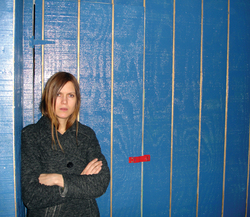
    (image from VenusZine)

    Share this:

    • Share on Facebook (Opens in new window) Facebook
    • Email a link to a friend (Opens in new window) Email
    • More
    • Share on X (Opens in new window) X
    • Share on Reddit (Opens in new window) Reddit
    Like Loading…
  • Steve Jobs was a Loser

    October 6th, 2011

    He was a dweebie way before he was a righteous dude.

    He was an odd young man who had a “turbulent” relationship with education until his fourth grade teacher bribed him to study; a guy whose principal recommended he be skipped directly to high school, in part to avoid the social issues that come from being a weirdo. After changing schools, fourteen year-old Steve spends most of his time with nineteen year-old Steve Wozniak (let that sink in for a moment), a guy he meets through a mutual friend in the high school electronics class.

    Seems like Woz opened the door to all kinds of adventures, mostly embodying the Merry-Prankster attitude that still hung around the Bay in the early seventies. A semester at ultra-relaxed Reed College was not a fit – he left because he knew the expense was killing his parents – and came home to a barefoot life, dropping acid (“one of the most important things he had done in his life”) and eating off returned bottles and Hare Krishna handouts. Then he designs video games for Atari for a little bit, travels in India for enlightenment, and returns to co-found the company at 21 with funds from the sale of a VW bus and Woz’s scientific calculator.

    It feels like visiting a foreign country to read about Jobs’s early life, and the role school played in it (and didn’t). Where would there be a high school electronics class now, to start with? What about the opportunity to spend time in the in-between places before, after, and around school, where most of the kit-building and club-swapping happened? I am writing this blog on stolen time from prepping a seminar on Foucault and panoptic power. He suggests that knowing one is watched leads one to actually police oneself: to internalize the values of your watcher and thereby ensure that even when you are “off the grid” of its gaze, you are still keeping yourself “on” it. We work in the most heavily-monitored moment American education has ever seen. I fear the deepest damage to students is not the hours spent testing and comparing. It’s the saturation of school with the idea that what is supposed to be known is the only thing worth knowing, and that time “off-task” (or “thinking different“) is wasteful.

    In our moment of international economic anxiety and pressure on the schools to fix it, why aren’t we re-reading Jerome Bruner and the rest of his Woods Hole buddies? Back in in 1960, they were way more scared of getting their butts kicked than we are, what with Sputnik looking down at their backyard barbeques. But from their anxiety came the realization that teaching the deep structure of discipline, at any age, was key to being able to really innovate. They acknowledged that intuition, sense, and emotion were cognitive events and intrinsic to our relationship to information (another Apple innovation, of course). And as Bruner explains in The Process of Education, they understood that wanting to learn was inseparable from really learning:

    Motives for learning must be kept from going passive… they must be based as much as possible upon the arousal of interest in what there is be learned, and they must be kept broad and diverse in expression (p. 80).

    Curriculum that follows from those insights look a lot more like wandering around and exploring than teaching and testing and teaching and testing again. Here’s Jobs remembering the electronics kits he built in middle school (out of school, of course):

    Heathkits were really great. Heathkits were these products that you would buy in kit form. You actually paid more money for them than if you just went and bought the finished product if it was available. These Heathkits would come with these detailed manuals about how to put this thing together and all the parts would be laid out in a certain way and color coded. You’d actually build this thing yourself.

    I would say that this gave one several things. It gave one a understanding of what was inside a finished product and how it worked because it would include a theory of operation but maybe even more importantly it gave one the sense that one could build the things that one saw around oneself in the universe. These things were not mysteries anymore. I mean you looked at a television set you would think that “I haven’t built one of those but I could. There’s one of those in the Heathkit catalog and I’ve built two other Heathkits so I could build that.”

    Things became much more clear that they were the results of human creation not these magical things that just appeared in one’s environment that one had no knowledge of their interiors. It gave a tremendous level of self-confidence, that through exploration and learning one could understand seemingly very complex things in one’s environment. My childhood was very fortunate in that way.

    Today the President is enjoying the naches of celebrating Jobs’ innovation and vision a week after his Secretary of Ed tried to forge connections between that innovation and his own impoverished and heavily-monitored agenda for American schools. That is fine, but let’s acknowledge that the two do not go together. And the economic argument (retreaded from 1983) that we need to drill-and-kill in order to keep up with the rest of the world isn’t our best idea by a long shot.

    When I was at Stanford, there was a billboard by the highway up to San Francisco that showed the voluptuous new VW bug, with the slogan “Hello Rich Hippies!” A commodification of our nostalgia for the goofiness of the 60s, for sure, but also a reminder that freedom and innovation go together. Wandering around is part of finding, and being a magpie is a necessary precondition to finding the shiniest bits of others’ ideas to forge into your own.

    Stay Hungry, Stay Foolish. Thanks, Steve, for all the shiny bits.

    What do you think?

    Share this:

    • Share on Facebook (Opens in new window) Facebook
    • Email a link to a friend (Opens in new window) Email
    • More
    • Share on X (Opens in new window) X
    • Share on Reddit (Opens in new window) Reddit
    Like Loading…
  • “What Will Be Your Legacy?”

    September 17th, 2011

    Today’s the Teach for America application deadline, as about a hundred posters on campus reminded me this week. The date invites a brief reflection on what TFA is doing, and how it is doing it. Yes, it still bothers me.

    As I watched Waiting for Superman with a class last night for the third time, I was challenged again by the core values the film shares with TFA: that the only way to address entrenched, systemic problems is to “drop out” of the system and start anew. This is the logic the film presents to defend charter schools as the sole, scrappy Davids capable of felling the Goliath of the ineffective existing system (an argument effectively fact-checked and dismantled elsewhere). And it is the logic of TFA too – don’t become part of the “blob” of traditional educators that prevent change: join us on the barricades of a new, nimbler effort, where your individual freedom won’t be hampered and your individual success will be rewarded.

    I especially note how TFA’s recruitment pitch appeals to an inborn desire to be a member of an elite corps – in fairness, perhaps no more attractive an option to the students I teach than it would have been to me, but this is the supposedly the “Trophy Kids”  generation, more dependent upon external validation than any that’s preceded it. This terrific student columnist at Mt. Holyoke puts a very fine point on how TFA threads the needle of selectivity in a tight job market:

    Teach for America is easy to gravitate towards—they come to you, saving you much of the overwhelming and sometimes scary process of figuring out where to go and what to do after graduation, and, with a 12 percent acceptance rate, they’ll assure you and everyone else that you really do have it together.

    There is also the way that the “elite corps” mentality of TFA casts education as a matter of noblesse oblige, something worthy to invest in with your spare capital. Most of those recruitment posters say, “What Will Your Legacy Be?” – “legacy” being of course what the advantaged and well-off call their leavings to those who come after. A cynic could say it’s a dramatic way to capitalize on a student’s desire to make something of herself in a job market offering fewer and fewer chances to do that with a BA. And who am I to fault a college student for seeking an edge? If you can’t find a job, why not wait out the recession doing some good?

    Maybe it’s those two things together that leave me queasy: the way TFA strengthens resumes as evidence of commitment to the have-nots, and the way it capitalizes on the vague desire to “make a difference” while actually undermining less-stylish efforts to address these intractable problems.

    And I think I can say “undermining” because the issue is too important to depend upon the altruism and energy of the young. A school is not a Habitat for Humanity house; no disrespect to that terrific organization, but students and their schools’ cultures need sustained, institutional support, not drop-in charity. Education change requires systemic efforts that address not only the abuses of tenure and collective bargaining (that WFS succeeds in making us think about in true muckraking fashion, touche), but also intransigent and politically-toxic issues like income disparity and institutionalized racism.

    It also requires us to look hard at the glaring lack of respect for teachers’ rights and craft that led to their unionization in the first place. These are crucial issues of professional autonomy that continue to be ignored in merit-based efforts to “pay teachers more” based on their attainment of measurable outcomes, despite the impressive consensus among people who spend their lives thinking about this problem that it doesn’t work and that TFA’s resources would be better spent elsewhere.

    Thrashing out this whole question is bigger than my present understanding, and certainly outgrows the time I have for it today (you’d be better served to read that student editorial I linked above, and her follow-up here – man, what are they feeding the undergrads up there?) To be clear: I have deepest respect and gratitude for the energy and altruism those extraordinary young people in TFA are bringing to the students they spend a few years with. But we do need to think about legacy when we consider TFA. Will this generation be remembered as those who took on core issues that underpin problems of schools, or those who were satisfied with short-term interventions that boosted scores, but shortchanged the long-term need?

    What do you think?

    Share this:

    • Share on Facebook (Opens in new window) Facebook
    • Email a link to a friend (Opens in new window) Email
    • More
    • Share on X (Opens in new window) X
    • Share on Reddit (Opens in new window) Reddit
    Like Loading…
  • A Question of Trust

    September 11th, 2011

    On the morning of September 11, 2001, I was teaching middle school in Durham. Before second period I passed the admissions director’s office and heard her chatting about a radio report that had just come in. I remember thinking, fleetingly, that it must have a been a single-engine plane (what else could our imaginations admit, back then), and briefly wondering how a tragic accident like that hadn’t happened sooner. Then I went back to work, prepping the class about to start.

    A few minutes later, I was on the way the copier when I passed the head of the school, another teacher, and a parent who were having a fiercely-whispered, stand-up conversation in the middle of the commons that separated the elementary and middle schools. I was running late, but I was pulled in by their urgency. There had been another crash in New York; they were huge planes; we did not know what was happening, but it was terrifying, and we needed to decide what to do.

    I remember someone mentioned the nuclear plant to our west, and wondered if it was in danger. There was concern for how to manage the chaos of a run on the school of worried parents. The parent (a Duke professor) commented presciently that “this was the end of civil liberties as we know it.” What next?

    I volunteered that we should not tell the students, to avoid panic and maintain order. The head agreed, and we headed our separate ways. We must have stood there for less than a minute.

    It is hard to remember a time when you could put a school on information blackout. Few student had phones, and the only internet was through four ancient PCs in each classroom that took ten minutes to boot up. But that’s the way we got through the day: pretending nothing was happening. The teachers sneaked TVs into their rooms to look in between periods, before (incredibly) turning back to their lesson plans to step oblivious children through the day’s spelling or science reading or verb declensions. As the day progressed, we became increasingly unable to hold that crazy boundary. By lunch some kids had been picked up by their parents, starting a rumor among them that I never really heard but could sense. We got the kids home safe; the defining news of their young lives waited for them after the carpool line, often from the lips of parents incredulous that they did not already know.

    Like all of us, I carry burning questions from that day, but as a teacher none is more powerful than the question of whether we made the best choice. Where did my reflex not to tell the kids come from, that morning? Why did the others assent so readily? Was it because it seemed safest and easiest to stay the course? What was done to the kids, knowing that the grown-ups they implicitly trusted to act in their best interest chose to warp their world to one that better suited them for six hours, rather than let them be full members of the larger culture’s struggle that day to assimilate the unimaginable? Did we do right by them?

    Perhaps I should be a little gentler with our deliberations and decisions that morning. A teacher lives life at the threshold of public and private, every day. She plans what she thinks will best meet the needs of her students, but those plans are always contingent upon what the day brings her. And she rarely gets a reflective moment before having to respond to what a student has brought in the room, or what the world outside the classroom forces upon her orderly direction. In school, class is always about to start: teachers need to do, first, to live without a net in front of the attention of those they are committed to serve. Only afterwards do they get to reflect on whether their doing was the best they could, whether it met the demands of the moment, what they should have done differently and hopefully will do better in the future.

    Our first and deepest responsibility as teachers is to keep our students safe. The trust that we will act in loco parentis makes safety job one, the inviolable bedrock upon which any learning must stand. It is ours to be worthy of a fiduciary duty: we will use our judgment to make decisions on their behalf that their judgment won’t let them make in that moment. These two judgments look different for first grade teachers than they do for middle school teachers or college professors, of course, but a first principle at all levels of maintaining that trust is letting our students know that we will not lie to them. That we will not abuse our almost-total power over the borders of the sealed world of the classroom and pretend the world isn’t changing, when it is.

    If I had it do over, I like to think I would have spoken up for telling our children the truth at that ad hoc policy session in the hall. Even though we did not fully understand it yet, even though it would up-end all of our normality, starting with the days’ lesson plans and ending with our deepest notions about safety and autonomy. That way, at least we would have come through that day with our students’ trust intact, even when everything else had been called into question. We would have enfranchised them in the culture we were equipping them to join, rather than affirming that, actually, our world valued false order over real chaos. As it stood, we showed that we valued our own institutional peace over the incipient horror of reality.

    I do not remember how I met the students who came to school on the 12th, but I know I apologized to them for abusing their trust the day before. I remember spending the next several days with the TV and computers blazing in my room as we struggled together to understand what had happened and accommodate ourselves to its implications. I still took my fiduciary responsibilities to heart, I believe. I watched Web sites over their shoulders, trying to benchmark the insanity of reality to whatever index of appropriateness I could still muster – what, exactly, constitutes the Zone of Proximal Development for “capacity to understand horror”? I did not abandon them to violence. But I stopped pretending the world was something it wasn’t in the name of maintaining my own fictional equanimity.

    And I promised myself that I would never betray my students’ trust to be honest with them again. That even when things happened that destroyed my own understanding of the way our world worked, I would be a companion to them as we worked together to find the next step, not a block to their development. That commitment is part of ensuring school is a place of real transformation, not just an institutionalized replication of existing power structures. It is the bedrock of trust.

    On this day of so much remembering, it is my deepest lesson, and one I hope I help my students learn.

    Share this:

    • Share on Facebook (Opens in new window) Facebook
    • Email a link to a friend (Opens in new window) Email
    • More
    • Share on X (Opens in new window) X
    • Share on Reddit (Opens in new window) Reddit
    Like Loading…
  • Moral Hazard

    August 26th, 2011

    I hope I am not the only one cataloging the “Abu Ghraib“-ing of the Atlanta cheating scandal: the assignment of blame to a few low-level “bad actors” whose motivations mystify the rest of us, while failing to account for institutional factors that are much harder to address. Note this quote from Richard Hyde, the investigator who uncovered the trends, as he describes emerging evidence that a similar thing happened in Dougherty County:

    “The level of confessions we’ve received and the cooperation of parents we’re getting here is greater than it was in Atlanta,” Hyde said. The teachers who have confessed, he said, have generally shown remorse. “I don’t know what their motives are,” he said. “It could be anything from self-aggrandizement and praise to promotions.”

    Come now – what could their motives have possibly been? This looks to me like a textbook situation of moral hazard: a situation in which the incentives to act in one’s best interest confound an individual’s ability to make ethical choices. But the classic example from the insurance industry – someone burning down their house to collect on a policy that is worth more than the house is – does not hold here. Teachers who work under threat of sanction, demotion, and dismissal for failing to raise test scores are not looking to get rich quick. They are trying to hold on to the meager security they already have.

    Let’s remember also that a primary criterion for which states receive Race to the Top funds is their commitment to linking individual student test data to specific teachers (by 2014, in NC, vide infra). If anything, the built-in pressure for a teacher to show improvements on standardized tests or lose her job is becoming stronger, not weaker. Couple that with a teacher’s vulnerability in bucking the entrenched culture of power by standing up to a principal requiring unethical behavior – a principal whose job is also on the line – and you have a clear situation where an institution has forced the hand of its lowest-level members.

    In my doc seminar last night we discussed Kieran Egan’s terrific reimagining of American schools. His provocative way of sharing that vision comes in the form of an imagined history of the next fifty years, a frame that is both frustrating and revealing. In his account, the trigger for a turn away from an atomized, standardized notion of accountability toward a more satisfying one is an environmental cataclysm that forces us to re-evaluate what our schools are and are not doing. That led to a discussion of how past sea changes in education have been associated with other “cataclysmic” social events (the immigration booms, Sputnik) that focused public energy and political will on making changes to account for them.

    We wondered: might there be a public cataclysm of faith in the accountability movement on the rise? The Atlanta debacle comes at the same time that other high-profile success stories are coming under public scrutiny for possible malfeasance. Michelle Rhee‘s tenure as chancellor of D.C. schools first among them; since she is the hero of the immensely influential Waiting for Superman, if her outcomes are discredited it will be a serious public blow. Taken together with Secretary Duncan’s (relatively) quiet, unilateral waivers of NCLB expectations on a state-by-state basis – and the outright refusal of a few states to comply with the law – we wondered if a similar event might be on the horizon: an irrefutable, public crisis of faith in the way we are doing things now that invites serious, ground-up work on what we should do differently.

    Of course, the antecedents we discussed also happened in eras of faith in the value of federal investment in social programs of massive scope – not at all our present moment. Still, we wondered if the conditions might be leading toward a public reckoning with the fruits of the thirty years that have passed since A Nation at Risk (a manufactured cataclysm that seemed to meet the needs of other entrenched interests) made accountability and rigor the only show in town. And what might be the results of such a reckoning? To be clear, changing NCLB should not be a step away from accountability of our schools to our students’ best interests. Thoughtful proposals for what to do next seem to build on the strengths of measuring what can be measured. But the calls for change are mounting. I hope we protect the most vulnerable actors in the current situation – the teachers – in the process.

    What do you think?

    (Also please note some substantial revisions of my previous post on Arctic Monkeys.)

    Thanks to Colonel Flick for the great image. All Rights Reserved.

    Share this:

    • Share on Facebook (Opens in new window) Facebook
    • Email a link to a friend (Opens in new window) Email
    • More
    • Share on X (Opens in new window) X
    • Share on Reddit (Opens in new window) Reddit
    Like Loading…
  • Everything I Needed to Know About Adolescence I Learned from Arctic Monkeys

    August 24th, 2011

    Adolescence – as I remember it, and certainly as it is reinforced and transmitted by our culture  – is about urgency. The highness of stakes. Fear of phoniness, of loss of face and the fragile esteem it brings. It is about the fear of being humiliated above all, and therefore transformation of that fear into anger toward those with the power to humiliate you. It is strong stuff.

    By these lights, Arctic Monkeys’ 2006 album Whatever People Say I Am, That’s What I’m Not might be the most adolescent album I have ever encountered. The album is bookended between two observations: that “anticipation has a habit to set you up for disappointment,” and that with those you truly love, “you just cannot get angry in the same way.” The first is made at the beginning of the evening, as the speaker is preparing for a night out – or a weekend out, really, that will close only in the dead-eyed light of an exhausted Sunday. And while the first dismisses all the mad searching that will come as futile before it’s begun, the second settles with acknowledging the quieter but more reliable satisfactions of at least having companions for the journey. We won’t find what we are looking for – but at least we’ll be on the mad, pointless hunt for it together.

    What is the search for? That’s the album’s arc. The speaker searches for pleasure, yes, but more for the connection and completeness that pleasure should bring. Our lads are running from the fear that it won’t satisfy even as they are running toward it as hard as their legs will carry.

    The music opens way for these explorations. There’s a willingness throughout to keep singing even after their (many) words fail, a fresh dipping into those glossalics (“na-na-na”) that the pop tradition has used to voice inarticulateness since Phil Spector. There is a willingness to let guitars sound like guitars, in Gang-of-Four slashes as well as slabs of Sonic Youth feedback. There is such humor in these songs! Listen to Matt Helders’ drums and imagine every cymbal crash as a “yeah!” and you’ll hear what I mean. No one since Keith Moon has shared as much clownish energy from behind the kit, been as involved in commenting on the song’s proceedings as much as keeping the time. Above all there is a lightness to these songs, a deftness with which they turn corners and cut out and pile on all together, amounting to a twitchy energy by turns neurotic as early Talking Heads and as playful as early Joe Jackson.

    Those records (Fear of Music, Look Sharp!, Entertainment!) are this one’s aunts and uncles, but its grandfather is beyond a doubt Quadrophenia. That was the last time a band so fully took on youth’s anxiety to make itself through affiliation – the last time rock and roll so effectively captured the satisfactions and crushing defeats that follow when youth entrusts its self-image to the wrong things and the wrong people. There are differences, surely: for one, the parents and other adults whose sham values haunt the mod’s flight into his own culture are largely absent in the “chav” culture the AM’s describe. There’s no parent horrified at what their kids are doing and wondering “did anyone see you there?”

    But there’s no observatory showdown either, no frontier justice other than border skirmishes. It’s just them and their insults and disses; they are each other’s judge and jury, not combatants. The effect, though, is one of intensifying fear rather than lessening it, raising the stakes rather than lowering them. Neurotic obsession with others grow and metastasize, complete slight or affirmation in issues as insignificant as whether your mates assent to jump a cab fare or whether someone confesses to pretending to forget your name a year ago.

    But holy cow, can they talk about it. In this, Arctic Monkeys’ differ from Green Day, who dropped their own rock opera in 2004 about disaffection and seeking something more satisfying. It’s been noted that, for that album’s protagonist, inarticulateness is part of the point: raised on soda pop and Ritalin, those kids don’t have much to say. Tempting to say that the AM’s made the record Green Day thought they did. As was once observed devastatingly about Chuck Mangione, “they hear more than they play.”

    Here, though, we have an album full of obsessively cataloged discontent, where the specificity of reference is part of what makes the rage so effective. It is targeted: at the good-looking girl who won’t give enough attention, at the better-looking guy who gets in your way, at the perceptiveness of the bouncer who realizes you and your friend switched shirts to try to get by him, at the band affecting to be from California when we all know they are from up the road. Urgency can heighten the senses, or dull them. Here, senses are keen-edged and on fire.

    Until suddenly, it isn’t: until, in a flash, clarity becomes muddy again. What you think you got, you suddenly realize you didn’t get, as they note in “From the Ritz to the Rubble:”

    Last night, what we talked about, it made so much sense

    But now the haze is ascended, it don’t make no sense anymore.

    For teachers, the record serves as an evocation the youth we spend our lives with, of how high the stakes always are when you have so little experience with which to reckon them. I am grateful to be reminded of what else is in the water when I teach, the turmoil that might have been brought in from the hall or the home, the lens through which whatever I am offering might be viewed. It’s a call to authenticity, above all – a bright line connecting Holden to Ben to Jimmy to Alex, right here and now. It reminds me, whatever else I do, not to be phony. Because if I am not, I have a chance to be a companion on the journey.

    What do you think?

    CORRECTION and AMENDMENT, August 26:

    First, I attributed my quote to the wrong song; it has been corrected.

    More egregiously, I associated the AMs with “chav culture” thoughtlessly and ignorantly. Further research suggests they are considered more an “indie” band, or even a “chindie” band, because their take on the “chavs” is more ironic than anything. Hard to understand these distinctions from across the ocean. Happily, I learned this week that I have a student this semester from Sheffield who went to school with some of the band, so I hope he’ll set me straight.

    More importantly, I was ignorant of the perjorative socioeconomic implications of the word. I should not have been: If Dick Hebdige taught us anything, it’s that youth subcultures cannot be separated from the social conditions they grow in (Richie Cunningham couldn’t cruise the strip without a car, gas, and cash for cheeseburgers; Johnny Rotten couldn’t sneer “God Save the Queen” without the backdrop of the over-the-top Silver Jubilee celebration that made a mockery of the poverty of so many Britons). Of course the way that youth subcultures get stripped of their intimate connections with socioeconomic status, race, ethnicity and other factors and sold back to us is a factor here too.

    And the critique of my structuralist assertion that it is even possible not to be “phony” (i.e., NOT to slip between what you say and what you think you mean) will have to wait for another day. But I hope you get what I mean.

    Share this:

    • Share on Facebook (Opens in new window) Facebook
    • Email a link to a friend (Opens in new window) Email
    • More
    • Share on X (Opens in new window) X
    • Share on Reddit (Opens in new window) Reddit
    Like Loading…
←Previous Page
1 … 9 10 11 12 13
Next Page→

Website Powered by WordPress.com.


Loading Comments...
 

    • Subscribe Subscribed
      • Chris Osmond PhD
      • Join 60 other subscribers
      • Already have a WordPress.com account? Log in now.
      • Chris Osmond PhD
      • Subscribe Subscribed
      • Sign up
      • Log in
      • Report this content
      • View site in Reader
      • Manage subscriptions
      • Collapse this bar
    %d