Chris Osmond PhD

  • Typewriter Agonistes
  • Human Words Project
  • Human Teaching: Get The Book!
  • About
  • Contact

  • dithering

    January 22nd, 2013

    dithering

    Author’s note: an expansion of this post has been published in the Spring 2013 issue of The Intima: A Journal of Narrative Medicine.

    Chuck Jones had strong thoughts about strong lines, and anything on the subject from a man who could make a rabbit into Brunhilde should be closely attended. Here he is on his drawing education in 1989’s Chuck Amuck:

    Chouinard in Los Angeles offered excellent schooling in the fine arts – painting and drawing in the classic traditions. But the most important and stunning discovery I made at Chouinard, one that has been shared by every artist, cartoonist, painter in history, from Cro-Magnon art to Claes Oldenburg by way of Leonardo, Goya, Frans Hals, Van Gogh, Herblock, and Beatrix Potter, was the ability to live by the single line – that single honest delineation of the artist’s intent. No shading, no multiple lines, no cross-hatching, no subterfuge. Just that line. Was it Feininger or Kandinsky who said, “My little dot goes for a walk”? Just so, every point on a line is of equal importance. That is rule 1 of all great drawing. There is no rule 2.

    Maybe this assertion most impressed me because it nailed everything that was wrong about my own drawing. When I was in fifth grade I wanted to learn to draw, and acquired a book to that end. I had seen a tiny ad in the back of Boys’ Life that claimed to be able to teach drawing; your talent could be discerned by copying a smiling little turtle head wearing a jaunty cap, which you would send in to the address listed and await further instructions.

    I was awful at it, but I do remember that the book advised making hundreds of tiny, light lines instead of bold ones. As I tried to copy the cartoony elephants and tigers, I did so with little scratches that made the outline seem faint, furry, barely there. When I got into art class in middle school, Mr. Foster (myopic, lavender sweater, stank of cigarettes) admonished me to knock that off: to make a single, confident line if I was going to make any line at all and stop dithering about. “Dithering” being the memorable word, suggestive of weak moral fiber and faint intention. Mr. Foster called me out for my indeterminacy as clearly as Chuck did. Stop scratching around the edge and draw, already.

    We imagine ourselves drawing a strong line in our daily practice as caring professionals. The culture expects us to. Johnson & Johnson is running a powerful Campaign for Nursing’s Future right now, including several commercials. The first one I saw was muted, but the images did the work: a smiling woman confidently offering a drink to a bedridden one, strong, tender, knowing hands smoothing a blanket around and under tired, wrinkled ones. The stock teacher pictures that run next to every ed policy story in every newspaper show the same: smiling people in front of whiteboards and Smartboards, mouths open in mid-declaration of something surely known and asserted to a room full of occupied desks with raised hands. There she is again in Verizon’s “Telepresence” ad, which touts the wonderful advances technology can bring education but knows better than to mess with the smiling, confident teacher in front of the chalkboard.

    In other words, effective caring professionals don’t dither. They execute with clear eyes and clean hearts (“no shading, no multiple lines, no cross-hatching, no subterfuge…”). But those who work to prepare caring professionals are beginning to see the dangerous shortcomings in training for such confidence. They include arrogance, inability to collaborate or learn from mistakes or, ultimately, to actually have a connection with the one you’re caring for. It’s well-documented in medical schools and emerging in nursing and social work – the push for expertise and algorithmic accuracy in diagnosis and treatment (“best practices,” we call it in education) tragically undermines the actual capacity to care.

    I remember a simulated joint-care exercise I observed years ago at a medical school, where teams of students from medicine, nursing, OT, social work, and nutrition worked with a standardized patient who had been in a car accident. They would take history, then conference and develop a care plan before sharing the plan with the SP. As soon as the SP left the room, the single med student began barking orders to everyone else about what they should do next. The nursing student was first, and her to-do list was long. She listened until he was done, then asked respectfully, “Doctor, have you checked her for allergies? If she’s allergic, three of those medications could kill her.”

    There it is: the uncomfortable notion that someone else might know something that your training has made invisible to you. That’s a truth that can and should trouble our equanimity as well-trained professionals. The real world has a way of doing that – messing up our best ideas and intentions with stubborn reality, asserting how the map is never, ever the territory (and we might not even have the right map).

    Which gets us back to that unlovely word, “dithering.” What’s it mean? What can it tell us?

    …one of the earliest [applications] of dither came in World War II. Airplane bombers used mechanical computers to perform navigation and bomb trajectory calculations. Curiously, these computers (boxes filled with hundreds of gears and cogs) performed more accurately when flying on board the aircraft, and less well on ground. Engineers realized that the vibration from the aircraft reduced the error from sticky moving parts. Instead of moving in short jerks, they moved more continuously. Small vibrating motors were built into the computers, and their vibration was called dither from the Middle English verb “didderen,” meaning “to tremble.” Today, when you tap a mechanical meter to increase its accuracy, you are applying dither, and modern dictionaries define dither as a highly nervous, confused, or agitated state. In minute quantities, dither successfully makes a digitization system a little more analog in the good sense of the word (Ken Pohlmann, Principles of Digital Audio, as quoted in Wikipedia).

    Seen through these eyes, maybe “dithering” isn’t a distraction from effectiveness: maybe it’s a part of it. It helps aspirations to precision and comprehensiveness actually work out in the real world, making our best machines “more analog in the best sense of the word” by grooving the 1s and 0s of algorithmic practice into actual peaks and valleys (not for nothing is analog sound “warmer” to the audiophile’s ear than digital, methinks).

    When I know to look for it, I see arguments for dithering in the many of the wisest words I know about teaching, caring, and living an involved life. There’s Parker Palmer, describing how one of the century’s most insightful scientists said her best advice to neophytes was to learn to “lean into the kernel,” to get a sense of the actual lived experience of the thing you hope to understand by introducing the unique noise of life into your analysis and deliberation. Over here there’s a powerful article in the Journal of the American Medical Association on how to prevent compassion fatigue through the important usual suspects (reflective writing, meditation), but also a startling description of “exquisite empathy,” a state of sustainable connection born of leaning in to the very situations and tensions we thought caused burnout in the first place.

    And here we have Pema Chodron describing a state of equanimity before the daily travails of life – ceasing to struggle with the challenges of attachment, coming into abiding compassion with yourself as path to enlightened empathy with other.

    The basic ground of compassionate action is the importance of working with rather than struggling against, and what I mean by that is working with your own untwined, unacceptable stuff, so that when the unacceptable and unwanted appears out there, you relate to it having worked with loving-kindness for yourself. Then there is no condescension. This nondualistic approach is true to the heart because it’s based on our kinship with each other. We know what to say, because we have experienced closing down, shutting off, being angry, hurt, rebellious, and so forth, and have made a relationship with those things in ourselves (pp. 146-147).

    That would be the deepest admission of the noise of actual living into ourselves of all, would it not? Embracing all our personal human dithering as part of the ride, “leaning into it” and, therefore, embracing it in those we seek to care for?

    So “dithering” is way deeper than being “nervous, confused, agitated;” it seems to involve talking back to the judgment of dissolute intention I heard in Chuck Jones’ call to a confident line as “rule 1 for drawing well.” Perhaps it even includes a “trembling” before what we cannot ultimately understand, an acceptance of how ultimately inaccessible the deepest human processes of “healing,” “learning,” “connecting” are to our most assiduous assays to understand and regulate and predict and contain them.

    This becomes the province not only of Palmer, but also M.C. Richards and Rachel Naomi Remen, who have also begun to map the reality of lived experience with healing and teaching, how completely any honest student of either must eventually admit how little we know and seek a deeper connection to a greater power then oneself. I take interest (and not a little pleasure) in how each of these three wise ones began their career in the academy of traditional, rational knowledge, and after earning their impeccable “straight” PhDs left that world to seek better explanations for what they were experiencing. They listened to their “trembling” before what they could not fully grok with the tools they had developed, and left to try to create new ones. Chodron talks about the “refugee vows” taken by those of her Buddhist order – a commitment to leave the quest for security and instead trust the world’s unknown to bring you what you need. It takes courage to take such vows, and I have deepest respect and gratitude for the courage and example of these refugees, and the wisdom they now have to share.

    I hope some of that wisdom is coming through here. Of course I still love a confident line and treasure it whenever I find it, in music as well as art. Somewhere I’ve got begun a little exegesis on the wonder of the rising swells of Adele’s “Skyfall,” and my youngest son could give you a better account of the joy of the strong line (a.k.a. “killer hook”) in fun.’s “Some Nights” than I could, which we agree is the single of the year and everything that’s right about pop music. Strong lines everywhere. Lovely.

    But for actual connection with actual people, let us have less assertiveness and more attending; less fake-it-till-you-make-it and more reverence before what you (or we) really don’t fully know yet. That’s a unique and precious comfort we can offer. I wonder if it might not be part of the “maturity” the anonymous author of “Let Us Have Medicos of our Own Maturity” seeks in his caregivers:

    Let us have medicos of our own maturity,

    For callow practitioners incline to be casual

    With a middle-aged party…

    Let our medical attendants be of compatible years,

    Who will think of us as in certain ways their peers.

    Who know what we possible still have to live for,

    Why we are not unfailingly poised to withdraw…

    Then permit us to be appreciative and appreciated

    A little in our final fruition, however belated.

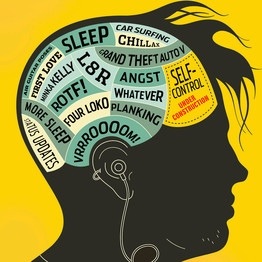
    Image from Michael Gordon’s blog on digital printing, with thanks.

    Share this:

    • Share on Facebook (Opens in new window) Facebook
    • Email a link to a friend (Opens in new window) Email
    • More
    • Share on X (Opens in new window) X
    • Share on Reddit (Opens in new window) Reddit
    Like Loading…
  • ETEWAF

    December 30th, 2012

    20121230-084456.jpg
    It stands for “Everything That Ever Was Available Forever,” and is used by tech and futurist types to describe the state of our present relationship with information. I thought about it briefly last year in my blog post about “otaku,” the state of being expert in something obscure and therefore cool. Patton Oswalt’s great Wired piece asserted that ETEWAF made otaku meaningless as both individual achievement and social state: if anyone could just read A.V. Club’s Gateway to Geekery on Frank Zappa and suddenly “know Kung Fu,” then what the heck was the point? We all could pass as otaku; we just had to invest the requisite fifteen minutes.

    My school’s motto is lovely: “Esse Quam Videri,” “to be rather than to seem.” It was my intent upon entering college and grad school to become actually erudite: deeply knowledgable about things. Which things I had not really worked out, but smart things. You knew them when you saw them. The things smart people already knew (E.D. Hirsh become flesh, natch: knowledge as social currency first, actual utility after if at all). Oswalt is struggling with the “seeming” winning out over the “being” in the arcane pursuits that gave meaning to his childhood and the adult he became. I primarily wanted to seem more than to be: to seem like someone who read the Iliad and Shakespeare.

    I guess I succeeded. I was a predictably insufferable undergrad at home on break (“look what I read and how it explains everything and calls you all out on your benighted lives”), though in hindsight I knew little and talked much. I was very concerned about appearing well-educated. About seeming to be someone who had extracted the hidden knowledge of the culture and was therefore a more authentic member of it. But I was CONCERNED, is the point. I knew there were things I did not know, and for reasons good or poor was hell-bent on finding them out.

    It’s the perceived difference between me and my current students that has me writing here, especially the difference in how we navigate ETEWAF culture. I am a voracious Googler. I love that in thirty seconds I can have Wikipedia-level information on whatever I barely care to know more about. That capacity is an essential part of my daily life.

    Actual stuff I know more about than I did twenty-four hours ago:

    – Whether Topol toothpaste is better than other whitening brands (no, and is probably more dangerous to tooth enamel because it is off the charts on the Relative Dental Abrasive (RDA) index and the ADA hasn’t even given the stuff its seal of approval);
    – whether or not Britney Spears ever emerged from the “swamp thing from hell” stage she was viciously portrayed as by Rolling Stone in 2008 (by the quality of her last outing, I think so – hope so, the poor dear);
    – what the heck Naropa University is, and what studying education must look like in a Buddhist-inspired setting.

    I did not start the day wanting any of this; it wasn’t on any syllabus prepared for me. My capacity to navigate the culture and have power in it is only marginally impacted by this knowledge (maybe I’ll impress someone someday with the Naropa thing, come off as more detached than I really am in a context where that’s valued or something). My teeth will be healthier for it, for sure. It’s not earth-shaking insight. The point is that I wanted to know something and went out and learned it.

    And I do not know if many of my students in the last twenty-four hours would have shared my curiosity about any of this, or seen any of it as the sort of thing that one might learn more about through a few keystrokes.

    I frequently ask my students to Google the authors we read for a just a minute or two before class, and reinforce the expectation by discussing what they found out first before we get into the stuff itself (lots of chances to show what you know, get teacher praise for your initiative, etc etc). Most of our authors have Wikipedia pages; none are obscure. Almost no one ever, ever does it. Why? Is the course so dull that the people we read in it must be dull too? Evals tell me no: it’s not a dull course, most find it the most relevant thing they have done in college so far. So why not venture out there for three minutes without a syllabus and find out more?

    I am beating around a pretty obvious bush, I fear. When the pantry is always full, we cease knowing what it is to be hungry or even valuing the food we eat. As people join a culture where anything they want to know is easily knowable, they naturally become less interested in actually going out to find it. The wonder of a full cupboard or a lightning-fast Google search (even though it has to go to space) isn’t a wonder any more. Paradoxically, we explore and exploit it less because of its richness and effortlessness.

    We also become exquisitely sensitive to the slightest discomfort in our engagement with it: the most insignificant gaps between our desires and reality become onerous. Here I am thinking of David Foster Wallace’s famous cruise ship essay (1), where he ends admitting that after a week of gargantuan luxury and indulgence, he pulls into port next to another ship and can’t help but notice how the other ship seems just a shade whiter, it’s umbrellas’ stripes just a shade more vibrant. There’s his thesis, and sort-of mine: satisfaction of every need leads us to be fine-tuned to those needs, and to create appetites that aren’t sated in a never-ending solipsistic free fall into ourselves (the interruption of which is the great theme of his work).

    So what can we do to help the generation that never wanted for information come to value it again, even seek it and desire to organize and use it? I am a teacher, after all: getting young people to want to do that, and helping them develop the skills and dispositions to do it, is what I am spending my life on.

    There may be some insight in Elizabeth Kolbert’s terrific New Yorker piece on spoiled children. Here our author compares the self-sufficiency and apparent equanimity with her place in the world of an Amazonian six year-old with the apparent helplessness and querulousness of a typical North American one.

    So little is expected of kids that even adolescents may not know how to operate the many labor-saving devices their homes are filled with.

    She wonders if the solution needs to include more benign neglect of children’s needs, the better for them to understand both their relation in the world to other’s needs (i.e., others have them) and to develop the context in which they have to learn to Do Things. And only in the context of having to do things will they actually learn to do them, and thereby develop the requisite self-confidence to try to do something else. It’s a developmental cycle that we paradoxically interrupt when we try to give them some further advantage – which parents of a certain class and social place do a lot, for some very logical emergent meritocratic reasons. It’s a great piece, you should read it (2).

    I take from the piece NOT a conviction that my students are spoiled or so different from “the way we used to be.” That’s poisonous, and I have seen senior faculty become intensely bitter by believing it. Rather, I think it means that the developmental mechanisms of capacity and “self-efficacy” are closely aligned with the exigencies of actual need to figure stuff out yourself and then surprise yourself with your own competence.

    This realization has big curricular implications for me: perhaps I need to put my students in higher-stakes settings where they must find stuff out for themselves, are made uncomfortable by the demand so they’ll do it and then see the payoff of having done it and use that self-knowledge to reinforce their confidence in doing it again. Concretely: maybe I start giving pop quizzes, where some info is not “in the readings” but out there to be found and synthesized? I hate “Web quest” scavenger hunt-style activities, but maybe something more independent where more varied (and authentic) outcomes are valued. I am actually pulling together a doc seminar right now that seeks to support advanced grad students in developing autonomy and self-confidence as readers, researchers, and synthesizers of previous thought toward their own. This challenge is everywhere.

    I loathe how many talks and resources about “milennials” (the generation I teach) emphasize that they are so deeply different from me, their values so inscrutably remote from mine that all I can do is throw up my hands and let them Pinterest when they should be participating in class discussion. I think it’s on me to help them thrive in their information environment, to come into their own as ETEWAF surfers as well as masters of the curriculum I bring.

    Apologies if this turned into teacher-talk inside baseball, but it’s eating my lunch as a teacher and I don’t think I (we) are doing enough about it. The ETEWAF world is a tremendous opportunity: how do we as teachers help our students use it to their own growth and strength and capacity? That’s part of our job. Some of my past students track this blog, I think: anyone want to weigh in?

    1 – I know I am obsessed with the guy, but I come by writing about it again honestly. I am giving a paper on him in a few weeks, for crying out loud, calm down.

    2 – I was personally amazed yesterday to witness my nine year-old make better pancakes than I can, with minimal supervision from my wife. I would not have given him the chance to, probably. Point exactly.

    NB – I deliberately drafted this whole thing on an iPad in iA Writer, an app that eliminates all other distractions and just makes you focus on the words themselves – not the hyperlinks, formatting, etc. I am trying it in blogging to see if it helps make my prose more lucid and arguments more forthright than my usual laptop-pounding. Feedback?

    I can’t remember where I got the image; New York Time several months ago, I think. Apologies, will cite when I find it.

    Share this:

    • Share on Facebook (Opens in new window) Facebook
    • Email a link to a friend (Opens in new window) Email
    • More
    • Share on X (Opens in new window) X
    • Share on Reddit (Opens in new window) Reddit
    Like Loading…
  • negligent privacy

    December 15th, 2012

    I first heard this phrase last year, from an elementary school assistant principal in my doctoral seminar. She said it was a term of art being used in discussions of school security: it describes aspects of a school’s physical and social landscape that provide spaces for dangerous or undesirable behavior to take place. The placement of video cameras such that they couldn’t see around corners, the fact that no one knows what happens in the bathrooms, that sort of thing. The goal of school security plans being to eliminate and police those sites as much as possible.

    I was disturbed by the concept, and how it connected to broad worries about the surveillance state, Foucault etc etc, and read its anxiety in light of various observations (Laclau and Mouffe, Scott and Princess Leia) that proliferation of top-down attempts to control an environment only multiply the sites where opposition can take place. Which in turn invites more overreach by authorities into privacy, ad infinitum. It’s a fool’s game to try to exhaust the possibilities of bad things that could happen and control them all. Better, much better, to empower and trust local actors to make their best judgments according to the local needs that only they can fully understand.

    The term came back to mind yesterday morning as I heard a horrifying story on NPR about Spain’s “ninos robados“: the 300,000 children over fifty years who were taken from their parents and sold to other parents to be raised in different families. This arrangement was justified under Franco as a state effort to eliminate “social distortion.” If the birth parents were judged too poor or potentially Marxist (and we have to assume the two were seen as one), their offspring would be better raised by good, well-off, Franquista families, and the $25,000 that changed hands along the way didn’t hurt anyone either. The birth parents were told their babies had died, and the handoff happened secretly. Now, in retrospect, Spain is undergoing an unthinkable nightmare of collective reckoning with its past (though not an unfamiliar one, around here). Empty coffins are being unearthed; hospitals have destroyed decades of records; aging nuns won’t talk about it, claiming perverted oaths of patient / caregiver privilege. Privacy abused, state-sanctioned exploitation, complicity, unthinkable legacies of pain.

    This was ample horror with which to begin the day, but of course it got much, much worse with the unimaginable news from a little elementary school in Connecticut. I was asked yesterday if I had a different reaction to the horror as a teacher and a teacher-of-teachers because it took place at a school. Are educators more vulnerable than the rest of us? Are children? To which I must reply, no. Education is not merely a social institution like others, because we have all been children, have all loved children, and most of us have them. A wound to other people’s children is a wound to ours, and to us. This is why discussion of political and social violence being wreaked upon American schools is not the purview of education professionals, but of all of us. This is why yesterday’s horror is not a school issue.

    My libertarian friends will perhaps be surprised to hear that I do not think that increased school security is a useful response to this tragedy. I think that would be another example of increasing oversight and thereby multiplying opportunities to skirt it, while drawing resources from better options. I am convinced by findings that increased TSA surveillance of air travel has not made travel demonstrably safer. I am convinced that top-down efforts to police student achievement have not made our schools demonstrably better. I think top-down oversight has diminishing returns, and does unintended and unforeseen damage to selfhood and dignity and respect and autonomy.

    But I also wonder on this bleak morning whether gun-control policy in our nation does not constitute a true “negligent privacy,” as it allows for spaces in which horrible technologies of violence can be bought and sold next to furnace filters and christmas trees (the case in my town). The type of guns that can be bought and sold by citizens matter. Speed kills. Yesterday’s furious outcry at the Press Secretary’s initial statement that “today is not the day” to talk gun-control policy suggests that many feel the same this morning. I am warily encouraged by the President’s early indications that maybe he’ll see fit to use his second-term cultural capital to correct these egregious misreadings of the rights to a “well regulated militia” that we supposedly enjoy. I hope for at least a renewal of the Federal Assault Weapons Ban as a step toward sanity in this matter. I think. I am not expert in this debate, and do not know what is enough. But the current situation cannot stand.

    This is hard to work out, too, because teaching is private practice, always, and to entrust your child to a teacher is to trust her to act in your stead behind a closed door. This is developmentally, socially, and culturally part of education: giving up our children to our teachers. Therefore we must work hard to choose people of good judgment and character to do the work, to support them in developing the skills and dispositions that support them in making sure that all students can learn, to enable them to use the trust and respect we accord them through their autonomy in the best and most useful ways. Privacy in teaching is not negligent. Not helping future teachers develop an understanding of the trust placed in them, is.

    So, how do we get up this morning? Some of us sit down and try to write their way through to how to keep going (the real end of real theory, after all).

    First I mourn fiercely the senseless loss of of so many beautiful, defenseless children. I have no rights in this matter – except the primary, cardinal rights we all have as children once, as parents, and members of the human family. They suffice.

    Second, I mourn and honor the teachers who died in yesterday’s horror: their consecration to their students’ well-being and their willingness to give their lives to their protection.

    And finally, I honor those lost by working to transform pain into change. May we correct, finally, the errors in our national experiment about gun policy. And may we honor the hundreds in Connecticut who wake today to torn lives by honoring those who teach their children with the autonomy and trust and respect and care they deserve.

    Thanks to Sarah Skwire for the Roethke poem. 

    Share this:

    • Share on Facebook (Opens in new window) Facebook
    • Email a link to a friend (Opens in new window) Email
    • More
    • Share on X (Opens in new window) X
    • Share on Reddit (Opens in new window) Reddit
    Like Loading…
  • hideous teachers

    November 29th, 2012

    Just finished Max’s biography of David Foster Wallace, and am left with a compulsion to write about it combined with a nauseating (not nauseous) sense of my incapacity to really do so. I am self-conscious writing about DFW, because a deep relationship with his stuff is almost required among hyperarticulate white men of a certain age (mine, to about ten years on either side). Debates among us about whether or not many of us “get” him is one of the practices that make us so insufferable: we are so sure that he spoke just to us, I think, that we bristle at someone else saying what he meant to them.

    In any case, his work meant a LOT to me. This is not my first attempt to write it: just after his suicide in 2008, I worked with the friend who turned me on to him to write a hastily-assembled tribute that got down a lot of the personal pain but missed much reflection on what his work made possible in my own life.[1] So let me come in a different door here: what DFW tells me as a teacher, and maybe from that apercu on to deeper considerations. (Will also try to lighten up on words like “apercu,” though they are sort of a baked-in hazard of reading the guy.)

    He taught a lot, at several institutions: his alma mater Amherst, briefly, maybe at Arizona State, I don’t remember, but definitely then on to more sustained gigs at a state college in Illinois (much like mine) and, finally, Pomona. Philosophy at first, then creative writing for years, and finally literature (which he mostly did through popular novels like Carrie and The Silence of the Lambs, not Raymond Carver and Flannery O’Connor).

    As a seminar teacher, he was apparently astounding. There’s a whole cache of internet stuff out there from previous students who reflect on his generosity and intense focus on the quality of their expressions, their engagement with ideas. He completely shunned any reference to his monolithic status as voice of a generation, the post-pomo wunderkind, the Genius Grant recipient and official Next Big Thing, maintaining that he was to be “Dave” and talk about their work, not his. I cannot yet find evidence of anything else anywhere, really: his RateMyProfessors profile (cursed artifact of these panoptic times) has been pulled, of course, but it was reported to concur, in the bald terms that platform always invites (“one of the best teachers I’ve ever had,” “tough as shit and can hurt students’ feelings,” “very neurotic and tends to chew tobacco and spit in a cup while lecturing”). A few more telling comments:

    He never talked about his work. Not once in the three workshops I took with him. I’ve had numerous professors force their students to read their own work in courses, but he would have been mortified by the idea. There wasn’t a bone in his body that wasn’t humble.

    He was the first professor to treat me as something other than a student. He said he was learning something from us, too. He was the kind of mentor whose unassuming personality warranted visits, even when the class was finished and there was nothing academic to discuss. I remember there was always a line of students by the bench outside his office in Crookshank. Those conversations were always rich and I will miss them, almost as much as I will miss him.

    As a reader of student writing, he was monstrous. Max’s portrait of his teaching of writing shows someone simply unwilling to let people work beneath their potential. DFW read student work more closely than many of us read our most precious writing: three times, once each for general impression, for literary quality, and once for markup as if it were going to press (in a different color ink each time), and ended with a ton of handwritten or small-font-typed response (here’s an example).

    Perhaps part of his hyperfocus was pathological (his tics and obsessions included grammar “SNOOTiness” as well as revulsion against self-consciously artistic or ironic prose). Maybe it was part avoidance of The Work Itself: the task of finding and maintaining the rhythmic discipline to write productively that challenged him his whole career. How else can we understand Max’s reporting of a heartrendingly personal correspondence with Don DeLillo about how to actually DO the work of writing:

    Do you have like a daily writing routine? Do you set off certain intervals as all and only time for fiction writing? More important, do you then honor that commitment, day after day? Do you have difficulties with procrastination / avoidance / lack of discipline? If so, how do you overcome them? I ask because I am frustrated not just with the slowness of my work but with the erratic pace I work at. And I ask you only because you seem at least on this end of the books, to be so steady – books every couple of years or so for over two decades and you don’t seem to have an outside job or teaching gig or anything that might relieve (what I find to be) the strain of daily self-starting and self-discipline and daily temptations to dick around and abandon the discipline. Any words or tips would be appreciated and kept in confidence (pp. 235-236).

    When taken together with his legendary output of  letters, perhaps the opportunity to lose himself in student work and other lower-impact writing was a way to feel productive while not having to belly-up to the project that was so much harder (I certainly would recognize that behavior, compassionately). Or maybe it’s overly simple – and unfair – to characterize his relationship to teaching as avoidance. Some wonder if his students, and the demands of responding to their work, were part of the structure that enabled him to write:

    His attentiveness to his students in particular was beyond generous. I think he needed us, too. We gave him a tangible purpose and a routine: things that writing didn’t always offer (emphasis mine).

    All this reflection is prelude to a more serious inquiry I would like to make into Wallace as teacher. I am grateful to Paula Salvio, whose groundbreaking scholarship on the pedagogy of Anne Sexton invites further considerations of other “limit cases of exemplary teachers”: teachers whose pathology (or, perhaps, humanness that refuses to be constrained and disciplined by teacherly role expectations) is both threatening and somehow deeply part of the power of their teaching.

    Sexton was a well-documented hideous creature, by most lights: alcoholic, mentally ill, prone to violence, disrespectful of boundaries personal, sexual, and social. Most of these same qualities plagued DFW – differences in degree, but after reading in both lives, not really in kind –  and the act of imagining either of them in the classroom is initally disturbing. Salvio works to get her hands around the nature of that disturbance through Freud (and Lacan’s) description of “uncanny” experience:

    The uncanny is really nothing new or alien. Rather, it is something that is ordinary, familiar, “old established in the mind and which has become alien to it…something which ought to have remained hidden but has come to light”… (p. 12)

    And the project of reading Sexton’s excesses as being of a piece with her pedagogy leads her to great discomfort as she reads Sexton’s papers in the archive at the Harry Ransom Center in Austin:

    The uncanny provokes anxiety because something appears that was already there, something closer to the house, the heim, the host. What suddenly appears at the door of the house, or on the stage, is at once hostile and expected, foreign to and yet embedded in the house. This dangerous conjunction, teacher+addict, teacher+mental illness, transformed the archive into a panic space where all the traditional limits I had clung to as I began to render her teaching life became blurred (p. 45).

    I must note a parallel experience – fear of finding something terrifying has been right in front of you the whole time, the Face in the Floor – as I write DFW as teacher. How to reconcile the dangers and damages he apparently wrought, the deep terrors of depression, addiction, and bad boundaries, with the teaching persona his students, without exception, affirm? How to locate the compassionate reader and annotator – paidagogos extraordinaire – within the selfish and self-loathing nature he worked a daily program to overcome but that (according to those who must have best known) still seethed beneath the surface of his serenity?

    I am only beginning to make sense of Salvio’s whole argument, but what most moves me right now is how she reckons Sexton’s final assignment, wherein she had her poetry students “write an interview in which they fabricated a persona from the details in Sexton’s poems and lectures”:

    You are to fabricate my reply and we will see how close you come as the term moves on….for the first eight classes, there will be in-class assignments. Written work that will let you live the life of a poet. I realize you are not all writers, but you will know a lot more about writing and the way a writer thinks after doing them. And thus will know me better (pp. 40-41).

    This assignment, at first blush an appalling exercise in self-absorption or outright narcissism, is unpacked as a risky articulation and subversion of the unspoken expectations that all pedagogues hold that their students come to mirror themselves. When Sexton foregrounds the expectation that students “give the teacher what she wants” (i.e., that they give her back herself) and exaggerates its most-repellent features, she is exploiting the power of “too much” to invite transformation:

    By asking to students to approach and then incorporate pieces of her “grotesque” body, and to incorporate aspects of a composing process that contain striking elements of a gross materialism, Sexton raises important questions, not only about the ways that our student imbibe, through spoken and unspoken exchanges, formal and informal, our culture’s body habits, language systems, memories, values, and anxieties, but also how we determine what is normal and what is perverse, what will come in and what we will spit out…the expressed anxieties about this assignment, many of which I also shared, point, I believe, to our reluctance to consider the extent to which we, too, may be complicit in composing a curriculum that is tainted by our own narcissistic attachments (pp. 41-42).

    What fascinates about Salvio’s frame as an approach to Wallace is that the difficulty of slipping the bonds of “our own narcissistic attachments” is the one of the core themes of Wallace’s fiction, and arguably (given his long struggle with addiction, and a dozen years of sobriety before his death) of his life. What then do we make of a another monstrous pedagogue who renders his teaching persona as completely – even obsessively – NOT about himself, but scrupulously about the Other, the student?

    This is not a benign platitude in DFW’s hands (though that noun wouldn’t scare him: he frequently acknowledged that the deepest lessons of a culture seem like trite platitudes at first). This business of being about the other as a way of finding oneself, of the decentering of oneself being the core challenge of making genuine connections with others. Wallace’s work is littered with characters whose self-obsession leads to inability to interface: see Hal Incandenza’s muteness in the admissions interview that opens Infinite Jest, and more vertiginously (sorry) characters in his work whose self-knowledge is hindered by inability to acknowledge the role of one’s own pleasure in the giving of pleasure to another. We are left with a host of characters who are hermetically sealed within themselves, while striving to appear anything but. The several narrators of Brief Interviews with Hideous Men, Max notes, are characters who “not only seem to feel nothing; they seem to feel nothing about feeling nothing. They have creepy amounts of self-awareness but no ambition for catharsis. Their hideousness is beyond question” (p. 247).

    I think Salvio’s excellent work makes space to consider the teaching of DFW as a study in the outcomes of fastidious focus on the Other; a “limit case of exemplary teaching” as yielding to exploration, I think, as Sexton’s focus on the Self. Likewise adding, then, to the overall critique of what education’s norms allow and disallow as knowing, as connecting, as being – what those cultural structures afford, and what they limit. Which is the crucial ambit of curriculum theory, generally.

    Or something like that. There’s a whole gang of something to be done here. I hope to do it.

    Image from New York Times.


    [1] I sell the piece short, a little: “We faced the fact that The Jest was making us look in a gargantuan mirror that we’d been avoiding for the better part of our tentative and clearly provisional adulthoods.” Will wrote that, and it’s still true. And I think I nailed this bit: “I do remember that—before there were critical treatments of the Jest and its legacy had really gelled, as it is finally beginning to—my first reading perceived the leitmotif of a shapeless head within a frame. Here’s the woman born without a skull and her impossible wheeled prosthesis; there’s that little guy, what was his name, upside down on the Eschaton court with his head buried in a computer monitor; here’s a therapist framing his analysand’s face with a cage made from his fingers; there’s Himself slumped in the kitchen with his head immolated in a microwave. I took all this to suggest our ultimate paucity of intrinsic fiber or substance as humans, that we are only as strong or rigid or resistant as that against or within which we have decided to buttress ourselves. That we make ourselves, in other words, in terms of the things against which we choose to strain—and, of course, that we pull to us weight that exceeds our own weight at our great peril.  That humble and sane proposition remains about the truest thing I know after my near-40 years. It helps me choose the weights against which to pull. And it is no less true because the one who taught it to me has elected to leave.”

    Share this:

    • Share on Facebook (Opens in new window) Facebook
    • Email a link to a friend (Opens in new window) Email
    • More
    • Share on X (Opens in new window) X
    • Share on Reddit (Opens in new window) Reddit
    Like Loading…
  • I want to believe

    November 17th, 2012

    I would like to have a reasonable discussion with people who can explain to me why they are convinced that organized labor is a scourge to progress, growth, and prosperity. Peter Elbow holds that we would understand our world better and make better decisions if we could play the believing game as well as the doubting game: if we could become as good at seeing where those we disagree with are right as we are at seeing where they are wrong. I really want to understand how many whose intellects and hearts I respect and honor can hold such opposing views on this topic.  Many who disagree with me are my deepest and oldest friends. Please consider helping me see the world through your eyes.

    Consider exhibit A: teachers. I live in a state that ranks 46th in the nation in teacher pay (p. 21 here) and is at the national vanguard of a wave of legislative efforts that are driving highly qualified and self-respecting people who also want a livable life away from the work. North Carolina is a right-to-work state, where organization of government employees has been illegal since 1959. How there can be anything other than disagreement with our legislature’s continued willingness to strip out basic protections for teachers of due process and transparency in hiring, retention, and promotion decisions? At teachers’ inability to have any voice in the matter other than the amicus briefs the NCAE is permitted before these efforts proceed mostly unimpeded?

    I teach future teachers every day, and am at a loss to explain this situation to them. Why should they stay? Other than their deep commitment to the twin values of the intrinsic value of every student and the public right to education: what compels them to do this work? They will do it while risking their ability to raise and provide for a family, because of the outsized demands on their time and bank accounts and emotional soundness that are “baked in” to what the profession is becoming. I work to help them think about their relation to the work in ways that are sustainable and self-caring and sane. Which holds, on an individual level. But what can I tell them when it’s time to talk policy?

    So I want to believe, because I have reached the end of the productivity of my doubting. I want to make sense of this, for me and for my students. What am I not getting? And I don’t think dueling anecdotes of atrocity really move the ball here. This issue’s urgency demands sound reasoning and data, not stories to anger the base.

    So let’s do it in the comments section, below. Please be civil; I’ll moderate. Many of my former and current students read this blog too, and I invite them to join the discussion as well. Anyone? Thank you.

    Share this:

    • Share on Facebook (Opens in new window) Facebook
    • Email a link to a friend (Opens in new window) Email
    • More
    • Share on X (Opens in new window) X
    • Share on Reddit (Opens in new window) Reddit
    Like Loading…
  • for a vast future also

    November 6th, 2012

    Last spring, there were reports of Mitt Romney bullying another boy in grade school. Charles Blow’s NY Times op-ed helped me think about it then. Today, as it seems every bump in this eighteen-month presidential campaign (from the dog on the roof to the empty chair) is being compiled and re-run, I find this story curiously absent. I wonder what it means for our times, and our election today. It seems pretty important to me.

    After the story broke, Romney apologized, after a fashion:

    Back in high school, I did some dumb things, and if anybody was hurt by that or offended, obviously I apologize for that…I participated in a lot of hijinks and pranks during high school, and some might have gone too far, and for that I apologize.

    And Blow cries foul:

    If someone was hurt or offended, “I apologize” isn’t a real apology. Even if no one felt hurt or offended, if you feel that you have done something wrong, you can apologize on that basis alone. Remorse is a sufficient motivator. Absolution is a sufficient objective. Whether the person who was wronged requests it is separate.

    Blow calls Romney out for the insufficiency of a hands-in-the-air “no harm, no foul” approach. He fumbled “an amazing teaching moment about the impact of bullying,” and thereby failed to show leadership. True enough, maybe.

    But for me the issue turns on that little word “obviously.” I think it reveals contempt for the person who was wronged. It says more about the speaker than it does about the hearer: that s/he is saddened by suffering because any decent person would be, and of course s/he are one of those (decent people). “Obviously” trails a tacit “but,” in the clause of the sentence that’s rarely said (until the “apologizer” gets angry that what he’s proffering hasn’t been accepted).

    I’ve mentioned elsewhere the bullying reported by Dan Savage’s husband Terry in their “It Gets Better” video (the one that started a national movement). The “but” is silent, and especially searing:

    My parents went in once to talk to the school administrators about the harassment I was getting in school, and they basically said, “if you look that way, walk that way, talk that way, act that way, then there’s nothing we can do to help your son.”

    Once your ear gets tuned to it, you can hear the “but” all over the place. It’s in the defense proffered by the Birmingham clergymen who decried the unwelcome presence of the “outside agitators” like Dr. King who were upsetting their congregation’s apple carts, and called for “the principles of law and order and common sense” to prevail. I’ve used it myself: as a freshman in 1987, I was told I was required to attend an LGBT sensitivity session with the rest of my hall. I took my RA aside after and told him that I would not be attending, since I was at the time an active member of a faith community that found homosexuality sinful. “Obviously,” I felt that no one should be subject to violence or discrimination (I was a good and decent person, after all) – “but” I had another, higher allegiance, don’t you see: one that certainly opted me out of being made uncomfortable by hearing stories of difference from the people whose lives I’d be sharing for the next years.

    In hindsight I can see that sexual difference was deeply unsettling to me, a small glimpse of how unsettled that tradition left me generally. My RA, to his great credit, informed me that my discomfort was sort of the point: that my obligations as a “good person” in fact extended beyond me, and that my membership in the larger human community implied allegiances that might need to transcend my faith. He didn’t say that I needed to change my mind or my heart, but he did say that I needed to understand how life felt in another’s shoes. The conversation got intense – quite, considering I had been at college one week and we barely knew each other. I think I finally mumbled something about agreeing to disagree.

    I share my story because it’s personal and uncomfortable (that’s why stories teach, BTW – and precisely why they belong in teaching, especially the teaching of teachers and other caring professionals). I think it illuminates the difference between “sympathy” and empathy,” to start – a difference made and articulated in medical education (important as it is to training up compassionate doctors):

    In social psychology, both empathy and sympathy can lead to a similar outcome (e.g., prosocial behavior), albeit for different behavioral motivations. For example, a prosocial behavior that is induced by empathic understanding is more likely to be elicited by a sense of altruism. A prosocial behavior that is prompted by sympathetic feelings, however, is more likely to be triggered by egoistic motivation to reduce personal distress…

    This is stunning insight: it helps us see the difference between attending another’s suffering because not to would mean you were a bad person, and attending another’s suffering because you wish to live in a world where we care about other’s suffering. Sympathy, then, is a defensive, frightened, isolating experience. Empathy is an opening, peaceful, connecting experience: a glimpsing of the interdependence of you and me that Karen Armstrong states lies at the heart of all world religions, succinctly expressed in the universal dictum not to do to another that which would be painful to yourself. The first is base, the second transcendent. The first has a “but” (I’d do more, but I am not like you), while the second has an “and” (I am like you, and will strive to regard you as I myself would be regarded).

    I’m not blogging for or against a candidate – it’s not my place, not here. Who can really say how revealing a youth’s actions are of his adult heart (mine has certainly been changed since my freshman year); besides, I am in the business of believing that education changes hearts and minds. But I began this post months ago, and was drawn back to it on Election Day as I reflect on where our nation might be headed tonight: what it might mean for policy deadlock and civil rights, for our nation’s role in the world. Not militarily or educationally but morally, as a nation whose system was forged to allow compassion as compromise, empathy as coming to understand the others’ perspective and needs and working to accede to it as one can. If we have a destiny in this interconnected world, I would hope it would be as an example of how thoroughly we embrace the possibility of compromise – compromise born of empathy for the other.

    Last month I went with my family to Washington D.C. and saw the monuments, stood in the temples of universal suffrage and enlightenment that we rally around: the Lincoln Memorial, The Library of Congress. I heard how in 1861, Lincoln noted that the struggle engulfing his nation “is not altogether for today–it is for a vast future also.” I feel the same resonance today, in the hope that whatever might come of our struggle today will foremost be a call for coming together despite our discomforts, for embracing empathy rather than sympathy for all those who constitute our People. And whatever the outcome, I hope for a future of commitment to compromise that hurts sometimes: compromise that makes both sides uncomfortable in the name of seeing the world from another’s shoes, and reaching out to meet another’s needs. Perhaps starry-eyed to wish for, but I am a patriot, and believe we can do better.

    Obviously. May we.

    Image from Wikipedia.

    Share this:

    • Share on Facebook (Opens in new window) Facebook
    • Email a link to a friend (Opens in new window) Email
    • More
    • Share on X (Opens in new window) X
    • Share on Reddit (Opens in new window) Reddit
    Like Loading…
  • the lion’s other name

    September 25th, 2012

    In A Primate’s Memoir, Robert Sapolsky tells a story I can’t shake. I think it has something to teach me.

    It’s his memoir of years in Africa conducting neuroscience research on baboons, which involved a lot of hanging nose-to-nose with species – and people – far different from he. One such person was Rhoda, a woman half-Masai and half-Kikuyu, whose heritage meant that she understood the outside world better than most of her tribe despite having been raised within the legendary insularity of Masai culture.

    Sapolsky asks Rhoda if what he has learned from his new Maa dictionary is true: that there are two names for “lion” in her language. The one he had been taught (by her) was actually the fake name, to be used out in the open. But the real name was only to be said in the safety of your house, at night. That the Masai believed that if you say the real name outside, the lion will hear its name and come and eat you.

    Howzabout it, Rhoda., is that true? Yes, it is true: you should not say that name; she gets visibly itchy each time I do. Aw, come on, Rhoda, the lion isn’t going to come. Yes, I have seen that many times, it will come and eat you. Aw, come on, really. Yes, I heard that it will happen.

    I push harder. Come on Rhoda, are you telling me that the lion will hear its name, you know that lions cannot understand that, they wouldn’t come.

    Yes, they will come.

    The lion understand Masai language?

    Finally, she gets irritated, and in one petulant paragraph sums up the two worlds she knows about and how she balances them.

    “The lion cannot understand its name. Anyone who has been to school knows that a lion cannot understand the language of people…But if you say that word too many times outside, the lion will come and eat you.”

    The subject was closed, as far as she was concerned (pp 51-52).

    On the surface, this is a straightforward story of how deeply culture has its teeth in us: how even when we have trained our rational minds and become enlightened, we remain in thrall to the earliest messages we were given about the way the world works. We would do well, it seems, not to leave the “subject closed” – to ventilate the closed closets of our minds and our souls, open them to the clear light of reason and research and give up our old superstitions.

    But the story sticks with me, I think, because of the petulance with which she acknowledges her own contradiction (or, maybe her “negative capability,” Keats’ lovely phrase for the capacity to hold on to opposing truths without rushing to resolve dualisms or shorting out your sanity).  Why is she reluctant to give up what she knows cannot be true?

    Perhaps, I wonder, because it is true. True in a different way than can be demonstrated: true because it is wise, and innate, and deeply felt in a place that includes her mind but is not exhausted by it.

    Her we are entering the realm of “body-knowing.” I explore elsewhere Grumet‘s take on the phenomenological notion that “the world is answer the body’s question” – that it “arranges itself around our hopes, needs, and possibilities, real and imagined.” It’s a powerful idea for reasserting the value of subjectivity in a culture that finds it increasingly suspect. But Sapolsky’s story helps me see just how deeply our embodied knowing about the world shapes our engagement with that world – and how well-served we are by holding on to our deep, primal knowings, even when they are called out as irrational or counter to “best practice” or just plain not-valued.

    I think the apparent esoterics of what is known and not-known actually have vivid application to teacher education. Teaching is increasingly considered a closed science by the teacher education and assessment models that have become nearly hegemonic (as the closing credits of Waiting for Superman have it, “we know what works”).  Any body-knowing that the prospective teacher might bring to the work in this environment is suspect at best and counter-revolutionary at worst. Our own experiences of having been taught – in our culture of compulsory education, the very experiences that formed both who we are and, later, our sense of vocation to enter practice – is to be abandoned, or at least seriously questioned, in the light of “research-based” pedagogies which we must adopt if we are to be serious about this work.

    It is certain that some of our stories about the world must be interrogated and ultimately discarded. The great gain of No Child Left Behind (for all its tragic losses) was its articulation of the “soft bigotry of low expectations,” which opened ground for serious exploration of bias, stereotype threat, and the rest of the complex of self-fulfilling prophecies (or heuristics, if you agree with them) that maintain the yawning achievement gap. My “hopes, needs, and possibilities, real and imagined” may involve the short-circuiting of another’s, based on assumptions baked into my stories about the capacities and intentions of student race and ethnicity. gender, socioeconomic status, sexual orientation. I completely accept the presence of bias in our educational culture, and support our best efforts to counteract its miseducative legacy.

    But still, there must be a place for the wisdom of my students’ stories about teaching: a place front and center in my curriculum, not sneaked in around the edges as reflective essays about my “favorite teacher” or my “favorite class” that future teachers write and then go through the pockets of for insight into how to go and do likewise. It is so much deeper than that – or must be, if we are to take seriously the implications of understanding this work as vocation, not job (or even profession).

    I am coming to see that perhaps the greatest value of the work I do with future teachers, nurses, and social workers with stories and poems about giving care is that reading someone else’s stories calls out our own. Inevitably, reading a poem like “Call Room” in a group brings into that group the stories that each member also carries from her days of training; “September, The First Day of School” invites bright recollections of all our first days of school (for all of us have been one end of that hand-holding at the classroom door, and many of us have been on the other). By giving place to an absent teacher or nurse’s story, suddenly we have a unique place to reflect upon our own  – even if it contradicts what we are “supposed to think or do” in our practice. Even if it doesn’t make sense logically, but does, deeply, to us.

    And maybe Sapolsky’s rollicking and overflowing stories have called out my truth here, helping me really understand that in my deepest self I feel that our stories must be a part of how we engage with our teaching world, why that’s the engine that drives my own research. And for that I’m grateful.

    Image from the National Zoo site.

    Share this:

    • Share on Facebook (Opens in new window) Facebook
    • Email a link to a friend (Opens in new window) Email
    • More
    • Share on X (Opens in new window) X
    • Share on Reddit (Opens in new window) Reddit
    Like Loading…
  • the joy of grading papers

    September 20th, 2012

    TL;DR: Can thinking about how we enjoy art help teachers enjoy the drudgery of their work? I think so.

    I am in the weeds of some headache-inducing philosophy today: trying to understand some rather abstruse ideas, because I keep glimpsing ways I think they can help us understand some of the most pressing and practical issues in teaching. I grow so impatient with some philosophers, especially phenomenologists like the guy I am working with right now (Roman Ingarden). I am all in favor of saying something specific using lots of words, if you need all the words (and specialized vocabulary) to get across something that has not been said before – and I think that’s what he’s doing here. But still – uy.

    There was a time when the music of long words and complex arguments was entrancing to me for its own sake. The ability to use those words had self-esteem value as a marker of how well-read I was becoming as much as for their actual import. But I am at a different place now, and am eager to understand high-minded stuff in ways that I can really relate to pressing questions that I face as an educator, and that my students will face eventually. I value erudition clearly expressed, above all.  (I don’t find this an anti-intellectual stance, incidentally: if anything it is energetically pro-intellectual, believing as it does that the life of the mind has vital contributions to make to policy and practice. So there.)

    I’m also working on a paper for a philosophy conference next month, and these ideas are finding their way into that project, in the specialized language that is always a part of professional boundary maintenance. But this blog always helps me find (I hope) a clear way to express sometimes muddy concepts. So here I’ll try to explain clearly why I find this 1961 paper by Roman Ingarden so exciting, and why I think its insights have a lot to offer people who are engaged in the vocation of teaching. (And if you’re attending the conference too, well – spoilers ahead.)

    Ingarden’s main project is to understand what we are doing with our mind when we become so engaged by an object that we get “swept away” by it into a rapturous engagement with it that he (among others) calls an “aesthetic experience.” The exciting idea he brings to this question is the notion that you – the viewer of a painting or a statue, or the hearer of a song – are participating in making that art object the something special that it is.

    On the one hand, the idea that we participate in making art special is not so new or groundbreaking – I blogged about it earlier today, in fact, maintaining that it’s the specificity of our own engagement with this viewing of a film, or that listening to of a record, in a particular moment in space and time that makes it so moving to us. But I think he is going my idea one better: he is suggesting that we are actually doing some of the work that makes that painting, statue, or record so entrancing to us – that without us, it maybe is not so special. The work we are doing involves our willingness to cooperate with the object itself to make it all it could be, even if that means willfully ignoring some of its faults that might detract from its beauty, or becoming “complicit” in agreeing to imagine parts of it that are not there yet or never were, but that – if imagined – make it even more gorgeous.

    He uses a vivid example: the iconic statue of Venus de Milo. The one thing everyone in the world knows about this statue is that it does not have arms, and yet most of the world still finds it ineffably beautiful. How come? Ingarden thinks it’s because the statue’s present qualities – the ones that are really there – are so engaging and promising that we willfully overlook any qualms we might have about looking at an armless statue and cooperate in imagining their presence (or, at the very least, not letting their absence detract from our experience of its beauty). The arms are only the most apparent example of the willful fooling-ourselves that we are willing to do: we will work to overlook all other kinds of flaws that might be found in this or any physical object or its presentation (e.g., pits in the marble, discolorations, bad lighting, a noisy tour group) if we are so engaged by the possibility of gorgeousness that we think it’s worth the effort.

    So in a real way (this is what he finds most interesting, though not me), the object we are looking at and digging so hard is not actually a real object: it’s a constructed one in our minds, one where we have willfully filled in all the holes and glossed over all the faults in order to better render it something gorgeous and satisfying. He has some interesting ideas about how we know we are actually having an “aesthetic experience” because we can actually track our having of it by how completely we forget, if only for a moment, the everyday world we are in (we stop “dead in our tracks” to contemplate a gorgeous sunset, then have to remember what we were up to before we can continue on with it).  Which is cool, because it helps explain (justify?) the way the arts interrupt everyday life and (hopefully) change our perception of everyday life when we have to get back to things.

    But the reason I find this whole consideration of aesthetic experience most interesting and exciting is because I think it helps explain a big part of teacher’s daily work and why (how?) they find it satisfying.

    It seems pretty inescapable to me that teachers (English teachers and education teachers, in my personal experience, though I am pretty confident this holds for all other disciplines too) spend huge amounts of time hanging nose-to-nose with incomplete, underdeveloped, and sometimes just plain bad work. That’s because teachers, by definition, work with people on things that those people are not good at yet. or not-as-good-at-yet as the teacher is. The writing teacher became a writing teacher by reading a LOT and doing a LOT of writing; that’s what makes her someone in a position to help other people get better at writing. But that also means she’s spending practically her whole professional life with incomplete, underdeveloped writing – the exact thing she has spent a career identifying and, presumably, learning to avoid. How is she of all people – someone who KNOWS good writing, and presumably LOVES it – supposed to stay engaged and compassionate and focused and productive through hours and hours of reading POOR writing? Put this way, teaching – or at least marking up and grading student papers – seems like torture, and any pleasures that might derive from it seem masochistic or, at least, a little twisted.

    Enter Ingarden. Maybe what the writing teacher who thrives in this work is doing is a version of what Ingarden talks about: she is becoming arrested by the potential beauty that even incomplete or underdeveloped writing has within it, and is willfully doing the aesthetic work of creating another, “aesthetic” object of that writing in her mind: something that is more fulfilling, more satisfying. The “teacherly” part of this aesthetic work, of course, is the sharing of her own aesthetic construction of “what this paper could be” with the student and encouraging the student toward a better-developed next draft. Which draft may or may not conform directly to the aesthetic vision of the instructor, to be sure – but perhaps the aesthetic “object” conjured up by the professor will offer one possibility among many of where to go next. (This model does not, I think, have to be overly didactic – it’s a way of visioning and communicating potential and next steps, not a prescriptive recipe that removes the student’s voice and will.)

    More to the point that I find most urgent: this way of thinking about the drudgery of spending days with incomplete work empowers the teacher to be not just a proofreading, red-pen automaton, but rather a constant seeker of aesthetic experience. And that’s an endlessly rewarding endeavor. We all LOVE aesthetic experience: by definition, really, it’s all the stuff we do not because we have to, but because we WANT to, because it gives us pleasure. Seen this way, perhaps the reading of student work becomes intrinsically satisfying to a teacher, BECAUSE she is doing the aesthetic work in her mind to make it so. And then, in handing along her vision of “what might be” to the student, she is also fulfilling her teacherly duty to help the student develop new knowledge, skills, and attitudes (not least, the attitude that “hey, maybe I have the germ of something beautiful within this draft. Let me go back to it and work on it more”).

    Teaching is an uncertain business: despite the ever-mounting accountability measures that pretend otherwise, teachers really cannot see with clarity the full result of their efforts. They cannot know for certain that the sum of all the parts they work through with students will have been worth the work; they cannot know for sure that the drudgery aspects of their practice will always pay off. I am deeply impressed by how similar these teacher challenges are to the challenges that face other “caring professionals” like doctors, nurses, social workers, ministers: all people who work  on one issue after another, usually for long periods of time in under-resourced, high-stress environments, usually without much sense of the actual impact of their efforts. All of these fields struggle with burnout, “compassion fatigue,” and high attrition rates: all of them desperately need ways to engage their work in ways that find intrinsic satisfactions in the doing of the work. And I believe they all need to evolve to the point where asking that question (“what in this work can feed me?”) does NOT break the deep cultural codes of service at the expense of well-being that saturate all these professions, but especially the lower-status ones historically dominated by women: teaching, nursing, social work.

    These same themes – perseverance in the face of uncertainty; faith that the result of what we are doing will be more than the sum of its parts; acceptance that some parts of the work are drudgery, but still have value even though it’s not immediately apparent – happen to be part of what leads Hansen to claim that teaching is best understood as a “vocation” (rather than a job, an occupation, or even a profession). Hansen (convincingly, IMHO) argues that vocation is the word that best describes what we do for two reasons: because the work is important for reasons BEYOND self-satisfaction (i.e., it has moral value) while at the same time giving us some sense OF self-satisfaction (affirming our sense of identity and worth, helping us feel we are doing the work only we can do). Only “vocation” gets at that quality of teaching, and in Hansen’s hands a big part of keeping that inside satisfaction / outside importance synergy going is remaining genuinely engaged in the parts of the job where the payoff is uncertain. where we need faith that it will all be worth it someday, and where we might be worn down by the work but need to see that the wearing-down parts also have deep meaning and significance (however invisible that may be in the moment). Only “vocation” gets at the quality of caring work that invites the practitioner to find ways to feed her own needs for pleasure and satisfaction WHILE meeting the needs of her students.

    It seems to me that if we can find ways to talk about the intrinsic pleasures of doing caring work, and empower practitioners to bring satisfying ways of engaging tasks to their practice, we’ll have made significant progress toward addressing the burnout and attrition issues (at least on the individual, disposition level: institutional factors are a whole other bag of cats). We’ll improve the work experience of caring professionals, and along the way improve the quality of the care they are capable of giving. Aesthetic theory might seem like an odd place to look for ideas that can do that for us, but I say if the shoe fits, let’s invite people to wear it.

    If this all makes sense to you, I’d love to hear your own thoughts.

    Image from Wikipedia.

    Share this:

    • Share on Facebook (Opens in new window) Facebook
    • Email a link to a friend (Opens in new window) Email
    • More
    • Share on X (Opens in new window) X
    • Share on Reddit (Opens in new window) Reddit
    Like Loading…
  • angels in the architecture

    September 20th, 2012

    In December of 1989, I was living in a remote and very cold Spanish town. I had chosen to be disconnected from most of the world for the previous year – no news, little connection with family or friends – and only listened to sacred music, if any. I was enjoying a newly-arrived cassette copy of an album of hymns that a friend had made for me, and the album ran out before the tape did. In the palimpsestic way that we shared music back then, the cassette had previously held a copy of U2’s The Joshua Tree. So I suddenly and inadvertently found myself listening to the last moments of “Trip Through Your Wires,” followed by the chiming introduction of “One Tree Hill.”

    Things got very complicated. In my world of that moment, such music threatened the spiritual equanimity I was trying to maintain, and I reached to turn it off. But I couldn’t, swept up in the spacious architecture that spanned between The Edge’s arcing lead lines and the gentle train-track rattle and sway of Larry Mullen’s rhythm. I had a transcendent experience, best I can tell: my definition of “sacred music” grew three sizes that day.

    The song is drawn like that. It progresses through the most essential tensions and releases of the American sacred and secular idiom – but like so much blues, it never makes it to the five, too busy with the implications of the one and fours. (Put another way: “Amazing Grace” let’s you off the hook, but “Boom Boom” never does.) U2 were deep into blues and Americana at that point, and nothing was an accident on that record. That was enough for me, apparently. Of course I knew the album, but had never heard the song – in my defense, it’s a deep cut, the penultimate one, if one of the biggest albums of the century can be said to have deep cuts. I was rapt, and transformed when it ended, come through Saturday night all the way into Sunday morning.

    Cut to eight years later. I am in Spain again, this time with a group of high school students on a homestay. I am in another extreme state here, perhaps back to Spain to try to set right some of what had been amiss the first time, ghosts everywhere. Spinning U2’s anti-manifesto Zooropa in my host teacher’s guest room, I get that same zing listening to “Dirty Day” (also the second-to-last song on that record). Again, the track is a consummation intimated but never attained, as the four-chord vamp falls endlessly but never hits the bottom. This time the architecture burrows rather than soars, and down I go along with it. A little light breaks through on a single, pale bridge, but that only makes the following darkness deeper.

    So, I met God and the devil at the crossroads of two U2 songs. I know: check please. But both these experiences keep rising to the surface as I read considerations of whether there’s a science, or at least a system, to what makes music affect us. Slate has a nice summary of some recent articles in this vein, which turns especially on the power of Adele’s mega-single “Someone Like You,” and it was on our mind before that thanks to Oliver Sacks’ Musicophila (and not a little thanks to SNL). I find ditherings about the science of music kind of beside the point, actually (all respect to Dr. Sacks). Efforts to account for art’s power to move predate brain scans by a fair piece, and when I read some of them back in the aesthetics class I took at Duke I remember being amazed just how far the algorithmic impulse seems to stretch, and to how little effect; how much we want to be able to rationalize what’s going on, in order to duplicate it for greater profit or psy-op it into a more persuasive jingle for our soap or our cheeseburgers.

    More interesting, I think, is David Byrne’s new book. I’ve only read the free chapter, but he is definitely onto something as he explores the upside-down idea that “context largely determines what is written, painted, sculpted, sung, or performed”:

    That doesn’t sound like much of an insight, but it’s actually the opposite of conventional wisdom, which maintains that creation emerges out of some interior emotion, from an upwelling of passion or feeling, and that the creative urge will brook no accommodation, that it simply must find an outlet to be heard, read, or seen. The accepted narrative suggests that a classical composer gets a strange look in his or her eye and begins furiously scribbling a fully realized composition that couldn’t exist in any other form. Or that the rock-and-roll singer is driven by desire and demons, and out bursts this amazing, perfectly shaped song that had to be three minutes and twelve seconds — nothing more, nothing less. This is the romantic notion of how creative work comes to be, but I think the path of creation is almost 180 degrees from this model. I believe that we unconsciously and instinctively make work to fit preexisting formats.

    Byrne is exactly the guy I want to hear hold forth thusly, as my generation’s premier pomo artist/musician/fellow who’s thought a lot about this (he went to art school first, remember: Velvet Underground found art through music, Talking Heads brought art to music, maybe). His thesis is really fun to follow, as he wonders at how everything from Ramones to Bach to Wagner to Ghanian drum circle happens the way it does because of the place in which it happens, first and foremost: rocks and trees, and physical culture.

    So maybe music is about a feeling that you are more or less likely to have in a particular place. And if in our culture there are some moves to get you there that always work, that’s not the same as having a formula. “Why are the Black-Eyed Peas so popular? They can’t sing!” bemoans my youngest son. “Dirty Bit,” I reply, and he reflexively begins singing the buzzing bass line of their elementary-school anthem “The Time” – itself built on the irresistible chorus that made it essential to my generation’s school dances too. That’s why: The Black-Eyed Peas know where your button is, and they push it again and again. It’s not about singing – it’s about knowing where you live. Just ask will.i.am:

    I don’t write it on paper; I record and write into the machine. I would mumble a cadence. I know if it feels good or not because I’m hearing it rather than writing it on a piece of paper.

    The interview’s amazing to hear, as he freestyles rhythms into a recorder on the spot, discarding what doesn’t work and repeating what does until he’s got something intense that moves his personal motorbooty. And that’s the song. The space will.i.am records for is the space inside his head – a space that, somehow, also leads to sounds that work in cars, and clubs, and Super Bowl halftime shows.

    Maybe we should acknowledge that fitting music to its space includes its cultural space too, and maybe Black-Eyed Peas inhabit one of those rare, global pop spaces where their personality overwhelms their sound. In other words, they don’t HAVE to sound especially appropriate to their space, because their appeal in large part comes from their presence in all spaces. They seem content enough to inhabit Total Media Saturation uncritically (and lucratively). Not so U2, whose present work is constantly inflected by echoes of what’s gone before. Zooropa’s inevitably built in the shadow of the band’s monolithic previous success:  Achtung Baby was made to “chop down the Joshua Tree” and try to give them some creative space outside the earnest, brooding, Catholic high ground they had invented for themselves and were so viciously parodied for (Zooropa’s essentially its B-side, tracked during the two-year tour for AB). While Black-Eyed Peas sits still, like a slow-moving hurricane dumping rain until we’re all flooded out, U2 wants to move away from all they’ve built. Sometimes we go with them, sometimes we don’t.*

    My U2 experiences are inextricably connected to the spaces and times where and when they happened. Part of what makes music so universal is, paradoxically, how personally situated experiences of it are, even when it’s listening to a CD for the first time in a certain room, with a certain person (a timeless record of a performance rendered a single performance). Music can do that: inscribe a specific moment in time and place forever. I’ll end this with a memoir of just such an experience, names changed to protect the innocent:

    When I was twelve, I loved classical music. Maybe it was a nerdy act of self-empowerment; maybe I was scared by the cooler kids, unable to find any purchase in their world or their stuff; maybe it was just because those were the records I found in my grandmother’s basement, together with some Paul Mariat, some Herb Alpert, and an album of yodeling with a family of grim blonde people on the front in lederhosen. In any case, classical worked for me. It impressed grown ups, and there was tons of it in the house. I brought the set of all twelve Tchaikovsky symphonies into school for my sixth-grade teacher to spin on the record player while we did individual work. The others must have loathed me, but I was a pig in mud. My parents let me move the massive tube radio into my room so I could listen to the public radio’s classical broadcast while doing my homework. My grades were good. And so it went.

    The Anderson girls changed all that. They were four sisters I knew from church, as close in age as was physically possible, from high school on down. They loved me, like a little brother I guess. They were part Cheryl Tiegs and part Joan Jett, identically feathered hair running blonde to dark black; they wore faded, snug Lee jeans, matching white leather Nikes, and menacing black T-shirts featuring musicians I did not know.

    One shirt in particular of Elaine’s stands out: a blue baseball jersey with white sleeves that featured the fierce glare of the yeti-owl from the cover of Rush’s “Fly By Night.” Of course, I did not know about Rush, or any rock music, until one day at their house. We were in the eldest’s room, where a dozen posters of hulking, homely men in tight silks, hair flowing like gladiators, loomed on the walls. Fog and sweat abounded in concert photos, glowering intensity in the portraits. I asked her who they were. Incredulous, she pushed me down on the bed. “You gotta hear this,” she said, and clapped enormous pre-Walkman headphones on me, the cable coiling like a viper across my lap. Turning to the massive stereo’s turntable, she carefully set the needle on “YYZ”, an instrumental track from Rush’s just-released live double album “Exit…Stage Left,”  and left me alone in the room, like Tommy before the Acid Queen.

    Scratchy quiet. Then, an urgent, stuttering rhythm on a tiny triangle, a sledgehammer of dense articulation. It was so loud, low and high hurtling together through a dissonant pair of notes to the same rhythm, a wash of space synthesizers descending beneath it to the tonic to end with eight epic, ostinato pulses. A second of silence echoed in the hall – punctuated by a  joyous whoop from a blissed-out fan – and the guitar, bass and drums blew back into the room, now in ascending unison, an irregular figure worked out according to logics sensed but not evident, spinning in filigree until it swooped like a shimmering dragon into the abyss as the drums settled into a driving pulse beneath the snarling guitar theme.

    It ran for seven minutes. I cowered slack-jawed between the cans, battered by my first onslaught of deadly serious high-baroque progressive rock. Neil Peart’s legendary drum solo was impressive, but its details were lost to me on this first listen; I was snowblind, overwhelmed by the sparkling brilliance of this new territory, barely hanging on through to the song’s end. I took off the headphones as she came back in the room, the joyous grin that comes from sharing something very precious breaking over her face. “What did you think?” she asked.

    *apropos to nothing, but still awesome: I think Britney Spears’ “Til The World Ends” is a block-rocking beat in part because, in the single mix, they slyly muffle the high end and boost the midrange of the out chorus so it sounds like it’s coming through the walls of a club you’ve been waiting all night to get into. Suddenly, in the middle of an obliterating dance track, there’s a pressure drop, and a sense of space evoked in your mind, if not your body. This music belongs to a certain kind of room, it says – won’t you come with me there, now?

    Thanks to Scott Shephard for image – used under Creative Commons license.

    Share this:

    • Share on Facebook (Opens in new window) Facebook
    • Email a link to a friend (Opens in new window) Email
    • More
    • Share on X (Opens in new window) X
    • Share on Reddit (Opens in new window) Reddit
    Like Loading…
  • you better recognize

    August 21st, 2012

    The knee is letting me run again, so I’ve been out around the campus and Boone a few mornings this month. Running outside and running on a treadmill shouldn’t even use the same verb. To run is to be in the world, but not of it, a twenty-first century flaneur granted permission to see everything while remaining mostly invisible. What a pleasure.

    Except that when you’re a professor on the campus you’re running around, you’re not invisible, of course. One of my students from two years ago spotted me in my fourth mile trance last week. When I waved, she startled, then waved back, saying, “Oh, I didn’t recognize you!” My endorphin-rattled brain produced a very odd reply:

    “That’s OK: I don’t even recognize myself.”

    What could I possibly have meant by that?

    I think I probably was trying to laugh off that weird frisson that students experience when they see a teacher in an un-teacherly place (remember bumping into yours in the grocery store, at the movies? A universally weird and memorable sensation).  I was probably also mitigating a little of the self-consciousness I felt, sensing the distance between the floppy, sweaty profile I cut de pie and the more-or-less tucked in persona I inhabit professionally.

    But today, the first day of classes, I am thinking about just how aptly my malaprop describes what we are up to here in undergrad education, on our best days: providing opportunities for students not to recognize themselves.

    I am playing with “recognize” here of course, thinking about it as “re-cognizing:” actually engaging with a perception anew, “cogitating” upon what you’re perceiving until you know what to do with it next. The brilliant Elliot Eisner taught me (after Rudolf Arnheim, I think) that the arts help us understand education because we look at art to really “re-cognize” what’s there, rather than just recognize it as harmful/benign/useful/not-useful and file it away accordingly. I love how the word reveals that every time we regard something, we have a chance to re-engage it, re-see it, re-experience it as part of our world.

    But the experience I hope my undergrads can get in my class is an even deeper disorientation – one that tilts the table and actually invites a completely new way to see. Call it not-re-cognizing, but getting lost, if only for a few minutes. I’ll be experimenting this semester with different ways to invite that productive estrangement, especially on the topic of teacher burnout and how to engage the role in sustainable ways. As always, the opportunities that literature provide to inhabit another world and thereby gain new perspective on your own will be front-and-center. I am especially psyched to teach Dinaw Mengestu’s The Beautiful Things That Heaven Bears for the first time, as well as some other tried-and-true short stories about teaching.

    This notion of pedagogy is conceptual, but also deeply autobiographical, since the moments of my undergrad career that most affected me were usually the most disorienting ones. I’ve had some splendid professors – people who really knew how to get a guy lost, who I’ll re-cognize here:

    • Dean Edgar Beckham, who introduced me to Achilles and Agamemnon and helped me see how profoundly selfishness and duty could canker each other’s best intentions (I didn’t meet Odysseus until I taught him to ninth graders – I prefer him, for the long haul, to either of those spoiled children);
    • Professor Enda Duffy, who read Discipline and Punish with us and helped us see what something called “postmodernism” was through a newly-published Fred Jameson book. He thoroughly blew both my mind and my confidence that anything I was learning was in fact completely “right” (he also introduced me to the pomo tic of hyphenating otherwise benign words to smartypants effect – sorry, Prof. Duffy);
    • Professor Bernardo Gonzalez, who helped me see the world through the eyes of Spain’s greatest poet and martyr and introduced me to the surreal, dark, and deep parts of my own.

    And that was just undergrad. Each course shorted me out in ways that permanently altered my cognizing of everything that came after. My greatest teacher, though, may have been the exquisite film series where I spent a hundred hours getting bent by Blue Velvet and River’s Edge, My Life as a Dog and Delicatessen, Top Hat and Adam’s Rib (not all disorientation is unpleasant), and of course that capstone achievement of Western civilization, Raising Arizona. Those were the experiences we took back to the dorms and argued about for the rest of the night: the moments of being lost in the dark before alien worlds that someone had dared make real for us.

    The opportunity to not recognize oneself, to come back from a book or a discussion or a movie permanently changed. That’s probably my highest aspiration for my classes this year. because if my students have that capacity, they’ll be that much closer to the ability to see the classroom world they create through eyes other than their own; that much more likely to empathize with other’s needs and adapt to meet them; that much more likely to succeed at the daily balancing act of being who they really are in their vocations while also being who others need them to be.

    What brings us deeper nostalgia than the first day of school? We have all experienced dozens of them, on one end of a held hand or the other. My campus today is so much like the one I left twenty years ago. The poster sale in the Student Union does brisk business (Bob Marley and Joe Strummer remain in full effect), new clothes and backpacks sparkle on some and not others (socioeconomic difference being, perhaps, the most immediate diversity most of my students grok – and the one my class begins with).  Some of the styles are even coming around again, for better or worse (Frankie Says Neon: Hide Yourself). It’s school: deeply familiar, but with the constant possibility of finding something new, of the familiar becoming strange, of not recognizing yourself.

    I wish my students and colleagues a wonderful, strange year. See you ’round the campus.

    Thanks to Ken Davenport’s blog for image.

    Share this:

    • Share on Facebook (Opens in new window) Facebook
    • Email a link to a friend (Opens in new window) Email
    • More
    • Share on X (Opens in new window) X
    • Share on Reddit (Opens in new window) Reddit
    Like Loading…
←Previous Page
1 … 7 8 9 10 11 … 13
Next Page→

Website Powered by WordPress.com.


Loading Comments...
 

    • Subscribe Subscribed
      • Chris Osmond PhD
      • Join 60 other subscribers
      • Already have a WordPress.com account? Log in now.
      • Chris Osmond PhD
      • Subscribe Subscribed
      • Sign up
      • Log in
      • Report this content
      • View site in Reader
      • Manage subscriptions
      • Collapse this bar
    %d