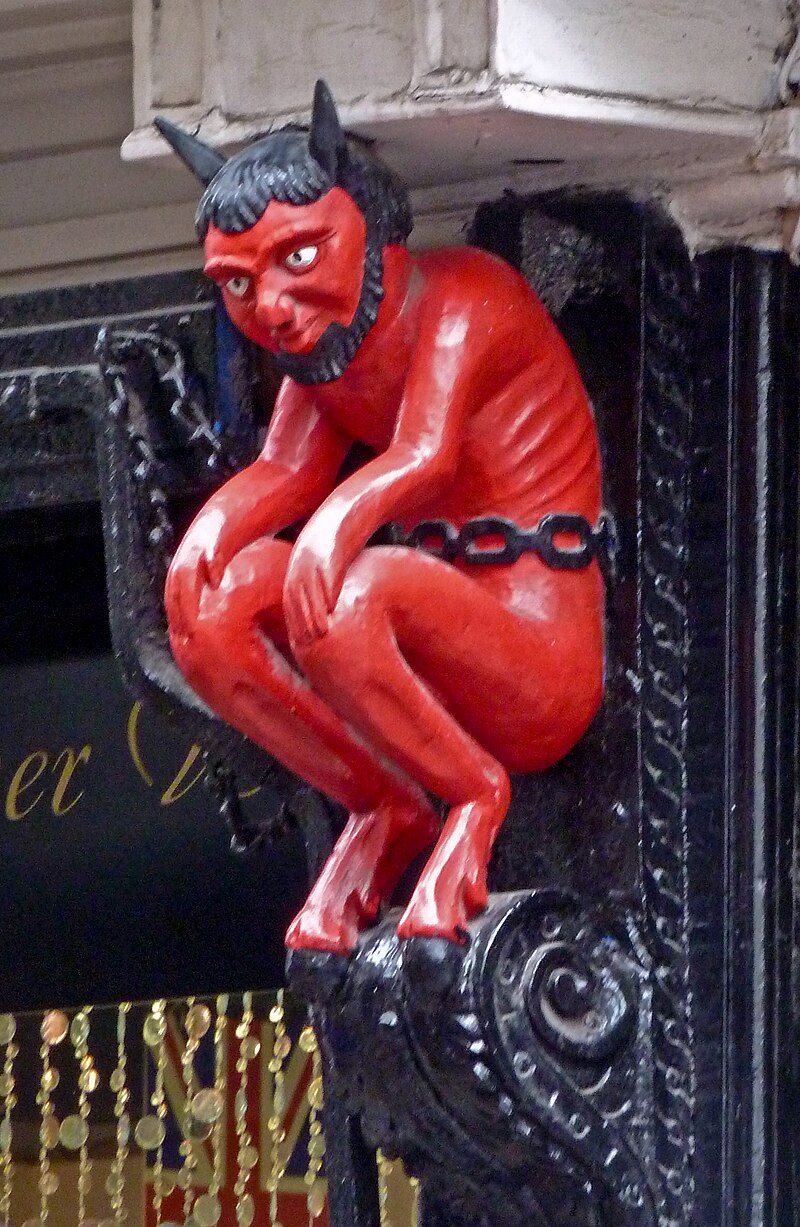
Here he is! You probably didn’t even know he existed.1 He messes up what you are trying to write. He introduced the errors that have grown like mushrooms in your draft since you last looked at it. His industry is your weakness. It’s not you–it’s him! The lord of all typos, the demon of scribes: meet Titivullus!2
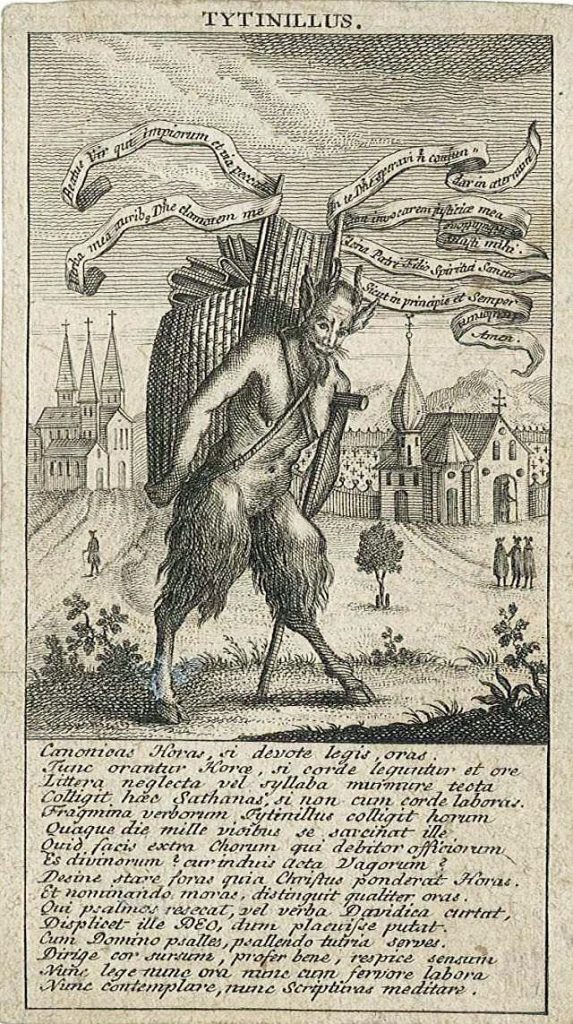
I understand he was originally two demons! One who gathered up all the poorly-spoken and mumbled sermons of the preachers and prayers of the laity in a big sack–the image above has him in this form, toiling toward his quota of a thousand per day (!). And a second who compiled and tallied them, to be held against the poor mumbler and lazy parishioner on the judgment day.
Thus the medieval church installed a panoptic anxiety among the faithful.
In Margaret Jennings study of Titivillus she wrote the point of this Medieval demon was to remind clergy and laity of the danger of “spiritual sloth.” The litany of the service, each prayer and each song were to be unhurried, expressed clearly and with fervor.
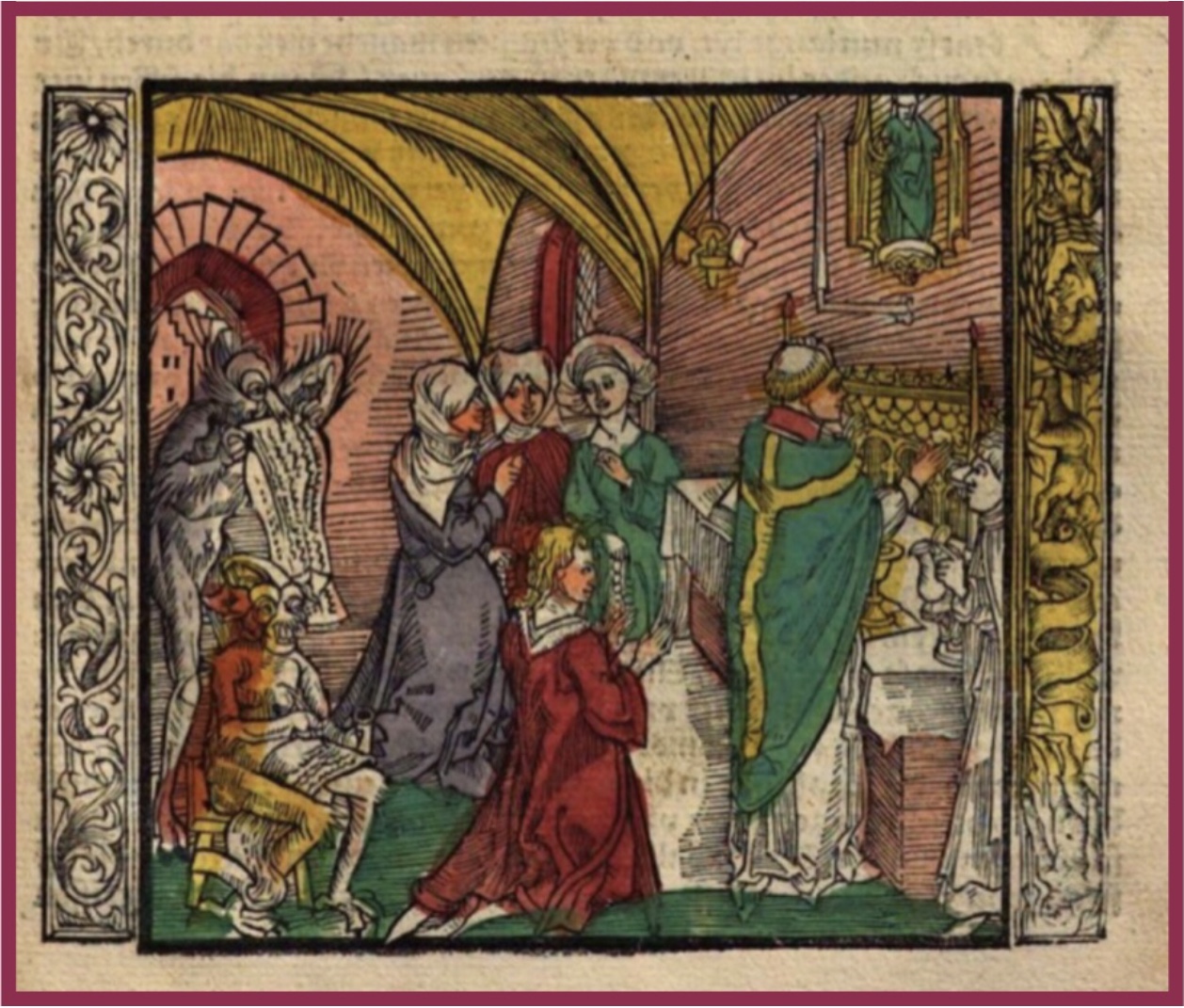
To say or sing by rote and without care, to attend church, but not participate wholly was to open oneself to sin. Hence, visual reminders of a recording demon, as well as other devilish minions, were found on wood, walls and paper. In the hand-colored woodblock above three women gossip, one demon scribbles away and the second demon stretches a scroll with his teeth because they need more paper!
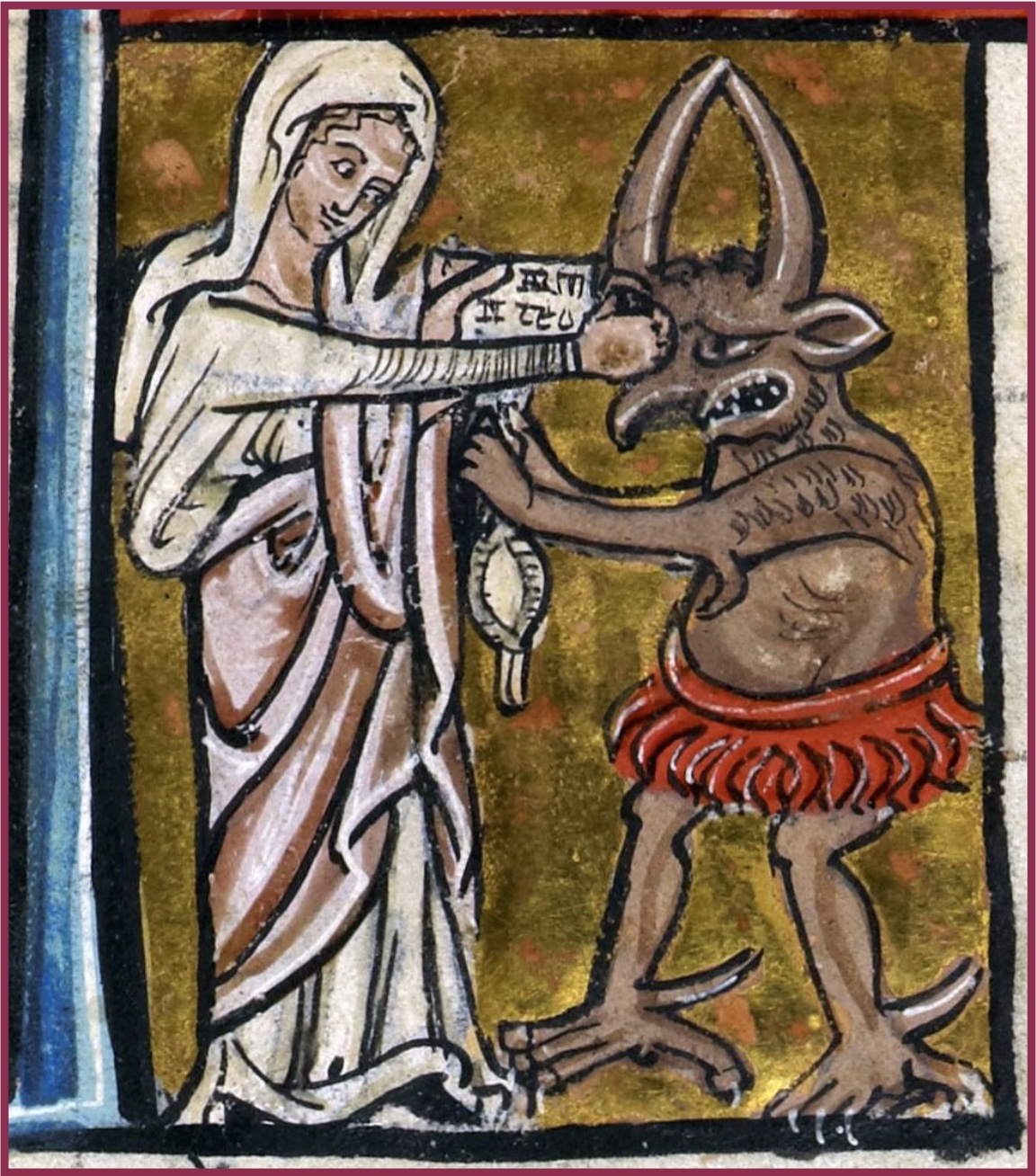
He sees you when you’re sleeping, he knows when you’re awake…and he knows if you have been phoning in your devotions, too. So look sharp, lest your imperfect words be held against you in the final tally and toss you into the jaws of hell (below, right).
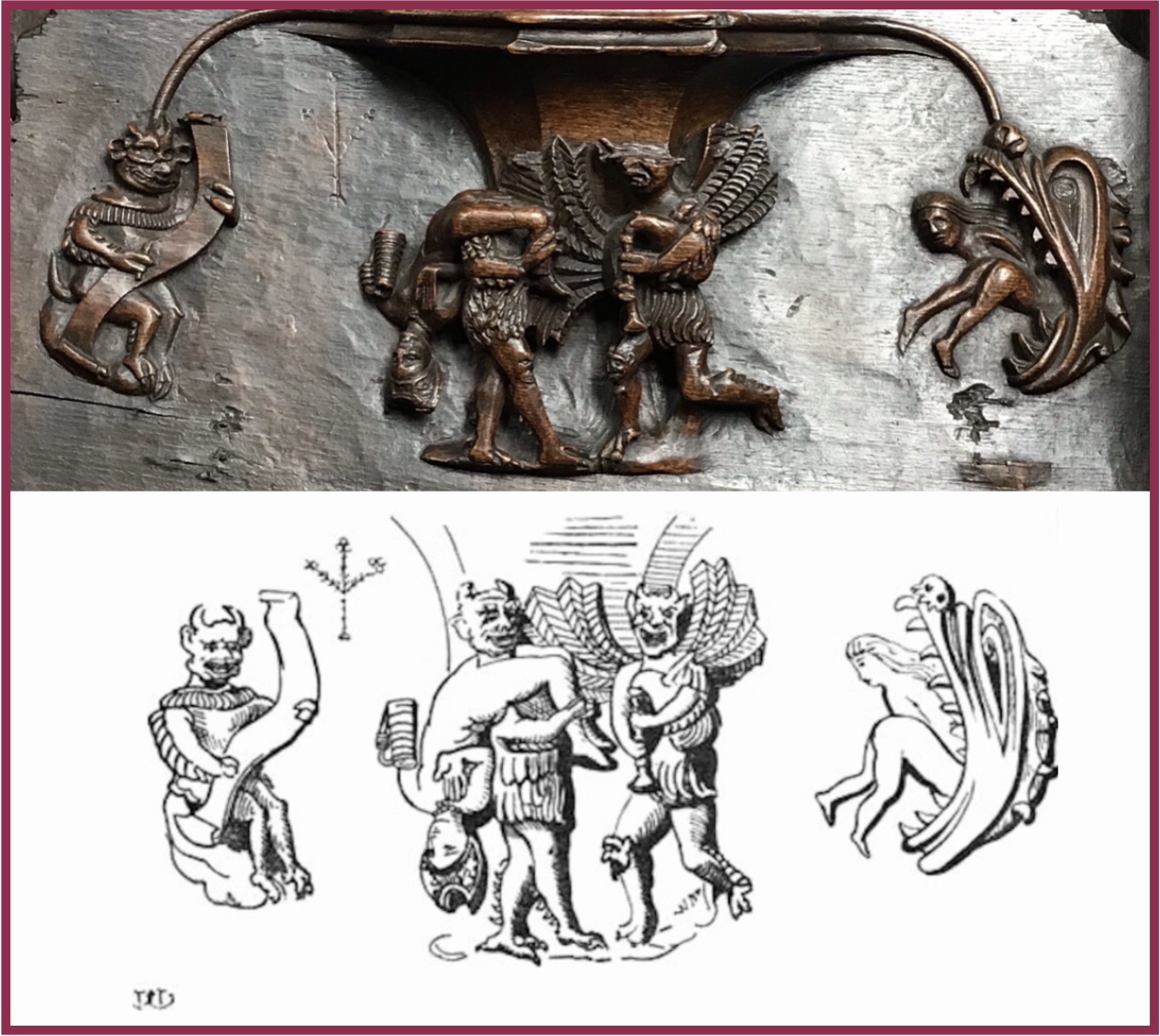
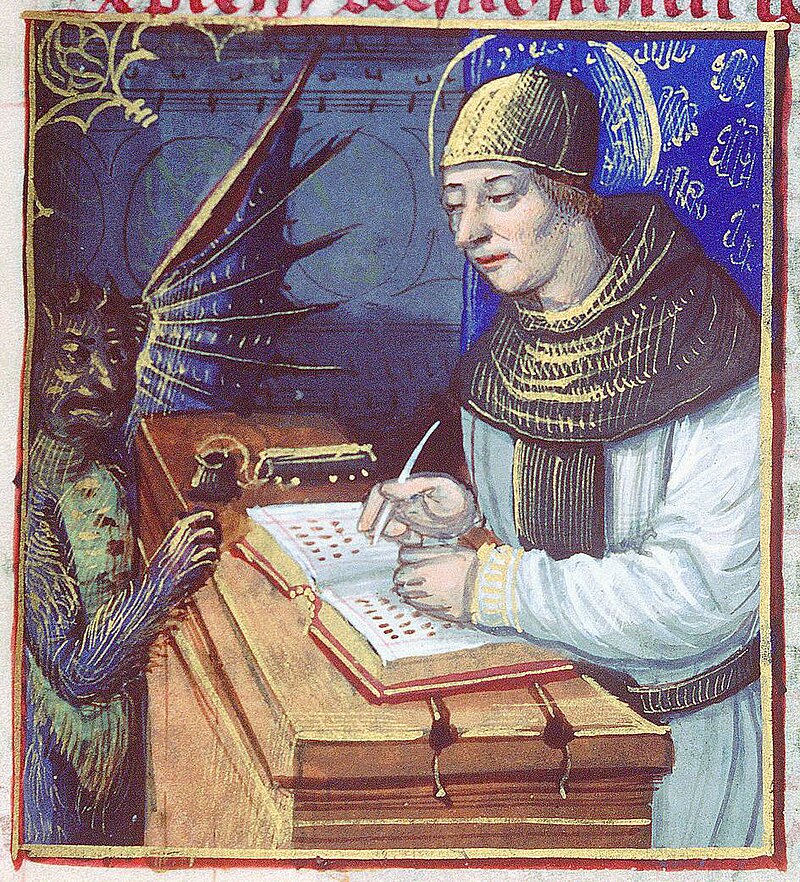
From the demon monitoring and keeping track of our language shortcomings, it was a small step to the demon actually interpolating such errors. Mischief not just recorded, but instigated. And thus T became the active cause of our imperfections, not just their registrar.
Titivullus’s relation to Ceiling Cat’s many forms is as yet undocumented, and awaits future research.

Fun fact: he is apparently the source of the “printer’s devil,” the name given to apprenticed boys who scurried around eighteenth- and nineteenth-century printshops pulling fresh pages out of the press and collecting errant type to melt down. Because their hands were blackened by ink; because they were underfoot; because they made mischief!
Holy cow! No wonder we are so averse to typos and other false steps in our writing. We liberal arts undergrads who sort-of remember our sort-of reading of Max Weber shake our woolly (or bald) heads and think, yes: sloth in all its forms does not compute with the rational pursuit of economic gain. So mis-writing is a crime against God, and also profit.
Are we still in thrall to Titivullus? Well…does this track?
Typos are sin! And must be stamped out, even (especially?) if doing so requires an internalized self-loathing that is activated whenever we make a mistake.
Whenever we read back what we just wrote and think, that is not what I meant at all. That sounds stupid, and I misspelled “stupud” too…that voice is the spirit of Titivullus, living for free in our heads!
And loading up the very fallible (but passionate) humanity that led us to write anything at all with…well, wow, with what?
Guilt?
Nagging sense of inadequacy?
Embarrassment at having thought we had anything to say in the first place?
Much safer to not write anything at all…
And If we are already primed to feel bad about our writing’s syntax inconsistencies, then the prevalence of effortless “typesetting” technologies will make us feel even worse.
We all know two spaces after a period in word processing is a tell that your author is a recalcitrant from the age of typewriters. Word processing automates the monospace of typewriting: just put in one space and let the rock that thinks figure it out.
And everything written should look perfect now, whether or not it is actually flawless. Canva is the tip of the spear, here; a friction-free tool that raises all our expectations that whatever we dare to inscribe should be Instagram-ready, should look cute on a Stanley cup or an Etsy t-shirt.
When you know about Titivullus, you see his minions everywhere. Making you feel bad about all the ways real human words are imperfect when they first come out of us.
And making you think that until they are perfect, they are wrong and unworthy. And maybe even evil: maybe even will be held against us in some final accounting that awaits us, and our wordmaking.
What bunk, friends!
Let’s embrace an enlightened perspective that we all make and consume our words exactly the best way we can and should, exactly as we are!
Especially when the demon’s AI great-great-great grandchildren are offering us the false promise that we need never feel bad about our words again–as long as we just let them write for us. (“It’s cheating, but I don’t think it’s, like, cheating.”)
Subtle temptor indeed.
Long live typos–because they affirm the real-world and real-person provenance of what you are reading!
Go to hell, Titivullus! Let us type in peace!
- Unless you played a lot of Dungeons & Dragons growing up. ↩︎
- Or “Tutivillus, Tytivillum, Tintillus, Tantillus, Tintinillus, Titivitilarius, Titivilitarius.” He is a demon of many names–perhaps more evidence of his craftiness. To believe Wikipedia, “for the past half-century every edition of The Oxford English Dictionary has listed an incorrect page reference for, of all things, a footnote on the earliest mention of Titivillus.” ↩︎
 Chris Osmond PhD
3 responses to “The Children of Titivullus”
In French, “typo” is said “faute de frappe”, that is, “touch fault”. Typos are linguistically not mere errors, but ethical breaches! Same for the grammatical errors, which are simply said “fautes”.
So interesting. Emmanuel! I don’t know “typo” in Spanish, but I’d bet it’s the same!
Tytinillus (or whatever) is new to me. What a great concept! I wonder how closely he’s related to Krampus.