Chris Osmond PhD

  • typewriter agonistes
  • human words project
  • about
  • contact

  • Straight Talk

    October 12th, 2025

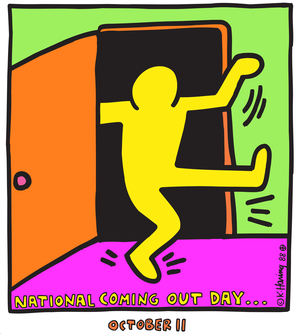
    Happy National Coming Out Day! It was yesterday, Oct 11. But I will be observing today: by coming out as a heterosexual and cisgendered ally of my LGBTQ+ students, colleagues, friends, family, and readers.

    I do not mean to make light of the occasion by shifting its meaning like this. I understand its gravity, and honor its creation in the dark days of the AIDS epidemic.

    But at least around here, people like me seem to have backed away from using the unique protections that our positionality provides us to work for our more vulnerable fellow citizens.

    And I want to say to my straight brothers and sisters: where the hell did you go?

    My fellow educators, five minutes with the appalling data on the increased risks of suicide, self-harm, and interpersonal violence for LBGTQ+ young people should make up your mind that creating actively inclusive spaces is part of your responsibility.

    Like I tell my students: the first job of an educator is to affirm the safety of those in their charge. This is 101-level Maslow: No safety, no learning.

    If you are not actively interrupting the homophobic and transphobic culture of school—the hallway and locker room talk, not just the classroom talk—you are part of the problem.

    This truth does not not have to change your faith, your heritage, or your heart. It DOES have to change your practice to an active, change-making daily approach, not a ¯_(ツ)_/¯ and pretend-not-to-hear approach.

    How will you know what to do? Especially if you live in a purple-to-red state like mine?

    Well, from one straight person (teacher) to another, this is what I do, and what I humbly suggest.

    First: think on the LGBTQ+ people you have taught, known, and loved in your life, and presently do. There have been hundreds, both those who told you about this part of themselves and those who didn’t.

    Second: make the list, maybe actually write it down. See their faces in your mind.

    Third: thank them, in your heart (or maybe even IRL, if you never have). Thank them for trusting you with their truth–especially if their truth proceeded to ruin your capacity to pretend that their issues are not yours.

    And once you have done that—well, act accordingly, on both their behalf and the behalf of those additional hundreds you have not yet met, nor yet had the responsibility to serve.

    And what does THAT mean? “Act accordingly?” Well, I can’t know for sure. But you can figure it out!

    Here’s a thought: maybe go to the Pride March next June! A friend thanked me at ours for marching, “especially as a straight person.” Why? It is literally the least I can do, and you too. To stand with and for.

    You don’t have to carry a flag or holler alternate lyrics to “Hot to Go” (though that was super fun).

    You do have to stand up and be counted, and swell the numbers, and put your safe and nearly-invisible body between those whose bodies aren’t and those who might do them harm.

    Mark it, show it, name it! And I am not perfect at this. This week I finally took the unity flag out of my work email signature. Maybe I am a coward. But we got another email from legal reminding us of the old-and-new rules governing “political activities and employees,” and for the first time it linked to the “email signature guidelines” provided by our ever-vigilant Comms team, which I quote in full:

    Don’t promote a personal agenda, including politcal [SIC—nice] messages. If it isn’t connected to your professional life, it doesn’t fit in your signature.

    This is loathsome, as I argue to my students: identity is not a political message. Solidarity and safety and peace and love are not political messages. These are humane messages. These are “the world I want to live in ” messages. Aren’t they? As we let identity become politicized—as we let what we know so clearly about bias and its deadly impact become politicized—we diminish in our humanity.

    But in this moment, in a system that claims “institutional neutrality” and a news cycle that is keeping the body count of fired professors, a message from legal carries different weight, and I intend to keep this job. So I made the change. I kept my pronouns in there; they are not illegal yet. And I still wear the unity button I have every day since the election. We will see what’s next.

    Is this the right thing to do? Is this the best thing to do? I don’t know. I am figuring this out as I go.

    But I am still working on it.

    And my dear fellow straight folks, hey:

    Are you working on it? If not–where have you gone?

    Yes, you might think I am virtue signaling. Whatever. (Kind of a charming throwback, that, in 2025.)

    And yes, there are multiple identities being punished and erased and traumatized right now, and they all matter. Black Lives Matter. Immigrant lives matter. Womens’ lives matter, as we lose generations of change in their self-determination and autonomy and safety. I admit the zone is flooded, and I am not working for it all the same way. (This week I did get added to the translator list for the Immigrant Justice Coalition, so maybe that can change too.)

    But this corner of the vineyard feels like mine—and I see a way through to do something about it—and I am going to keep working on it.

    Het/cis friends: Will you?

    If not, why not? What changed?

    The times, yes; the climate, the laws, the workplace feel, yes, they have all changed.

    But has what is right changed? No. Has your love for those friends you conjured up a minute ago changed? No.

    Have YOU changed, fellow person who could just keep your head down and ride this out in your ill-fitting khakis, and who could blame you? Maybe?

    Well, don’t! We can’t change. Please don’t change.

    Our LGBTQ+ dear ones need us not to. Our nation needs us not to.

    And down deep: you need yourself not to.

    Straight talk!

    Happy National Coming Out Day!

    Image from Wikipedia. The logo is from the following website: https://www.hrc.org/ https://www.elm.org/wp-content/uploads/2013/01/NatnlComingOutDay.jpg, Fair use, https://en.wikipedia.org/w/index.php?curid=20687252

    Share this:

    • Click to share on Facebook (Opens in new window) Facebook
    • Click to email a link to a friend (Opens in new window) Email
    • More
    • Click to share on X (Opens in new window) X
    • Click to share on Reddit (Opens in new window) Reddit
    Like Loading…
  • Foie Gras or Peanut Butter

    October 4th, 2025
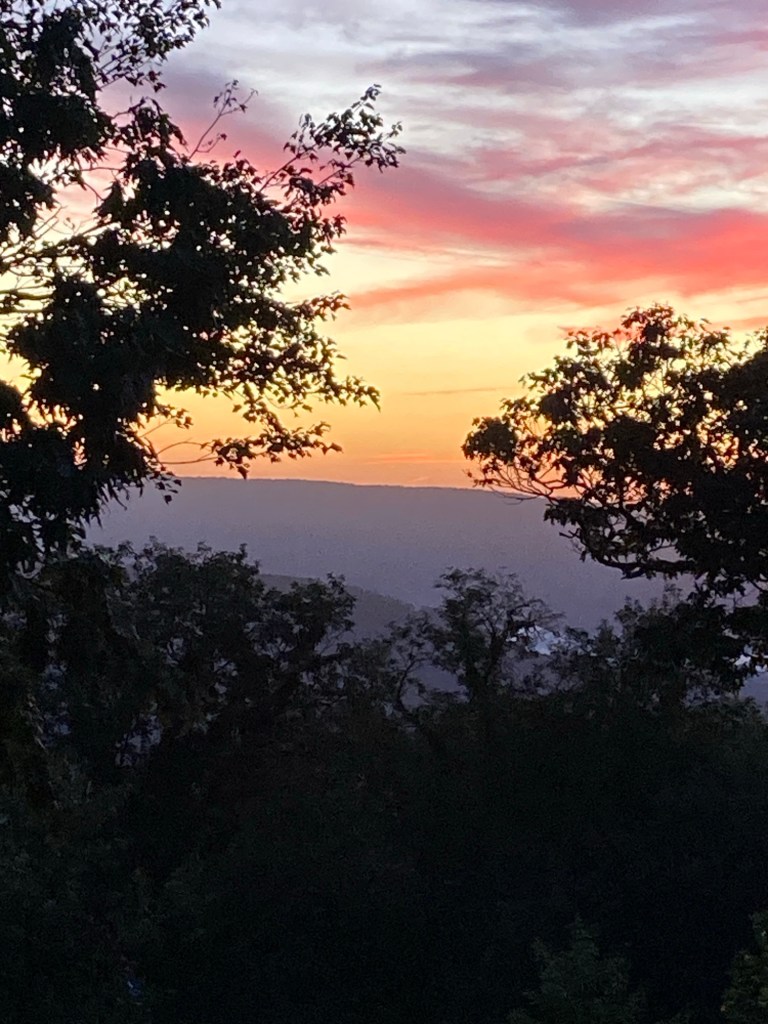
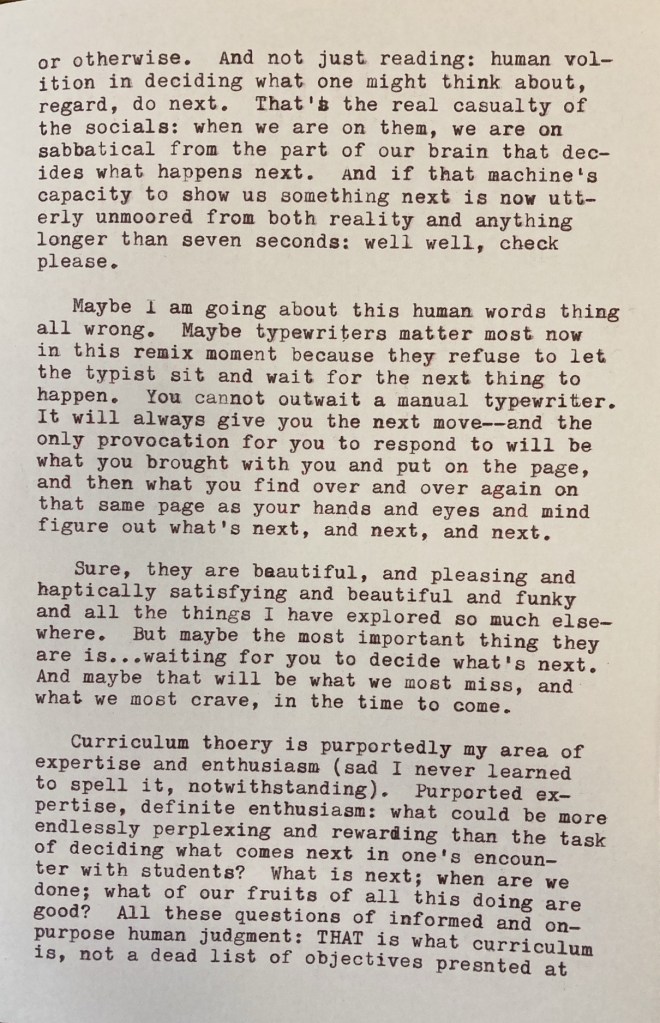
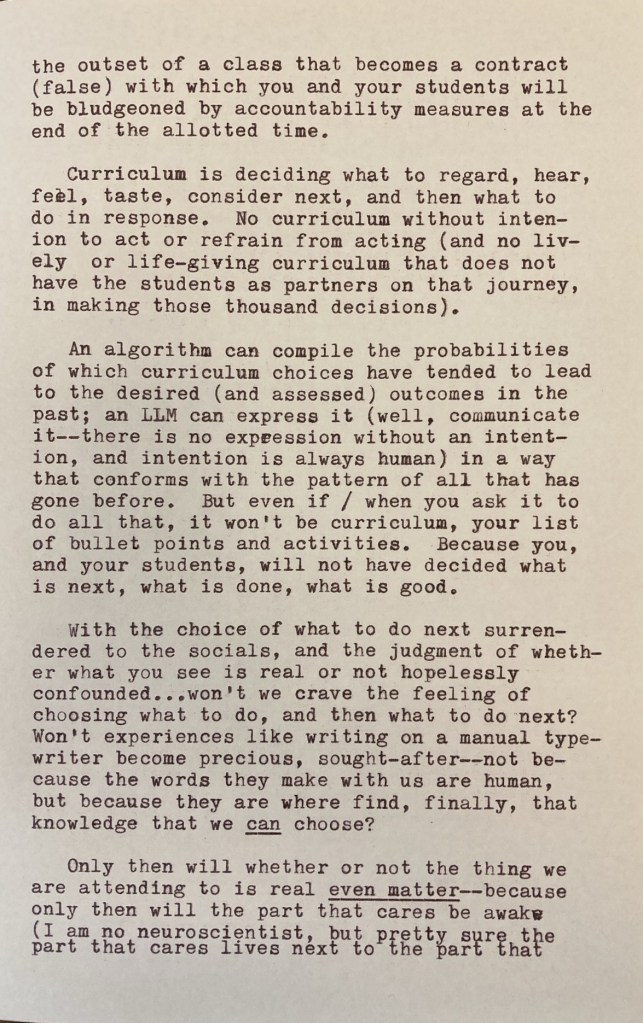
    My view this morning. How’s yours?

    Works cited:

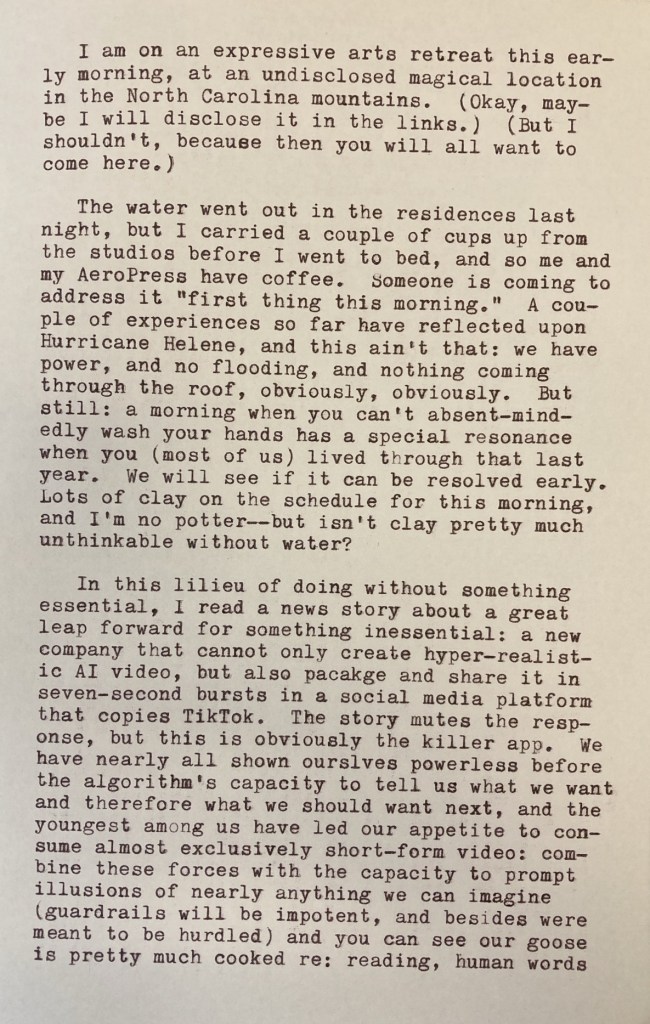
    NYT—Open AI’s New Video App is Jaw-Dropping (For Better or Worse): https://www.nytimes.com/2025/10/02/technology/openai-sora-video-app.html?unlocked_article_code=1.q08.UUYt.5QX7omLx3jYN&smid=nytcore-ios-share&referringSource=articleShare

    *I am not really a Pavement fan, though “Slanted and and Enchanted” was pressed upon me by the hippest guy I know. See? I have no strong feelings about Nickelback, but I wish them well.

    **That whole last bit is Wendell Berry—sure ain’t me, but I love it. See the page “Typewriter Agonistes” for link.

    ***Elliot Eisner taught me the next, done, good stuff; can’t cite it on my little phone but you should read him, a lot. https://en.m.wikipedia.org/wiki/Elliot_Eisner

    Share this:

    • Click to share on Facebook (Opens in new window) Facebook
    • Click to email a link to a friend (Opens in new window) Email
    • More
    • Click to share on X (Opens in new window) X
    • Click to share on Reddit (Opens in new window) Reddit
    Like Loading…
  • Robots Throwing Robots

    September 30th, 2025

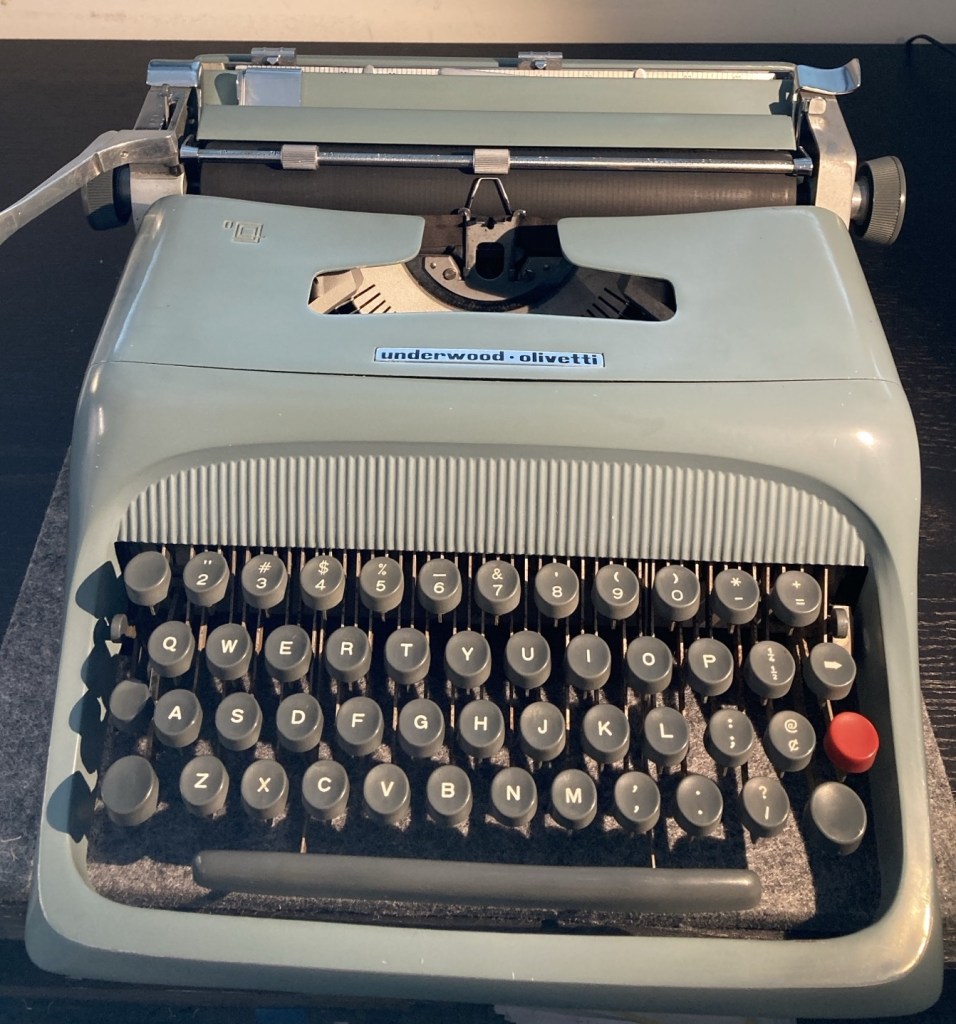
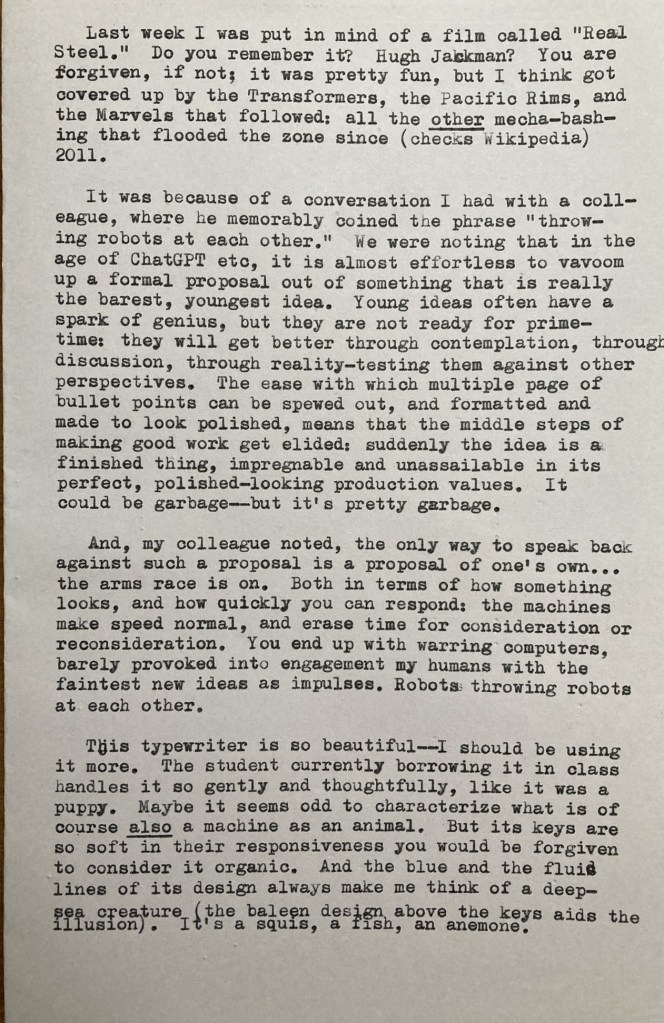
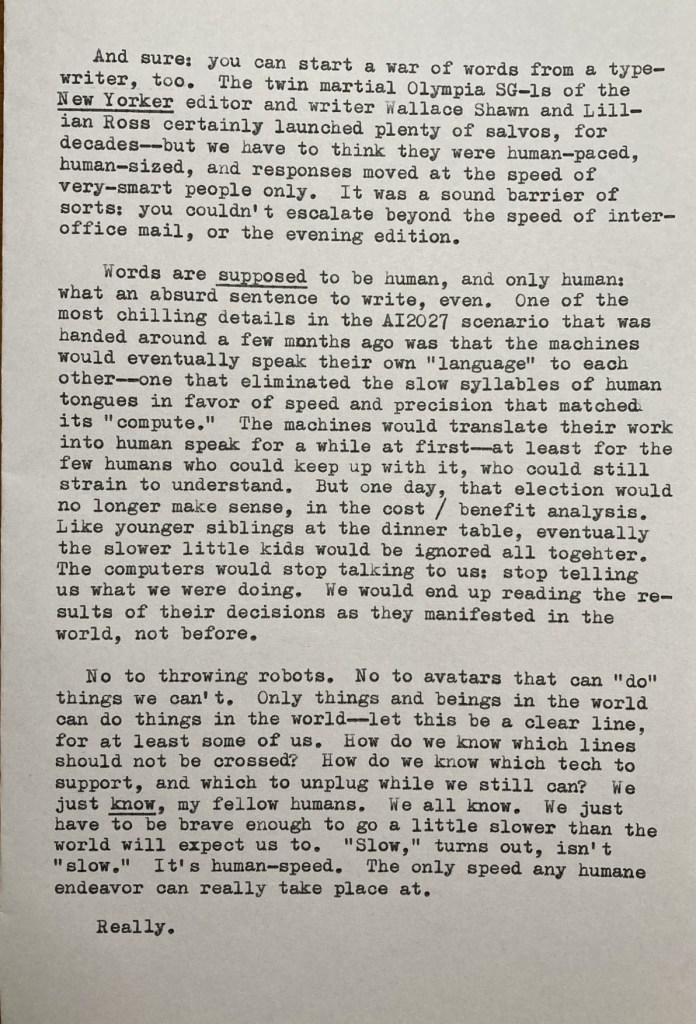
    Here’s the 1961 Olivetti Studio 44 I typed these pages on. My deep-sea creature! My Nautilus, my Monstruo!

    Links referred to:

    Real Steel–Wikipedia

    AI-2027

    A Weighty and Whimsical Century of the New Yorker–NYT

    Share this:

    • Click to share on Facebook (Opens in new window) Facebook
    • Click to email a link to a friend (Opens in new window) Email
    • More
    • Click to share on X (Opens in new window) X
    • Click to share on Reddit (Opens in new window) Reddit
    Like Loading…
  • Another Awful Morning

    September 11th, 2025
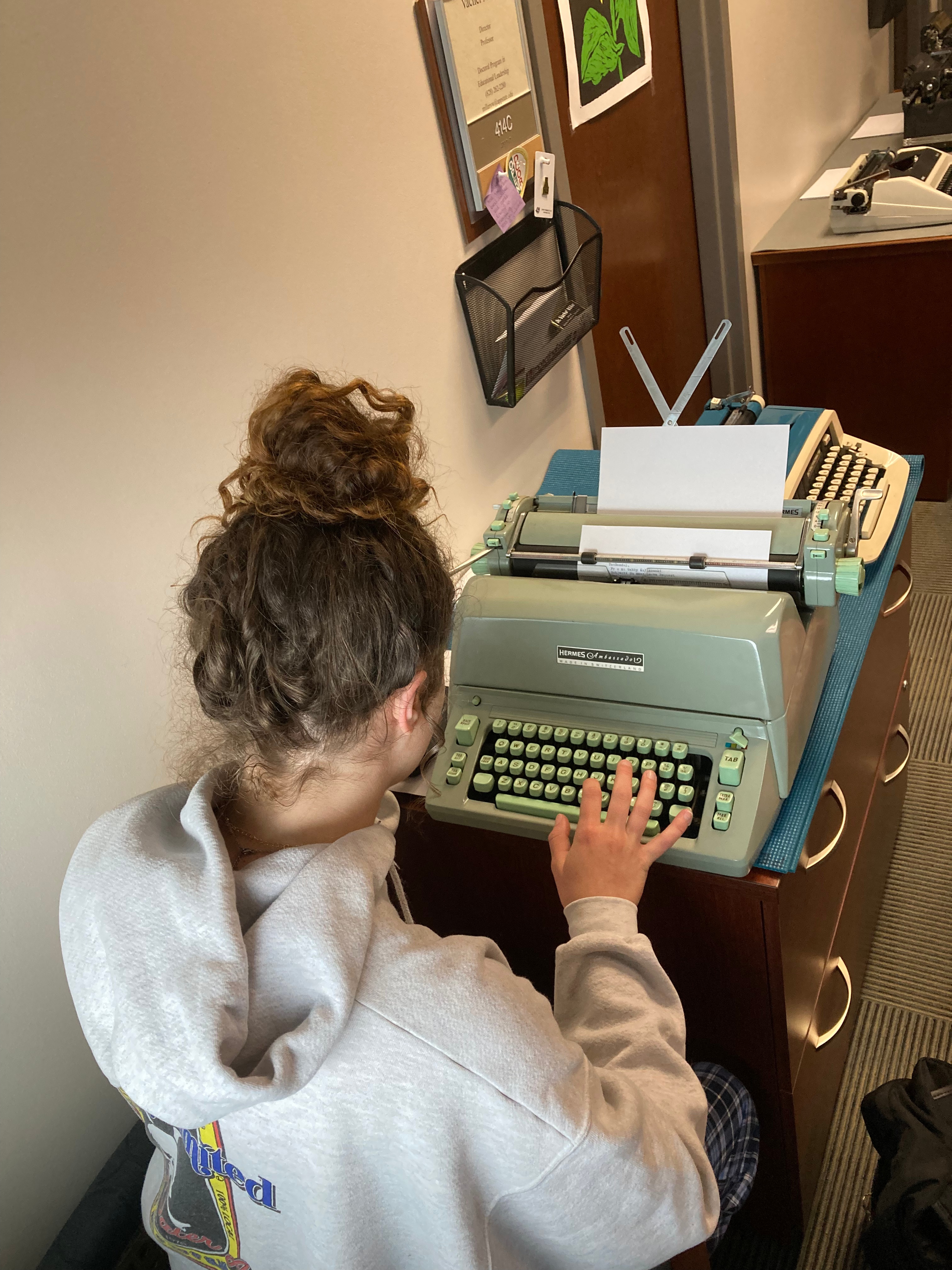
    A student works it out at Typewriterfest, April 2025.

    Here is my post from 9/11/2011, on yet another morning when we wake up horrified by the news and braced for what might come next.

    Yet again, I am weighing the events of the moment against the peremptory start of class at 9:30. A teacher’s capacity to be ready for the start of class is one of our many superpowers–but that singular focus blinds as well as illuminates.

    In my 2011 post, I wonder if I should have pushed for sharing more info with our young students that morning. As it turned out, my instinct not to say anything and keep a news blackout all day was what we did, as a school. And I wonder if it was right, and decide that if I had it to do over I would instead share the news and be part of discussing it with them.

    This morning, though, I am not at all inclined to address the events of the day in class. It is a different landscape, of course, than we met in 2001. One in which what might materialize in the next few days is also unpredictable, but is uniquely inflamed by the extremity of the rhetoric–and the technologically-weaponized speed with which information travels and is converted to sensation, message, and action.

    My scheduled work in class today includes a good amount of semi-structured time with my manual typewriters. I am using them 1:1 with my undergrads this year, once a week. They each choose a machine to work with for a few weeks, and I am building in time for reflective human words typing about both our shared curriculum and their daily experience of life.

    I am doing this to invite them to discern the different levels of experience they get to choose to have. To help them feel the rarest of feelings in the swirl of messages we receive every day: like a subject acting, rather than an object acted upon. This seems to be a fundamental capacity for people we will soon trust with our youngest and most vulnerable humans.

    Perhaps the best I can offer them today is exactly that: a moment away from phones and socials and provocations and interpretations for them to try to discern who they are, how they feel, and what they want to do next. In the slow, letter-at-a-time process that the typewriter requires: the only thing it can do, and the thing it does without peer.

    With a typewriter in front of you and nothing to do but write, you find yourself saying to yourself, what about this? And this? And this? In 2025, the typewriter gives you back to yourself, sentence upon sentence.

    I hope we all find ourselves today.

    Share this:

    • Click to share on Facebook (Opens in new window) Facebook
    • Click to email a link to a friend (Opens in new window) Email
    • More
    • Click to share on X (Opens in new window) X
    • Click to share on Reddit (Opens in new window) Reddit
    Like Loading…
  • Something Tapping Me on the Shoulder

    September 9th, 2025

    Rewatched a terrific Oz Perkins film last night, on my small personal screen. Longlegs. (And if you haven’t seen it yet, obviously spoilers abound in what follows.)

    I made a point of first seeing it in a nearly-empty theater when it was released fourteen months ago, and am glad I did. The forced perspectives work best when there is nowhere else to look but down the tunnels he builds, over and over again. When there is nowhere else to go.

    But this time I had the comfort of pause and rewind, and subtitles to make what on first viewing is terrifying mumbling into words. I am not sure which experience I prefer.

    Those perspectives regularly give you a long view of an outside or household landscape, with everything focused and static–then refuse to tell you where to look. Like the conceit of Paranormal Activity, you do not know what is about to happen or where the threat will emerge.

    But unlike that excellent but still-lesser film, the payoffs do not always come. A second viewing allows you to cheat, of course. To mash the “rewind ten seconds” button over and over and see how Perkins’ craft shifted something so, so subtly, just enough to decenter you from where you are looking. This is a well-worn tool of horror, but I have not seen it used so deftly since Let the Right One In‘s blend of uncanny and quotidian.

    What is worth noticing, remembering, reading, adding to your churning internal complex of “making sense”? Maybe the central question of the film, and mostly unremarked in reviews I have read.

    Maika Monroe’s Lee Harker experiences the world differently than the barely-sketched normies around her–and why is left pretty open until the very end. Is it intuition, or psychic power? Is she on the spectrum? All we know is she can attend more closely to real things that others do not even see; grok what others do not even know is there to be grokked. She is in reality: just a different one than everyone else knows. The film actually makes refreshingly-short work of the usual business of trying to understand why she knows stuff: in the last third, a massive manhunt is begun based only on her saying, this is guy we have to find.

    The 90s milieu of the film is signaled only by a looming official portrait of Bill Clinton in an FBI office, and the unmentioned nondigital surfaces where the story lives. This is how we lived before our smartphones, the film says over and over: there was nothing to note about it, because it was just living. The cars have radios, the libraries have microfilm readers, and all the macguffins that move the film’s grim business along are hand-crafted and hand-deployed: dolls, birthday notes, shotguns.

    And the “built environment” of the film is warmly lit, but grimy on top of ersatz. The net effect is queasily human and alien both. The FBI office’s walls are paneled in the faux-grain dark wood all children of the eighties know well, from rec rooms and dens where Godzilla films on TV were watched on long Sunday afternoons and unsupervised Boggle games went inexplicably awry.

    Institutional spaces are massive and cluttered at once, and the people who sit and stand in them are oblivious to how the strangely-shaped doors and oddly-placed windows in turn shape and place them according to obscure intentions. The exception is Lee’s childhood home, a handsome arts-and-crafts farmhouse that we first see in her pre-blight childhood. In the present, though, it has been taken over by malevolence that weaponizes reality against its sole occupant: hoarding, but hoarding as slow encroachment and engulfment. The fast-cut images of snakes writhing bear out this sense of being surrounded and consumed (kudos to Perkins for recasting this imagery to his own vision, after Nine Inch Nails’ era-defining Hurt).

    There is a single manual typewriter in this film, that I could find: an unremarkable 70s era Smith-Corona we see abandoned on Lee’s childhood desk, surrounded by a time-capsule child’s bedroom. Here like in so many films, it is a shorthand way for a filmmaker to evoke the beforetimes. As surely as the stack of Polaroid instant photos Lee finds in the same scene, which hasten the story to its conclusion. In a film with so much realia, it fades into the background as yet another artifact piled up over time against an implacable invading force.

    But there is so much time to stack up, in this movie. Scene after scene seems to move at 1/3 speed, until sudden violence is delivered at its own slow pace. We fall with Lee into reverie after reverie: on our knees with her as she spreads out photos and reports on a dark red carpet, at her desk at home as she decodes satanic code with her well-thumbed Bible open beside her.

    Fans of Perkins’ The Blackcoat’s Daughter and Gretel and Hansel will recognize this insistence upon letting things unfold the way they actually do. Upon refusing to make even the most absorbing life pass more “narratively” than it actually does. Upon refusing to tell you what is going to matter later that right now is just another object on a desk, another shadow in the corner of the frame.

    My own time is moving fast, and I need to get ready for class. But I will always be ready for another plunge with Perkins into a world of real things and places that seem like what you think until they are not. This one is a real dilly.

    As a nine year-old girl asks in a quiet moment: Is it scary being a lady FBI agent?

    And the answer: Yeah. Yeah, it is.

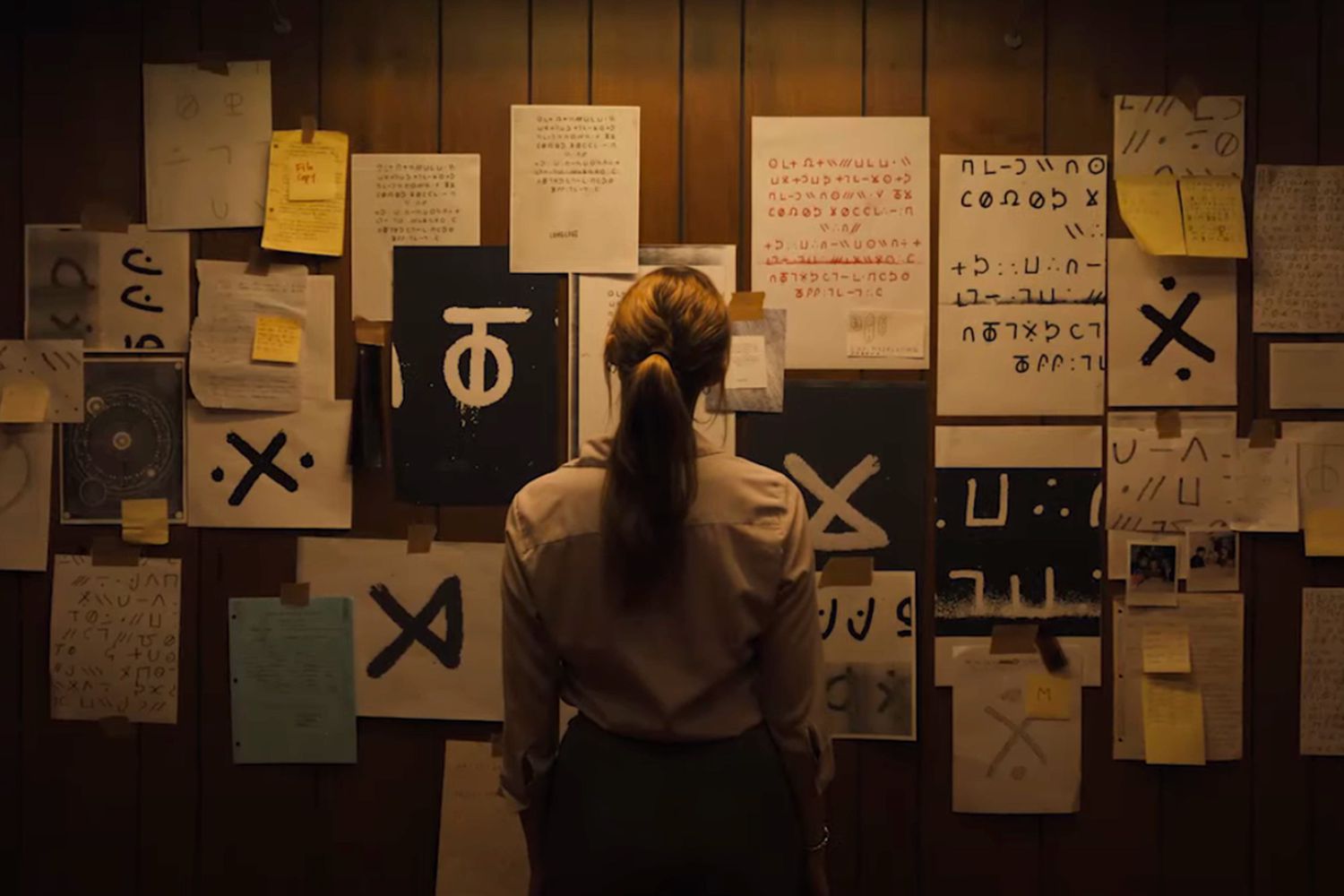
    (Image from EW.)

    Share this:

    • Click to share on Facebook (Opens in new window) Facebook
    • Click to email a link to a friend (Opens in new window) Email
    • More
    • Click to share on X (Opens in new window) X
    • Click to share on Reddit (Opens in new window) Reddit
    Like Loading…
  • What is a Reason to Believe?

    September 2nd, 2025
    img_5102

    Been thinking a lot about this question this morning, as all Tar Heels have after the prime-time shellacking our social-climbing football team and its famous head coach received last night.

    I have been a Tar Heel for twenty-five years. We moved to Chapel Hill in 2000 for me to do the doctorate, and have stayed. All our children are born and raised here; the piedmont for the first ten years, and the mountains for the last fifteen.

    We thought hard about coming here! Leaving Palo Alto and another Stanford degree seemed like foolishness from some POVs. But North Carolina beckoned. It was a “deep purple state” even then, before we used the term–with blue ascendant, especially in the Triangle. It was a better fit for our whole lives. We committed, and have (almost) never regretted the choice.

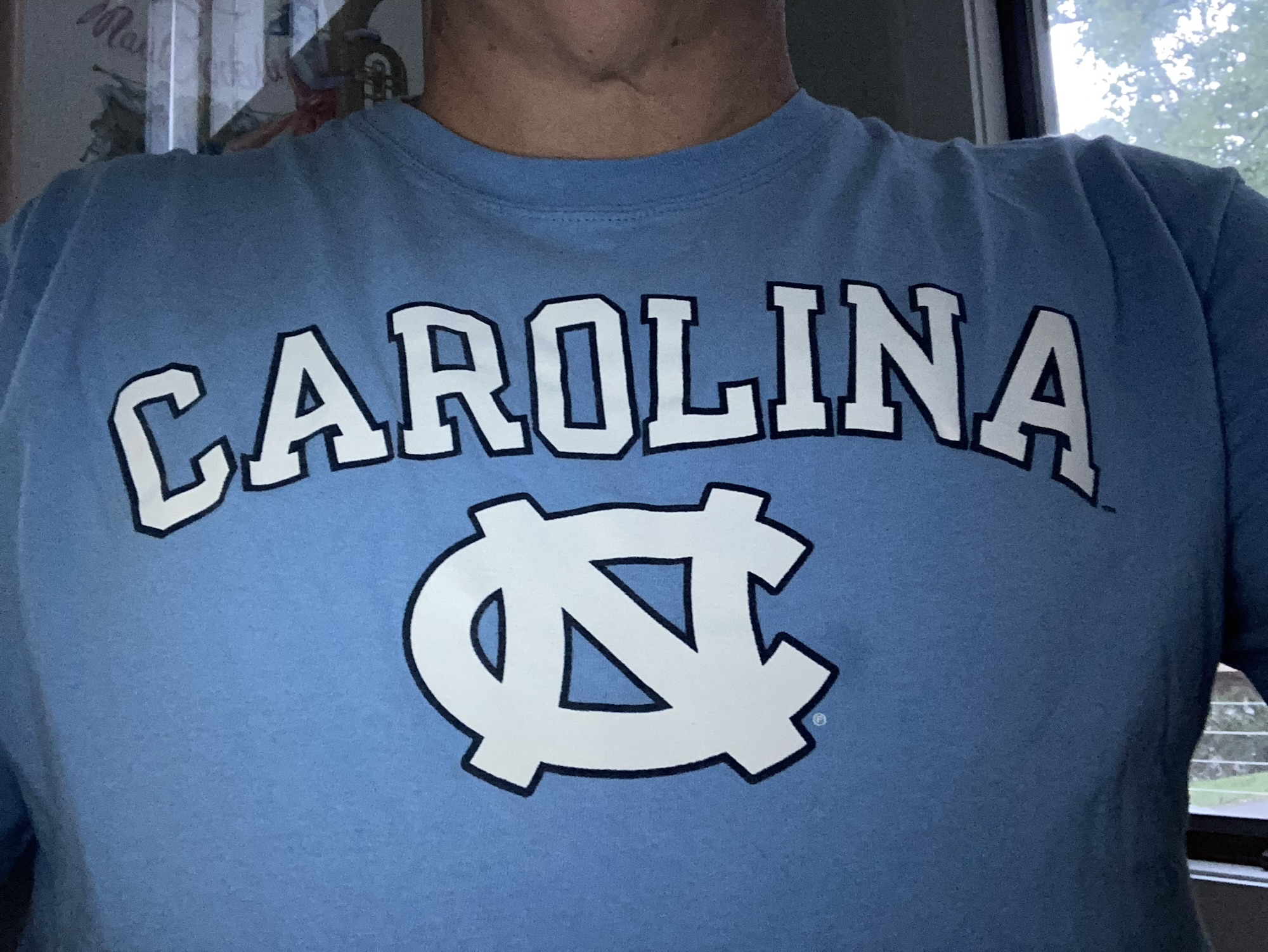
    Believing is not just repping your team when they win! Anyone can do that. That’s why you can get a Carolina shirt at Hot Topic when men’s basketball is on a streak. And why casual fans howl for a head when the new guy delivers an 8-20 season.

    No: believing is standing with your school when they lose.

    And not just on the scoreboard. When the institution you attached yourself to on purpose loses its way–or better, when the whole enterprise breaks and your school trips on its laces trying to get onto the court. When the system you threw your lot in with twenty-five years ago betrays their values in almost every way they can be betrayed.

    We all need something to believe in. As Wendell Berry taught me, our institutions ARE us.

    And belief is irrational by definition: if it were rational, it wouldn’t be faith. Bruce Springsteen said that–he didn’t sing it the night we heard him in Kenan Stadium, but he got it. And he put it as the last song in the most no-reason-to-believe record he ever made, too.

    Faith is stupid…and it is the only thing that matters. Finding it when you can’t find it is the only work worth doing.

    Seeking a reason to believe today, in so many ways.

    #GDTBATH

    Share this:

    • Click to share on Facebook (Opens in new window) Facebook
    • Click to email a link to a friend (Opens in new window) Email
    • More
    • Click to share on X (Opens in new window) X
    • Click to share on Reddit (Opens in new window) Reddit
    Like Loading…
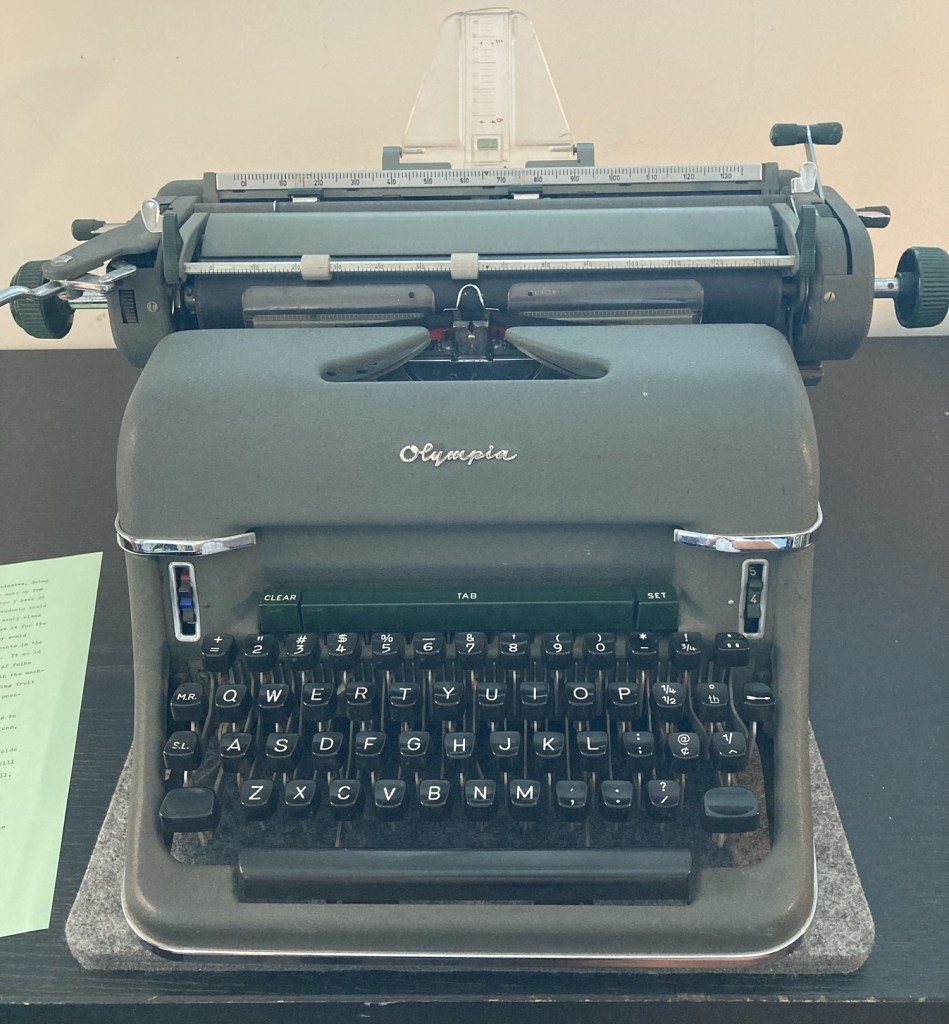
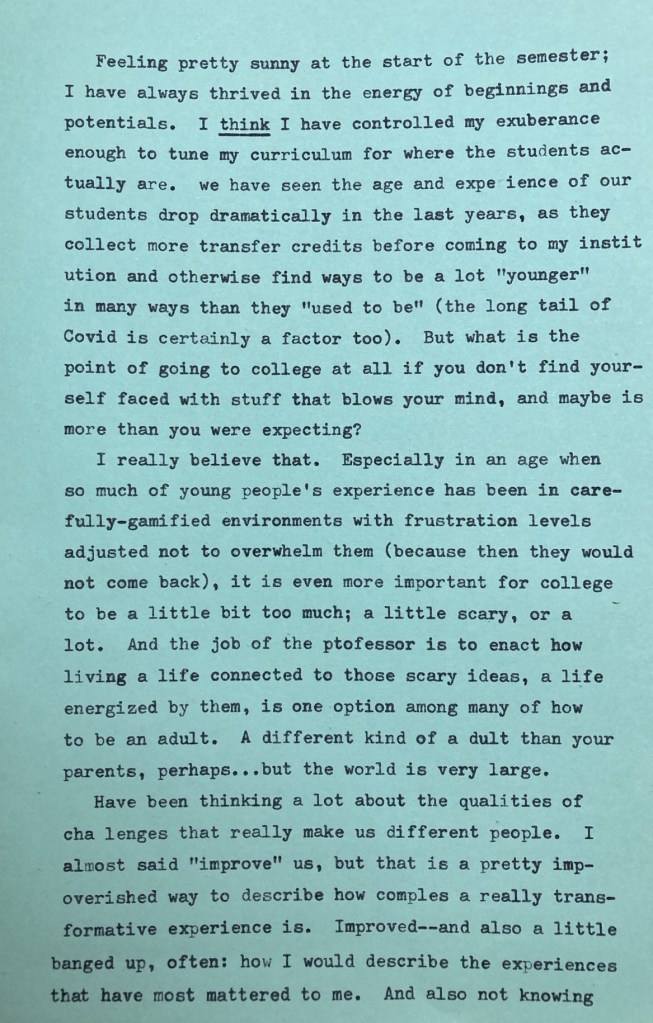
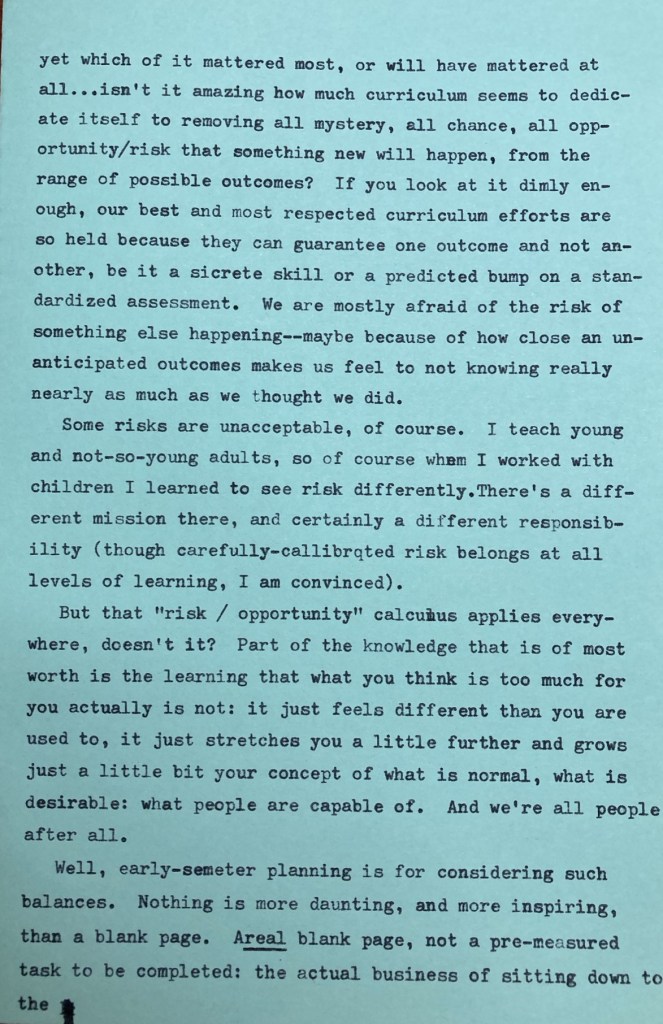
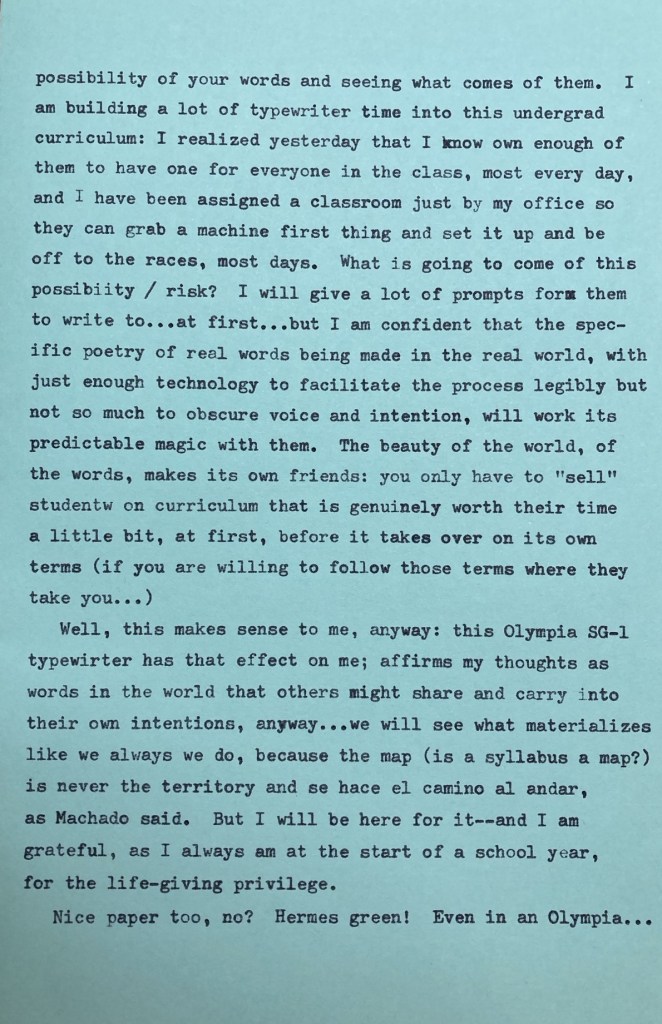
  • Blank Paper Energy

    August 13th, 2025
    Why yes, that IS the original paper support, thanks for noticing!

    Share this:

    • Click to share on Facebook (Opens in new window) Facebook
    • Click to email a link to a friend (Opens in new window) Email
    • More
    • Click to share on X (Opens in new window) X
    • Click to share on Reddit (Opens in new window) Reddit
    Like Loading…
  • Save It, Tell Its Story. Maybe…

    July 22nd, 2025
    Christie Hemm Klok, for the New York Times, as linked below.

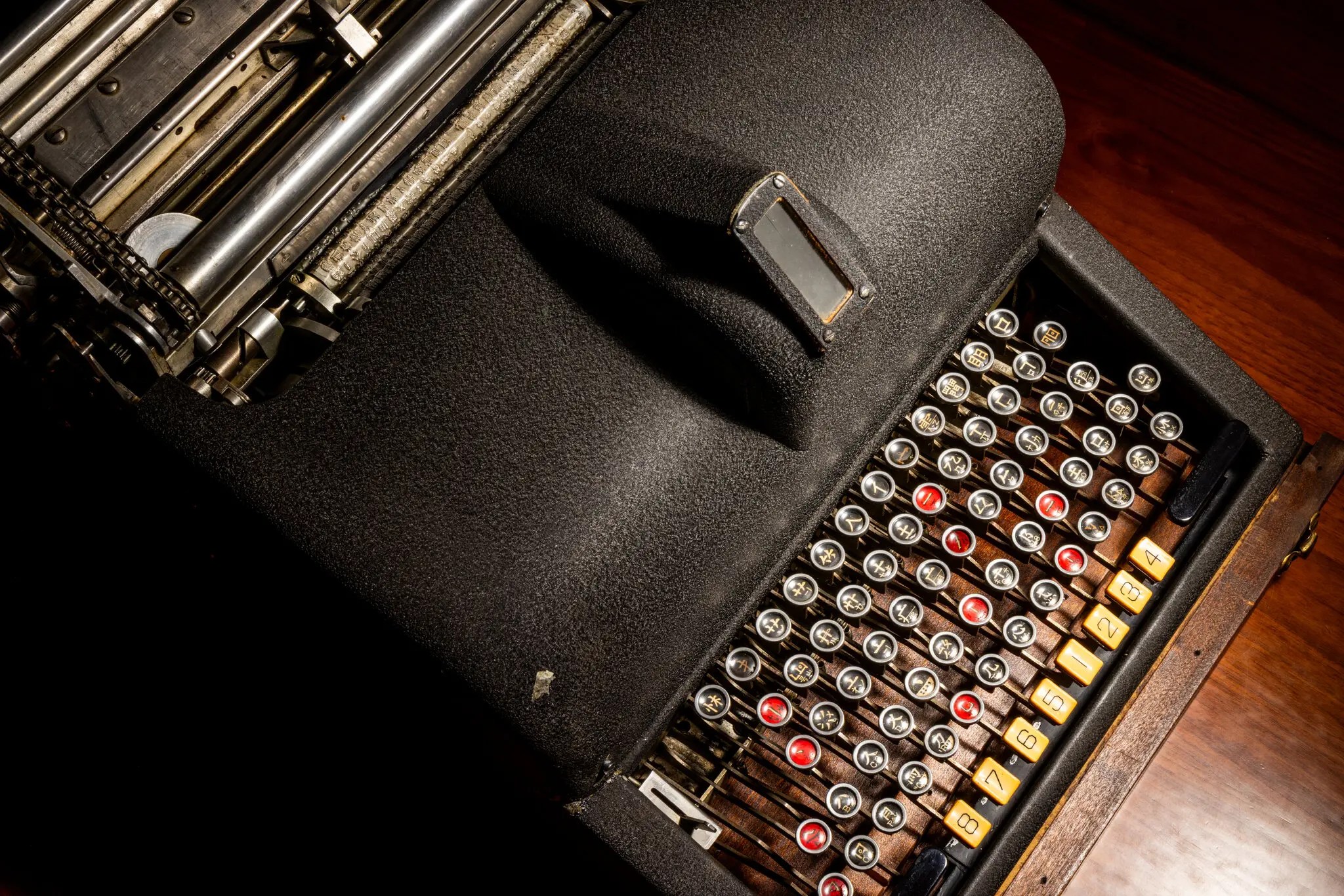
    I might get to yell “first” in the Typosphere for blogging this terrific NYT article on the rediscovery of the “MingKwai” Chinese typewriter.

    It details the thrill of Tom Mullaney, an obsessive history professor (I thought I had it bad) searching out, finding, and saving the only extant example of this machine from oblivion.

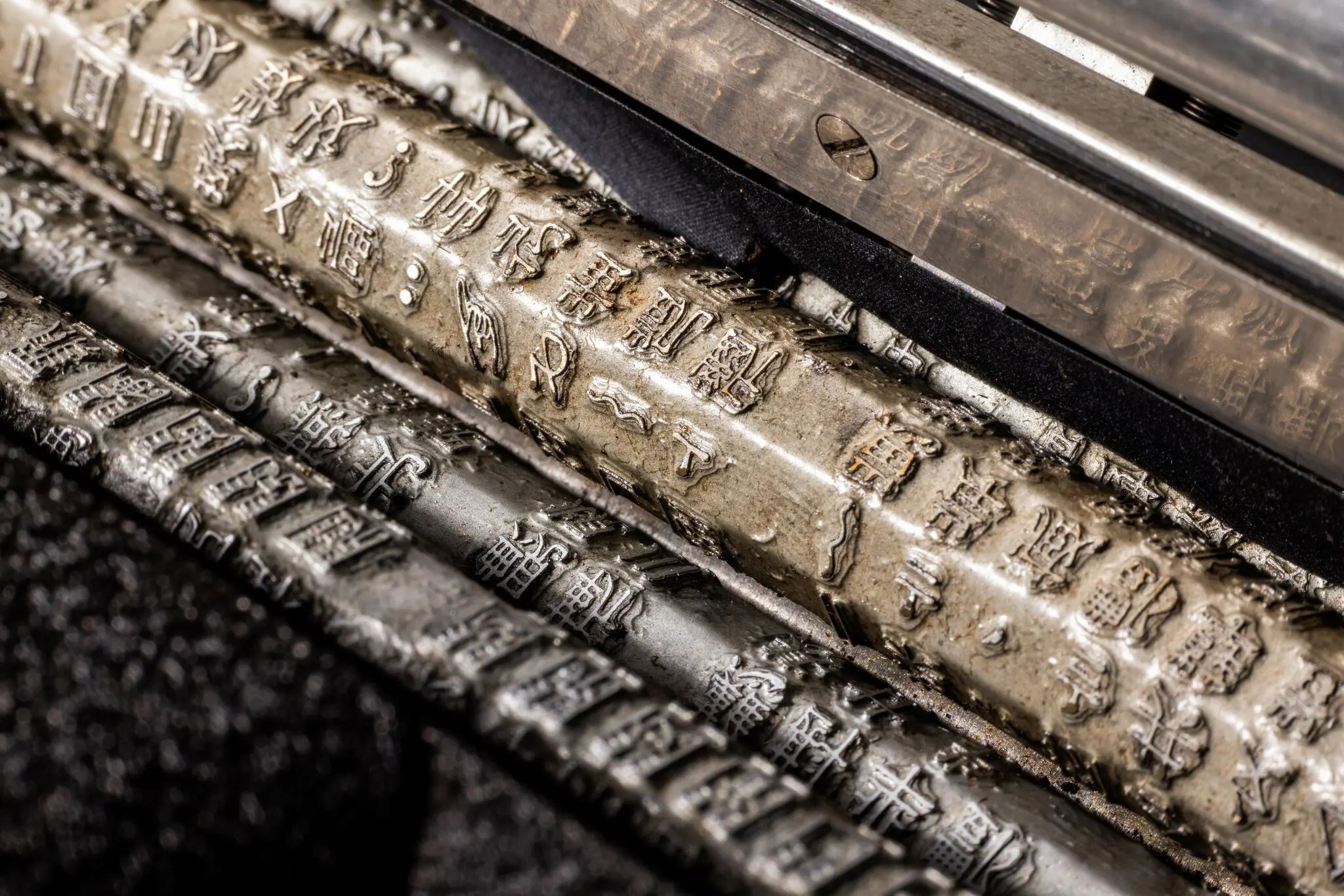
    I have never seen any Asian language typewriter in person, but the gorgeous photos here really give a sense of the engineering feat accomplished in this protoype.

    Imagine!

    Any two keystrokes, representing pieces of characters, moved gears within the machine. In a central window, which Mr. Lin (YuTang, the inventor) called the Magic Eye, up to eight different characters containing those pieces then appeared, and the typist could select the right one.

    Mr. Lin had made it possible to type tens of thousands of characters using 72 keys. It was almost as if, Dr. Mullaney said, Mr. Lin had invented a keyboard with a single key capable of typing the entire Roman alphabet.

    He named his machine MingKwai, which roughly translates to “clear and fast.”

    Ibid.

    It was never manufactured. Lin had a single prototype made in the 30s at his own enormous expense, and tried to sell it to Remington, the General Motors of the era’s American typewriter industry. It failed during the demo; he went bankrupt; the machine was stashed at his job, then moved here, then there, and was presumed lost.

    “Gone the way of most obsolete technology…had most likely ended up on a scrapheap. The right person hadn’t been there to save it, to tell its story.”

    What is worth saving?

    I think typewriters tend to be! My typewriter collection does not enter Dr Mullaney’s rare air, for sure. All of my machines were made in the hundreds of thousands, if not more, and none could be considered truly scarce. Though some, like the 1967 Hermes Ambassador that tops my blog, are definitely scarcer than others.

    But the course of the Ambassador is exemplary of the path I think once-precious things often take when they become outmoded. It got stashed in the back of a dry closet, under a cheap plastic cover someone had the presence of mind to replace before forgetting about it for decades. And that afterthought by some anonymous someone is why it surfaced in an estate sale, perfectly functional, when so many others that were left uncovered in damp basements or attics do not. (Cover your typewriters, children!)

    I think so many manual typewriters are still around because they were so expensive. They were workaday tools–well, some were more stylish than others, and they had different price points, so maybe they were more like automobiles than tools–but they were dear to acquire, about the price of a laptop today. So even when they were no longer needed, and were replaced by an electric or a desktop computer, folks couldn’t imagine tossing them out.

    That cover wasn’t an afterthought. The Ambassador was a luxury model! I like to imagine that it was the owner’s child, or grandchild, that finally made the choice to store it safely. Maybe because they had been told over and over that it wasn’t a toy. You can’t play with it. It’s precious. Treat it like something precious. And that someone–or their child–did.

    So maybe that’s why one generation’s expensive stuff tends to still be around for future generations to rediscover, reassess, and decide if it has anything new to offer in a present-day recontextualization. The kids get told to take care of it–and they do.

    But…what about the true ephemera of our daily lives? Will we miss any of it when it is gone?

    Cruise FB Marketplace’s “free stuff” section in a college town right around the end of July, when all the student apartments are turning over, and wonder. Will anyone ever miss flatpack furniture? Entry-level vacuum cleaners? Futons? (So many futons.)

    So much hideousness. Here in my personal college town, our sustainability-branded university students used to collect all the discarded stuff, spend a few weeks cleaning and sorting it, and then sell it back to the incoming frosh in “The Big Sale” that happened at Legends, proceeds to scholarships. A one-day Black Friday delirious feeding frenzy of plastic and upholstery and area rugs. It was a gas.

    Unimaginable with social distancing, “The Big Sale” got cancelled during COVID…then, like so many things, just quietly never started up again.1 I have a mediocre electric fan from the last one in 2019. It cools nothing, but reminds me of stomping around the bedlam of that sunny hot morning in a packed Legends with my then six-year-old in wide-eyed tow. Glorious memory.

    You miss the ephemeral stuff if you have reason to miss it; you miss stuff if it has a reason to matter. It was from the last “Sale.” I didn’t know it was the last sale, any more than Lin knew the typewriter would be the only one ever made. The meaning got loaded into it after.

    And of course you can’t save everything just in case it matters later–because that is the high road to hoarding. If you never throw anything out, how will anything ever be precious?

    You have to miss something for anything to matter. Like Sheryl Crow sang, “there ain’t nothin’ like regret / to remind you you’re alive.” Better to lose too much and make space for the new, run the risk of having tossed something you long for, than be hemmed in by stacks of everything in case some of it happens to matter to you again…

    Right?

    So: save some of it, I guess?

    Maybe that is how to honor a past you were part of–and, eventually, as you grow older and more judicious about what is beautiful, a past you weren’t part of too.

    But also, let the world have its way with ephemera, which of course is most everything. Burn through stuff made to be burned through.

    What matters will become clear later…and we will have the delectable chance then to rediscover what once we could not even see, and treasure it up in our new world for the preciousness it brings us from the old.

    Ibid.
    1. Besides, Legends was torn down this week. Victim of Helene, supposedly–but also was hard to program the last few years, and nothing that doesn’t fill up right with value stays as-is on this campus. Will it be missed? Maybe if you saw Hank Williams Jr there, or Dave Matthews, or A Tribe Called Quest…some hyperlocal cred to be collected if you did. I saw a great band there once featuring students I taught in middle school twenty years earlier. That is enough for me to miss it–especially because it will almost certainly be replaced with some “nice”, institutional building with all the soul of a Holiday Inn Express. ↩︎

    Share this:

    • Click to share on Facebook (Opens in new window) Facebook
    • Click to email a link to a friend (Opens in new window) Email
    • More
    • Click to share on X (Opens in new window) X
    • Click to share on Reddit (Opens in new window) Reddit
    Like Loading…
  • The Children of Titivullus

    July 6th, 2025

    Here he is! You probably didn’t even know he existed.1 He messes up what you are trying to write. He introduced the errors that have grown like mushrooms in your draft since you last looked at it. His industry is your weakness. It’s not you–it’s him! The lord of all typos, the demon of scribes: meet Titivullus!2

    I understand he was originally two demons! One who gathered up all the poorly-spoken and mumbled sermons of the preachers and prayers of the laity in a big sack–the image above has him in this form, toiling toward his quota of a thousand per day (!). And a second who compiled and tallied them, to be held against the poor mumbler and lazy parishioner on the judgment day.

    Most images from a terrific blog at Lost Art Press. You should just go read it!

    Thus the medieval church installed a panoptic anxiety among the faithful.

    In Margaret Jennings study of Titivillus she wrote the point of this Medieval demon was to remind clergy and laity of the danger of “spiritual sloth.” The litany of the service, each prayer and each song were to be unhurried, expressed clearly and with fervor.

    To say or sing by rote and without care, to attend church, but not participate wholly was to open oneself to sin. Hence, visual reminders of a recording demon, as well as other devilish minions, were found on wood, walls and paper. In the hand-colored woodblock above three women gossip, one demon scribbles away and the second demon stretches a scroll with his teeth because they need more paper!

    He sees you when you’re sleeping, he knows when you’re awake…and he knows if you have been phoning in your devotions, too. So look sharp, lest your imperfect words be held against you in the final tally and toss you into the jaws of hell (below, right).

    Fate of a “dishonest alewife,” also given to loose talk. As above.

    From the demon monitoring and keeping track of our language shortcomings, it was a small step to the demon actually interpolating such errors. Mischief not just recorded, but instigated. And thus T became the active cause of our imperfections, not just their registrar.

    By Unknown author – https://www.flickr.com/photos/28433765@N07/6779860130, Public Domain, https://commons.wikimedia.org/w/index.php?curid=25737553

    Titivullus’s relation to Ceiling Cat’s many forms is as yet undocumented, and awaits future research.

    Fun fact: he is apparently the source of the “printer’s devil,” the name given to apprenticed boys who scurried around eighteenth- and nineteenth-century printshops pulling fresh pages out of the press and collecting errant type to melt down. Because their hands were blackened by ink; because they were underfoot; because they made mischief!

    By Tim Green from Bradford – The Devil is in the Detail, CC BY 2.0, https://commons.wikimedia.org/w/index.php?curid=52128604

    Holy cow! No wonder we are so averse to typos and other false steps in our writing. We liberal arts undergrads who sort-of remember our sort-of reading of Max Weber shake our woolly (or bald) heads and think, yes: sloth in all its forms does not compute with the rational pursuit of economic gain. So mis-writing is a crime against God, and also profit.

    Are we still in thrall to Titivullus? Well…does this track?

    Typos are sin! And must be stamped out, even (especially?) if doing so requires an internalized self-loathing that is activated whenever we make a mistake.

    Whenever we read back what we just wrote and think, that is not what I meant at all. That sounds stupid, and I misspelled “stupud” too…that voice is the spirit of Titivullus, living for free in our heads!

    And loading up the very fallible (but passionate) humanity that led us to write anything at all with…well, wow, with what?

    Guilt?

    Nagging sense of inadequacy?

    Embarrassment at having thought we had anything to say in the first place?

    Much safer to not write anything at all…

    And If we are already primed to feel bad about our writing’s syntax inconsistencies, then the prevalence of effortless “typesetting” technologies will make us feel even worse.

    We all know two spaces after a period in word processing is a tell that your author is a recalcitrant from the age of typewriters. Word processing automates the monospace of typewriting: just put in one space and let the rock that thinks figure it out.

    And everything written should look perfect now, whether or not it is actually flawless. Canva is the tip of the spear, here; a friction-free tool that raises all our expectations that whatever we dare to inscribe should be Instagram-ready, should look cute on a Stanley cup or an Etsy t-shirt.

    When you know about Titivullus, you see his minions everywhere. Making you feel bad about all the ways real human words are imperfect when they first come out of us.

    And making you think that until they are perfect, they are wrong and unworthy. And maybe even evil: maybe even will be held against us in some final accounting that awaits us, and our wordmaking.

    What bunk, friends!

    Let’s embrace an enlightened perspective that we all make and consume our words exactly the best way we can and should, exactly as we are!

    Especially when the demon’s AI great-great-great grandchildren are offering us the false promise that we need never feel bad about our words again–as long as we just let them write for us. (“It’s cheating, but I don’t think it’s, like, cheating.”)

    Subtle temptor indeed.

    Long live typos–because they affirm the real-world and real-person provenance of what you are reading!

    Go to hell, Titivullus! Let us type in peace!

    I want to meet this Suzanne Ellison! https://blog.lostartpress.com/2021/01/17/my-old-nemesis-titivillus/
    1. Unless you played a lot of Dungeons & Dragons growing up. ↩︎
    2. Or “Tutivillus, Tytivillum, Tintillus, Tantillus, Tintinillus, Titivitilarius, Titivilitarius.” He is a demon of many names–perhaps more evidence of his craftiness. To believe Wikipedia, “for the past half-century every edition of The Oxford English Dictionary has listed an incorrect page reference for, of all things, a footnote on the earliest mention of Titivillus.” ↩︎

    Share this:

    • Click to share on Facebook (Opens in new window) Facebook
    • Click to email a link to a friend (Opens in new window) Email
    • More
    • Click to share on X (Opens in new window) X
    • Click to share on Reddit (Opens in new window) Reddit
    Like Loading…
  • Liberty From, and Liberty To

    July 4th, 2025
    This blog is not just pro-typewriter; it is also pro-possum!

    Today I stand for:

    Liberty from computers that finish my sentences for me

    Liberty from corporations that use every word I write to tune the ads they show me

    Liberty from tyrannies of grammar, usage, and punctuation as the sole arbiters of value in prose

    Liberty from poorly-understood technologies that compress my thoughts inevitably toward a “gentle singularity” that is anything but gentle

    Liberty to know my own mind through my own words at the exact pace that is right for me

    Liberty to make words in the world that can matter in the world, instead of cartoons of words on a screen

    Liberty to write without distraction, notification, or interruption using an elegant single-use device

    Liberty to share my words with exactly whom I wish to, exactly when and how I wish to

    Liberty to air-gap my words from being scraped to train AI

    The manual typewriter: the best companion for your own great democratic experiment today! Happy 4th!

    Share this:

    • Click to share on Facebook (Opens in new window) Facebook
    • Click to email a link to a friend (Opens in new window) Email
    • More
    • Click to share on X (Opens in new window) X
    • Click to share on Reddit (Opens in new window) Reddit
    Like Loading…
←Previous Page
1 2 3 4 … 12
Next Page→

Website Powered by WordPress.com.


Loading Comments...
 

    • Subscribe Subscribed
      • Chris Osmond PhD
      • Join 58 other subscribers
      • Already have a WordPress.com account? Log in now.
      • Chris Osmond PhD
      • Subscribe Subscribed
      • Sign up
      • Log in
      • Report this content
      • View site in Reader
      • Manage subscriptions
      • Collapse this bar
    %d